
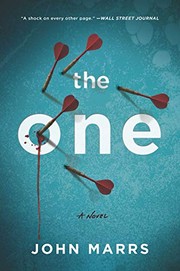
The One
2,856-word summary 13 min read 416 pages in the book
- First published
- 2017
- Publisher
- Del Rey
- Pages
- 416
- ISBN
- 9781785036057
Reading options
What's inside (8 sections)
I picked up The One because the premise sounded simple and a little too close to real life. A company called Match Your DNA says it found the gene that pairs each person with one other person. You send a mouth swab, they run it, and they tell you who you are meant to be with. The book came out in 2017 from Del Rey and runs 416 pages in the edition I used, and it follows five people who get that notification. What hooked me was not the science. It was the question of what people do once someone hands them certainty about love.
The setup matters, so here it is in plain terms. About a decade before the main story, scientists announce the discovery. Since then millions of people have been tested. Marriages have broken up. Dating has changed. People leave good partners because a computer says someone better exists. Others refuse to date at all until they are Matched. Marrs does not spend long on labs or genetics. He spends his time on the fallout. Each chapter jumps between the five new Matches, and the tension comes from watching ordinary hopes bend under that one result.
This is not a cozy romance. It is a thriller with romantic threads, and some parts are grim. There is stalking, murder, manipulation around pregnancy, and a killing near the end. If you want only sweet love stories, this will not suit you. If you like stories that ask what happens when technology promises to remove doubt, it will keep you turning pages even when you want to argue with the characters.
A mouth swab for love
The first strength of the book is how fast Marrs makes the idea feel normal. No long lectures. People at dinner parties talk about being Matched the way people now talk about apps. Some couples take the test together to prove they are right for each other. Some take it in secret. Employers joke about it. Parents ask about it.
Marrs returns often to the same social effects. Breakups spike. People who test and find no Match feel left behind. People who find a Match across the world suddenly have to decide whether to move. The company founder, Ellie, becomes famous and rich, and her face is tied to the promise. You get the sense of a world that outsourced a hard choice and then had to live with the results.
I liked that Marrs keeps the mechanics vague. He never pretends this is hard science fiction with explained genes and peer review. It is closer to speculative suspense. The swab goes in, the email comes back, and life tilts. That vagueness will bother some readers. I found it honest, in a way, because the book is about belief rather than biology. People believe the result, so they act as if it must be true.
The five stories never truly intersect until the final reveal about the database, but they rhyme. Each person thinks the Match will fix something missing. Each learns that a genetic link does not supply kindness, honesty, or timing. Some learn it gently. Others learn it in ways that leave bodies behind.
Mandy and the family that wanted a baby
Mandy is divorced and lonely and very open about wanting a child and a settled home. When her Match finally arrives, his name is Richard Taylor. She looks him up online before he contacts her, builds a picture from photos and posts, and waits for a message that never comes. Then she finds a remembrance page. Richard has been hit by a car and is said to have died.
What Mandy does next is uncomfortable and sad. She goes to the service. She tells a small story as if she knew him. His sister Chloe sees through it, and Mandy admits she was his genetic Match and only wanted to understand who he was. Instead of pushing her away, Chloe brings her home to meet their mother Pat. Grief makes strange bonds, and Mandy is soon spending a lot of time in Richard's old room, hearing stories, looking at pictures, feeling close to a man she never met.
Pat tells Mandy that Richard banked sperm before cancer treatment years earlier. She offers Mandy the chance to carry his child. For Mandy, who has wanted motherhood for years, this feels like purpose. She agrees to insemination, moves closer to Pat, and pulls away from her own sisters who think she is moving too fast. The pregnancy gives her joy and also ties her tighter to a household that watches her closely.
The turn comes through Michelle, a former girlfriend of Richard's. Michelle says Pat and Chloe tried the same pitch with her, and then says the harder thing. Richard is not dead. He is alive in a care home with severe brain injury after the crash, with almost no responsiveness. Mandy goes to see for herself and finds it is true. When she confronts Pat, the story shifts from grief to control. There is a struggle, a fall, and Mandy wakes in hospital to learn her baby was delivered early by emergency surgery and taken. Pat and Chloe have vanished with him.
The search that follows is the most thriller-like part of Mandy's thread. Police look in obvious places. Mandy remembers a detail from photos and talk, a cottage in the Lake District tied to Richard's childhood, and that is where they find them. I will not lay out every beat of the standoff, except to say Marrs plays it as desperation rather than cartoon villainy. Pat believes a child of a Matched pair might somehow reach Richard. That belief does not excuse what she does, but it explains why she cannot let go. Mandy gets her son back, and in a quiet later scene she places him near Richard and sees a small physical response. It is not a cure. It is a flicker, and Marrs leaves it at that.
Mandy's story frustrated me in places. She ignores clear warnings and hands too much power to people she barely knows. Yet her longing is drawn with care. She is not foolish for wanting a family. She is vulnerable because the Match gave her a story to hold onto before she had facts. That feels true to how people use dating results in real life, clinging to the label while missing the person.
Christopher meets someone who can stop him
Christopher is the darkest thread and, strangely, the most readable. He is a serial killer operating in London, methodical and proud of his planning. He photographs victims, keeps trophies, and has a target number in mind to make his name. When his Match notice arrives while he is still dealing with a recent murder, curiosity wins. He goes to meet her.
His Match is Amy, a police officer. The irony is immediate and Marrs leans into it without winking too much. Amy is direct, confident, and used to asking sharp questions. Christopher, who is used to control, finds he cannot steer her so easily. He enjoys her company in a way that surprises him. Dates feel normal. Talk feels easy. For the first time his private project feels like an interruption rather than the main event.
That does not make him good. He keeps killing while seeing her, telling himself he will finish his plan and then stop so he can be present with her. The murders lose their thrill, which scares him more than guilt does. He worries that if he quits early he will resent Amy, and that resentment could turn toward her. It is chilling to read because it is so practical. He treats murder like a career to wind down before settling down.
Amy discovers the truth in stages. First small inconsistencies, then objects he cannot explain, then a forensic link that ties him to a scene. When she confronts him at what was meant to be his final killing, he does not lie about who he is. He says knowing her changed him and asks her to believe he can stop. Amy has to weigh her career, her safety, and what she owes future victims. She decides he will always be a danger and that turning him in would still leave risk and ruin. She kills him with his own weapon, then burns his body and scrubs traces of him from her life.
This resolution will divide readers. Some will find it too neat that a trained officer steps outside the law so completely. Others will accept it as the book's bleak logic, that the system cannot hold someone this careful. I landed in the middle. The scenes leading up to it are strong because Marrs shows two intelligent people circling each other, each hiding something. The aftermath feels rushed, and I wanted more time with Amy's fear and calculation. Still, as a study of how even a Match cannot rewire a violent mind, it works.
Jade flies halfway around the world
Jade works a dull hotel job in Sunderland and dreams of travel she cannot afford. When she Matches with Kevin, who lives in Australia, the distance feels cruel. They message and call for months. Friends push her not to waste the chance. At last she buys a ticket and shows up to surprise him.
Kevin is ill. Very ill. He has cancer and has kept the worst of it from her. He is thin, tired, and living with family. Jade feels shock and also guilt for feeling disappointed. She expected romance and found a sickroom. To her credit, she stays. She tries to be kind. She tells herself the test must mean something, and that meaning should carry her through.
What she does not expect is her reaction to Kevin's brother Mark. Mark is reserved, almost avoidant at first, and Jade feels an immediate pull she never felt with Kevin. She hates herself for it. Kevin, meanwhile, asks her to marry him so he can feel loved at the end, and she says yes. They have a brief period that is tender and sad. He dies not long after.
After the funeral Jade plans a coastal trip she always wanted, partly to escape the confusion. Before she leaves, the truth comes out. Mark was her Match all along. When Kevin was diagnosed and learned he had no Match, Mark swapped their samples so Kevin could feel chosen before he died. Their mother Susan knew parts of this and urges Jade not to throw away something real because it started with a lie.
I found this thread the most moving and also the most manipulative, in both good and bad ways. Marrs uses illness to raise the stakes, which can feel unfair, but he also gives Jade agency. She chooses to stay with Kevin out of care, chooses to marry him knowing it is short, and later chooses Mark with open eyes after anger and distance. The lie is large, yet the motive is plain love between brothers. If you dislike secrets as plot engines, this will annoy you. If you accept that grief makes people bend rules, it lands.
Nick has to rethink everything
Nick is engaged to Sally and thinks his life is settled. Sally wants them to take the test before the wedding to be sure. The results say they are not Matched. Nick shrugs it off and says they can trust themselves. The shock is his own result. He is Matched with Alex, a man. Nick has always thought of himself as straight, has never questioned it, and suddenly has to face a physical and emotional reaction he did not plan.
At Sally's urging he meets Alex, a physiotherapist with ties to New Zealand. At first there is awkward politeness. Then eye contact lingers. Talk runs long. Both men have girlfriends and both insist this changes nothing. But Nick keeps finding reasons to see Alex, going to his games, texting, meeting. Desire grows alongside genuine liking, and Nick feels split between loyalty to Sally and something he cannot name away.
The split becomes public at a dinner with friends. Nick lets slip how often he has seen Alex, Sally sees the truth, and the engagement ends. Nick and Alex plan a future, possibly in New Zealand when Alex's visa ends. Then Sally calls. She is pregnant. She says Nick can stay and help or she will end the pregnancy. Nick decides to stay out of duty, Alex leaves, and Nick and Sally live together without being a couple.
The birth brings the book's saddest twist for Nick. Sally dies from an aneurysm during labor. The baby, Dylan, survives. Nick soon realizes the child cannot be his biologically. Sally had an affair, likely with a friend of theirs whose own Match story had faded. It changes nothing for Nick in the way that matters. He claims Dylan as his son and flies with him to New Zealand to ask Alex for another chance.
I admired how Marrs handles Nick without turning him into a symbol. His confusion is specific. He loves Sally, feels obligation to a child, and also feels undeniable attraction to Alex. The pages where he tries to be honorable to everyone and fails are painful in a believable way. The pregnancy-as-pressure beat may bother readers who dislike that device, and the quick resolution of paternity will feel convenient. Even so, Nick's choice to parent a child who is not his, while pursuing a life that is true to him, gives the book one of its few hopeful notes.
Ellie learns her own system is broken
Ellie Stanford founded Match Your DNA and grew rich on its promise. She has been registered for years with no Match, which she wears almost as proof of seriousness. When a Match finally appears, a man called Tim who works as a systems analyst, she hides who she is and meets him as a normal dater. Tim is funny and easy, and Ellie, usually guarded, softens. She brings him to a company party.
There a staff member calls Tim by another name, Matthew. Ellie brushes it off as mistaken identity until old photos surface. Tim's mother once worked for her as a technician in the early days. Tim is actually Matthew Ward, son of that worker, and he sought Ellie out on purpose. His father left his mother after being Matched elsewhere, his mother's life fell apart, and he blames Ellie and her company for treating people as data points.
Matthew's revenge is not only personal. He worked inside the company and altered the matching database so that a large number of pairings over more than a year were false. That means many couples, including possibly some of the people in this book, built lives on corrupted results. When Ellie confronts him, the argument turns violent and she kills him in her office. The killing is live streamed by accident, and the sabotage news spreads at the same time. The book ends with Ellie facing trial and telling her assistant to destroy the database if she is convicted.
Ellie's thread carries the theme most directly. She sold certainty and then discovered she could not even trust her own Match. Marrs does not make her a simple villain. She is brilliant, controlling, and tired, and her horror when she grasps the scale of the corruption feels real. The live stream device is a bit sensational, and the final courthouse beat is brief. I wanted one more scene of Ellie sitting with what her product did to the other four stories. Even without it, her fall gives the novel its spine. If the system can be hacked, what was everyone actually trusting.
Stepping back, The One works best as a page turner with ideas rather than as rigorous science fiction. The genetics are a pretext. The real subject is how people hand over judgment to a result and then justify almost anything to protect it. Mandy justifies intrusion, Christopher justifies delay, Jade justifies staying, Nick justifies secrecy, Ellie justifies control. That pattern is the book's smartest observation.
The flaws are real too. Five full arcs in 416 pages means some beats compress. Motivations sometimes arrive via confession rather than buildup. A few reveals lean on swapped samples, hidden identities, and overheard calls. The middle sags when all five stories hit waiting periods at once. And the science will not satisfy readers who want detail about genes, databases, or regulation. Marrs cares about dates, messages, flights, and funerals more than labs.
I still recommend it to fans of speculative thrillers who like moral mess. Read it for the momentum and the arguments it will start. Ask yourself which character you judged most harshly and why. Ask whether you would take the test. My answer shifted while reading, which is more than many thrillers manage. The Match promises one person made for you. The book suggests love is still a series of choices, made daily, with incomplete facts, and no swab can spare you that work.
FAQ
When was The One published?
Del Rey published it in 2017. The edition cited here runs 416 pages with ISBN 9781785036057.
Do I need to read other books first?
No. Mandy, Christopher, Jade, Nick and Ellie each get their own thread, and the book resolves them without needing other volumes.
Who are the five main characters?
Mandy, Christopher, Jade, Nick and Ellie. Each receives a Match notice from Match Your DNA and learns the result brings trouble rather than certainty.
Similar books
Reveal Me
A Shatter Me novella told by Kenji, set between Defy Me and Imagine Me, as the rebels learn Anderson has taken hostages and Juliette faces Emmaline.
2,098-word summary · 9 min read

Wither
In a future where women die at twenty, sixteen-year-old Rhine is sold as a bride to a wealthy stranger and plots an escape from a beautiful prison.
2,395-word summary · 11 min read
Upgrade
A Gene Protection agent is infected with an upgrade virus that makes him stronger and faster than human, and only he can stop his sister from releasing it on…
2,166-word summary · 10 min read
Under the Never Sky
Exiled from her Pod, Aria crosses a storm-scarred wilderness with Outsider Perry to find family and the fabled Still Blue.
2,572-word summary · 11 min read
Shadow Me
Kenji Kishimoto narrates for the first time as he joins Nazeera on a quiet mission after Restore Me, carrying painful secrets into Defy Me.
2,512-word summary · 11 min read
The Running Man
Out of work in a broken 2025, Ben Richards enters a televised manhunt where each hour alive pays cash.
2,922-word summary · 13 min read

Requiem
Lena fights in the Wilds while cured Hana marries into Portland power.
2,232-word summary · 10 min read
Pines
A Secret Service agent wakes hurt in Wayward Pines, Idaho, hunting two missing agents, and finds a town that will not let him leave.
2,452-word summary · 11 min read
Imagine Me
Juliette remembers who she was and storms the capital to end the Reestablishment for good.
2,090-word summary · 9 min read
Oryx and Crake
Snowman lives alone after the plague with Crake's green-eyed Children, remembering Jimmy, Crake and Oryx.
3,026-word summary · 13 min read
Destroy Me
Shot by Juliette, Warner holds his base together while his father arrives with harsher plans for her.
2,556-word summary · 11 min read
Delirium
In a America where love is treated as disease, Lena Haloway counts down to her Cure until she meets Alex in Portland.
2,425-word summary · 11 min read

The Host
Stephenie Meyer imagines Earth settled by Souls, where Wanderer wakes inside Melanie Stryder and hears her voice refuse to fade, sparking a desert flight to…
2,288-word summary · 10 min read

Shatter Me
Juliette Ferrars, whose touch kills, is locked up by the Reestablishment until Adam and Warner pull her into war.
2,115-word summary · 9 min read
Insurgent
Insurgent retold: Tris guilty after war, Erudite hunts Divergent, Amity talks, Candor serum.
1,951-word summary · 9 min read
Divergent
Veronica Roth's Divergent explained: the five factions, Tris's choice of Dauntless, the aptitude test, and where the trilogy's premise starts to crack under…
2,494-word summary · 11 min read

Iron Widow
Wu Zetian enlists to avenge her sister, kills her pilot, and becomes an Iron Widow in a mecha Huaxia where the machines are built to kill women.
2,444-word summary · 11 min read

Archenemies
Nova steals for the Anarchists while Adrian hides his Sentinel identity, and a serum that erases prodigy powers puts them both at risk.
2,485-word summary · 11 min read

Carve the Mark
On a planet divided between conquered and conqueror, the tyrant's sister and a kidnapped oracle's son discover that their gifts make them useful to everyone…
2,340-word summary · 10 min read
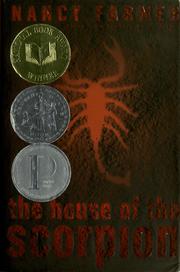
The House of the Scorpion
A clone raised in a drug lord's poppy fields learns what he was made for and chooses what to do with the life he was given.
2,527-word summary · 11 min read

The Age of Miracles
A California girl grows up while the Earth's rotation slows, and ordinary adolescence continues alongside slow catastrophe.
2,417-word summary · 11 min read
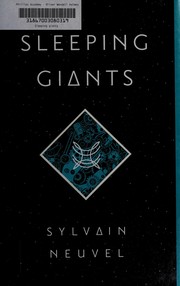
Sleeping Giants
A girl falls into a field and lands in a giant metal hand. Years later a secret team assembles the rest of the machine, and it chooses its own pilots.
2,466-word summary · 11 min read
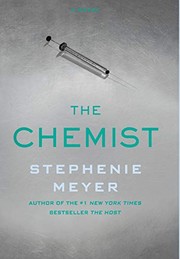
The Chemist
A former government interrogator on the run takes one last job, then learns the case she was handed was built to pit her against him.
2,249-word summary · 10 min read

Divergent: Official Illustrated Movie Companion
An oversize behind-the-scenes guide to the 2014 Divergent film, with casting stories, costume and set design, and scores of photos.
2,524-word summary · 11 min read
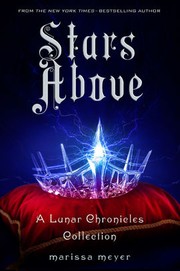
Stars Above: A Lunar Chronicles Collection
Nine Lunar Chronicles stories fill in the histories of Cinder, Wolf, Thorne, Cress, Winter, and Jacin, and end with a wedding after the war.
2,230-word summary · 10 min read
See Me
A law student with a violent past falls for a prosecutor whose old case returns as a stalker, in a romance with a thriller at its center.
2,007-word summary · 9 min read

Say You're Sorry
A widowed prosecutor defends the teenager accused of killing her babysitter, uncovering a small town's secrets and a killer hiding in plain sight.
2,116-word summary · 9 min read