Requiem
2,232-word summary 10 min read 391 pages in the book
- First published
- 2013
- Publisher
- HarperCollins
- Pages
- 391
- ISBN
- 9780062014535
- Series
- Delirium (#3)
Reading options
What's inside (8 sections)
I finished the Delirium trilogy on a long train ride, which turned out to be the perfect place for this particular finale. Every time we stopped at a station I looked up and had to remind myself which world I was in. Requiem is the third book after Delirium and Pandemonium, published by HarperCollins in 2013, 391 pages in the edition I read, and it does something structurally bold for a series closer. It splits itself in half. Every other chapter belongs to Lena, fighting in the Wilds, and the chapters in between belong to Hana, her old best friend, living cured in Portland. I went in braced for a battle. I got something stranger and sadder, and I am still turning parts of it over. Fair warning, this book demands the first two. Pandemonium ends on a revelation about Alex that reframes everything, and Requiem picks up that thread without apology. If you walk in cold, the triangle will read as melodrama instead of the slow heartbreak Oliver spent two books building.
If you have not read the first two books, stop here and start there. This summary gives away everything, including the endings of books one and two, because there is no way to explain book three without them.
Lena in the Wilds
When Requiem opens, Lena is no longer the rule-following Portland girl counting days to her Cure. That girl is gone. Book two took her across the fence, through hunger and flight, and delivered her to the resistance, a loose network of Invalids and defectors living rough and planning to strike back. Now she is an active fighter. She trains. She stands watch. She has killed, or come close enough that the difference barely matters to her sleep.
Two boys anchor her chapters, and the book never lets you forget either of them. Julian Fineman, the son of a Cure advocate, who loved her gently in book two and escaped execution beside her. And Alex Sheathes, her first love from book one, the Invalid who went undercover in Portland and was left for dead at the fence. Alex is alive. Lena learned that at the end of Pandemonium, and the news broke something open in her that Julian's devotion had only patched. So now she fights beside Julian while loving the memory of Alex, and then Alex himself, scarred and harder, back from the dead and working with the resistance's rougher edges.
Oliver writes the Wilds with dirt under its nails. The camps move. Food runs short. Rain gets into everything. Raven, one of the resistance leaders, drills the new recruits without sentiment, and Tack, her counterpart, handles weapons and strategy with a calm that unnerves Lena. There are raids by regulators, the government's armed patrols, and reprisals the other way, sabotaged towers and cut power lines. Lena takes part in an operation against Portland's infrastructure early on, and the sequence has real tension, whispered signals and a fence humming with current and somebody's plan falling apart on contact.
What struck me most in these chapters is how tired everyone is. This is not a glossy rebellion. People argue about targets. People die in ways that feel random rather than meaningful. Lena keeps thinking about her mother Annabel, who survived the Crypts and joined the cause, and about the girls she left behind. She believes in the fight. She also counts its cost every night, and Oliver lets both feelings sit side by side without resolving them. Her mother Annabel's presence complicates things further. The woman Lena mourned for years is alive, gaunt, formidable, and not remotely maternal in any soft sense. Their reunion has no swelling music. It has logistics, arguments about tactics, and a single conversation about love that lands harder for being so plainly spoken.
Hana in Portland
Then the chapter breaks, and we are somewhere else entirely. Hana Tate, Lena's former best friend, took the Cure at the end of book one. She is now paired with Fred Hargrove, the young mayor of Portland, handsome and powerful and cured, and she lives the life Lena was supposed to want. Big house. Fitting appointments. A wedding everyone in the city will watch. Her chapters are quiet in a way that made my skin crawl.
Because Hana is cured, she should feel nothing sharp. Calm. Content. Safe. And mostly she does, until she doesn't. Little things snag. A song she should not remember moves her. Her sleek, controlled days develop hairline cracks. She starts paying attention to the pills she and the other cured citizens take daily, the regulators' routine, the things nobody questions, and what she notices frightens her more than any raid could. I will leave the specifics for you to discover, but the pills matter, and Hana's slow understanding of what they do is the best-written thread in her half of the book.
Hana's Portland is all surface order. Government broadcasts play in every square. Invalid attacks are reported as minor incidents or not at all. Her mother coaches her on smiles. Fred is kind to her in the flat, distant way of the cured, and there are moments, a hand on her back, a rehearsed laugh at dinner, where Hana wonders whether this is happiness or its photograph. She also starts noticing a guard, a boy her age with unguarded eyes, and the attention scares her precisely because she should be incapable of the feeling behind it.
I admit I resented these chapters at first. I wanted Lena, the war, the fence. Hana's wedding china felt like a distraction from the revolution. Then, about a third of the way in, I caught myself dreading the chapter breaks in the other direction, because something in Hana's storyline had started to hum. The dread in Portland is the dread of a sealed room slowly running out of air. Oliver knows exactly what she is doing with the contrast. Lena's world is all noise and blood. Hana's is silence with something scratching inside the walls. My favorite Hana detail is how she starts noticing other cured women, their identical calm at school gates and grocery lines, and wonders for the first time whether any of them wonder too. The possibility of a whole city of buried doubt, everyone performing peace at each other, is the subtlest horror in the trilogy.
The road back to Portland
The middle of the book moves both women toward the same city from opposite sides. The resistance decides Portland is the target that matters, the seat of the Cure's machinery, and Lena's unit starts moving through the borderlands toward it. The traveling chapters have a grim momentum. Villages burned by regulators. Sympathizers hiding fighters in cellars. A botched rendezvous that leaves good people dead and Lena blaming herself for hesitating at the wrong second.
Alex and Julian orbit her through all of this, and Oliver refuses to make it simple. Julian is steady, open, the person who held her together when she was starving in book two. Being near him feels like rest. Alex is raw voltage, shared history, the boy who taught her what the Cure steals. Being near him feels like waking up. Lena leans on Julian and aches for Alex and hates herself for both, and neither boy plays the villain. Julian knows where her mind goes when Alex enters a room, and he stays anyway. Alex knows he lost months she spent with someone else, and he does not pretend it does not wound him. There were moments I had to put the book down and stare out the train window because the three of them in a tent together, being careful with each other, hurt more than any firefight.
Meanwhile Hana's wedding approaches, and Portland fills with security for a planned public event, a government meeting meant to project control while the Invalids gather in the woods outside the walls. Both sides can feel the other breathing. Hana, cracking wider by the chapter, starts making small dangerous choices. She passes information. She looks away at the right moment. She stops taking what she is told to take. Whether any of it will matter, she cannot tell, and neither can we.
One sequence I keep replaying: Lena's group sheltering in a homestead that regulators torch the next morning, and Hana, miles away, watching smoke rise from the city's edge during a fitting, told it is a controlled burn. Both of them know better. The two halves of the book touch without touching, and the effect is genuinely eerie.
The meeting
Everything converges on a single day. The government has arranged a public gathering in Portland, officials and cured citizens and press, a show of unity meant to prove the Invalids are finished. The resistance plans to be there too, inside the walls, hidden among the crowd and the staff, and Lena is part of the infiltration. She walks back into the city that tried to cut feeling out of her head, wearing borrowed clothes and a borrowed calm, past checkpoints she once feared as a schoolgirl.
Hana is there as well, in the audience, the mayor's perfect fiancee in her perfect dress. The two former friends, who have not stood in the same place since book one, are finally breathing the same air again without knowing it. Oliver stretches this section almost unbearably. Lena spotting familiar streets through a stranger's eyes. Hana scanning the crowd with a feeling she cannot name. Fred at the podium. Regulators at every door. Julian somewhere in the wings. Alex somewhere else, on a task Lena begged him not to take.
Then the bombs go off.
I will not choreograph it beat by beat, because the chaos is the point. Explosions rip through the assembly. The show of unity becomes a stampede. Glass and smoke and screaming, regulators firing into crowds, Invalids moving through the confusion with their own orders, Hana knocked down and crawling, Lena running toward the blast instead of away from it because her people are in there. Characters you have followed for three books make split-second choices in the haze, and some of them do not come out. The meeting fails in every way that matters. Nobody controls anything by the end of the day. Portland, the sealed city, is broken open, and what pours in cannot be put back. Fred's reaction in the chaos tells you everything about the Cure's limits. Stripped of scripts and handlers, the young mayor is only a frightened boy shouting Hana's name, and for a second the book lets you pity the system instead of hating it. Then the shooting starts again.
An ending that refuses to choose
After the smoke, the personal reckoning. Lena survives, bloodied, and finds herself in the open with both of them. Alex, alive, reaching for her. Julian, alive, reaching for her. The girl who began this trilogy counting down days to having love cut out of her brain stands between the two boys who taught her what it is, and Oliver ends the book without letting her choose on the page. The last lines hold all three of them suspended. No name spoken. No hand taken. The revolution burns on around them, outcomes uncertain, Hana's fate left threading into the same smoke, and the trilogy closes mid-breath.
I have feelings about this, and they are mixed, which seems to be the universal response. On the one hand, I respect it. Lena spent three books being told by everyone, parents and governments and boys, what to feel. Ending on her unmade choice hands the decision back to her, permanently. The story was never really about which boy. It was about a girl who was supposed to be emptied learning to hold too much. On the other hand, I read over a thousand pages across this trilogy, and some stubborn reader part of me wanted the scene, the running, the name called out. Oliver denies it. Some readers find that brave. Some find it a dodge. I land somewhere in between, admiring it in daylight and resenting it at midnight.
What I made of it
As a closer, Requiem does the hard jobs well and the easy ones unevenly. The dual narration pays off once Hana's thread ignites, and the bombing is staged with genuine horror. The Wilds chapters sag in a couple of spots where strategy talk replaces momentum, and readers who disliked love triangles will find no relief here. The triangle does not resolve. It deepens, then freezes.
Who should read it. Anyone who finished Pandemonium has to see this through, obviously. Beyond that, hand it to readers who like dystopias of control rather than arenas, stories about what a state does to private feeling. The trilogy as a whole sits closest to books about engineered compliance, and this finale is its loudest argument that feeling, even grieving, even torn feeling, beats peace without it.
For me, the trilogy's image is still Rachel forgetting the lullaby back in book one. Requiem answers that scene from the other side. Hana, cured, at a piano or a window, catching a tune she should not know and stopping, hand in midair. Lena, uncured, in the woods, humming with her whole chest. Two girls. One city between them. Noise on one side, silence on the other, and the wall coming down.
FAQ
Is Requiem the last Delirium book?
Yes. Requiem is the third and final book in the Delirium trilogy, after Delirium and Pandemonium, published by HarperCollins in 2013.
Does Lena choose between Alex and Julian?
No. The book ends with Lena between Alex and Julian and does not show her choosing. The triangle stays unresolved on the page.
Why does the book switch between Lena and Hana?
Chapters alternate between Lena in the resistance and Hana in Portland. Their stories converge at the Portland meeting that ends in a bombing.
Similar books
More from Delirium first, then related titles.
Delirium
In a America where love is treated as disease, Lena Haloway counts down to her Cure until she meets Alex in Portland.
2,425-word summary · 11 min read

Pandemonium
Lena survives the Wilds and spies in New York after losing Alex at the fence.
2,314-word summary · 10 min read

Reveal Me
A Shatter Me novella told by Kenji, set between Defy Me and Imagine Me, as the rebels learn Anderson has taken hostages and Juliette faces Emmaline.
2,098-word summary · 9 min read

Wither
In a future where women die at twenty, sixteen-year-old Rhine is sold as a bride to a wealthy stranger and plots an escape from a beautiful prison.
2,395-word summary · 11 min read

Under the Never Sky
Exiled from her Pod, Aria crosses a storm-scarred wilderness with Outsider Perry to find family and the fabled Still Blue.
2,572-word summary · 11 min read
Shadow Me
Kenji Kishimoto narrates for the first time as he joins Nazeera on a quiet mission after Restore Me, carrying painful secrets into Defy Me.
2,512-word summary · 11 min read
Reached
Cassia, Ky, and Xander serve the Rising undercover as plague spreads, then chase a cure that tests love, loyalty, and who should lead after the Society.
2,690-word summary · 12 min read

Imagine Me
Juliette remembers who she was and storms the capital to end the Reestablishment for good.
2,090-word summary · 9 min read

Crossed
Cassia crosses the Outer Provinces canyons seeking Ky after labor camp, while Xander returns as medic with Rising secrets to shift her search.
2,322-word summary · 10 min read

King's Cage
Chained by Maven with Silent Stone, Mare endures while Cal and the Guard gamble on rescue and alliance.
2,001-word summary · 9 min read
Destroy Me
Shot by Juliette, Warner holds his base together while his father arrives with harsher plans for her.
2,556-word summary · 11 min read

Matched
Cassia matched to Xander sees Ky's face flash and starts to doubt.
1,916-word summary · 9 min read

Shatter Me
Juliette Ferrars, whose touch kills, is locked up by the Reestablishment until Adam and Warner pull her into war.
2,115-word summary · 9 min read
Insurgent
Insurgent retold: Tris guilty after war, Erudite hunts Divergent, Amity talks, Candor serum.
1,951-word summary · 9 min read
Divergent
Veronica Roth's Divergent explained: the five factions, Tris's choice of Dauntless, the aptitude test, and where the trilogy's premise starts to crack under…
2,494-word summary · 11 min read

Iron Widow
Wu Zetian enlists to avenge her sister, kills her pilot, and becomes an Iron Widow in a mecha Huaxia where the machines are built to kill women.
2,444-word summary · 11 min read

Archenemies
Nova steals for the Anarchists while Adrian hides his Sentinel identity, and a serum that erases prodigy powers puts them both at risk.
2,485-word summary · 11 min read

Carve the Mark
On a planet divided between conquered and conqueror, the tyrant's sister and a kidnapped oracle's son discover that their gifts make them useful to everyone…
2,340-word summary · 10 min read
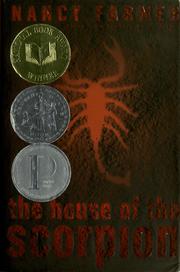
The House of the Scorpion
A clone raised in a drug lord's poppy fields learns what he was made for and chooses what to do with the life he was given.
2,527-word summary · 11 min read

Divergent: Official Illustrated Movie Companion
An oversize behind-the-scenes guide to the 2014 Divergent film, with casting stories, costume and set design, and scores of photos.
2,524-word summary · 11 min read
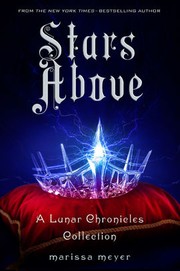
Stars Above: A Lunar Chronicles Collection
Nine Lunar Chronicles stories fill in the histories of Cinder, Wolf, Thorne, Cress, Winter, and Jacin, and end with a wedding after the war.
2,230-word summary · 10 min read

Never Fade
Ruby, now a leader in the Children's League, must track down the boy whose memories she erased, because he holds the only proof of what caused the disease that…
2,188-word summary · 10 min read
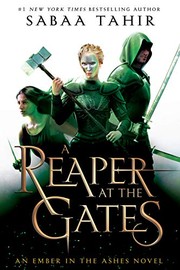
A Reaper at the Gates
The Martial capital falls to an army of ghosts, Elias becomes the Soul Catcher, and Laia and Helene pay brutal prices as the Nightbringer moves to free the…
1,991-word summary · 9 min read
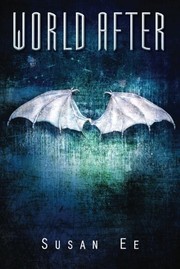
World After
Penryn wakes from near-death to find her altered sister Paige hunted as a monster, and follows her into the angels' scorpion factory and Uriel's coup.
2,213-word summary · 10 min read