
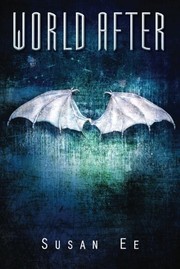
World After
2,213-word summary 10 min read 315 pages in the book
- First published
- 2013
- Publisher
- Skyscape
- Pages
- 315
- ISBN
- 9781477817285
- Series
- Penryn & the End of Days (#2)
Reading options
What's inside (11 sections)
I picked up World After the same week I finished Angelfall, which is the only sensible way to read this trilogy. The first book ends mid-scream inside the angels' aerie, and the sequel opens seconds later, with Penryn lying on her mother's lap in the back of a Resistance truck while everyone around her believes she is a corpse. She was not dead. She was paralyzed by the sting of a scorpion, one of the hybrid monsters the angels grow in their laboratories, and when she finally sits up, the other survivors nearly panic. It is a great way to restart the story: the heroine has to prove she is alive before she can do anything else.
Susan Ee writes action like a fistfight, quick and physical, and she is good at the small human details that most apocalyptic stories skip. Penryn's mother is still schizophrenic, still carrying her sword, still convinced she is a knight of God. Paige, the seven-year-old sister Penryn gave everything to rescue, sits nearby with crude stitches across her body and metal teeth grafted into her mouth. The rescue worked, but the thing that came home is not quite the little girl who was taken.
Waking at Palo Alto
The caravan reaches Palo Alto High School, which the Resistance has turned into its new headquarters. Penryn, her mother, and Paige get a classroom to themselves, and the domestic normalcy of that detail, desks pushed against the wall, a chalkboard still smeared with old lessons, makes the horror land harder. Paige will not eat. She wants raw meat, which nobody wants to think about.
Penryn keeps Raffe's angel sword hidden under a blanket. The sword is not just a weapon. It is partly sentient, and it starts pushing visions and memories into Penryn's dreams. She sees Raffe across centuries, fighting hellions and bat-faced demons, and her body learns the moves while she sleeps. She mimics his stances in the waking world, and the training is earned in a way that a normal montage never could be.
I liked how Ee handles the sword. It has opinions. When Penryn tries to use it to hunt a squirrel for Paige, it floods her mind with images of Raffe commanding angel armies, almost as if it is insulted at being asked to do something so small. She disguises it with a teddy bear and a bridal veil so nobody recognizes an archangel's blade wrapped in a child's toy.
The Resistance is not the good guys
Obi's Resistance is not a warm haven. When scouts report that the angels are digging up their dead and reviving them with water, the survivors learn that their earlier victory was mostly luck. The warriors they thought they killed simply healed and flew away. That is the tone of the middle chapters: every win was borrowed, and the bill is coming.
Then three men jump Penryn for the sword, and Paige drops out of nowhere, all fours and reflex, and slashes one of them open before stalking the others. The onlookers see the monster, not the child. Later the Resistance ties Paige up in the grove, and Penryn finds her there, her lips bloodied from an attacker she had already hurt. Penryn hesitates, and Paige reads the judgment in her sister's eyes. That moment is the emotional center of the book. Penryn has spent two novels promising to save her sister and now has to ask whether she still recognizes her.
A swarm of mature scorpion-angels hits the camp. Paige flees into the trees, their mother runs after her, and Penryn fights using the techniques the sword drilled into her. Obi locks Penryn and her mother in a police car, a small betrayal that shows how quickly frightened people turn on each other. Clara, the woman Penryn freed from a scorpion tank back in the first book, steals a key and drives them out.
Clara, the tracker, and Alcatraz
Clara is one of the more interesting side characters here. Her skin is dried and aged from the fetus that fed on her, but she is alive and practical. Penryn's mother reveals a prototype tracker, chips she sewed into the girls' clothing years earlier as a private insurance policy, which she then squandered by going off her medication. It points toward San Francisco, and eventually toward Alcatraz, now swarming with scorpions.
On the pier, Beliel, the demon who stole Raffe's wings, is netting humans like fish. Raffe appears out of nowhere to fight him, which is the first time in the book that the two plots, Penryn's search for Paige and Raffe's hunt for his wings, cross. Beliel escapes, and Penryn, her mother, and Clara are captured and ferried to the island.
Alcatraz is where the book stops being a chase and becomes a horror movie. Beneath the prison sits a cavernous factory where humans hang suspended in water droplets, each one slowly transforming into a scorpion. Penryn poses as a captive, watches prisoners get fed to the creatures, and eventually escapes a cell with two men. They find Doc, a human scientist running the whole operation. He shows Penryn surveillance footage of Paige's captivity, where Beliel called her Little Worm, tormented her, then began to protect her and ask her to sing him to sleep before handing her over to the surgeons. Doc admits he altered Paige's batch of children using stolen angel science, hoping to give humanity a weapon. Paige was the only survivor.
That added layer is what makes the sequel more than a middle chapter. Penryn does not just have a traumatized sister. She has a sister who may be a deliberately engineered weapon, and the people who made her are on both sides of the war.
Uriel's party
From Alcatraz, Penryn is smuggled to the new aerie at Half Moon Bay, a luxury hotel on the bluffs where Uriel, the archangel who arranged Raffe's wing replacement, is campaigning to be elected Messenger, the head of the angels. She is dressed up as one of his matched human escorts. At a masquerade, Uriel announces that the biblical locusts have risen from the Pit, presenting his scorpion creations as proof that Judgment Day is here. The angels erupt, and the party becomes a slaughter of the human guests.
Penryn spots Raffe in the crowd and creates a distraction so he can slip away. After the massacre, he flies her out over the ocean. The aerial fight that follows is one of the best action sequences in the series, partly because it turns on a simple problem: Raffe cannot swim. Penryn, freezing and half-drowned, fights off an angel in the water and then has to tow him to shore. It is a neat inversion. The angel does the flying, and the human does the saving.
They get one quiet night in a beach house. Raffe explains that angel law forbids a relationship between them, and that the real punishment for a warrior is not death but losing everyone they love. It is a soft scene in a loud book, and it earns the emotional weight of what comes after.
Beliel, Burnt, and the wings
Back at the pier, Penryn retrieves her sword and the tracker, and Raffe agrees to fly her to the aerie one more time. There, Paige walks stiffly out of the dark toward Beliel, takes his hand, and then tears into his throat while the scorpions pump him full of venom. Raffe severs both stolen wings from the paralyzed demon. When Burnt, the angel who originally kidnapped Paige, reaches for her, Penryn draws the sword.
The blade channels its own fury at the angel who separated it from Raffe. Burnt's sword shatters, and Penryn's stroke cuts him down. Every unsheathed angel sword in the area drops from its owner's hand, the archangel's blade having intimidated the whole field. It is a big, satisfying image, and a little over the top, which is fine for this kind of book.
The scorpions crash into the advancing angels, and the swarm splits around Penryn, Raffe, and Paige, protecting them. Whatever Doc did to Paige has left her connected to the creatures. Penryn looks at her sister and finally sees what their mother kept telling her to see: the same brown eyes, full of sweetness and light. Paige climbs onto Beliel's body with Raffe's severed wings and the scorpions lift her into the air, and the three of them fly off as the sun rises.
Penryn's mother and the family thread
The strangest and most affecting thread in the book is Penryn's mother. She is mentally ill, and the story never pretends otherwise. She talks to God, she carries a sword, she believes she has a mission, and in the first book she even tries to sacrifice herself. In World After she becomes something more complicated than a burden. She is the one who sewed tracker chips into her daughters' clothes, a decision that looks like madness until it saves their lives. She is the one who keeps insisting that Paige is still Paige, and in the end she is right.
Ee gives the family its own small arc. Most apocalypse stories reduce parents to casualties, and Ee keeps hers in the frame, difficult and inconvenient and necessary. When the mother collapses and screams that Penryn let the monsters take Paige, it is genuinely painful, because it is exactly the accusation Penryn has been making against herself.
Even the typos of grief are handled well. Penryn's guilt is not clean. She loves her sister and is also repelled by what her sister has become, and the book refuses to tidy that contradiction.
The sword and Raffe's history
A quieter strength is how the sequel builds Raffe through the sword rather than through romance. The blade shows Penryn his memories in fragments. She watches the amputation of his wings, the agony, and the moment a human girl, whom the angels call a Daughter of Man, threw the sword to him so he could keep fighting. His last thought in that memory is that his Watchers, the angels condemned for marrying human women, would have liked this girl.
That one memory does more work than a dozen love scenes. It explains why Raffe is drawn to Penryn, why he is conflicted about his own kind, and why the sword has attached itself to her. It also lays groundwork for the politics of the final book, where the fate of the Watchers and the question of whether angels and humans can share a world become central.
The sword itself becomes a kind of third character. It sulks when used for small tasks, it protects Penryn whether she wants it or not, and at the climax it acts on its own. I have seen sentient-weapon tropes go badly, but Ee keeps the blade's behavior consistent and a little funny, which keeps it from feeling like a cheat.
The factory and the moral mess
The scorpion factory on Alcatraz deserves its own mention because it is the book's best invention. Humans hang in water droplets, slowly turning into creatures, and the person running the factory is a human scientist who believes he is saving the species. Doc is not a cackling villain. He is a frightened man making a monstrous bet, and the story lets Penryn understand him without forgiving him. When he says he altered Paige to give humanity a chance, it is both a confession and a justification, and the novel does not tell you which one to believe.
That ambiguity spreads outward. The angels are not a single enemy. There is Uriel, who manufactures prophecy to seize power. There is Beliel, who is cruel and also, in one disturbing stretch of footage, tender with a child he tormented. There is Raffe, who is an archangel and a fugitive and a man who cannot swim. The war is not good against evil. It is a crowd of self-interested factions, and Penryn is trying to keep one small family alive inside it.
What works and what sags
The strength of World After is that it refuses to let the previous book's rescue be a happy ending. Paige is saved and ruined at the same time, and the book sits with that discomfort instead of resolving it. Clara, Doc, and the scorpion factory give the world a grim industrial logic, and Raffe's choice to help Penryn rather than reclaim his place among the angels carries real cost.
The weaknesses are the usual ones for a middle volume. The plot moves through a lot of holding pens and captures and escapes, and the Resistance leadership stays thin, so the human side never feels as vivid as the angels. Uriel's scheme is effective but announced rather than slowly revealed, and some of the sword-training sections repeat themselves.
Still, as a bridge between a strong opener and a finale, it does its job. It widens the war, deepens the bond between Penryn and Raffe, and turns a rescued child into a genuine mystery. If you liked Angelfall, this one is not optional, and if you were on the fence, the Alcatraz factory and the masquerade are worth the price of admission.
FAQ
Is World After part of a series?
Yes. It is book two in the Penryn & the End of Days trilogy, following Angelfall and preceding End of Days. It picks up immediately after the first book ends.
When was World After published?
Skyscape first published it on November 19, 2013. The paperback runs 315 pages with ISBN 9781477817285.
Does Raffe get his wings back in World After?
Yes. After Paige attacks Beliel, Raffe severs the stolen wings from the paralyzed demon and reclaims them at the end of the book.
Similar books
More from Penryn & the End of Days first, then related titles.
Angelfall
After angels destroy the world, Penryn trades help with a wingless angel to rescue her sister from their stronghold.
2,420-word summary · 11 min read
Dreams of Gods & Monsters
Karou and Akiva unite chimera and seraphim against empires invading Earth.
2,179-word summary · 10 min read
Chain of Gold
Cordelia and James hunt demons in Edwardian London while hearts tangle.
2,364-word summary · 11 min read
Shadow Me
Kenji Kishimoto narrates for the first time as he joins Nazeera on a quiet mission after Restore Me, carrying painful secrets into Defy Me.
2,512-word summary · 11 min read
Unearthly
Part-angel Clara moves to Wyoming to fulfill a vision of a boy and a forest fire.
2,241-word summary · 10 min read
The Young Elites
Adelina survives fever and execution to join a secret group of gifted malfettos plotting against the queen of Kenettra.
3,310-word summary · 15 min read
Finale
Nora Grey must lead the Nephilim while her bond with Patch is tested by old vows and looming war over Coldwater. Hank's shadow still drives hate from beyond…
2,898-word summary · 13 min read
Days of Blood and Starlight
Karou takes up Brimstone's resurrection work while Akiva breaks with his empire as war burns Eretz.
2,866-word summary · 13 min read
King's Cage
Chained by Maven with Silent Stone, Mare endures while Cal and the Guard gamble on rescue and alliance.
2,001-word summary · 9 min read
Daughter of Smoke and Bone
Art student Karou with blue hair runs errands for chimera Brimstone until war finds her.
2,563-word summary · 11 min read
Powerless
Ordinary Paedyn hides in Ilya, saves Kai, and enters the Purging Trials while pretending an ability.
3,079-word summary · 14 min read
Unravel Me
Juliette trains at Omega Point while Warner hunts her and Adam's touch starts to hurt them both.
2,262-word summary · 10 min read

Vow of Thieves
Kazi and Jase return to Tor's Watch to find it occupied, and their marriage is tested by captivity, betrayal, and a war for the town of Hell's Mouth.
2,059-word summary · 9 min read
The Lost Sisters
Taryn Duarte writes a letter to her twin, Jude, explaining how she fell for Locke and why she stayed silent while he used them both.
1,914-word summary · 9 min read

Iron Widow
Wu Zetian enlists to avenge her sister, kills her pilot, and becomes an Iron Widow in a mecha Huaxia where the machines are built to kill women.
2,444-word summary · 11 min read

Archenemies
Nova steals for the Anarchists while Adrian hides his Sentinel identity, and a serum that erases prodigy powers puts them both at risk.
2,485-word summary · 11 min read

The Siren
Saved from a shipwreck in 1930, Kahlen becomes a siren who sings men to their deaths for the Ocean, until a boy in a college library makes her want a life she…
2,369-word summary · 11 min read
Cruel Beauty
A girl raised to kill the demon prince who rules her cursed land instead falls in love with him, in a retelling that mixes Beauty and the Beast with Bluebeard…
2,669-word summary · 12 min read
Demonglass
Sophie Mercer spends the summer at the Council's English estate, where two new demons, a suspicious host, and Archer's return complicate her plan to remove her…
2,771-word summary · 12 min read

Born at Midnight
Kylie Galen is sent to a camp for troubled teens and discovers it is a haven for vampires, werewolves, and witches, and that she may be something stranger…
2,310-word summary · 10 min read

The Rose & the Dagger
Shahrzad is pulled from her Caliph husband and left in a desert camp of rebels, needing to break his curse and end a war before it ends her.
2,520-word summary · 11 min read

We Hunt the Flame
In a fractured Arabia-inspired world, a disguised huntress and a prince-assassin race to find a magic-restoring book and confront an ancient evil.
2,195-word summary · 10 min read
Stars Above: A Lunar Chronicles Collection
Nine Lunar Chronicles stories fill in the histories of Cinder, Wolf, Thorne, Cress, Winter, and Jacin, and end with a wedding after the war.
2,230-word summary · 10 min read
Reveal Me
A Shatter Me novella told by Kenji, set between Defy Me and Imagine Me, as the rebels learn Anderson has taken hostages and Juliette faces Emmaline.
2,098-word summary · 9 min read

Lore
Lore Perseous, the last of a hunted bloodline, is pulled back into the Agon when a wounded Athena offers her revenge against the god who killed her family.
2,188-word summary · 10 min read
House of Salt and Sorrows
Annaleigh Thaumas investigates her sister's death in a cursed island manor where the balls are illusions and the sea god is always listening.
2,025-word summary · 9 min read