

Iron Widow
2,444-word summary 11 min read 384 pages in the book
- First published
- 2021
- Publisher
- Penguin Teen
- Pages
- 384
- ISBN
- 9780735269934
- Series
- Iron Widow (#1)
Reading options
What's inside (8 sections)
The first thing Wu Zetian does in Iron Widow is sign up to die. She is a peasant girl from a village in Huaxia, and her older sister enlisted as a concubine pilot and came home in a box. The family did not get the girl back. They got a payment. Zetian takes that payment, walks to the recruitment office, and asks to be paired with the man who flew the machine her sister died in. She has no plan beyond getting close enough to kill him. What she gets instead is a cockpit, a corpse, and a reputation that the army cannot decide whether to bury or sell.
That opening is the best argument for the book. Xiran Jay Zhao does not ease readers into the world. The rules arrive through Zetian's anger, and the anger is specific. She is not sad about a vague injustice. She is angry at a ledger, at a sum of money, at the way her parents counted a daughter as an investment that finally paid out.
The Sister Who Never Piloted
Huaxia is a futuristic version of medieval China, ringed by walls and watched by the Heavenly Council, a set of gods nobody has seen. The enemy is the Hundun, a species of alien creatures that attacks in waves. Humanity fights back in Chrysalises, giant machines built from Hundun husks, each one piloted by a man with strong qi. The pilots are celebrities. Their faces are on posters. Their weddings are broadcast.
The pairing system is the rot at the center. A male pilot cannot run a Chrysalis alone, so he is paired with a female concubine who feeds him qi through a mental link. Most of the women die. The strain of the link burns them out, and the army calls that sacrifice. When a woman survives, the pairing is called a Balanced Match, and the media treats it like a royal marriage. The word balanced is doing a lot of work. It sounds like harmony. It means the machine did not finish her off.
Zetian's sister never even reached that point. She died in training or in a test run before she ever sat in a real battle, and the family's only response was to ask about the compensation. Zetian notices that no one in her village remembers her sister's name without attaching a price to it. The Heavenly Council receives offerings. The army receives pilots. The families receive coins. Everyone gets something except the girls.
Zetian enlists with a lie in her mouth and a plan she has not thought through. She is assigned to Yang Guang, the pilot her sister served. He is handsome in the way the posters require, and he is courteous in public. In the cockpit, the link opens his mind to her, and she sees what he did to the girls who came before. The book is blunt about this. His memories include abuse, coercion, and deaths that the army recorded as accidents. Zetian does not debate him. She overwhelms him inside the link and kills him in the cockpit, then survives the backlash.
That survival makes her a problem. A concubine who kills her pilot should be executed. A concubine who kills her pilot and lives, with the spirit pressure to show for it, is a weapon. The press gives her a name: the Iron Widow. The army gives her a cell, then a new partner, because the war does not stop for scandal.
The Man in the Cockpit
Li Shimin is called the Iron Demon. He is a conscripted criminal, not a volunteer, and he has the strongest qi in modern Huaxia. The army keeps him drunk because a sober Shimin is difficult to aim. He has killed before, and the official story says he slaughtered his own family. He does not deny it. He sits in his cell with the flat patience of a man who has stopped expecting anyone to ask a second question.
Zetian is paired with him as a punishment and a test. The link should kill her. Instead it settles. They are a Balanced Match, and the bond is deeper than either expected. They can see each other's memories. Shimin's are not the ones the army advertises. He was an artist before he was a prisoner, a man who painted and kept to himself. His family gang-raped a young woman, and he killed them for it. The army took a murderer with a conscience and turned him into a dog on a leash, then used alcohol to keep the leash tight.
This is where the book slows down enough to breathe. Zetian and Shimin share a cockpit and a public story. The army wants a romance for the cameras, a redeemed monster and the widow who tamed him. The two of them start performing it, then stop performing. Their tenderness is built out of small things: shared memories, a hand on a shoulder, the way Shimin notices when she is pretending not to be afraid. Zhao writes these scenes with more care than the battle sequences. The result is that the relationship feels earned even when the plot around it is moving at a sprint.
There is a fair criticism here. The prose is propulsive, but it is often blunt. Zhao tells readers what a scene means as well as showing it, and some emotional beats land twice because the narration will not trust the moment. I noticed this most in the cockpit scenes, where the imagery is vivid but the explanation keeps arriving right behind it.
Three in a Bed, Three in a Machine
Gao Yizhi is Zetian's childhood friend, the fifth son of the biggest media mogul in Huaxia, and the only person from her old life who ever treated her like a person rather than a ledger entry. He is rich, charming, and useful in ways that make him dangerous. When Zetian and Shimin are brought to the capital, Yizhi pulls strings to join their household. Officially he is there as a media liaison. In practice he is there because he loves Zetian and because he can see what the army is doing to Shimin.
Yizhi helps Shimin break the alcohol addiction. That process is not glamorous. It is ugly and repeated, and Zhao gives it room. Shimin's dependence was imposed on him, which makes quitting a fight against the army as much as against his own body. Yizhi's patience with him is one of the better surprises in the book. The rich boy could have been a rival or a joke. Instead he becomes a partner.
The three of them fall into a relationship that the story treats as real and deliberate. Zetian loves Shimin. She also loves Yizhi, and the old feeling between them never went away. Shimin and Yizhi love each other too, in a quieter key. The book does not present this as a scandal to be resolved or a phase to be outgrown. It presents it as three people choosing each other and then having to negotiate what that means. Consent is not a footnote. They talk about jealousy, about what they want, about what they will not do. For a young adult novel with this much violence, the emotional honesty around the polyamory is striking.
The capital also shows how the celebrity machine works. The three of them are photographed, interviewed, and packaged. Yizhi knows the machinery because his family built part of it. Zetian learns to use it. The media is not a background detail. It is a weapon that the army and the council both rely on, and whoever controls the story controls what the public is willing to accept.
Yizhi's position costs him something. He is the fifth son, which means he has money and freedom but no real claim on the family's power, and every favor he calls in puts him further outside it. He chooses Zetian and Shimin anyway. That choice is quieter than Zetian's rage, but it is the one that makes the household possible. Without his money, his contacts, and his willingness to be disliked by his own relatives, the two pilots would still be property of the army.
The Confession in the Cell
The turning point is a televised battle in which Yizhi feeds qi to both pilots. The three of them survive, and the numbers do not add up. If the system were fair, the woman in a pairing would have a real chance of living. If the system were fair, a Balanced Match would not be treated as a miracle. They start pulling at the thread.
They capture An Lushan, a high ranking official, and interrogate him. The scene is graphic. Zhao does not cut away from the torture, and readers who are sensitive to that should know it is coming. What An Lushan gives them is the answer the book has been circling: girls are just as likely as boys to have strong spirit pressure. The machine is designed so that the man survives and the woman is drained. The imbalance is not nature. It is engineering, and the engineering is protected by law, religion, and the story that women are naturally weaker.
That confession reframes everything. The Hundun war is real, but the concubine system is not a necessary cost of fighting it. It is a way of turning a war into a hierarchy. The Heavenly Council's technology arrived with a design baked in, and the men who run Huaxia have spent generations pretending the design is destiny.
Zhao is at her strongest when she lets this idea sit in a room with the characters. Zetian's rage is not abstract. She thinks about her sister, about the girls in Yang Guang's memories, about the fact that she only escaped because she was strong enough to kill a man. The book understands that survival can be a form of luck and that luck is not justice.
Qin Zheng and the Yellow Dragon
The army sends the trio on a counterattack into lost territory. Another Chrysalis opens fire on them, not by accident. The orders come from inside the government, and the message is clear: the three of them have become more dangerous than the Hundun. Shimin makes a choice. He ejects Zetian and Yizhi and pilots alone, taking the full strain of the link. It kills him.
His death is the hinge of the novel. Zetian does not grieve quietly. She goes looking for a weapon big enough to break the people who killed him. That search takes her to the Kunlun Mountains, where the legendary Emperor Qin Zheng lies in stasis with the Yellow Dragon, a Chrysalis unlike anything in the army's arsenal. Qin Zheng is ill. Zetian offers him a cure in exchange for the machine.
The last act moves fast. Zetian takes the Yellow Dragon into battle and destroys the Hundun forces, then turns on the pilots who were sent to stop her. She flies to the capital and brings down the central command tower. She exposes the truth about the concubine system to the media, using the same machinery that made her a celebrity. The surviving powers submit. She becomes Empress Wu.
It is a satisfying power fantasy, and Zhao does not pretend otherwise. The pleasure of watching Zetian take the tools that were used against her and turn them on their makers is real. The book also does not pretend that seizing power is clean. People die. The tower falls on people who were not in the room when the orders were given. Zetian knows it, and the novel lets her know it without turning her into a villain.
The Gods at the Door
The victory is not the end. Zetian tries to retrieve Shimin's body, and the Heavenly Council has already taken it. Then she finds a secret document that changes the shape of the war. Huaxia is a colony on another planet. The Hundun are not invaders from outside. They are the native species, defending their world from the settlers who built walls and machines out of their dead.
Before Zetian can tell anyone, the Heavenly Council makes an offer. They will bring Shimin back if she serves them. The book ends there, with Zetian holding a truth that could destroy her new empire and a temptation that could give her back the person she loves most.
That ending is bold and also rushed. The colonial reveal arrives very late, and the first book does not have room to work through what it means. Readers who want the worldbuilding to pay off immediately will be frustrated. The sequel has to carry that weight, and the final chapters feel more like a handoff than a resolution.
The other criticism is the prose. Zhao's sentences are built for momentum. They are short, loud, and direct, and they work well in action. In quieter moments they can flatten complicated feelings into declarations. The torture scene is another sticking point. It is meant to show Zetian becoming what she hates, but the book does not spend much time on the moral cost before the plot moves on.
The Heavenly Council is the other piece that feels underdeveloped. The council is treated as a religion and a government at once, receiving offerings and handing down technology, but the book rarely shows how ordinary people understand it. When the colonial document appears, readers have to accept a huge shift in the world with very little preparation. The sequel can build on that. The first book mostly uses the council as a threat offstage, which works for tension and leaves a lot of questions open.
What holds up is the system. Iron Widow is not really about one bad man. Yang Guang is a monster, but he is a monster the army selected, trained, rewarded, and protected. Shimin is a murderer, but the state made him into a weapon and then called him a demon. The Heavenly Council gave humanity a machine that eats women and called it salvation. Zetian's revenge is personal, and the book never lets readers forget that the personal is structural.
It is also a book about grief that refuses to be polite. Zetian does not heal into a better person. She becomes more powerful and more willing to use power. The novel is interested in what that costs and what it makes possible. The final image is not peace. It is a woman at the head of an empire, with the gods at the door and a dead lover's body in their hands, deciding what she is willing to trade.
FAQ
Is Iron Widow the first book in a series?
Yes. It is the first book in the Iron Widow series and ends with a cliffhanger involving the Heavenly Council and Shimin's body.
What is a Balanced Match?
A Balanced Match is a pilot pairing in which the female concubine survives the mental link, which the army treats as a rare and celebrated event.
Is Iron Widow suitable for younger teens?
It contains graphic violence, including a torture scene, and deals with sexual abuse, so older teens are a better fit than younger readers.
Similar books
More from Iron Widow first, then related titles.
Shadow Me
Kenji Kishimoto narrates for the first time as he joins Nazeera on a quiet mission after Restore Me, carrying painful secrets into Defy Me.
2,512-word summary · 11 min read
Steelheart
In steel-covered Newcago, David Charleston joins the Reckoners to kill the invincible Epic Steelheart, the tyrant who murdered his father.
2,190-word summary · 10 min read

Archenemies
Nova steals for the Anarchists while Adrian hides his Sentinel identity, and a serum that erases prodigy powers puts them both at risk.
2,485-word summary · 11 min read

The House of the Scorpion
A clone raised in a drug lord's poppy fields learns what he was made for and chooses what to do with the life he was given.
2,527-word summary · 11 min read

Divergent: Official Illustrated Movie Companion
An oversize behind-the-scenes guide to the 2014 Divergent film, with casting stories, costume and set design, and scores of photos.
2,524-word summary · 11 min read

Stars Above: A Lunar Chronicles Collection
Nine Lunar Chronicles stories fill in the histories of Cinder, Wolf, Thorne, Cress, Winter, and Jacin, and end with a wedding after the war.
2,230-word summary · 10 min read

Reveal Me
A Shatter Me novella told by Kenji, set between Defy Me and Imagine Me, as the rebels learn Anderson has taken hostages and Juliette faces Emmaline.
2,098-word summary · 9 min read
I Who Have Never Known Men
Forty women in a cage, one child who remembers nothing, and a nearly empty world above the bunker. Harpman's quiet, unexplained dystopia.
2,025-word summary · 9 min read

Wither
In a future where women die at twenty, sixteen-year-old Rhine is sold as a bride to a wealthy stranger and plots an escape from a beautiful prison.
2,395-word summary · 11 min read

Never Fade
Ruby, now a leader in the Children's League, must track down the boy whose memories she erased, because he holds the only proof of what caused the disease that…
2,188-word summary · 10 min read
World After
Penryn wakes from near-death to find her altered sister Paige hunted as a monster, and follows her into the angels' scorpion factory and Uriel's coup.
2,213-word summary · 10 min read

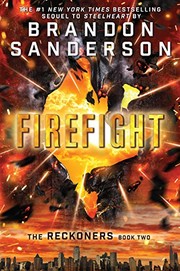
Firefight
David hunts Firefight in flooded Babylon Restored while Prof slips.
2,462-word summary · 11 min read

Under the Never Sky
Exiled from her Pod, Aria crosses a storm-scarred wilderness with Outsider Perry to find family and the fabled Still Blue.
2,572-word summary · 11 min read



Life As We Knew It
Sixteen-year-old Miranda keeps a diary while an asteroid strike on the moon brings tsunamis, blackouts, and a frozen year of hunger to her Pennsylvania town.
2,485-word summary · 11 min read
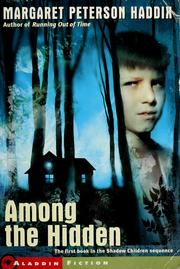
Among the Hidden
Twelve-year-old Luke, an illegal third child, befriends Jen and faces the cost of stepping out of hiding.
2,923-word summary · 13 min read
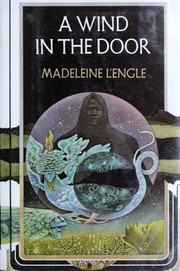
A Wind in the Door
Meg must save Charles Wallace from a cosmic sickness by naming and loving what she fears, helped by a cherubim called Progo.
2,214-word summary · 10 min read

The Young Elites
Adelina survives fever and execution to join a secret group of gifted malfettos plotting against the queen of Kenettra.
3,310-word summary · 15 min read
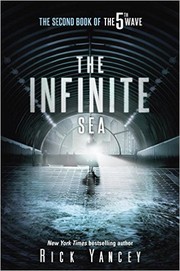
The Infinite Sea
Cassie and Squad 53 wait out winter in a hotel while Ringer is retaken and learns the truth behind the 5th Wave.
2,985-word summary · 13 min read

Requiem
Lena fights in the Wilds while cured Hana marries into Portland power.
2,232-word summary · 10 min read
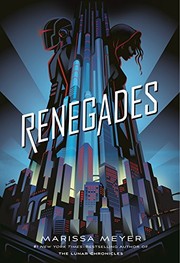
Renegades
Villain Nova infiltrates heroes while Adrian questions justice.
2,453-word summary · 11 min read
Messenger
Matty carries messages through a living Forest for Village until Trade Mart greed, a closing border, and his hidden gift force a final run.
2,363-word summary · 11 min read
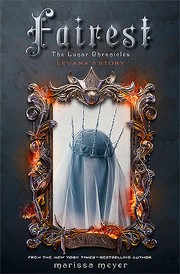
Fairest
Queen Levana's rise from scarred princess to Lunar ruler fills the gap between Cress and Winter.
2,983-word summary · 13 min read

The Grace Year
In Garner County, Tierney James faces her grace year exile, where girls are blamed for magic and must survive a year outside the fence before they can return…
2,817-word summary · 13 min read
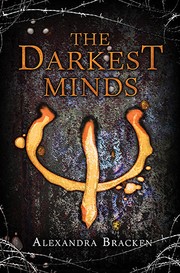
The Darkest Minds
A teen with mind powers escapes a government camp and joins three runaways in Bracken's 2012 dystopia, first in The Darkest Minds series.
2,038-word summary · 9 min read

Angelfall
After angels destroy the world, Penryn trades help with a wingless angel to rescue her sister from their stronghold.
2,420-word summary · 11 min read
Imagine Me
Juliette remembers who she was and storms the capital to end the Reestablishment for good.
2,090-word summary · 9 min read