
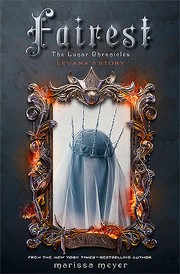
Fairest
2,983-word summary 13 min read 272 pages in the book
- First published
- 2015
- Publisher
- Feiwel & Friends
- Pages
- 272
- ISBN
- 9781250060556
- Series
- The Lunar Chronicles (#3.5)
Reading options
What's inside (8 sections)
I did not expect to feel sorry for Queen Levana. After Cinder, Scarlet and Cress she was mostly a veil and a smile and a threat from orbit. I picked up Fairest because Winter was next on my shelf and a friend said this short bridge would make her choices make sense. She was right, though not in the way I guessed.
Fairest came out in 2015 from Feiwel and Friends, 272 pages in the hardcover. It is listed as book 3.5 in The Lunar Chronicles and it ends about a decade before Cinder starts. Meyer wrote it after Cress when she felt stuck on Winter, because she did not yet grasp her villain well enough to finish the series. That origin shows. This is a character study with court politics around it, not a full quest.
It covers roughly ten years, from Levana at fifteen to her settled rule as queen. The interest is in how she gets there, step by unhappy step.
The Girl Who Practiced Smiles in Empty Rooms
Levana wakes on the morning of her parents funeral from the same dream. Fire. A small voice calling her baby sister. She sits up in a cold room in Artemisia and spends more care on choosing a face than on mourning clothes.
Her parents, King Marrok and Queen Jannali, were killed in their sleep by a shell, a Lunar born without the mind gift. The palace calls it an assassination. Levana, fifteen, feels the loss as a draft more than a wound. She did not feel held by them. She feels watched by everyone else.
Her sister Channary is older, beautiful without effort, and cruel in the casual way of someone who has never been refused. Channary is about to be crowned. She comes to Levana's room before the service and slaps her hard enough that Levana loses hold of her glamour, the Lunar ability to bend what others see and feel. Under it, Levana's skin is ridged with old burn scars on one side. Channary stares, laughs, then tells Levana she will have to speak at the funeral because Channary does not want to.
That dynamic never shifts. Channary takes lovers among the guards, skips council reading, rules by appetite. Levana studies, listens at doors, practices holding a pleasant face for hours until her head aches.
The burn is the center of it. As small girls they played with fire in the nursery, which is illegal on Luna where air and heat are managed so tightly. Channary tossed powder to make sparks, cut a lock of Levana's hair to throw in, held her down when Levana tried to pull away. Cloth caught. Skin caught. Later Channary told the court she got a red mark on her own neck trying to save her sister. Levana learned two lessons that day and kept them. Beauty gets belief. Pain gets hidden.
At the funeral Levana sees Sir Evret Hayle among the guard detail. He is much older, a grown man with a steady post near the king's family, and he has been kind to her since she was small. Small kindnesses count for a lot in that house.
Evret introduces his wife. Solstice is a seamstress, pregnant, soft spoken, tired in the way of late pregnancy. Levana knew he was married. She had not let herself picture the rest.
Lessons in Glamour and Control
Levana is good at glamour and getting better. She can pass as pale and untouched, as her sister, as Solstice when she wants to practice. Her teachers praise control. What she lacks is ease. Fear breaks her hold. Loud flame, sudden laughter, a hand raised fast, and the illusion shakes.
Her sixteenth birthday shows it. There is an illusionist at the party, working mostly for Channary's amusement. He swells a jet of flame for effect. Levana screams, tips her chair, goes white under her borrowed face. The court laughs. Channary laughs longest.
Court itself is instructive in a grim way. Levana sits through briefings Channary finds dull. Head thaumaturge Joshua Haddon reports on two projects started under their father. One is the making of altered soldiers, part wolf and part Lunar, meant for shock war. The other is a lab made sickness called letumosis, built to strike Earthen bodies while leaving Lunars immune. The point is pressure. Sicken Earth, then offer the cure only if Earth trades and obeys.
Channary yawns through it. Levana asks questions. How is the cure stored. Whose blood is needed. How soon can the soldiers stand review.
Haddon says the cure work needs blood from shells, since their bodies react in a way that helps the lab track response. Channary, bored and wanting the meeting over, signs a law to round shells up for research. She names Sybil Mira to run the collection. Sybil is young, sharp, hungry for rank. Levana files her name away.
Levana also learns the informal rules. Never look unguarded. Never let a mirror catch you tired.
A few days after the funeral she goes to Solstice's shop in disguise and orders gloves with a small necklace. Solstice is polite, skilled, warm in an ordinary way. On the wall hangs a quilt of Earth Solstice pieced by hand, blue and white and green.
Mirror, mirror on the wall, who is the fairest of them all.
On Luna that old line has teeth. Fairest means most loved, most obeyed, most able to hold a room without raising a hand. Levana wants it the way a thirsty person wants water.
Evret and Solstice
Evret Hayle is not mysterious. That is part of his pull. He is courteous, plain in his tastes, devoted to Solstice, fond of night duty because it is quiet. He treats Levana as a princess to be guarded, nothing more. She reads everything else into it.
For her sixteenth birthday a guard brings her a card and a small Earth pendant. The note is signed by Evret. Levana presses it to her chest and sleeps with it near her pillow. Only later does she learn Solstice chose the gift and asked Evret to add his name because she pitied the lonely girl with no friends. Levana tears Solstice's name off the card and keeps the rest.
When Solstice goes into labor early and badly, word reaches the palace during a fitting. Channary will not release Evret until his shift ends. Levana, quick for once in a useful way, says she means to go into town and asks for an escort. Channary waves them off. Levana knows she will pay for the favor.
The clinic waiting room smells of soap and hot metal. Levana sits while nurses hurry. She finds herself hoping, then praying, that Solstice will not come through it. She frames it as fate. If Solstice dies, Evret will be free. Grief will pass. She will be there.
Solstice dies. The baby lives.
They name her Winter. Levana goes to the nursery and looks at the infant and thinks she is perfect. Evret comes in hollow eyed. Levana says the wrong things, too eager, too close. He asks her to leave. She does, stung and already rewriting the scene so she was a comfort.
Evret takes leave. Levana pines and tells herself he pines too. When he returns he comes to her rooms, not to declare love but to thank her. He brings the Earth quilt Solstice made and asks Levana to keep it for his daughter when she is older. He says she will have his gratitude until the day he dies. Levana stores the quilt and decides to give it to Winter one day. She holds the words gratitude and love side by side until they blur.
Then she tells him she wants more than friendship.
He says no, gently, clearly. He thinks of her as a charge and a friend. He will not resign in a way that insults her, but he means to step back.
Levana does not accept it.
She uses her gift to freeze him in place, then wraps herself in the look and voice of Solstice. He begs her to stop. She keeps going, shaping his feelings until his body leans toward her while his eyes stay afraid. It is hard to read. Meyer does not soften it. Levana tells herself it is persuasion. On the page it is assault.
A month passes. Levana wears Solstice's face in private and a pale beauty in public. Channary mocks her for both. Evret tells her plainly that he knows his warmth is forced, that his mouth kisses her while his mind stands apart. He tried to take his daughter and leave the district. Channary refused the transfer for her own amusement.
Levana sets a wedding for that night. Evret says no. She presses again with power until he says yes. The witnesses are his friend Garrison Clay, Garrison's wife, and their small son Jacin, who will one day guard Winter. Evret keeps his first wedding band on and slides the second beside it. He will not take Solstice off.
Channary is furious, less from care than from control. A princess should marry for gain, not for a guard. Levana says she may soon be pregnant herself.
A Crown That Never Feels Safe
Marriage does not settle her. Evret is polite, distant, careful with Winter. Levana tries to conceive and fails month after month.
Channary, meanwhile, is pregnant and unsure of the father. She carries with complaint and delivers a girl she names Selene. Small, dark haired, loud. The palace coos. Levana holds her niece once and feels the room tilt. If Selene lives, Levana will only ever be the aunt, the spare, the regent at best.
Channary sets her eyes on Earth next. The emperor of the Eastern Commonwealth, Rikan, is married, but Channary speaks of marriage to him as if wives and treaties are equally removable. Levana reminds her he is wed. Channary hints at accidents.
About a year after Selene's birth, Channary dies of regolith poisoning, a toxin tied to Lunar mining dust. The council votes. Levana is named queen regent until Selene turns thirteen. She reads reports, pays the outer sectors, promotes Sybil Mira to head thaumaturge, reviews the soldier program.
Then the wanting returns, sharper. Levana pictures Selene gone. She tells herself Luna needs a steady adult, not a child queen with guardians fighting over her. At last she stops dressing it up.
She picks a new nanny, one with a soft mind, and uses glamour to plant an order. Take a candle to the nursery playhouse. Set it near cloth. Lie down with the child for a nap. Fire does the rest. It mirrors what Channary did to her, or what she tells herself Channary did. She would do to the child what Channary had done to her.
The fire kills the nanny. The official word says Selene died too.
But rumor starts at once. Some staff swear the body was too small or too still in the wrong way. Dr Eliot, first to examine the remains, insists the princess is dead. Levana and Sybil do not trust him. They mean to press a second doctor, Logan Tanner, who was also on scene. Tanner vanishes before they can hold him. Readers of Scarlet will know that name. He is the old man who carried a burned child to Earth and raised her as his granddaughter in France.
Soon after, Dr Darnel, the lead on the soldier and sickness work, disappears as well. On Earth he will live under the name Dr Erland and run plague research in New Beijing. His wife's infant, born without the mind gift, was hidden to save her from collection. That infant is Cress, sent to a satellite to work as a hacker and a spy.
Levana tells herself these losses are the cost of safety. Earthen news feeds show fever and blue marks and quarantine domes. The advantage shifts toward Luna.
Winter Changes the Shape of Jealousy
Years pass. Winter grows into a kind girl with dark skin and a quick laugh, loved by staff and outer sector workers for small generosities. She refuses to use her mind gift, which on Luna brings on sickness with visions and bleeding. She accepts the visions rather than bend others. People start to whisper she may prove fairer than the queen.
Luna itself thins. Mines yield less. Water recycles tighter. Levana knows conquest of Earth is the only plan the council will back, and conquest needs either war or marriage.
At home the marriage hollows further. Levana overhears Evret telling Winter about Solstice, that she was lovely, that only Winter outshines her. Something in Levana cracks open. She asks Evret why he ever agreed to wed her. He answers honestly. She gave him no choice. She insists she would have taken no for an answer. He looks at her until she knows that is false.
He mentions the pendant. She has kept it all these years as proof of love. He tells her Solstice picked it, that he only signed. He does care for Levana, he says, as a friend, as his queen. Pity was in it from the start, on both their parts.
Levana asks to try again, to start clean. Evret says he cannot start clean while she still wears another woman's face. So she drops the glamour and shows him her true skin, scars and uneven tissue, eyes wet.
He is shocked. He is gentle for a moment. Then he says what is true. Whatever her face, she has steered and held him by force. She says her love has always been real. He does not argue the feeling. He argues the method.
There is a flashback here to the nursery fire, told at last in full. Two girls, forbidden flame, powder for sparks, a snip of hair tossed in to sizzle. Levana trying to back away. Channary holding her skirt, then holding her down. Heat. Screaming. A scar that itches for years. A lie that hardens into court history.
Back in the present Levana walks the halls with a cloth over her face. She goes to Channary's kept rooms and faces the old mirror. She has not looked long in a true mirror since childhood. Rage takes her. She throws bottles and chairs until the glass stars and falls. Guards run in. She orders every mirror in the city broken and all palace glass changed to non reflective panes.
She keeps the frame. Inside it she sets a netscreen to watch Earth feeds and her own court. An Earthen broadcast shows the Eastern Commonwealth in mourning. The empress has died of letumosis. The man fitting the screen warns her glamour will not hold through video. She commissions a veil from her dressmaker to cover the gap.
Policy hardens with her. She fines the outer sectors and asks for larger cohorts of soldiers. She decides Luna's future needs an Earth marriage, and since Winter is not her blood heir, the bride must be herself.
One obstacle stays. She is already wed.
She calls in former head thaumaturge Joshua Haddon, pushed aside for Sybil, bitter and for sale. She promises marriage and a crown beside her if he kills Evret. He goes to Evret's rooms and shoots him. Then Levana turns on Haddon and kills him herself. No witnesses, no rival claimant.
She holds Evret as he dies. He asks her to protect Winter. Levana promises. She presses the old Earth pendant into his palm.
What Works and What Wears Thin
Short books have to choose. This one chooses Levana's interior and lets the wider war sit in briefing scenes. That focus is its strength and its limit.
What works is plainness. Jealousy here is not grand. It is counting who gets greeted first, whose quilt hangs where. The Solstice chapters are strong because Solstice is ordinary and decent. Her death is a bad labor in a clinic with thin walls. The pendant lands because it is cheap and chosen with care.
Power is drawn well too. Glamour runs on attention and will. It fails on camera, it slips with fear, it needs practice like an instrument. The rule that video breaks it explains so much of later books, from veils to staged appearances, without a lecture.
The criticism I would offer a friend is this. The middle leans on council talk to move years fast. Haddon explains the soldiers. Sybil explains the shells. After a while the voices blur and I had to flip back to tell who proposed what. Channary's death from mine dust feels quick. The Selene fire is given in a few pages and then buried under rumor, which fits a cover up but left me wanting one more scene of Levana alone after.
Still, as a bridge it does its job. Read between Cress and Winter. Cress ends with a wedding forced from Earth and a crew scattered. Winter opens with a princess who will not bend minds and a queen who will not yield a throne. Fairest shows why the queen cannot yield. Every concession feels like a return to that nursery floor.
Who should pick it up. Readers who like villain studies with clear cause and effect. Readers who want the Snow White beats made plain. If you wanted more Cinder and Kai banter, wait for Winter.
I closed it with less hate for Levana and more alarm about her. Harm explains her without excusing her. The last image that stayed with me was not the throne or the veil. It was the quilt folded in a chest for years, saved for a girl who will never know the hands that made it, kept by a woman who tore the giver's name off the card.
If you go on to Winter, watch for mirrors, veils and apples. They all start here.
FAQ
Is Fairest the third book in The Lunar Chronicles?
No. Fairest is a novella numbered 3.5 in The Lunar Chronicles, published in 2015 by Feiwel and Friends. It sits between Cress and Winter and ends about a decade before Cinder starts.
Do I need to read Cinder, Scarlet and Cress before Fairest?
You should, because Cinder, Scarlet and Cress set up Levana, the plague, the wolf soldiers and the missing Princess Selene. Fairest reads alone as a character study, but the throne and marriage choices land harder with that background.
Who is Evret Hayle in Fairest?
Evret Hayle is a Lunar palace guard, first husband of Solstice and father of Winter. Levana forces him into marriage after Solstice dies, and his death clears her path to seek an Earth alliance.
Similar books
More from The Lunar Chronicles first, then related titles.
Cinder
Cyborg mechanic Cinder discovers she is Lunar royalty while plague and Queen Levana threaten New Beijing.
3,553-word summary · 16 min read
Scarlet
Scarlet searches for her grandmother with Wolf while escaped Cinder fights Levana in the Lunar Chronicles sequel.
2,756-word summary · 12 min read
Cress
Imprisoned hacker Cress joins Cinder Scarlet Wolf Thorne to stop Levana's wedding to Kai.
2,534-word summary · 11 min read
Winter
Scarred Princess Winter joins Cinder and her crew to stop Queen Levana's forced wedding and war between Luna and Earth.
3,179-word summary · 14 min read
Stars Above: A Lunar Chronicles Collection
Nine Lunar Chronicles stories fill in the histories of Cinder, Wolf, Thorne, Cress, Winter, and Jacin, and end with a wedding after the war.
2,230-word summary · 10 min read

Archenemies
Nova steals for the Anarchists while Adrian hides his Sentinel identity, and a serum that erases prodigy powers puts them both at risk.
2,485-word summary · 11 min read
Heartless
Cath Pinkerton wants a bakery with Mary Ann, not a crown, until secret love for Jest and Jabberwock attacks pull her toward becoming the Queen of Hearts.
2,968-word summary · 13 min read

Iron Widow
Wu Zetian enlists to avenge her sister, kills her pilot, and becomes an Iron Widow in a mecha Huaxia where the machines are built to kill women.
2,444-word summary · 11 min read
Cruel Beauty
A girl raised to kill the demon prince who rules her cursed land instead falls in love with him, in a retelling that mixes Beauty and the Beast with Bluebeard…
2,669-word summary · 12 min read

The Rose & the Dagger
Shahrzad is pulled from her Caliph husband and left in a desert camp of rebels, needing to break his curse and end a war before it ends her.
2,520-word summary · 11 min read
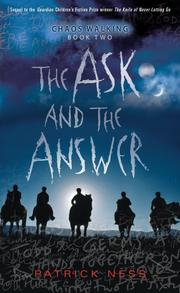
The Ask and the Answer
Todd and Viola are separated in occupied Haven, where the Mayor's Ask tortures suspects and the Answer plants bombs in the name of freedom.
2,265-word summary · 10 min read

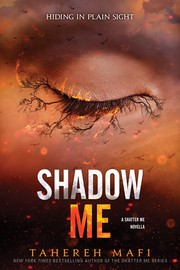
Shadow Me
Kenji Kishimoto narrates for the first time as he joins Nazeera on a quiet mission after Restore Me, carrying painful secrets into Defy Me.
2,512-word summary · 11 min read
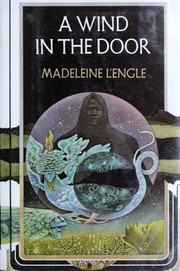
A Wind in the Door
Meg must save Charles Wallace from a cosmic sickness by naming and loving what she fears, helped by a cherubim called Progo.
2,214-word summary · 10 min read
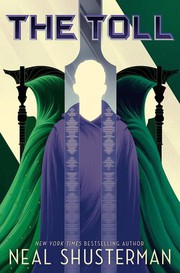
The Toll
After Endura sinks and the Thunderhead falls silent, Greyson Tolliver becomes its sole voice while Citra and Rowan fight to return.
2,744-word summary · 12 min read
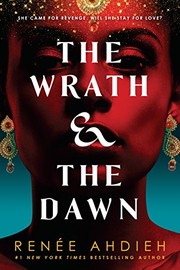
The Wrath and the Dawn
Shahrzad marries a king who executes each bride at dawn, hoping to stay alive through stories. A lush Arabian Nights retelling about grief, trust, and palace…
3,568-word summary · 16 min read

Beastly
Cursed by witch Kendra, cruel rich teen Kyle must find true love within two years while exiled in Brooklyn with Lindy and tutor Will.
2,967-word summary · 13 min read
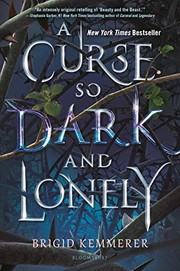
A Curse So Dark and Lonely
Pulled from Washington DC to Emberfall, Harper meets cursed Prince Rhen, who relives his eighteenth autumn until someone falls for him.
2,677-word summary · 12 min read
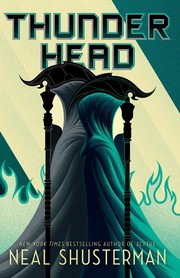
Thunderhead
Rowan hunts corrupt scythes as Scythe Lucifer while Citra, now Scythe Anastasia, defies the new order. Then Endura sinks.
2,396-word summary · 11 min read
The Knife of Never Letting Go
Todd Hewitt flees Prentisstown with silent Viola as Noise exposes the town lie, hunted by Aaron and Mayor Prentiss toward Haven and a cure rumor.
2,512-word summary · 11 min read
Gathering Blue
Orphaned weaver Kira is kept in the Council Edifice to mend the Singer robe, learning dyes and control until lasting blue thread opens choice.
2,954-word summary · 13 min read
Scythe
Citra and Rowan become apprentice scythes who must glean one another.
2,574-word summary · 11 min read
Glass Sword
Mare Barrow hunts newbloods with Cal while Maven hunts her after the palace betrayal.
2,268-word summary · 10 min read
Ella Enchanted
Cursed to obey, Ella fights for freedom and love in a Cinderella retelling.
2,725-word summary · 12 min read
A Wrinkle in Time
Meg Murry, Charles Wallace and Calvin tessar past Mrs Whatsit, Mrs Who and Mrs Which to Camazotz to free Mr Murry from IT.
2,055-word summary · 9 min read
Renegades
Villain Nova infiltrates heroes while Adrian questions justice.
2,453-word summary · 11 min read
The Thief
A boastful young thief is pulled from a prison to steal a legendary stone for the king's magus, and the story he tells about himself is not the whole story.
2,514-word summary · 11 min read

Inkdeath
The final Inkworld novel sends Mo into the land of the dead, leaves Meggie choosing between two boys, and ends the Adderhead's immortality with three written…
2,062-word summary · 9 min read

Vow of Thieves
Kazi and Jase return to Tor's Watch to find it occupied, and their marriage is tested by captivity, betrayal, and a war for the town of Hell's Mouth.
2,059-word summary · 9 min read
The Lost Sisters
Taryn Duarte writes a letter to her twin, Jude, explaining how she fell for Locke and why she stayed silent while he used them both.
1,914-word summary · 9 min read