
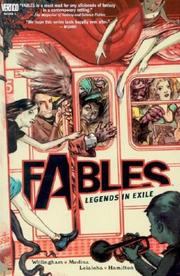
Fables, Vol. 1: Legends in Exile
2,984-word summary 13 min read 128 pages in the book
- First published
- 2002
- Publisher
- Vertigo
- Pages
- 128
- ISBN
- 9781563899423
- Series
- Fables (#1)
Reading options
What's inside (8 sections)
I picked this up because a friend kept telling me it was the best murder mystery hiding inside a comics shelf. I expected a cute twist on bedtime stories. What I got was a short, sharp detective story where everyone already knows each other. This is the first Fables collection, first published by Vertigo in 2002. It gathers Fables issues 1 through 5 from July to November 2002, plus a short extra prose piece, in a 128 page paperback tied to ISBN 9781563899423. Art is by Lan Medina and Steve Leialoha with finishes by Craig Hamilton, covers by James Jean, letters by Todd Klein.
The hook is simple. The people from old stories are real, and they lost their home worlds to a conqueror called the Adversary. They fled to our world centuries ago and built a hidden street of their own. Now one of them might have been murdered. The sheriff has to solve it before the whole town splits open.
That is the whole engine of the volume. It reads fast. It also sets up a much longer series about exile, money, and who gets to lead.
New York with a secret on the Upper West Side
Fabletown sits inside New York City, centered on the Woodland Luxury Apartments on the Upper West Side. From outside it looks like any expensive old building with a doorman and quiet halls. Inside it is city hall, police station, and housing block for refugees who happen to be Snow White, Prince Charming, Beauty and the Beast, Pinocchio, Flycatcher the Frog Prince, Boy Blue, Mr. Toad, Colin the pig, and a lot of others.
Willingham gives you the rules early without slowing down for a lecture. Fables who look human enough can live in the city. They call ordinary people mundys, short for mundanes, and the first law is to stay hidden from them. Spells and money help. Those who cannot pass, giants and talking animals and stranger shapes, live upstate at the Farm, out of sight. Old King Cole is the mayor in name, a friendly figure who likes ceremony. Snow White does the actual running of the place as deputy mayor and director of operations. Bigby Wolf is the sheriff. Yes, that Bigby. The Big Bad Wolf, pardoned after the exile, shaved down into a chain smoking investigator in a rumpled suit.
The backstory comes in pieces. The Homelands were many linked worlds where each tale lived apart. The Adversary came with armies and took them one by one. Most ran through magic doors at the last minute. By the time this volume starts they have been here for a couple hundred years, which means they have had time to get bored, get broke, and hold grudges.
I liked how lived in it feels. Snow has a cramped office full of files. Bigby has a small apartment and a sour mood. Jack has debts. Bluebeard has cash. Boy Blue plays sad songs on a horn. Toad has to keep a glamour on to look human and keeps complaining about the cost. Nothing here feels like a museum of tales. It feels like a co op board with magic.
One short bit to know: the book keeps its fantasy light on purpose. There are no long fights with dragons in these five issues. The magic is mostly in the background, in a mirror that can find people, in a witching cloak, in how hard it is to kill someone like Bigby. The foreground is rent, meetings, and police work.
Blood on the floor in Rose Red's flat
The case starts when Jack runs to Bigby to say his girlfriend is missing. The girlfriend is Rose Red, Snow White's younger sister. Jack is that Jack, the one mixed from all the Jack tales, beanstalk climber and trickster and current live in boyfriend. He talks fast and lies faster.
Snow goes with Bigby to Rose's flat and the door opens on a mess. Furniture overturned. Blood smeared and pooled across the floor. Claw marks. No body. Snow goes pale in a way you do not see from her elsewhere. Bigby holds her back from touching anything and starts reading the room the way a good sheriff does.
This is where the art does quiet work. Medina and Leialoha show you more than the dialogue says. The blood pattern looks wrong for a straight killing. The room looks staged in spots. Bigby notices. He does not say everything he notices right away, which annoyed me the first time and pleased me the second time. He is the kind of cop who keeps his best guess to himself until it firms up.
Jack goes into the lockup at the Woodland because he was sleeping there and because his story wobbles. He says he was out. He says Rose had enemies. He says a lot. Under pressure he lets slip that Rose had also been seeing Bluebeard, which changes the shape of the case. Bluebeard is rich, polite, dangerous, and famous for having killed several wives in the old world. If your girlfriend turns up missing and bloody, and her other lover has that history, you look at him.
Meanwhile the clock is ticking because Remembrance Day is coming. Once a year the richer Fables gather to remember the Homelands and pledge the money that keeps Fabletown running. King Cole wants no scandal hanging over the party. Snow wants her sister found. Bigby wants room to work. Jack wants out of his cell.
There is also money trouble humming under everything. Jack tried to start an internet company and burned through cash. Prince Charming, who in this world is broke and divorced from Snow and Rose and Cinderella in turn, has decided to raffle off his old titles and lands back in the Homelands to raise funds. People buy tickets anyway for pride and habit. Pinocchio says blunt things only a boy who cannot grow up would say. Colin the pig drops by Bigby's place for late talks.
If you like mysteries, this opening plays fair. The clues are on the page. The suspects have reasons. The cops miss things because they care about the victim.
Bigby and Snow working the same side
Bigby and Snow carry this book. He is gruff and patient in the field and rough when he needs to be. She is organized and proud and scared for her sister in a way she tries to hide behind work.
Their history matters. Snow ran Fabletown's daily business for years. Bigby worked security and stayed apart. People respect him and fear him a little because of what he was. He can take a beating that would kill a man and walk it off. He smokes too much. Snow keeps her desk neat and her feelings neater. She tells herself Rose is the wild one and she is the steady one.
Willingham puts them together on page after page. They question Jack. They visit Bluebeard. They argue about how hard to push. Snow insists on seeing everything herself even when Bigby wants to spare her. At one point she makes him promise to follow the evidence even if it points somewhere ugly. He does, which is why their scenes work. Neither one pulls rank for long. They keep trading the lead.
My favorite stretch is the middle interviews. Bigby leans on Toad and other small time Fables who saw things or claim they did. Snow reads letters and accounts. Boy Blue helps with records. The dialogue sounds like people who have lived near each other for decades. Short answers. Old jokes.
There is a slow pull between Bigby and Snow that the book does not push too hard. He watches out for her at the bloody flat. She brings him files he forgot to ask for. They stand close at the party and then step back. If you have read later Fables books you know where this goes. Here it is just warmth under pressure, two tired workers who trust each other's judgment.
One thing I appreciated: Snow is not written as a victim's sister who waits by the phone. She pushes the case, pays for help, faces Bluebeard in his own rooms. She also makes mistakes. She assumes Jack is useless, which is mostly true but blinds her to one useful thing Jack says early. She assumes Bluebeard must be guilty, which is easy to assume. Bigby has to slow her down without shutting her out. That balance felt true to how siblings handle fear.
The pressure from Remembrance Day sharpens all of it. Cole keeps asking for good news to share on stage. Donors keep asking if their money is safe. Snow has to smile at meetings while thinking about blood on floorboards. Bigby hates politics and has to do a little of it anyway. He tells Cole he will have answers by the party. He is not sure he will.
Bluebeard counts his coins
Bluebeard is the best problem in this volume. In the old tales he married women and killed them when they disobeyed him. In Fabletown he is wealthy, well dressed, and technically pardoned like everyone else. He gives money to the town. He also keeps knives sharp and records straight.
When Bigby accuses him outright, Bluebeard does not flinch. He says Rose came to him for help and signed a paper. The terms are cold. She would take a large sum now. She would stay out of sight for a year. After that she would marry him or pay the money back with more on top. He shows documents. He smiles. He acts like a man who bought patience.
That contract reframes the case. Was Rose running from something? Was she bought? Did Bluebeard kill her to punish her for seeing Jack? Or did Jack kill her for the money? Bigby has to hold both ideas at once.
Jack does himself no favors. He brags. He whines. He tries to charm Snow and fails. He picks a fight he cannot win and then cries foul when Bluebeard answers it and Bigby has to pull them apart. The book makes it clear Jack is a user. He used Rose's name to get attention. He used Bluebeard's cash to fund a dot com idea that went nowhere. He used old fame from the beanstalk to get meetings. Medina draws him with a slick look that curdles fast. You start hoping Bigby will lock him up just to get some quiet.
The money trail is the real clue, and Willingham lays it plainly if you watch. Jack had no income but spent freely. Rose had Bluebeard's funds but told Snow she was broke. Prince Charming's raffle moves small sums from many hands to one pair of hands. Bluebeard watches all of it like a banker watching late payments. At one point Bigby asks the simple question the reader should ask: where did Jack's startup money come from? The answer sits in that contract and in Rose's restless need to slip every fence Snow builds around her.
Bluebeard's scenes have a chill I did not expect from a comics villain. He does not shout. He offers wine. He talks about the past as if those dead wives were accounting errors. When he threatens Jack it sounds like paperwork. That makes him scarier than a growling beast. You understand why Snow hates being in his debt and why Rose thought she could outsmart him.
A note on tone here. The book is marked for mature readers and earns it. There is blood, rough language, talk about sex, and a frank account of how Bluebeard killed women before. Prince Charming brags about his past with women in a way that is meant to show him as shallow. None of it feels thrown in to shock. It feels like adults talking about adult messes. Younger teens who love fairy tales could still read it, but parents should know it is not a kids book.
The party where Bigby talks it out
Remembrance Day arrives and Bigby gets his wish. He gathers the main players and lays out what happened, in the style of old detective stories where the cop talks through the whole crime in one room. Willingham even has Bigby admit he always wanted to do that scene. It is a fun beat because Bigby is usually so terse. When he finally talks at length, people listen.
The reveal is that Rose is alive. She and Jack staged the bloody room to fake her death. The plan was to break the deal with Bluebeard without paying him back, keep the cash for Jack's business, and let the town mourn while the two of them slipped sideways for a while. They used animal blood and a torn up flat and Jack's loud panic to sell it. They counted on Snow's grief and Bigby's workload to cover the gaps.
It almost worked. What gives them away is small stuff. The amount of blood is too much for a human body to lose and still leave no body. The marks in the flat do not match a real struggle. The money moves at the wrong times. And Rose, who loves her sister under all the party girl armor, underestimates how hard Snow will push and how well Bigby reads rooms.
I will not spoil every turn of the confession because the pleasure is in watching Bigby corner two liars who thought they were cleverer than a wolf's nose. Jack folds first. Rose comes out of hiding with anger and shame mixed together. Snow goes from relief to fury in about three panels. The party crowd, dressed up to honor the dead Homelands, finds itself watching living sisters fight about lies and loans.
The fallout is practical rather than bloody. Jack, to everyone's surprise, holds the winning ticket in Prince Charming's raffle. Charming raised only a little money from the whole scheme, so he offers Jack a trade. He will buy back his titles for cash. Jack, who finally has something real to sell, agrees. Part of that cash goes straight to Bluebeard to settle Rose's debt. The rest keeps Jack afloat for about five minutes, knowing Jack.
Punishment is community service, not exile or prison. Rose has to clean up the mess she made. Jack has to work too, which he hates more than any cell. Bluebeard gets his money but loses face, and he does not forgive that. Snow gets her sister back and a fresh pile of worry. The last pages are quiet. Sisters sit apart and then a little closer. Nobody calls it justice.
There is also a short extra at the back, a prose story with small drawings about Bigby's old nature, which deepens his past without changing the mystery. It reads like a campfire tale tucked after the main show. I liked it as a palate cleanser, though new readers can skip it and lose nothing from the main plot.
What creaks under the charm
For all its fun, this is a first volume and it shows in good and bad ways.
The good first. The central mystery holds together. The town feels full after only five issues. Snow and Bigby are distinct on voice alone. You could cover the names in a word balloon and still tell who is talking. The art stays clear even in crowded party scenes. James Jean's covers give the book a storybook look that the interiors then rough up in the right way. The Remembrance Day speech about how the Fables lost their worlds lands hard because it is plainspoken about flight and loss.
Now the drags, because there are a few. Jack dominates more page time than he earns. He is meant to be grating, and he is, but after the third long scene of him scheming I wanted the book to leave him in his cell and get back to Snow. Some side Fables get one joke and no more. Beauty and Beast hint at a marriage story that this volume has no room to tell. If you came for a big cast, you will need volume two for payoffs.
The length matters too. At 128 pages this is a quick read, closer to five single issues stitched clean than a thick novel. That keeps the pace tight, but it also means the Adversary stays a shadow and the Farm stays a rumor. Readers who want deep world building may find the background thin. I did on first read. On second read I saw the thinness as discipline. Willingham holds back the war story so the detective story can breathe.
A couple of craft notes. The dialogue sometimes leans on hard boiled patter. Most land. A few thud. Prince Charming's bragging gets repeated enough that the point is made twice. The blood in the opening looks stagey on purpose, but if you read fast you might think the artists slipped.
Who should pick it up? Anyone who likes mysteries with a closed circle of suspects, anyone who grew up on Grimm and wants those tales grown up without turning cruel for its own sake, anyone curious about early 2000s Vertigo. It is not for readers who want cozy tales kept tidy, or for readers who hate love triangles and money plots. Those drive the whole case.
I closed it thinking about Snow more than the trick. She runs a town of legends while trying to save one restless sister who does not want saving. That feels like the real subject Willingham will keep circling in later volumes. The fake death is clever. The sisters are the point. When Rose walks back into the party alive, the mystery ends and the longer story starts. I wanted volume two right away, which is the best thing a first volume can do.
FAQ
What does Fables, Vol. 1 collect?
It collects Fables issues 1 to 5, July to November 2002. The Vertigo paperback came out December 1, 2002 with 128 pages and ISBN 9781563899423.
Is Rose Red really dead?
No. She and Jack staged the bloody flat with animal blood to break her paid marriage contract with Bluebeard and keep his money for Jack's failed startup. Bigby exposes the trick at the Remembrance Day party.
Is it the start of a series, and who is it for?
Yes. It is book one of Fables, followed by Animal Farm. It is marked for mature readers for blood, language, and talk about sex, so it suits older teens and adults rather than small children.
Similar books
More from Fables first, then related titles.
Locke & Key, Vol. 1: Welcome to Lovecraft
After their father is murdered, the Locke children move into a haunted family estate where keys unlock doors to ghosts, other places, and dangerous secrets.
2,019-word summary · 9 min read
Black Butler, Vol. 1
A twelve year old earl and his demon butler keep a Victorian manor running by day and handle dark work for the Queen.
2,877-word summary · 13 min read

Bone, Vol. 1: Out from Boneville
Three cartoon cousins are run out of Boneville, separated by locusts, and dropped into a valley where rat creatures and an old grudge are waiting.
2,155-word summary · 10 min read
The First Fifteen Lives of Harry August
Harry August dies and is born again into the same life, again and again, until a warning from a child tells him the world is ending faster with each pass.
2,189-word summary · 10 min read
Ms. Marvel, Vol. 1: No Normal
Kamala Khan, a Jersey City teenager and Carol Danvers fan, gains shapeshifting powers and has to decide what kind of hero she wants to be.
2,579-word summary · 11 min read
Dealing with Dragons
A princess who hates embroidery runs away to become the cook and librarian for a dragon, then has to outthink wizards, knights, and a plot against the dragon…
2,563-word summary · 11 min read
Cruel Beauty
A girl raised to kill the demon prince who rules her cursed land instead falls in love with him, in a retelling that mixes Beauty and the Beast with Bluebeard…
2,669-word summary · 12 min read
Chainsaw Man, Vol. 1: Dog and Chainsaw
A broke teenage devil hunter and his chainsaw dog get a second life, a government leash, and a fight that stops mid-swing in Fujimoto's horror comedy.
2,584-word summary · 11 min read
Once Upon a River
A wounded man stumbles into a riverside inn carrying what appears to be a drowned child who is not quite dead, and the story braids the guesses of everyone who…
2,173-word summary · 10 min read
Nettle & Bone
Marra, a princess in a convent, leaves to save her abused sister, but first she must finish three impossible tasks: a bone dog, a nettle cloak, moonlight in a…
2,061-word summary · 9 min read
The Hazel Wood
Alice Proserpine has spent her life running from bad luck. When her mother vanishes, she follows a trail of fairy-tale clues to her grandmother's estate and…
2,064-word summary · 9 min read
Saga, Volume 3
Marko, Alana, and Hazel hide on the planet Quietus with the reclusive author who inspired their romance, while assassins and a prince close in.
1,989-word summary · 9 min read
House of Salt and Sorrows
Annaleigh Thaumas investigates her sister's death in a cursed island manor where the balls are illusions and the sea god is always listening.
2,025-word summary · 9 min read
Ghost Story
Dead but not gone, Harry Dresden returns as a spirit to find his killer, protect the friends he left behind, and learn why the afterlife gave him a second…
1,978-word summary · 9 min read
Cold Days
Back from the dead as the Winter Knight, Harry Dresden must follow Mab's order to kill an immortal and defend Demonreach on Halloween night.
2,361-word summary · 10 min read
The Stonekeeper
After their father's death, Emily and Navin chase a monster into a hidden world to save their mother, and Emily's great-grandfather's amulet offers power at a…
2,753-word summary · 12 min read
Paper Girls, Volume 1
Four paper girls in 1988 Ohio chase a stolen walkie-talkie into a basement and stumble into a time war, flying dinosaurs, and an older version of themselves.
2,235-word summary · 10 min read
Men at Arms
The City Watch gets new recruits and a murder case when the Disc's only handgun turns up in Ankh-Morpork, in the fifteenth Discworld novel.
2,216-word summary · 10 min read
Deadlocked
A dead woman on Eric's lawn starts a murder investigation, a vampire queen wants Eric as her consort, and the fairies in Sookie's life close in.
2,885-word summary · 13 min read
Batman: The Long Halloween
Batman, Jim Gordon, and Harvey Dent hunt a serial killer who strikes on holidays, from Halloween to Halloween, in the noir epic that carries Harvey Dent toward…
2,041-word summary · 9 min read
Turn Coat
Morgan asks Harry for sanctuary as the Council calls him traitor.
2,590-word summary · 12 min read
The Sandman, Vol. 2: The Doll's House
Rose Walker dreams open as Dream hunts his missing creations and the Corinthian.
2,338-word summary · 10 min read
Small Favor
Harry owes Mab a favor and must find Marcone while Denarians hunt a holy girl.
2,741-word summary · 12 min read
The Awakening
Chloe Saunders flees Lyle House with Derek, Simon and friends while her necromancy wakes fully and the Edison Group hunts them.
2,428-word summary · 11 min read
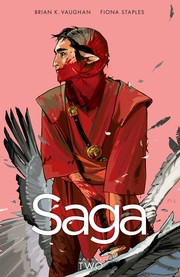
Saga, Volume 2
Alana and Marko flee with baby Hazel while exes, princes, and ghosts close the net.
2,028-word summary · 9 min read
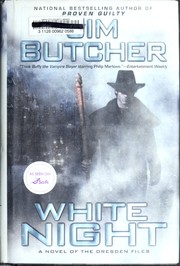
White Night
Wizard Harry Dresden hunts fear-feeding White Court killers preying on Chicago's minor talents, reunites with Elaine Mallory, and faces a coup at Chateau Raith.
2,521-word summary · 11 min read
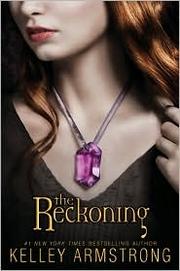
The Reckoning
Necromancer Chloe Saunders and her gifted friends raid Edison labs in the Darkest Powers finale, chasing rescue and freedom together as hidden powers break…
2,955-word summary · 13 min read
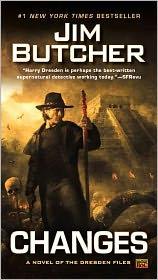
Changes
Harry Dresden learns he has a seven-year-old daughter Maggie, hidden for years. The Red Court seizes her for a bloodline rite, forcing him toward Chichen Itza.
2,855-word summary · 13 min read

Belladonna
Poison-immune orphan Signa Farrow hunts a gothic killer at Thorn Grove with Death as ally and suitor, while cousin Blythe fades and her ghost mother asks for…
2,868-word summary · 13 min read
The Eyre Affair
Literary detective Thursday Next chases a villain who kidnaps Jane Eyre from her own novel in an alternate 1985 England.
1,929-word summary · 9 min read