
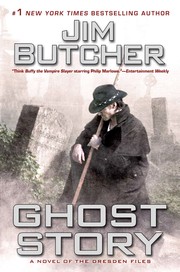
Ghost Story
1,978-word summary 9 min read 481 pages in the book
- First published
- 2011
- Publisher
- Roc
- Pages
- 481
- ISBN
- 9780451463791
- Series
- The Dresden Files (#13)
Reading options
What's inside (8 sections)
The twelfth Dresden Files novel ends with Harry Dresden shot through the chest and falling into Lake Michigan, and this book opens with him standing in the water, confused, next to a boat he can no longer touch. If that sounds like a cheap trick, it is worth saying clearly what Ghost Story is not: it is not a reset button, and it is not a victory lap. It is the book where Butcher makes his hero spend an entire novel helpless, watching the consequences of his own decisions land on the people he loves, and it is the best emotional payoff in the series so far.
Dying Is Not the Scary Part
Harry wakes in the Between, the borderland between life and death, and is met by Captain Collin Murphy, Karrin Murphy's late father, who drives him around in a rusted Skylark and assigns him a case. There was an irregularity in Harry's death, he is told. He is being sent back as a spirit to find out who killed him, because whatever happened has bent some rule that even the afterlife cares about.
As a ghost, Harry is useless in almost every way that matters. He cannot touch anything. His magic is a shadow of what it was. Harry Dresden's entire identity, for twelve books, has been the guy who shows up and sets things on fire, and this novel strips that away and asks who is left. The answer, it turns out, is a man who keeps trying anyway, which is the most consistent thing about him across the whole series.
He goes to Mortimer Lindquist, the ectomancer, the only person in Chicago who can see and hear him. Mort has spent his entire career as a punchline for Harry and the rest of the magical community, a timid little man who communicates with the dead for money. Now Mort is the only bridge Harry has to the living world, and the book gives him a promotion and a tragedy in the same volume.
From Mort, Harry learns two things he cannot process. The first is that he has been dead for six months. The second is that the world has moved on without him.
Chicago After the Red Court
Changes ended with the annihilation of the Red Court of vampires, and the power vacuum has been filled by the Fomor, a nasty aquatic faction that snatches people from the shores of Lake Michigan and does not do anything as straightforward as declaring war. The White Council is stretched thin. The Chicago police department has fired Karrin Murphy, who has become the leader of a ragtag alliance defending the city. Mab is still Mab. And Harry's friends have been fighting all of this without him, which is exactly the punishment he deserves and the point the book is making.
Karrin Murphy is the anchor of the living-world chapters. She interrogates Harry rigorously at her house before she accepts that it is him, because she is a cop and because she has been burned by shapeshifters before. Their scenes have a weight they have never had, because for once Murphy is the one who can touch people and Harry is the one who cannot. The book's treatment of her grief is careful and unromantic. She breaks down when it finally lands that he is dead, and Harry cannot hug her, and that is the whole novel in one image.
Butters, the medical examiner who has become the series' most beloved supporting character, builds Harry a radio that lets him be heard and a ghost light powered by Bob the skull, which makes him visible. Bob, for anyone keeping score, is the spirit of intellect Harry left in Butters' care before he died, and the Butters-Bob partnership is one of the best things this book adds to the series. The scene where Harry gets to talk to his friends again, gathered around a table, is warm and funny and undercut by the fact that they can see how thin he is, how close to disappearing.
The Grey Ghost and the Corpsetaker
The villain of the book is a return, and a good one. The Corpsetaker was the body-hopping necromancer Harry killed in Dead Beat, and she is back in a new form, the Grey Ghost, using the confusion after Harry's death to hunt for a body she can steal. She has been terrorizing Mortimer Lindquist for weeks, trying to force his soul out so she can take his. She has also been working with the Fomor, and she has plans for Molly Carpenter, Harry's apprentice.
The Corpsetaker's method is the same as ever. She eats ghosts. The book calls the spirits she devours after the serial killer from Silence of the Lambs, and the name fits: she consumes them and gains enough power to manifest physically, which means every ghost Harry tries to recruit is a resource she can use against him. Harry has to build an army of the dead out of volunteers knowing that most of them will be eaten, and Butcher does not let him off that hook.
The middle of the book is where readers split. Harry's spirit investigation is limited, by design, to detective work and persuasion, and some of the logistics of moving ghosts around Chicago get repetitive. The pacing flag is real. The scenes with Mort, Sir Stuart Winchester, and the strange society of the dead are the most inventive material Butcher has written, and the assault on the Corpsetaker's hideout in an abandoned meatpacking plant is a great set piece, but the first half of the novel sits still for longer than it should.
Sir Stuart Winchester is the best new character in the book, Mort's colonial-marine ancestor, a ghost who has been dead for centuries and who gives Harry his memory-bullet pistol as a badge of authority over the army of the dead. He is dignified, practical, and quietly hilarious, and the way he chooses to spend his afterlife says everything about what the book thinks heroism is.
The Fomor thread is quieter than the Corpsetaker plot and just as important. The Fomor have an agent named Listen working the city, recruiting the desperate and the angry, and the book shows the occupation in the background of every street scene: fishermen who have lost their boats, neighborhoods that are thinning out, a child's shoe on a pier. Harry cannot fight them, because a ghost cannot punch a warlord, so Butcher uses the Fomor to raise the temperature of the whole novel. The Paranet kids, led by Fitz, the young man Harry has been helping since White Night, are the human cost of that pressure. They are teenagers running a support network for minor practitioners in a city where monsters now operate openly, and watching them try to protect their own while Murphy's alliance holds the line is the book's clearest image of what Harry left behind.
The assault goes wrong in exactly the right ways. Harry drops the wards and his living allies, Murphy, Butters, Will Borden and the werewolves, Fitz and the young Paranetters, storm the building, but the Corpsetaker consumes the spirits of the strike force and takes Butters' body hostage, then goes for Molly. Harry follows her into Molly's mind and finds the battlefield he has been training her for since she was a teenager. It is Molly, with Mort's help, who beats the Corpsetaker, and the book is smart to let the apprentice win the fight.
The Answer to the Question
Here is the reveal, and it is the reason to read this book even if ghost logistics bore you. Harry did not just happen to die. Knowing that Mab was going to turn him into a monster as her Winter Knight, he hired Kincaid, the assassin, to kill him, and then had Molly erase the memory so that Mab could not find out. Harry Dresden arranged his own murder as an act of mercy to the world.
But that is not the whole answer. Something interfered. A fallen angel whispered into the most vulnerable moment of his life, and the book's argument is that Harry would never have made the choice he made if he had not been pushed. The phrase that gets whispered is "And it was all your fault, Harry," and it weaponizes the exact guilt that has driven him since book one. The intervention gives Uriel, the archangel, the opening he needs to respond, which is why the rules of the afterlife are bent and why Harry is walking around as a ghost.
This is why the book matters in the arc of the series. It is not about whether Harry survives, because of course he survives. It is about the fact that a good man can be talked into suicide by an enemy who knows which sentence to use, and that the fix is not a grand redemption but a quiet correction. When Uriel appears and offers Harry a job, or the option of What Comes Next, the choice Harry makes is to see his loved ones first. He gets to watch Molly leading the fight, he gets to see Maggie, his daughter, safe with the Carpenter family, and then he chooses to go back.
Demonreach and the Knight
Harry wakes on Demonreach Island in Lake Michigan, where his body has been cared for, for six months, by Mab and by the island's own spirit. His first conversation after resurrection is with Mab, who is both furious and satisfied, and with Uriel, who balances the fallen angel's whisper with seven words of his own: "Lies. Mab cannot change who you are."
Harry's answer to Mab is the hinge the rest of the series turns on. He will be her Winter Knight, but he will do it his way, and the book trusts the reader to understand how thin that promise is. Cold Days, the next novel, is about whether he can keep it.
There are grace notes here that deserve their own paragraph. The headstone in Graceland Cemetery, bought years ago by an enemy, reads, "HERE LIES HARRY DRESDEN. HE DIED DOING THE RIGHT THING." The grave is empty, because Mab took the body, and the statue ghost Inez delivers the line like a benediction. The Bob-versus-Evil-Bob subplot, in which the knowledge Bob cut out of himself in Dead Beat returns as an enemy, is resolved without either side being destroyed, leaving a thread for later. And the epilogue introduces the parasite, a mystery in Harry's skull that the next books pay off.
The Case Against and the Case For
Ghost Story has a real pacing problem in its second act, and it does not have a conventional villain with a face, which frustrated readers who wanted the usual Harry Dresden stomp. Some of the ghost rules are laid out more than once. The book is also the most directly dependent of any Dresden novel on the ones that came before it; if you do not know who Mort is, or why Harry's death matters to Murphy, or what happened in Dead Beat, most of the emotion will not land.
What it does better than any book in the series is pay off consequences. Harry has to see the world he left behind, and it is messier and more fragile without him. The book also completes a turn the series had been making for several volumes: the wizard who tried to fix everything alone learns that his friends are better at fixing things than he is, and that the answer to guilt is not more sacrifice but staying alive to do the work. It is the middle chapter of the series in more than one sense, and it is the one I think about the most.
FAQ
Is Ghost Story a good starting point for the Dresden Files?
No. It follows directly from Changes, the twelfth book, and the emotional payoff depends on knowing Harry's friends and his long history with them.
Who killed Harry Dresden?
Harry arranged his own death, hiring the assassin Kincaid as part of a plan he then had Molly erase from his memory so Mab could not learn of it.
Does Harry get his body back?
Yes. At the end of the book he wakes on Demonreach Island, where Mab and the island's spirit kept his body safe for six months.
Similar books
More from The Dresden Files first, then related titles.
Storm Front
Wizard PI Harry Dresden hunts heart-explosion killer in Chicago.
2,563-word summary · 11 min read
Fool Moon
Wizard Harry Dresden hunts a full moon killer through Chicago werewolf packs.
2,855-word summary · 13 min read
Grave Peril
Chicago ghosts turn murderous as Harry Dresden faces a vengeful sorcerer and Bianca's vampire trap.
3,484-word summary · 15 min read
Summer Knight
Harry refuses Mab to solve a Summer Knight murder and stop fairy war.
2,147-word summary · 10 min read
Death Masks
Wizard Harry Dresden hunts the stolen Shroud of Turin while dueling a vampire lord and facing fallen angels.
2,979-word summary · 13 min read
Blood Rites
Wizard Harry Dresden guards a porn set from entropy curses while learning brother Thomas and fighting Black Court nest.
2,211-word summary · 10 min read
Dead Beat
Wizard Harry Dresden hunts the Word of Kemmler through necromancers to stop a Halloween godmaking rite.
2,883-word summary · 13 min read
Proven Guilty
Warden Harry defends teen Molly from White Council while fear phages stalk con.
2,068-word summary · 9 min read
White Night
Wizard Harry Dresden hunts fear-feeding White Court killers preying on Chicago's minor talents, reunites with Elaine Mallory, and faces a coup at Chateau Raith.
2,521-word summary · 11 min read
Small Favor
Harry owes Mab a favor and must find Marcone while Denarians hunt a holy girl.
2,741-word summary · 12 min read
Turn Coat
Morgan asks Harry for sanctuary as the Council calls him traitor.
2,590-word summary · 12 min read
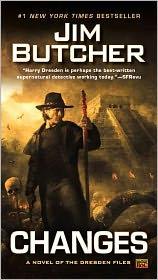
Changes
Harry Dresden learns he has a seven-year-old daughter Maggie, hidden for years. The Red Court seizes her for a bloodline rite, forcing him toward Chichen Itza.
2,855-word summary · 13 min read
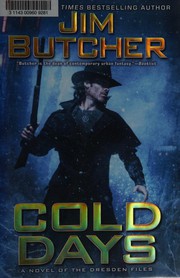
Cold Days
Back from the dead as the Winter Knight, Harry Dresden must follow Mab's order to kill an immortal and defend Demonreach on Halloween night.
2,361-word summary · 10 min read
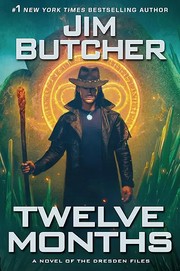
Twelve Months
A grieving Dresden rebuilds Chicago over one year while ghouls gather and Thomas fades.
2,193-word summary · 10 min read
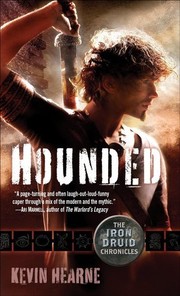
Hounded
A two-thousand-year-old druid runs a bookshop in Arizona, hides from an Irish god who wants his sword back, and talks to his dog.
2,159-word summary · 10 min read

Magic Burns
A magic flare hits Atlanta, and mercenary Kate Daniels must recover stolen maps, find a missing witch, and keep a teenage girl alive while Celtic gods try to…
2,021-word summary · 9 min read
The Golem's Eye
Two years after The Amulet of Samarkand, Nathaniel is a rising bureaucrat, Bartimaeus is his unwilling servant again, and something made of clay is tearing…
2,299-word summary · 10 min read

The Hazel Wood
Alice Proserpine has spent her life running from bad luck. When her mother vanishes, she follows a trail of fairy-tale clues to her grandmother's estate and…
2,064-word summary · 9 min read
Magician: Apprentice
An orphan kitchen boy and a smith's son grow up in a frontier castle just as invaders from another world open a rift and begin a war that will change both of…
2,114-word summary · 9 min read
The Bane Chronicles
Eleven stories across five centuries follow Magnus Bane from a ban in Peru to his first date with Alec in this illustrated Shadowhunter companion.
2,470-word summary · 11 min read
Sourcery
A dying wizard hides his soul in a staff, his eighth son becomes a sourcerer strong enough to break the world, and Rincewind is sent to stop him with a sock.…
2,404-word summary · 11 min read
The Awakening
Chloe Saunders flees Lyle House with Derek, Simon and friends while her necromancy wakes fully and the Edison Group hunts them.
2,428-word summary · 11 min read

Magic Bites
A broke Atlanta mercenary takes her murdered guardian's last case and walks into a war between vampires and shapeshifters.
2,272-word summary · 10 min read
Iron Kissed
Mercy repays Zee by hunting a fae killer, clears his name, and finally chooses between Adam and Samuel.
2,944-word summary · 13 min read
Dead Witch Walking
Witch and runner Rachel Morgan quits the agency with a death mark on her head and hunts an untouchable crime lord.
2,709-word summary · 12 min read
Blood Bound
Coyote mechanic Mercy Thompson stands with vampire friend Stefan against a demon driven rival while pack ties strain.
2,636-word summary · 12 min read
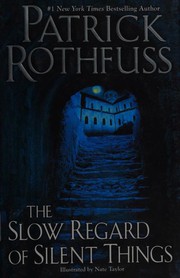
The Slow Regard of Silent Things
Auri tends the Underthing through seven days of naming and small rituals.
2,491-word summary · 11 min read
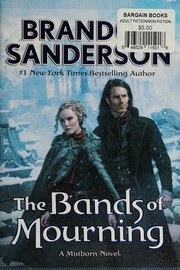
The Bands of Mourning
Wax and Wayne hunt a mythical metalmind while southern visitors and the Set close in.
2,461-word summary · 11 min read
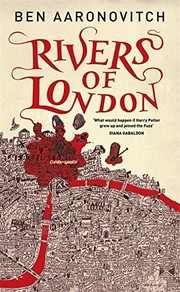
Rivers of London
A London constable takes a statement from a ghost and trains as a wizard, policing river gods and a riot spirit.
2,886-word summary · 13 min read
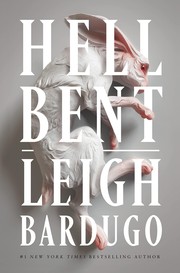
Hell Bent
Alex Stern risks Yale and Lethe to pull Darlington from Hell through a hidden gate.
2,994-word summary · 13 min read