
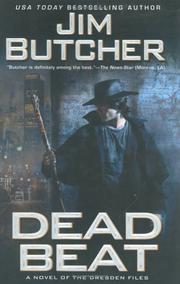
Dead Beat
2,883-word summary 13 min read 396 pages in the book
- First published
- 2005
- Publisher
- Roc
- Pages
- 396
- ISBN
- 9780451460271
- Series
- The Dresden Files (#7)
Reading options
What's inside (8 sections)
I picked this up right after Blood Rites because that ending left me rattled about Thomas, and I wanted to see where Harry stood with his brother and the Council. Dead Beat turned out to be the Halloween book, the one fans always mention when they rank the series. It is book seven of The Dresden Files, the first one released in hardcover, published May 3, 2005 by Roc with 396 pages in that first edition. I read it in late October with rain on the windows, which felt correct. Zombies, necromancers, a hunt through Chicago libraries. It earns its spot as a favorite for a lot of readers, and I get why, even though one thread tested my patience.
Harry Dresden is Chicago's only professional wizard, working as a private investigator, broke most months, living in a basement apartment with a skull that talks and a big dog who leans on people. By this point he has dueled a vampire lord, tangled with the Knights of the Cross, survived family revelations, and picked up a favor debt or two he would rather forget. He is also under Council scrutiny that never fully lifts. Dead Beat drops him into the worst week of his year with a clock ticking toward Halloween, when the barrier between the living and the dead runs thin and big workings become possible.
Three days before Halloween
The squeeze starts fast. Mavra, the Black Court vampire Harry crossed in earlier books, shows up with an order, not a request. Find the Word of Kemmler for her within three days, or she will frame Karrin Murphy for the murder of one of Mavra's own people, a killing tied to last year. Murphy is Harry's friend on the Chicago police, the honest cop who runs the occult cases and takes heat for calling Harry in. She has already risked her badge for him more than once. The threat lands because Harry knows Mavra means it and knows the system well enough to make a frame stick.
Almost a year has passed since Blood Rites in story time. Harry is still carrying that book's fallout. His brother Thomas, the White Court vampire with an incubus hunger, is closer now but still complicated. His dog Mouse, the temple dog puppy from the last book, is growing fast and starting to show what he is. Murphy is under pressure at work. The vampire war with the Red Court grinds on in the background. Butcher does not stop for a long recap. He drops a line here and there and trusts you to keep up, which I liked. If you start here, you will follow the main case, but Murphy's danger and Thomas showing up will hit harder if you have read the prior two.
What makes the blackmail sing is that Harry cannot go to the usual authorities. The White Council, his own employers in the wizard world, would not protect Murphy from a vampire frame, and they have their own reasons to watch Harry. So he has to find this Word of Kemmler thing before he even knows what it is. A word? A book? A spell? A person? He starts asking around, and the people who know go pale. Kemmler, it turns out, was the most feared practitioner of death magic in a thousand years. The Council killed him years ago, or thought they did thoroughly enough, and his writings were supposed to be gone. The idea that a copy survived, and that several someones are hunting it now, changes the shape of the week from a favor for a vampire into a race.
The skull who used to belong to Kemmler
Bob is the spirit who lives in a skull on Harry's shelf, a repository of lore with a smart mouth and a love of trashy romance novels. He is usually comic relief and a walking library. Here he becomes the scariest thing in the apartment. Harry learns that Bob once belonged to Kemmler himself. The goofy assistant he chats with over candles carried, somewhere deep, the imprint of a monster.
I will not spoil the exact mechanics, because discovering them with Harry is genuinely creepy, but there is a hidden layer inside Bob, a leftover will that wakes when Kemmler's name gets spoken too much and his work draws near. Harry nearly dies in his own living room learning this. He has to make a fast brutal choice about how to handle a friend who might also be a weapon. It forces him to treat Bob as a person with a past rather than a tool, and it sets the moral tone for the rest of the book. Power leaves stains. Even stored knowledge can bite.
This section also deepens the Kemmler history without drowning us. Kemmler trained apprentices, wrote down workings other wizards would not touch, and kept coming back after defeats until the Council put him down for good. His big idea, the one everyone wants now, involves a rite on Halloween that lets a practitioner call up a source of wild power and keep it, rising toward godhood at the cost of thousands of lives. The details come out in pieces through Bob, through Council contacts, and through a second text Harry has to track down. Butcher paces the reveals well here. Each answer raises the price of the next question.
My one wobble in these chapters: Harry keeps Bob's danger to himself longer than feels wise. I get it. Bob is his friend, and telling the Council would likely mean Bob's destruction. Still, with Murphy's life on the line and Halloween coming, the secrecy had me muttering at the page. It pays off emotionally later, but in the moment I wanted to shake him.
A morgue, a medical examiner, and a bookstore clerk
Waldo Butters walks into this series as a gift. He is the city medical examiner, a small nervous man with polka obsessed energy who plays in a band and faints at the wrong times and keeps showing up anyway. Harry finds him at the morgue about to be killed by Grevane, one of Kemmler's old apprentices, a necromancer with a dry rotted presence and no interest in witnesses. Harry pulls Butters out of that room by force and improvisation, and Butters spends the rest of the book trying to be useful while being very clear he is terrified.
Butters works because he is ordinary in a book full of powers. He asks the questions a normal person would ask. Why are the dead moving? Why Halloween? Why does Harry think a book can fix this? His fear never fully leaves, but he keeps driving, keeps running samples, keeps standing next to Harry when running would be smarter. By the end I cared about him more than about some of the powered players, which seems to be exactly Butcher's plan. If you have ever been the least qualified person in a scary room who stayed anyway, Butters is your guy.
The morgue fight also introduces the second text. Grevane is after a book called Die Lied der Erlking, a work about the Erlking, the lord of the Wild Hunt. To find a copy, Harry goes to Bock Ordered Books, a rare shop near the university run by Artemis Bock, a few blocks from the apartment shared by Billy and Georgia of the Alphas, the young werewolves who back Harry. There he meets Sheila, a clerk with total recall of everything she has read. She is warm, quick, flirty in a shy way, and clearly taken with Harry. She helps him chase the Erlking thread.
Sheila is not what she seems. Slowly, horribly, Harry realizes she is a shade of Lasciel, the fallen angel whose coin he picked up in Death Masks to save the son of Michael Carpenter, his friend among the Knights of the Cross. Taking up that coin to save a child left a shadow of the demon in his mind, and that shadow has been learning him, wearing a kind face to earn trust. She offers help for his soul, steady power if he will only reach out and take it. He refuses, and she stays anyway, talking in his head. That ongoing presence, part temptation and part company, becomes one of the series' longest threads, and it starts here in scenes that are quiet and queasy. A date that is not a date. A helpful summary that knows too much. A voice that sounds like care and wants to own him.
Three sets of bad guys, one old book
Halloween approaches and the field clarifies into three rival crews, each chasing the same rite. Grevane wants it as Kemmler's heir by training, brutal and direct. Cowl, another old apprentice working with his associate Kumori, wants it with a colder patience. Kumori is a necromancer too, but not one of Kemmler's students, which makes her motives harder to read. Then there is the Corpsetaker, called Capiocorpus in old texts, in this era wearing the life of Alicia Nelson, a past apprentice and an expert in mind magic, moving with a ghoul servant named Li Xian who does the wet work. Each crew has its own style, its own dead, its own angle on the Word and the Song.
Butcher juggles them without letting the middle turn into soup, mostly. Grevane smashes. Cowl schemes. The Corpsetaker slips inside heads and bodies in ways that made my skin crawl. Harry, caught between them and Mavra's deadline, decides he cannot beat them by chasing each lead separately. He goes to the White Council instead, and the war politics that have simmered for books boil over. The Wardens, the Council's enforcers, are stretched thin by the vampire war. Their Captain, Anastasia Luccio, runs security with a hard eye. Young Warden Carlos Ramirez, who admires Harry's style more than he should, shows up eager and brave and a little starstruck. Harry, to everyone's surprise including his own, ends up carrying Warden authority himself, which changes how the other Wardens treat him and how much backup he can demand.
The plan Harry settles on is desperate and very Harry. If every crew needs to summon and bind the Erlking to complete the godmaking rite, he will summon the Erlking first himself, on his own terms, and deny them the prize. To do that he needs the Song, the circle, the timing, and help he does not have. He recruits Butters for medical sense and steady hands. He calls Thomas, whose hunger and strength come with a cost Harry hates to ask him to pay. He leans on the Alphas for street level muscle. He even prepares to stand in front of the Council and argue for a move most of them think is suicide. The chapters where he lays out the ritual logic, what each book holds and why Halloween matters, are dense but clear. I followed the plan without needing to flip back, which is more than I can say for some middle books in long series.
A fair knock: with three crews plus Mavra plus the Council plus Lasciel whispering, some players blur. Cowl and Kumori, in particular, stay masks for a long time. That is intentional, mystery needs masks, but it means Grevane and the Corpsetaker carry most of the menace while Cowl waits. Readers who want every villain equally textured may feel shorted until later books pay Cowl off.
The Erlking and a dinosaur
The summoning sequence is the reason people love this book, and it lived up to the hype for me. Harry sets his circle, speaks the words, and calls the Erlking, master of the Wild Hunt, a High Sidhe of the Wyldfae who rides with hounds and hunger. The rite works. Which is immediately a problem, because working was only step one. Two cloaked figures move in the chaos and loose the Erlking from Harry's control, turning a contained summon into a wild hunt through Chicago streets with necromancers riding its edges.
What follows is big, loud, and oddly moving. Wardens fight beside Harry. Butters, who has no business on a battlefield, refuses to leave. Thomas shows up and pays prices that reminded me why his scenes with Harry ache. And then there is Sue. Sue is a full Tyrannosaurus skeleton in the Field Museum, and Harry, out of options and time, does what wizards in Butcher books do when theory fails. He gets practical with death magic he hates using, and he raises her. A zombie T. rex running through Chicago to body slam necromancers and eat zombies sounds ridiculous, and it is, and on the page it plays as pure joy and relief. After hundreds of pages of dread, watching Sue toss cars and scatter the dead felt like the book exhaling.
Butcher keeps the geography readable during mayhem, which I appreciated. Streets, museum steps, park dark, hospital lights in the distance. You always know where Harry is and what he is trying to protect. The magic has costs that stay visible too. Harry burns energy he does not have, takes hits that slow him pages later, and leans on Mouse, on Thomas, on Ramirez, on Luccio's people, because alone he would die. The line between clever and reckless blurs in a way that feels true to Harry. He wins by preparation and by asking for help, not by suddenly becoming the strongest person present.
The aftermath lands quieter and better than the battle. Harry finally gets his hands on a copy of the Word of Kemmler. He hands it to Mavra as ordered, buying Murphy's safety, but he pairs the handoff with a warning I found chilling. Threaten his friends again, he tells her, and he will stop holding back. He will take up whatever power he must, the book's lore, Lasciel's coin, even an offer from the Queen of the Winter Court, and he will make ending Mavra his work. It is not a bluff scene. It reads as a man marking where his restraint ends. Murphy lives, the city survives Halloween, and Harry walks away with more authority, more enemies, and a voice in his head that sounds helpful.
What I loved and what wore me down
Butters is the soul of this book for me. His arc from morgue coward to someone who stands in the hunt without pretending to be brave gave the story a human scale the necromancers lack. I also loved the library legwork. Bock's shop, the search for the Song, Sheila's eidetic summaries that curdle on reread. Those scenes remind me why I like Dresden best when he is a detective first. Talk to clerks, check publication histories, compare translations, then run for your life.
The Lasciel thread is the one that wore me down a little, at least here. I understand its purpose. A tempter who knows Harry's memories and speaks as a kind woman is creepier than a horned figure shouting. But in this book her scenes repeat a beat: offer, refusal, lingering almost. By the third cycle I got it. He is tempted and resisting and tired. Later books do more with her, I am told, and the seed here is strong. In the moment, though, I wanted one fewer conversation in his head and one more scene with Murphy doing police work, since her life is the stated stake and she gets less page time than the villains.
Structure wise, this is a long book that moves. The Roc hardcover runs just under four hundred pages, and only the middle council stretch dragged for me, when names and old wars stack up. The opening blackmail, the morgue rescue, the bookstore turn, the summon. Those four movements carry. Tone stays wry without undercutting fear. Harry jokes when he is scared, which is often, but Butcher lets the jokes fail when someone he loves is bleeding. That control keeps the humor from cheapening the horror.
Who should read it? If you like urban fantasy where magic has rules and prices, detectives who bleed, and Halloween set pieces done right, start at book one with Storm Front and work to here. You could start here and follow the case, since Butcher restates the essentials, Bob, the coins, the war, Murphy. But Thomas, Butters, and Lasciel land harder with context. Content notes: death magic and corpses throughout, body horror with zombies and ghouls, vampire threats, torture talk, some language, moderate gore in battle, no explicit sex. It is darker than the Bailey book on this same list, but the hope holds. Friends show up. The dog leans. The doctor stays.
I finished admiring how much this series leveled up with the move to hardcover. Bigger canvas, same voice. Harry learns he can ask institutions for help without surrendering to them, and he learns the price of keeping secrets from people who would help if told. Sue will stay with me a while, not just as a stunt but as proof of the book's thesis. Even old bones can be called to protect the living when someone cares enough to call. Chicago survives another Halloween because a broke wizard, a scared doctor, a hungry brother, and a few young Wardens refused to let the dead collect.
FAQ
When was Dead Beat published?
Roc published it on May 3, 2005. The first hardcover runs 396 pages with ISBN 9780451460271.
Is Dead Beat part of a series?
Yes, it is book 7 in The Dresden Files, after Blood Rites and before Proven Guilty.
Do I need earlier books first?
You can follow the case, since Butcher restates Bob, the coin, and the war, but Death Masks and Blood Rites give Lasciel and Thomas full weight.
Similar books
More from The Dresden Files first, then related titles.
Storm Front
Wizard PI Harry Dresden hunts heart-explosion killer in Chicago.
2,563-word summary · 11 min read
Fool Moon
Wizard Harry Dresden hunts a full moon killer through Chicago werewolf packs.
2,855-word summary · 13 min read
Grave Peril
Chicago ghosts turn murderous as Harry Dresden faces a vengeful sorcerer and Bianca's vampire trap.
3,484-word summary · 15 min read
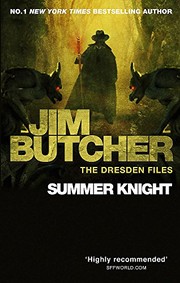
Summer Knight
Harry refuses Mab to solve a Summer Knight murder and stop fairy war.
2,147-word summary · 10 min read
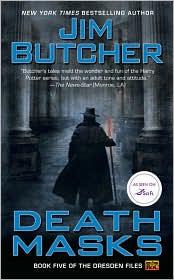
Death Masks
Wizard Harry Dresden hunts the stolen Shroud of Turin while dueling a vampire lord and facing fallen angels.
2,979-word summary · 13 min read
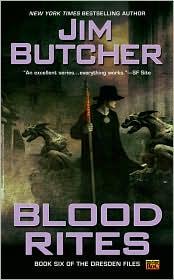
Blood Rites
Wizard Harry Dresden guards a porn set from entropy curses while learning brother Thomas and fighting Black Court nest.
2,211-word summary · 10 min read
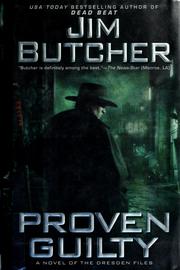
Proven Guilty
Warden Harry defends teen Molly from White Council while fear phages stalk con.
2,068-word summary · 9 min read
White Night
Wizard Harry Dresden hunts fear-feeding White Court killers preying on Chicago's minor talents, reunites with Elaine Mallory, and faces a coup at Chateau Raith.
2,521-word summary · 11 min read
Small Favor
Harry owes Mab a favor and must find Marcone while Denarians hunt a holy girl.
2,741-word summary · 12 min read
Turn Coat
Morgan asks Harry for sanctuary as the Council calls him traitor.
2,590-word summary · 12 min read
Changes
Harry Dresden learns he has a seven-year-old daughter Maggie, hidden for years. The Red Court seizes her for a bloodline rite, forcing him toward Chichen Itza.
2,855-word summary · 13 min read
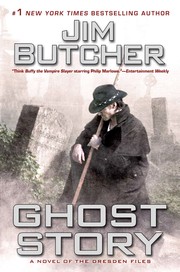
Ghost Story
Dead but not gone, Harry Dresden returns as a spirit to find his killer, protect the friends he left behind, and learn why the afterlife gave him a second…
1,978-word summary · 9 min read
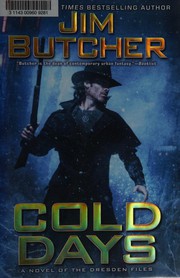
Cold Days
Back from the dead as the Winter Knight, Harry Dresden must follow Mab's order to kill an immortal and defend Demonreach on Halloween night.
2,361-word summary · 10 min read
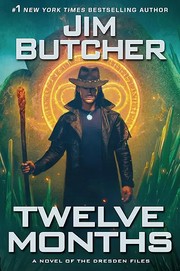
Twelve Months
A grieving Dresden rebuilds Chicago over one year while ghouls gather and Thomas fades.
2,193-word summary · 10 min read
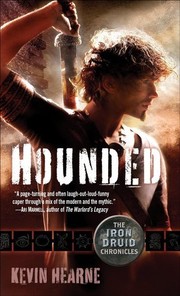
Hounded
A two-thousand-year-old druid runs a bookshop in Arizona, hides from an Irish god who wants his sword back, and talks to his dog.
2,159-word summary · 10 min read

Magic Burns
A magic flare hits Atlanta, and mercenary Kate Daniels must recover stolen maps, find a missing witch, and keep a teenage girl alive while Celtic gods try to…
2,021-word summary · 9 min read
The Golem's Eye
Two years after The Amulet of Samarkand, Nathaniel is a rising bureaucrat, Bartimaeus is his unwilling servant again, and something made of clay is tearing…
2,299-word summary · 10 min read
Circus of the Damned
A rogue master vampire arrives in St. Louis and Anita Blake is caught in an undead turf war, with a science teacher in the crossfire.
2,757-word summary · 12 min read
The Hazel Wood
Alice Proserpine has spent her life running from bad luck. When her mother vanishes, she follows a trail of fairy-tale clues to her grandmother's estate and…
2,064-word summary · 9 min read
Magician: Apprentice
An orphan kitchen boy and a smith's son grow up in a frontier castle just as invaders from another world open a rift and begin a war that will change both of…
2,114-word summary · 9 min read
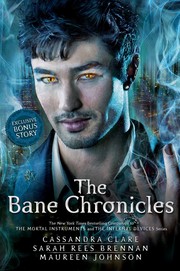
The Bane Chronicles
Eleven stories across five centuries follow Magnus Bane from a ban in Peru to his first date with Alec in this illustrated Shadowhunter companion.
2,470-word summary · 11 min read
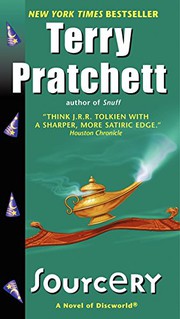
Sourcery
A dying wizard hides his soul in a staff, his eighth son becomes a sourcerer strong enough to break the world, and Rincewind is sent to stop him with a sock.…
2,404-word summary · 11 min read
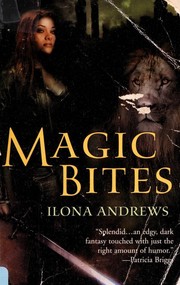
Magic Bites
A broke Atlanta mercenary takes her murdered guardian's last case and walks into a war between vampires and shapeshifters.
2,272-word summary · 10 min read
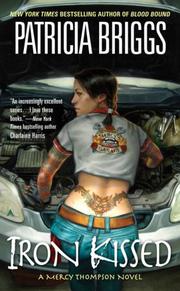
Iron Kissed
Mercy repays Zee by hunting a fae killer, clears his name, and finally chooses between Adam and Samuel.
2,944-word summary · 13 min read
Dead Witch Walking
Witch and runner Rachel Morgan quits the agency with a death mark on her head and hunts an untouchable crime lord.
2,709-word summary · 12 min read
Blood Bound
Coyote mechanic Mercy Thompson stands with vampire friend Stefan against a demon driven rival while pack ties strain.
2,636-word summary · 12 min read
The Slow Regard of Silent Things
Auri tends the Underthing through seven days of naming and small rituals.
2,491-word summary · 11 min read
The Bands of Mourning
Wax and Wayne hunt a mythical metalmind while southern visitors and the Set close in.
2,461-word summary · 11 min read
Rivers of London
A London constable takes a statement from a ghost and trains as a wizard, policing river gods and a riot spirit.
2,886-word summary · 13 min read
Hell Bent
Alex Stern risks Yale and Lethe to pull Darlington from Hell through a hidden gate.
2,994-word summary · 13 min read