

Magic Burns
2,021-word summary 9 min read 272 pages in the book
- First published
- 2008
- Publisher
- Ace
- Pages
- 272
- ISBN
- 9780441015832
- Series
- Kate Daniels (#2)
Reading options
What's inside (10 sections)
Second books in urban fantasy series are usually where the machinery shows. The first book introduces the world, the second has to prove there is a story worth staying for. Magic Burns does that by making the world bigger and the hero smaller. Kate Daniels starts the book as a mercenary with a sword and a bad attitude, and ends it as a woman with a child to protect. The plot is about Celtic gods trying to break into Atlanta. The story is about Kate accidentally acquiring a family.
Ilona Andrews is the pen name of a husband and wife writing team, and the Kate Daniels books have a particular flavor: fast, funny, violent, and surprisingly domestic. Kate kills things and then worries about whether her teenage ward has eaten. The mix should be jarring, and somehow it is not. Magic Burns is the book where that mix starts to work.
A City Made of Waves
The series is set in a version of Atlanta where magic and technology alternate in waves. When magic is up, cars die, guns jam, and creatures that belong in old stories come out. When tech is up, the world looks almost normal. Once every seven years, the waves become a flare, a period when magic runs wild and gods can manifest. Magic Burns takes place during one of those flares.
That premise is a gift for a plot. It lets the city become strange without warning. A street can be ordinary on one page and a swamp full of things with teeth on the next. It also gives the book a clock. The flare is coming, the magic is getting stronger, and everyone with a little power is trying to use it before the window closes.
Kate is a mercenary who cleans up magical problems for money. She is good with a sword, bad with authority, and secretive about her own magic. She has a sword named Slayer, a neighbor who is a witch, and a tendency to take jobs that are more dangerous than they pay. She is also lonely in a way she would never admit. The book knows this even when Kate does not.
Two Jobs, One Girl
The plot starts with two cases that look unrelated. The Pack, Atlanta's organization of shapeshifters, hires Kate to recover a set of stolen maps. A thirteen-year-old street kid named Julie asks her to find her missing mother, Jessica. Kate takes both jobs because she needs the money and because Julie reminds her of herself at that age.
Julie is the best thing in the book. She is not cute. She is wary, mouthy, and used to being let down. She has been living on the streets with a boy called Red, and she has learned not to trust adults who promise to help. Kate does not promise much. She just starts looking, and that is enough to make Julie follow her around.
The two cases turn out to be connected. Jessica was a witch, part of a small coven that tried to summon the goddess Morrigan and got something else instead. The summoning went wrong, and the thing that came through was Morfran, a Celtic power who wants to use the flare to manifest fully in the world. To do that, he needs a necklace, an old artifact with enough power to anchor him. Red had the necklace. Red gave it to Julie. Now everyone wants Julie.
This is a good plot engine because it keeps the stakes personal. Kate is not trying to save the world in the abstract. She is trying to keep a thirteen-year-old alive. The fact that the world happens to be attached to the same outcome is a bonus.
Bran and the Hound
The crossbowman is the book's most interesting new character. Bran is the Hound of Morrigan, able to step into her mist and appear where he is not expected. He is trying to stop the invasion, and he is not particular about who gets hurt along the way. Kate and Bran spend most of the book distrusting each other and then working together because the alternative is worse.
Bran gives the story its mythology. Through him, Kate learns about Morrigan, Morfran, and the Fomorians, the sea demons who have allied with Morfran. The Fomorians are led by Bolgor the Shepherd, a creature who wants the necklace and is willing to trade a child for it. The mythology is not deep, but it is coherent, and it gives the violence a shape.
Andrea is the other important addition. She is Kate's friend, a fellow mercenary, and a shifter who has been hiding what she is. In Magic Burns, Kate learns the truth, and the book treats it as a betrayal and a relief at the same time. Andrea's secret gives the two women something to fight about, and the fight is more interesting than the usual banter. It also sets up a thread that runs through the rest of the series.
The city itself is a character. Andrews writes Atlanta as a place with neighborhoods, guilds, and bad traffic. The flare changes the rules of the streets, but it does not erase them. Kate still has to pay rent, deal with clients, and find parking. That mundane texture is what makes the supernatural parts land. If everything were magic, nothing would feel strange.
The best scenes with Bran are the quiet ones. He is not a love interest. He is a soldier who has been fighting a war for a long time and has forgotten how to talk to people. Kate recognizes something in him, a person who has made himself useful so he does not have to be known. Their conversations are short and a little sad. When he dies in the final battle, it lands because the book has not oversold him.
Curran and the Pack
Curran, the Beast Lord, is the other major presence. He is a lion shifter, the alpha of the Pack, and a man who is used to being obeyed. Kate is not interested in obeying. Their relationship in this book is mostly negotiation by insult. He hires her, she annoys him, he saves her life, she resents it. The romance is there, but it is not the main event.
What I like about the Pack in this book is that it functions as a community rather than an army. There are politics, rivalries, and people who do not like Kate. Derek, the young werewolf, is a good example. He is loyal, reckless, and convinced he is invincible. Kate treats him like a younger brother, which means she yells at him and then worries about him.
Curran's gesture with the soup is the moment fans remember. Kate is injured, exhausted, and refusing help. He brings her food and sits with her. It is a small thing, and it says more about him than any speech. The book is good at these gestures. It knows that romance in a violent world is often about who shows up after the fight.
The Trap
Bolgor takes Julie and offers Curran a trade: the necklace for the girl. Curran accepts, because the Pack protects children, and because he thinks he can control the exchange. It is a trap. Morfran gets the necklace, Julie is not returned, and the invasion begins.
This is the point where the book becomes a war story. Kate has to unite factions that do not trust each other: the Pack, the witch covens, the People, and Bran. The alliance is uneasy. Everyone has a reason to hang back. Kate's job is to make them move at the same time.
The battle is loud and messy, which is appropriate. The Fomorians come out of the water. Morfran manifests. The city's defenders fight in the streets and on the river. Bran gets Julie out, but Jessica is already dead, killed by the Fomorians. Bran dies in the fighting. Kate kills things she did not know she could kill, and the city survives.
The aftermath is where the book earns its ending. Kate does not get a clean victory. She gets a traumatized child, a dead ally, and a city that will need rebuilding. She also gets a reason to stop living only for herself. Julie becomes her ward. The last scenes are about paperwork, school, and a girl who does not trust adults learning that one of them might stay.
What the Book Does Well
Kate's voice is the main pleasure. She is funny in a dry, defensive way. She narrates violence with the same tone she uses for grocery lists. She is also capable. The book never makes her a victim waiting to be rescued. She gets rescued sometimes, and she hates it, but she also does the rescuing.
The pacing is excellent. Andrews writes action scenes that are easy to follow without being simple. The mystery unfolds in stages, and each stage raises the stakes. The book is also short enough to read in a couple of sittings, which suits the material. It does not pretend to be more than it is.
The found family is the emotional core. Kate, Julie, Andrea, Derek, and the Pack become a unit by accident. Nobody gives a speech about family. They just keep showing up for each other. That is more convincing than a speech.
What It Gets Wrong
The mythology can be dense. Andrews throws a lot of names at the reader, and if you do not know Celtic folklore, some of it slides past. Morrigan, Morfran, Bolgor, the Fomorians, the Hound: the book explains them, but the explanations sometimes stop the action.
The romance is also thin in this installment. Curran and Kate have chemistry, but the book is more interested in the plot than in the relationship. Readers who come for the romance may find it slow. Readers who come for the monster hunting will be satisfied.
Morfran is also a vague villain. He wants to manifest, he needs the necklace, and he is willing to use a child. That is enough to make him a threat, but not enough to make him memorable. Bolgor is more vivid because he has a personality and a voice. The final battle is exciting, but the enemy at the center of it is a concept rather than a character.
There is a lot of violence against children. Julie is threatened, kidnapped, and forced to witness her mother's death. The book does not linger on the cruelty, but it is there, and it gives the story a darker edge than the banter suggests. It is not a cozy urban fantasy. It is a book where the stakes are real and the good guys do not always save everyone.
Why It Works
Magic Burns works because it takes Kate seriously as a person, not just a fighter. The plot gives her a reason to care about someone else, and the book follows through on that change. By the end, she is still sarcastic and still dangerous, but she is no longer alone. That is a small arc, and it is enough.
The title is doing more work than it first appears. A magic burn is what happens when magic gets into a person and leaves a mark. Kate carries marks she does not explain, and Julie carries marks of a different kind. The book is full of people who have been changed by forces they did not choose. Some of them become monsters. Some of them become guardians. The difference is usually who stayed with them afterward.
It also works as a second book because it expands the world without losing the intimacy of the first. The Pack, the witches, the People, and the flare all get more detail. The series starts to feel like it has a future. If you liked Magic Bites, this is the book where the series finds its footing. If you did not, this one probably will not convert you. It is not a reboot. It is a continuation, and a good one.
FAQ
Do I need to read Magic Bites before Magic Burns?
Yes. Magic Burns is the second Kate Daniels book, and the world, the Pack, and Kate's relationships all build on the first one.
Who is the main villain in Magic Burns?
Morfran, a Celtic power summoned by mistake by a small coven, is trying to use the flare to manifest. He is allied with the sea demon Bolgor and the Fomorians.
What happens to Julie in Magic Burns?
Her mother is killed by the Fomorians, and Kate takes her in as her ward at the end of the book.
Similar books
More from Kate Daniels first, then related titles.
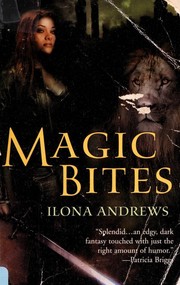
Magic Bites
A broke Atlanta mercenary takes her murdered guardian's last case and walks into a war between vampires and shapeshifters.
2,272-word summary · 10 min read
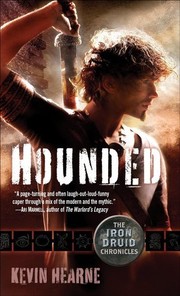
Hounded
A two-thousand-year-old druid runs a bookshop in Arizona, hides from an Irish god who wants his sword back, and talks to his dog.
2,159-word summary · 10 min read
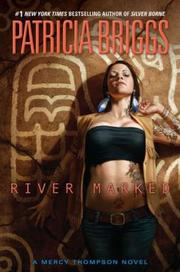
River Marked
Mercy and Adam's honeymoon on the Columbia River turns into a fight with an ancient river devil, and Mercy finally learns the truth about her father.
2,008-word summary · 9 min read

Blood Bonds
Oleander is chained in a Resistance camp, and her five Bonds have to find her before Silas Davies finishes what he started in this third Bonds that Tie book.
2,018-word summary · 9 min read

The Siren
Saved from a shipwreck in 1930, Kahlen becomes a siren who sings men to their deaths for the Ocean, until a boy in a college library makes her want a life she…
2,369-word summary · 11 min read

Lore
Lore Perseous, the last of a hunted bloodline, is pulled back into the Agon when a wounded Athena offers her revenge against the god who killed her family.
2,188-word summary · 10 min read
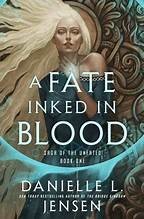
A Fate Inked in Blood
In Norse-inspired Skaland, a fish gutter hiding a goddess's blood is claimed by a jarl, bound by oath, and guarded by the son she cannot want.
1,971-word summary · 9 min read
Savage Bonds
Oli's deadly gift is out in the open, her Bond runs the show, and the Resistance is closer than ever in the second Bonds that Tie novel.
2,431-word summary · 11 min read

The Indigo Spell
Sydney Sage hunts an aging witch, learns forbidden magic, and finally admits she loves Adrian, while the Alchemist tattoo on her cheek may be controlling her.
2,604-word summary · 12 min read
Dreamfever
With the walls between worlds down and Mac broken by the Fae, Dreamfever is the darkest volume of the Fever series, and the one that changes everything.
2,007-word summary · 9 min read

Bitten
Elena Michaels is the world's only female werewolf, and keeping that world away from her human life in Toronto works fine until the Pack calls in a favor.
2,039-word summary · 9 min read
Silver Borne
Mercy hides a Fae book while Samuel slips and the fae close in.
2,571-word summary · 11 min read
Shadowfever
Mac Lane hunts the Sinsar Dubh in Dublin as Fae walls fail and Barrons secrets surface.
3,016-word summary · 13 min read
One Foot in the Grave
Cat hunts vampires with Bones while her Sire plots from the grave.
2,200-word summary · 10 min read
Half-Blood
Half-blood Alex trains at the Covenant while gods stir and rules close in.
2,601-word summary · 12 min read
Cry Wolf
Omega Anna joins Charles to hunt a rogue werewolf in Montana.
2,463-word summary · 11 min read
Bloodfever
Mac hunts the Sinsar Dubh in Dublin while Barrons tests her.
2,124-word summary · 9 min read
Broken Bonds
Oleander returns after five years on the run to face the five men she is bonded to, in J. Bree's 2021 opener of resentment, training, and slow trust.
2,582-word summary · 11 min read
A Light in the Flame
Held by Nyktos in the Shadowlands, Sera faces trials, Kolis and the Rot while broken trust is tested.
2,577-word summary · 11 min read
The Golden Lily
Sydney Sage guards Jill at Amberwood Prep in Palm Springs, studies forbidden magic, favors Adrian over Brayden, and faces Alchemist custody in this second…
2,988-word summary · 13 min read
Dead Witch Walking
Witch and runner Rachel Morgan quits the agency with a death mark on her head and hunts an untouchable crime lord.
2,709-word summary · 12 min read
Halfway to the Grave
Half vampire Cat hunts rogues to atone until Bones captures her and pulls her into vampire politics and love.
2,995-word summary · 13 min read
House of Earth and Blood
Bryce Quinlan hunts a killer in Crescent City with fallen angel Hunt Athalar.
2,496-word summary · 11 min read
First Grave on the Right
Charley Davidson is a private investigator in Albuquerque and the grim reaper. When three murdered lawyers come back as ghosts, her two jobs collide.
2,770-word summary · 12 min read
At Grave's End
Cat and Bones face Max, a zombie-raising ancient vampire, and a prophecy that ties their marriage to Patra's death in the third Night Huntress novel.
2,061-word summary · 9 min read
Masquerade
After Cordelia's death, Schuyler flies to Venice to find her exiled grandfather, then returns to the Blue Bloods as they prepare for a masked ball and a hidden…
2,543-word summary · 11 min read
The Golem's Eye
Two years after The Amulet of Samarkand, Nathaniel is a rising bureaucrat, Bartimaeus is his unwilling servant again, and something made of clay is tearing…
2,299-word summary · 10 min read
Demonglass
Sophie Mercer spends the summer at the Council's English estate, where two new demons, a suspicious host, and Archer's return complicate her plan to remove her…
2,771-word summary · 12 min read
Born at Midnight
Kylie Galen is sent to a camp for troubled teens and discovers it is a haven for vampires, werewolves, and witches, and that she may be something stranger…
2,310-word summary · 10 min read