
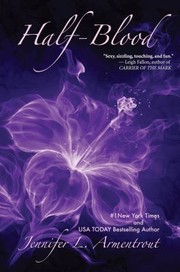
Half-Blood
2,601-word summary 12 min read 281 pages in the book
- First published
- 2011
- Publisher
- Spencer Hill Press
- Pages
- 281
- ISBN
- 9780983157205
- Series
- Covenant (#1)
Reading options
What's inside (8 sections)
I picked up Half-Blood because a friend kept pushing the Covenant books on me as the fast kind of young adult fantasy you finish in two sittings and then immediately want to argue about. She was right about the speed. This is the first book in the Covenant series, published in 2011 by Spencer Hill Press, and it runs a short 281 pages in the edition most people cite. It moves the way early 2010s paranormal books moved. Short chapters, a lot of training scenes, a school with strict rules, and a romance that is clearly not allowed and therefore clearly going to happen.
The narrator is Alexandria Andros, usually called Alex. She is seventeen and a half-blood, meaning one parent was a pure-blood descendant of the gods and the other was mortal. In this world that distinction shapes almost everything. Pures are the upper class. Halfs train to fight or end up serving pures in domestic roles. Alex spent three years away from the Covenant school with her mother, living off the grid in Florida, and when the book opens she has just been dragged back. Her mother is dead. Alex is behind on her training. Her uncle Marcus, who runs the school, tells her she has until the end of summer to catch up or she will be removed from the Sentinel track and placed into service. That threat hangs over the first half of the book.
What kept me reading was not the premise alone but how blunt Alex is about the unfairness of it. She knows the system is rigged. She says so. She still wants a place inside it because the alternative is worse.
Back at the Covenant with everything to prove
The Covenant is on Deity Island, off the coast of North Carolina, hidden from mortals. Students train in combat, study Greek myths and history, learn how to use daggers and how to spot daimons. Guards patrol. Instructors drill them until their hands blister. The island setting matters because no one can just leave. Once Alex is back, she is stuck there with people who remember her as the girl who ran.
Alex is placed with her old roommate Olivia, who is kind in a way that feels normal rather than saintly. Caleb, a friendly half-blood boy, treats her like no time has passed. Lea, another half-blood girl from a powerful family, treats her like dirt. I am probably forgetting some minor dorm politics here, but the broad shape is familiar from school stories. Alliances form fast. Rumors move faster. Alex has missed three years of technique, so she gets beaten in sparring, she gasses out on runs, and she has to sit through classes where everyone else already knows the material.
Her uncle Marcus is not warm about any of this. He is the Dean, a pure, and he acts like one. He gives her the summer deadline and assigns Aiden St. Delphi, a pure Sentinel in his early twenties, to train her privately before regular sessions. Those dawn sessions become the backbone of the book. Aiden is patient and strict at first, a bit distant. He corrects her footwork. He makes her repeat blocks until she wants to throw her dagger at him. Slowly she starts to close the gap.
There is a scene early on where she can barely get through the warmup without feeling sick, and a few weeks later she is holding her own longer against older students. Armentrout does not skip the boring part of getting better. She shows the bruises, the pulled muscles, the ice baths, the frustration of knowing what to do and not being able to make your body do it yet.
Pures, halfs, and daimons
The social order needs some explaining because the book keeps coming back to it. Hematoi is the term for pure-bloods, families who trace their blood back to gods. Half-bloods are the children of a Hematoi and a mortal. The pures have abilities tied to one of the four elements, air, earth, fire, water, plus the ability to compel halfs with their minds. A pure can order a half to do something and the half has to obey. That detail changes every interaction between the classes. A friendly pure is still someone who could force you to kneel if he chose to.
Halfs at eighteen face a kind of fork. Those who complete Sentinel training become fighters and Guards, protecting pures and hunting daimons. Those who fail or opt out can end up in service roles, working in pure households with little freedom. Girls in particular are pushed toward service in ways the book points out without turning it into a lecture. Alex is terrified of that outcome. Pride is part of it. The rest is that service means compulsion and boredom and being looked down on for the rest of her life.
Daimons are the predators here. They are halfs who have turned, or the offspring of mixed unions gone wrong depending on how you read the lore, and they feed on the aether in pure and half blood. They are fast, strong, and hard to kill unless you tag them with a titanium dagger through the heart and hold them while they turn to dust. Or that is the gist. The mechanics get filled in more in later books. For now what matters is that daimon attacks are rising, which makes the Covenant feel less safe than it should be.
The gods themselves are mostly distant in this volume. Their names come up in class. Their statues are around. Their old pacts shape the rules. Every so often something happens that suggests they are paying attention again, like an Oracle speaking out of turn or a Fury showing up where it should not be. Armentrout keeps that background hum low in book one. The focus stays on school life and survival.
One thing I appreciated is that the book does not pretend this hierarchy is fine. Characters defend it, especially pures who benefit, but Alex and even some pures question parts of it. Deacon, Aiden's younger brother, is a pure who refused Sentinel duty to live more freely, and people treat him as a disappointment. His presence shows there is more than one way to fail the expectations of this world.
Training at dawn and breaking rules by afternoon
A lot of the middle of Half-Blood is routine on purpose. Wake before sunrise. Train with Aiden. Eat. Classes. Train with everyone else. Homework. Patrol shifts. Sneak out. Repeat.
Armentrout uses that routine to build the relationship between Alex and Aiden without rushing it into declarations. He is older, he is her instructor, and pure and half relationships are forbidden by what characters call the Breed Rules. Both of them know it. That does not stop the long looks and the lingering after sessions. If forbidden romance annoys you, this stretch will try your patience. I went back and forth. On the one hand the age gap and the teacher dynamic made me uneasy, and the book does not interrogate that as much as I wanted. On the other hand Aiden is written as someone actively trying to hold the line, not as someone taking advantage, and Alex is the one who keeps pushing.
Outside training there are parties, a fall dance, and cafeteria politics. Laadan, who runs the infirmary, is one of the few adults who is kind without an agenda. Marcus remains distant. Lea keeps baiting Alex. Olivia tries to keep the peace. These scenes are not subtle, and some dialogue sounds exactly like 2011 in a way that may make you smile or cringe.
The action breaks up the school stuff at intervals. A daimon gets too close to the school. A patrol goes wrong. Alex freezes or acts rashly and has to live with it. One sequence I remember clearly involves an attack near the school grounds that leaves everyone shaken because the wards should have held. The book is good at showing how quickly bravado collapses when something real happens. Kids who bragged in training go quiet. Alex, who has actually seen a daimon kill, reacts differently from classmates who have only drilled for it.
There is also the matter of compulsion practice. Alex struggles with resisting orders from pures, which marks her as vulnerable. Aiden works with her on focus and will. Those scenes are less flashy than sparring but they matter more for where the series goes.
Seth and the Apollyon problem
About halfway through, Seth Diodoros shows up, and the energy of the book shifts. Seth is the Apollyon, a rare and extremely powerful half-blood who is meant to serve the gods directly when he comes into his full power. He is handsome in the way books like this always make the dangerous boy handsome, and he knows it. He teases Alex, invades her space, calls her pet names she hates, and picks fights with Aiden just by existing near him.
The lore says there is supposed to be one Apollyon in a generation. Having two should be impossible. Seth can sense something in Alex that no one else wants to name. He is drawn to her in a way that is part curiosity and part recognition. Their powers resonate when they touch. Static, heat, a tug behind the navel, whatever image Armentrout uses in a given scene. The point is clear. Alex may be the second Apollyon, the other half of a pair that was never meant to exist at the same time.
Seth is fun to read and exhausting in equal measure. He breaks rules openly because no one can punish him the usual way. He flirts with everyone. He says cruel things with a grin. Under that, the book hints at loneliness and being used by the adults around him. The Council and the Ministers want to control him. Instructors fear him. Other students either worship him or avoid him. Alex is one of the few people who talks back to him without flattering him, which only makes him more interested.
This is where the love triangle takes shape, though it is lopsided in book one. Aiden means duty and restraint. Seth means chaos and a pull she cannot explain. Alex wants Aiden and is linked to Seth and does not know what to do with either fact. If you dislike triangles on principle, you will see the rails being laid here and sigh. I sighed too, even while I kept turning pages to see what Seth would say next.
The mythology gets heavier in these chapters. Talk of the awakening, of akasha as a fifth and final power, of Oracles and prophecies, of gods taking sides. Some of it is explained in classroom scenes that read like study guides. Those passages dragged for me. You can feel Armentrout pausing the story to make sure you understand the terms for later books. Readers who love lore will not mind. I wanted to get back to the characters.
When the wards fail
The last third moves fast. Without giving away every beat, the Covenant suffers a serious breach. Daimons get inside spaces that were supposed to be protected. Adults who seemed in control make bad calls. Kids have to fight for real.
Alex is forced to use more power than she has ever used, and in front of witnesses. What happens confirms what Seth suspected and what Aiden feared. She can tap into abilities halfs should not have. The cord between her and Seth, a kind of invisible link that lets them sense each other and share power, snaps into place more strongly. It frightens her. It frightens Aiden more.
There are losses in this section that give the book weight. Caleb, who felt like safe ground for much of the story, gets hurt in the chaos. The infirmary scenes are messy and sad. People argue about who is to blame. Marcus has to face that his rules did not keep anyone safe. Aiden has to face that training Alex harder was never going to be enough against what is coming.
The climax also clarifies the mode of threat for the series. This is not random daimon attacks. Someone is letting them in or drawing them. The Furies appear in ways that suggest divine politics rather than simple monster hunting. An Oracle gives a warning that sounds like nonsense until it does not. Apollo, who takes an interest in Alex, shows up in a form that is both helpful and unsettling.
Alex ends the book alive but marked. She knows what she is, or partly knows. The Council knows enough to be nervous. Her relationship with Aiden is damaged by secrecy and by the fact that he kept things from her to protect her. Her link to Seth is stronger whether she wants it or not. The final pages set up Pure, the second book, without a cheap cliffhanger trick. The immediate danger is handled. The larger danger is just starting to show its shape.
What worked and what grated
The best part of Half-Blood is voice. Alex narrates in first person with a lot of snap. She is sarcastic when she is scared, which is often. That keeps the school sections alive even when the plot idles. Her friendship with Caleb and Olivia gives the book warmth. Her clashes with Lea give it friction, though Lea is pretty one-note here, mostly sneers and sabotage.
Pacing is uneven in a way that bothered me less than I expected. The middle repeats training and class beats. You could cut thirty pages and lose little. But because the book is short, the repetition feels like texture rather than bloat. At 281 pages it does not overstay, and the leanness is a plus against doorstop fantasy.
The criticism I keep coming back to is the handling of consent and power. The book wants you to see compulsion as wrong when daimons or bad pures use it, but it softens the issue when heroes are involved. Aiden resists compelling Alex and that is presented as proof of his goodness, which is fair, yet the fact that he could at any time never fully leaves the page. The same goes for the teacher and student setup and the age gap. Characters name it as a problem, but the story still rewards the boundary pushing with charged scenes. I wished the book had let Alex sit with that discomfort longer instead of moving to the next kiss or near kiss.
Mythology use is light here. If you come hoping for deep engagement with Greek myth, you may be disappointed. Names and a few stories get dropped in, but the gods function more like superpowered meddlers than figures with complex histories. In book one the myth is mostly set dressing for a paranormal school story with elemental magic.
Who is this for. Teens and adults who like fast paranormal romance with a fighter heroine and clear stakes. Fans of Vampire Academy will recognize the shape immediately. Half-Blood does not hide those echoes. It leans into them and adds its own Apollyon hook to stand apart.
I finished it in two evenings and ordered the next one. That says a lot. The prose is plain, some characters are thin, and the lore dumps in the middle could have been smoother. None of that stopped me from caring whether Alex would pass her trials and who she would choose to trust.
FAQ
Who is Alex in Half-Blood?
She is a seventeen year old half-blood returning to the Covenant after three years away, trying to stay on the Sentinel track under her uncle Marcus.
Is Half-Blood part of a series?
Yes, it is book one of the Covenant series by Jennifer L. Armentrout, followed by Pure, and it sets up the Apollyon link between Alex and Seth.
Is the romance appropriate for young readers?
The book is sold as young adult paranormal romance with a forbidden instructor relationship and an age gap some readers will want to weigh.
Similar books
More from Covenant first, then related titles.

Magic Burns
A magic flare hits Atlanta, and mercenary Kate Daniels must recover stolen maps, find a missing witch, and keep a teenage girl alive while Celtic gods try to…
2,021-word summary · 9 min read

The Siren
Saved from a shipwreck in 1930, Kahlen becomes a siren who sings men to their deaths for the Ocean, until a boy in a college library makes her want a life she…
2,369-word summary · 11 min read

Demonglass
Sophie Mercer spends the summer at the Council's English estate, where two new demons, a suspicious host, and Archer's return complicate her plan to remove her…
2,771-word summary · 12 min read

Born at Midnight
Kylie Galen is sent to a camp for troubled teens and discovers it is a haven for vampires, werewolves, and witches, and that she may be something stranger…
2,310-word summary · 10 min read

Lore
Lore Perseous, the last of a hunted bloodline, is pulled back into the Agon when a wounded Athena offers her revenge against the god who killed her family.
2,188-word summary · 10 min read
Cemetery Boys
A trans brujo in East Los Angeles summons the ghost of a boy who refuses to move on, and together they uncover a murder hidden beneath Día de los Muertos.
1,997-word summary · 9 min read
Switched
A Minnesota teenager who can make people obey her discovers she is a changeling troll princess, and the hidden kingdom she came from wants her back.
2,131-word summary · 9 min read

The Indigo Spell
Sydney Sage hunts an aging witch, learns forbidden magic, and finally admits she loves Adrian, while the Alchemist tattoo on her cheek may be controlling her.
2,604-word summary · 12 min read
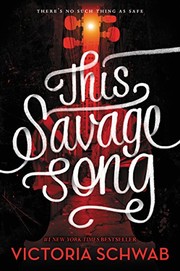
This Savage Song
Monster hunter Kate meets August, a monster who plays violin.
2,574-word summary · 11 min read
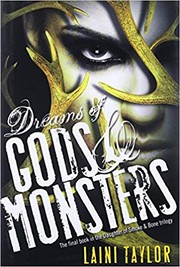
Dreams of Gods & Monsters
Karou and Akiva unite chimera and seraphim against empires invading Earth.
2,179-word summary · 10 min read

The Golden Lily
Sydney Sage guards Jill at Amberwood Prep in Palm Springs, studies forbidden magic, favors Adrian over Brayden, and faces Alchemist custody in this second…
2,988-word summary · 13 min read
Unearthly
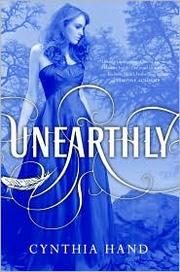
Part-angel Clara moves to Wyoming to fulfill a vision of a boy and a forest fire.
2,241-word summary · 10 min read

Forever
Grace turns wolf, Sam scrambles for a cure, and Mercy Falls votes to hunt the pack in trilogy end.
2,217-word summary · 10 min read
Lore Olympus: Volume One
Sheltered Persephone meets lonely Hades at an Olympus party, and gossip, old trauma, and new power test their slow bond.
2,283-word summary · 10 min read

Hex Hall
A witch who ruins prom with a love spell is sent to Hex Hall, where a vampire roommate and old family secrets wait.
2,991-word summary · 13 min read

Finale
Nora Grey must lead the Nephilim while her bond with Patch is tested by old vows and looming war over Coldwater. Hank's shadow still drives hate from beyond…
2,898-word summary · 13 min read
Midnight Sun
Twilight retold by Edward Cullen: a silent mind, singer blood in Forks, and restraint tested to the edge.
3,824-word summary · 17 min read

Evermore
Ever Bloom survives the crash that kills her family and meets Damen, whose touch quiets the psychic noise in her head.
3,604-word summary · 16 min read
Shiver
Grace Brisbane loves yellow eyed wolf Sam, human in summer, as winter cold threatens to take him back for good in small town Mercy Falls.
2,408-word summary · 11 min read
Clockwork Princess
Tessa chooses between Jem and Will as Mortmain's clockwork army closes on the London Institute.
3,289-word summary · 15 min read
Twilight
Stephenie Meyer's Twilight in full: Bella and Edward's romance in Forks, the Cullens' rules and the nomad vampires, and what the novel's restraint does to its…
2,494-word summary · 11 min read

A Light in the Flame
Held by Nyktos in the Shadowlands, Sera faces trials, Kolis and the Rot while broken trust is tested.
2,577-word summary · 11 min read
The Thief
A boastful young thief is pulled from a prison to steal a legendary stone for the king's magus, and the story he tells about himself is not the whole story.
2,514-word summary · 11 min read

Vow of Thieves
Kazi and Jase return to Tor's Watch to find it occupied, and their marriage is tested by captivity, betrayal, and a war for the town of Hell's Mouth.
2,059-word summary · 9 min read
The Lost Sisters
Taryn Duarte writes a letter to her twin, Jude, explaining how she fell for Locke and why she stayed silent while he used them both.
1,914-word summary · 9 min read

Masquerade
After Cordelia's death, Schuyler flies to Venice to find her exiled grandfather, then returns to the Blue Bloods as they prepare for a masked ball and a hidden…
2,543-word summary · 11 min read