
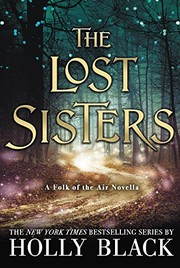
The Lost Sisters
1,914-word summary 9 min read 100 pages in the book
- First published
- 2018
- Publisher
- Little, Brown Books for Young Readers
- Pages
- 100
- ISBN
- 9780316310444
- Series
- The Folk of the Air (#1.5)
Reading options
What's inside (9 sections)
This is a hundred-page letter from a sister who did something unforgivable and knows it. Taryn Duarte writes to Jude, her twin, after the events of The Cruel Prince, and the letter is by turns an apology, a defense, and a confession. It is not a standalone story. If you have not read The Cruel Prince, most of it will feel like overheard gossip. If you have, it changes the way you read the novel that came before it.
The premise is simple. While Jude was fighting for power in the Court of Elfhame, Taryn was falling in love with Locke, the trickster who pretended to court Jude. Taryn knew about the deception. She let it happen. The novella is her attempt to explain why, and the explanation is more interesting than a straightforward apology would be because she keeps revealing things she does not mean to reveal.
The fairy tale at the door
Taryn opens with the story of Mr. Fox, a Bluebeard-like tale about a clever girl betrothed to a charming, well-mannered suitor. Before the wedding she visits his castle and finds the bodies of his previous brides in wedding gowns. She hides when Mr. Fox brings in a new victim, and the dead woman's ring falls into her lap. The next day she shows the ring to her brothers, and they cut Mr. Fox into pieces.
The story is a warning, and Taryn knows it. She tells it to Jude because she wants Jude to understand that she is not stupid, that she knew the risk, that she chose anyway. Then she tells the story of their mother, who ran away from Faerie with their father and was killed when her past caught up with her. Taryn calls the three Duarte sisters "the lost sisters," which is the title of the novella and a way of placing herself and Jude inside a fairy tale that is already written.
The frame is effective because it makes Taryn's choices feel both inevitable and avoidable. She is a girl who has been told stories all her life, and she has learned to see herself as a character in one. That is a dangerous way to live. It lets her believe that the ending is out of her hands.
Locke's note
The central event is a note Locke puts in Taryn's rucksack: if I came to your window, would you come out? Taryn knows who Locke is. He is one of Prince Cardan's friends, which means he is powerful, cruel, and dangerous. She also knows that he has been paying attention to Jude. She answers the note anyway. She tells herself that she is the hero of the story, that Locke is not as bad as Cardan, that she can handle him.
The romance that follows is written with the breathless intensity of a teenager who has never been chosen before. Locke is charming. He says the right things. He makes Taryn feel special. The problem is that he is also playing a game, and Taryn knows it, or suspects it, and chooses to keep playing because the alternative is to go back to being invisible.
Her jealousy of Jude is the engine of the whole thing. Jude is the bold one, the one who fights, the one who takes risks. Taryn is the quiet twin, the one who tries to be good. When Locke looks at Jude, Taryn sees everything she is not. When Locke chooses her, she feels seen. That feeling is strong enough to make her betray the person who has been closest to her since birth.
The sisters' childhood explains some of this. They are human girls raised in Faerie after their mother was killed and their father, Madoc, took them in. They have no real claim to the court, no magic, and no safety. Jude responds by learning to fight and refusing to be afraid. Taryn responds by learning to blend in, to be pleasant, to make herself easy to love. Both strategies are survival. Only one of them is visible, and Taryn resents being overlooked while also depending on the invisibility that keeps her safe.
The performance
Locke's plan is to court Jude publicly while seeing Taryn in secret. He tells Taryn that he needs to keep their relationship hidden from Cardan and his friends, and that pretending to be interested in Jude is the perfect cover. Taryn agrees. She tells herself that it is temporary, that it is necessary, that Jude will understand.
The scenes where Taryn watches Jude be humiliated are the hardest to read. Jude is mocked, manipulated, and put in danger, and Taryn stands by. She does not participate, but she does not stop it either. Her silence is the betrayal. Black does not let her off the hook. Taryn's narration keeps returning to the moment she could have spoken and did not.
Cardan is the one who figures it out. He confronts Taryn and tells her that she can be just as cruel as he is for letting Locke play her sister. Taryn cries, and the tears are real, but they do not change anything. This is the point where the novella becomes more than a romance. It becomes a study of how people justify the harm they do to the people they love.
Locke is unsettling because he never raises his voice. He does not threaten Taryn or force her. He creates a situation in which she has to choose between the truth and the version of herself he offers her, and he makes the second choice feel like love. That is a kind of violence, and Black is good at showing how it works. The reader can see the trap closing. Taryn can too, or she could if she let herself look.
The letter form also lets Taryn control the chronology. She tells the story in the order that makes her look best, and the reader has to reconstruct what she leaves out. That is not a flaw in the novella. It is the point. Taryn is not a reliable narrator, and Black trusts the reader to notice the gaps.
The deal
Taryn's solution is to force Locke to marry her. She threatens to expose him if he does not. Locke agrees, but he sets three conditions. She cannot tell anyone about their relationship until after Prince Dain's coronation. She cannot renounce him during that time. And she must remember that fairies do not love the way humans do.
That last condition is the cruelest. It is a warning and an excuse at the same time. Locke is telling Taryn that he will hurt her, and that she has agreed to it. The novella ends with Taryn begging Jude for forgiveness, and the reader is left to decide whether the apology is enough.
The ending is not a resolution. It is a pause. Taryn has chosen Locke, and she has chosen a version of herself that Jude may not be able to forgive. The letter is an attempt to keep the door open, but it is also a way of having the last word.
It also changes how the ending of The Cruel Prince reads. In the novel, Jude's triumph over Cardan is a moment of hard-won power. In the novella, that same moment is refracted through Taryn's guilt. While Jude is fighting for her life, Taryn is negotiating a marriage with the man who used them both. The sisters are in the same palace, at the same time, and they are living in completely different stories. That contrast is the novella's best argument for its own existence.
The voice
Black's prose is sharp and intimate. The second-person address makes the reader feel like Jude, which is uncomfortable in the right way. Taryn's voice is defensive, self-aware, and occasionally funny. She knows she is making excuses, and she makes them anyway. That honesty is what makes the novella work. A villain who simply lied would be less interesting than a sister who tells the truth in the worst possible order.
The fairy-tale language is also well used. Black writes about Faerie as a place where stories have power, where a bargain is a physical thing, and where love is never entirely safe. The Mr. Fox story works as a warning as well as a frame, and Taryn ignores it while the reader understands the danger before she does.
Where it falls short
The biggest problem is length. A hundred pages is enough for a letter, but not enough for the emotional arc Taryn needs. Her relationship with Locke happens quickly, and the reader has to accept a lot of off-page development. The novella tells us that Taryn is in love. It does not always show us why, beyond Locke's charm and her own loneliness.
The accountability is also uneven. Taryn apologizes, but she keeps circling back to her own pain. She is jealous, she is overlooked, she is afraid. All of that is true, and none of it erases what she did. The novella knows this, but it sometimes lets her off the hook by making Jude seem stronger and therefore less vulnerable. Jude is strong, but she is also a teenager who was publicly humiliated by her sister's boyfriend. The power imbalance matters.
The "fairies do not love the way humans do" line is a good piece of world-building and a convenient excuse. It lets Locke off the hook for behavior that is clearly cruel, and it lets Taryn pretend that she did not have a choice. She did have a choice. She made it. The novella is more interesting when it admits that.
There is also a question of audience. The Lost Sisters was published as an e-novella between The Cruel Prince and The Wicked King, and it reads like a bridge rather than a complete work. Readers who bought it expecting a full story may feel shortchanged. Readers who came for a deeper look at Taryn will find plenty, but they will have to supply the context themselves. The novella assumes you remember the plot of The Cruel Prince in detail, and it does not spend much time re-establishing the stakes.
Why it matters
The Lost Sisters is not essential to the plot of The Folk of the Air. You can read The Cruel Prince and The Wicked King without it and understand everything. But it adds a dimension that the main novels cannot. It shows how the same events look from the perspective of the person who stayed quiet. It makes Taryn a character rather than a plot device.
It also deepens the series' central theme: power is not only something you take. It is something you are given, and something you give away. Taryn gives Locke power over her because she wants to be chosen. Jude takes power because she is tired of being afraid. The sisters are mirrors, and the novella holds them up to each other.
The letter ends with Taryn asking for forgiveness. Black does not tell us whether she gets it. That ambiguity is the right choice. Forgiveness is not a plot point. It is a process, and the novella leaves it unfinished. The reader closes the book knowing more about Taryn than Jude does, and that is the point. The lost sister finally gets to tell her side, even if her side is not enough.
FAQ
Do I need to read The Cruel Prince before The Lost Sisters?
Yes. The novella retells and comments on events from The Cruel Prince, and it assumes you know Jude, Taryn, Locke, and Cardan already.
Is The Lost Sisters a full novel?
No. It is a companion e-novella of about 100 pages, published between The Cruel Prince and The Wicked King.
Does Taryn apologize to Jude?
She writes the letter as a half-apology and half-explanation, and she asks for forgiveness at the end. The novella does not show whether Jude forgives her.
Similar books
More from The Folk of the Air first, then related titles.
The Cruel Prince
Mortal Jude fights for a place at the faerie court, bargaining with the prince she hates.
2,477-word summary · 11 min read
The Wicked King
Jude must hold Cardan on the Elfhame throne while the Undersea plots.
3,439-word summary · 15 min read
The Queen of Nothing
Exiled Jude returns to Faerie to save Taryn and break a deadly curse.
2,091-word summary · 9 min read
How the King of Elfhame Learned to Hate Stories
Cardan recalls a harsh boyhood and an uneasy crown in this short illustrated companion to the Folk of the Air trilogy, told wholly from his side.
2,902-word summary · 13 min read
Tithe: A Modern Faerie Tale
A retelling of Holly Black's Tithe: Kaye Fierch returns to the Jersey Shore, discovers she is a changeling, and becomes the mortal sacrifice in a faerie power…
2,586-word summary · 11 min read
The Stolen Heir
Feral ex-queen Suren joins Prince Oak on a frozen quest to stop her mother, Lady Nore.
2,305-word summary · 10 min read
An Enchantment of Ravens
Isobel, a mortal artist in the fairy town of Whimsy, paints a portrait of the autumn prince and falls in love with him, breaking the laws of her craft.
2,087-word summary · 9 min read
These Hollow Vows
Brie trades with the Unseelie to save her sister and steals for a prince.
2,384-word summary · 11 min read

The Iron Queen
Meghan faces the Iron King past while Ash pays a winter price.
2,548-word summary · 11 min read
Fated Throne
Twins face the throne trial as heirs close in and stars shift.
2,349-word summary · 10 min read

Cursed Fates
Twin heirs Tory and Darcy Vega face Lionel Acrux, brutal trials and tangled mate bonds in this fifth Zodiac Academy book, a 749-page bridge to open war and…
2,750-word summary · 12 min read
The Iron Daughter
Exiled with Ash after the scepter theft, Meghan hunts the Iron stronghold as iron magic wakes inside her.
2,995-word summary · 13 min read
Powerful
Adena survives alone in the Loot and falls for a stranger while Paedyn faces the Trials.
2,229-word summary · 10 min read

Shadow Princess
Tory and Darcy learn they are Phoenixes with shadows inside them and face Lionel, the Heirs and a rescue that goes wrong.
2,837-word summary · 13 min read
Wicked Lovely
Aislinn sees faeries and must decide whether to become Summer Queen while loving mortal Seth.
2,059-word summary · 9 min read
The Reckoning
Twin heirs survive trials and hazing at Zodiac Academy while the heirs start to split.
1,984-word summary · 9 min read
The Iron King
Meghan Chase follows her stolen brother into the Nevernever and bargains with a Winter prince to face the Iron King.
2,720-word summary · 12 min read
The Awakening
Twin sisters Tory and Darcy Vega learn they are lost Fae heirs and enter Zodiac Academy in Solaria, where the four Heirs bully them to force them off the…
2,960-word summary · 13 min read
Queen of Shadows
Celaena returns to Rifthold as Aelin to free magic, face Arobynn and the Valg, and reunite with Rowan and Chaol.
4,447-word summary · 20 min read
Empire of Storms
Aelin gathers armies and faces Maeve while Elide and Manon flee Morath.
4,466-word summary · 20 min read
A Court of Thorns and Roses
Sarah J. Maas's A Court of Thorns and Roses retold: Feyre, Tamlin's Spring Court, the curse, and the trials Under the Mountain.
2,442-word summary · 11 min read
A Court of Mist and Fury
ACOTAR book 2 retold: Feyre in the Spring Court, the bargain with Rhysand, Velaris, and war with Hybern.
2,218-word summary · 10 min read
Six Scorched Roses
A dying scholar bargains with a reclusive vampire for blood, and six roses turn a transaction into a slow, dangerous romance.
2,663-word summary · 12 min read

Vow of Thieves
Kazi and Jase return to Tor's Watch to find it occupied, and their marriage is tested by captivity, betrayal, and a war for the town of Hell's Mouth.
2,059-word summary · 9 min read

Archenemies
Nova steals for the Anarchists while Adrian hides his Sentinel identity, and a serum that erases prodigy powers puts them both at risk.
2,485-word summary · 11 min read

The Siren
Saved from a shipwreck in 1930, Kahlen becomes a siren who sings men to their deaths for the Ocean, until a boy in a college library makes her want a life she…
2,369-word summary · 11 min read
Cruel Beauty
A girl raised to kill the demon prince who rules her cursed land instead falls in love with him, in a retelling that mixes Beauty and the Beast with Bluebeard…
2,669-word summary · 12 min read
Demonglass
Sophie Mercer spends the summer at the Council's English estate, where two new demons, a suspicious host, and Archer's return complicate her plan to remove her…
2,771-word summary · 12 min read

Born at Midnight
Kylie Galen is sent to a camp for troubled teens and discovers it is a haven for vampires, werewolves, and witches, and that she may be something stranger…
2,310-word summary · 10 min read

The Rose & the Dagger
Shahrzad is pulled from her Caliph husband and left in a desert camp of rebels, needing to break his curse and end a war before it ends her.
2,520-word summary · 11 min read