
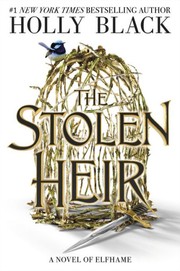
The Stolen Heir
2,305-word summary 10 min read 368 pages in the book
- First published
- 2023
- Publisher
- Little, Brown Books for Young Readers
- Pages
- 368
- ISBN
- 9780316592703
- Series
- The Stolen Heir Duology (#1)
Reading options
What's inside (8 sections)
I picked up The Stolen Heir because I missed Elfhame and wanted to see what Holly Black would do with Oak. He was the charming kid brother in the background of the Folk of the Air books, the boy everyone underestimated. Giving him a whole duology felt like a gamble. It pays off, though not in the way I expected. This is a colder, sadder book than The Cruel Prince. It follows Suren, the former child queen of the Court of Teeth, who is living wild in the human world, and Oak, the seventeen-year-old heir to Elfhame, who comes to drag her back into faerie politics. It came out in 2023 as the first half of a duology, and it reads like one. The story walks straight up to a cliff edge and stops.
If you loved the scheming and double crosses of the earlier books, plenty of that is here. But the heart of this book is two damaged teenagers trying to decide whether they can trust each other, set against a frozen war in the north.
One note on where this sits. You could read it cold, since Black folds in the backstory, but it hits much harder if you know who Jude, Cardan, and Oak are from the Folk of the Air trilogy. The betrothal, the Battle of the Serpent, the reason Suren ended up in Nore's hands in the first place, all of that carries weight from the earlier books. If you have not read them, start there. If you have, you already care about Oak, and this book will test that affection.
A queen sleeping rough in the mortal woods
Suren was once the child queen of the Court of Teeth, a nightmare court in the far north of Faerie where her mother, Lady Nore, raised her in cruelty. By the time this book opens, eight years have passed since the Battle of the Serpent, the big confrontation that closed out The Queen of Nothing. Suren fled. She crossed into the mortal world and never went back.
She lives feral now. She sleeps in the woods, steals food, wears rags, and keeps her sharp teeth filed down or hidden. Her one habit, the thing that gives her days shape, is hunting down mortals who have made foolish bargains with the Folk and getting them out of those deals. She knows every trick in the book because every trick was once used on her. There is something touching and a little broken about it. She cannot fix her own past, so she spends her strength fixing strangers.
Black writes these early chapters in a grimy, close-up style. You smell the damp leaves. You feel how thin Suren has gotten and how jumpy she is. She is not a plucky runaway. She is a trauma survivor barely holding together, and the book never looks away from that. Her magic is tied to cold and teeth and winter things, and it leaks out of her when she is scared or angry, which is often.
Then the storm hag Bogdana finds her. Bogdana is one of the most frightening minor villains Black has written, a screeching power of storm and spite who chases Suren through the night streets wanting to drag her back north. Suren is fast and clever, but she is outmatched. She gets saved, and the person who saves her is the last person she wants to see.
The prince she was once promised to
Prince Oak is the heir to the High Throne of Elfhame. Readers of the earlier trilogy know him as Jude and Cardan's beloved younger brother, the golden boy everyone adored. He is seventeen now, beautiful, funny, flirtatious, and far more calculating than his smile suggests. Years ago, as children, Oak and Suren were betrothed to each other to seal a peace. Suren has resented him ever since. In her mind he got to grow up safe and loved while she rotted in the Court of Teeth.
Oak does not come to the mortal world by accident. He has a mission, and he needs Suren for it. Lady Nore has reclaimed the Ice Needle Citadel in the north. Worse, she has found an ancient relic and is using it to build an army of monsters out of stick and snow, creatures that obey her and exist only to do her bidding and take revenge on her enemies. Suren is the one person alive with any real power over her mother. Oak wants Suren to come north with him and help stop Nore before the war spreads.
Suren says no, of course. Then circumstances close in, Bogdana keeps hunting, and staying in the woods stops being an option. She agrees the way a cornered animal agrees to a leash. What follows is my favorite kind of fantasy setup. Two people with every reason to hate each other, stuck on the same road, forced to rely on each other.
Oak brings companions, including Tiernan, a loyal knight sworn to guard him, and a few other allies with their own secrets. The group dynamic gives the middle of the book its warmth. Tiernan in particular is a steady, decent presence. He treats Suren with a plain respect she is not used to, and some of the best small scenes are just the awkward business of a feral girl learning to sit at a fire with people again.
The long cold road north
A big chunk of the book is the journey itself, and Black makes it feel properly miserable. Faerie in winter is no joke. The cold gets into everything. There are checkpoints, hostile courts, old curses, and stretches of trackless snow where the party has to keep moving or die. Supplies run short. Tempers run shorter.
Along the way, Oak keeps revealing new sides. In public he plays the charming, slightly empty-headed prince. In private he is running schemes inside schemes. He lies the way other people breathe. Suren, who grew up among liars, keeps catching him at it, and their fights about honesty are some of the sharpest exchanges in the book. She demands straight answers. He gives her smiles. Underneath, though, you can see he genuinely cares what she thinks of him, and that caring keeps tripping up his plans.
There are ambushes and narrow escapes, including a genuinely scary stretch involving wolves and worse things in the snow. Black is good at this kind of writing. The action scenes are short, brutal, and confusing in the way real fights are confusing, and then there is a quiet aftermath where everyone pretends they are fine. Suren's power keeps surfacing at the worst moments. She can do terrible things when frightened, and she knows it, and the shame she feels afterward is painful to read.
One thing I liked is how the book handles consent and bargains, the classic faerie themes. Suren's whole deal is freeing people from deals they did not understand. Oak's whole deal is getting people to agree to things without understanding them. Putting those two instincts in one traveling party creates friction on nearly every page.
There is one stop on the road I keep thinking about, a grim little court where the local ruler tries to peel Oak's party apart with hospitality. Rich food, warm beds, flattering talk, and a price tag hidden in the fine print. Suren sees through it instantly, because she grew up watching Nore run the same game with sharper teeth. Watching the feral girl become the group's early warning system, the one person who cannot be charmed, flips the usual dynamic. For once the broken one is the expert, and the princes and knights have to listen to her.
The Ice Needle Citadel and Lady Nore
When the party finally reaches the north, the book turns genuinely chilling. The Ice Needle Citadel is Nore's seat, a fortress of ice and bone, and she has filled the lands around it with her new-made monsters. These stick-and-snow creatures are creepy in a folk horror way. They look like something children would build in a yard, except they move, and they kill. Nore sends them out in packs, and whole villages empty at their approach.
Lady Nore herself is a great villain. She is not a ranting tyrant. She is cold, patient, and completely sure she owns her daughter. Her scenes with Suren are the hardest in the book to read. Nore does not yell. She talks to Suren the way you talk to a runaway pet, with absolute confidence that the leash is still on. Every cruelty of Suren's childhood comes back in these pages, and Black does not soften any of it. If you have a hard time reading about child abuse, even in fantasy dress, go in ready. The book earns its darkness, but it is dark.
Suren's confrontation with her mother is the emotional peak the whole story builds toward. She has to walk back into the place that broke her and face the woman who broke her, knowing she is probably still not strong enough. What she does there, and what it costs her, I will leave unspoiled. But I will say the book treats her fear as rational and her courage as real precisely because she is terrified the entire time.
What struck me most is how Nore fights. She barely lifts a finger. She just keeps talking, reminding Suren of small humiliations from childhood, praising her the way you praise a dog that finally came back. It is psychological warfare dressed up as a reunion, and Black writes it without flinching. Oak, for all his schemes, is nearly useless in these scenes, and that feels honest. Some fights nobody can fight for you.
Wren, Oak, and the thing between them
Under the war plot, this is a romance, and it is a messy one. Oak and Suren were promised to each other as children. She remembers a sweet boy and feels betrayed that sweetness came with safety she never got. He remembers a fierce little girl and cannot square her with the starved wild thing he found in the woods.
Slowly, on the road, they start over. Oak learns to drop the performance. Suren learns, in fits and starts, that needing people is not the same as being owned by them. There is a name at the center of this. Oak once knew Suren by another name, Wren, and the question of who gets to call her that, and what it means, carries real weight. Names have power in Faerie, literally, so a true name is never just a nickname. Watching Suren decide who is allowed to know her is one of the most moving threads in the book.
Is the romance healthy? Not entirely, and Black seems to know it. Oak manipulates people reflexively, even people he loves. Suren tests people destructively, pushing them away to see if they come back. They hurt each other more than once. Readers who want a clean, sweet love story should look elsewhere. Readers who like two sharp, damaged people slowly choosing honesty over games will eat this up.
The love scenes, such as they are, stay fairly chaste. The heat here is emotional, not physical. A conversation where Oak finally tells the plain truth lands harder than any kiss.
What works and what drags
Let me be honest about the flaws, because there are a few. The middle of the journey sags a little. There is a stretch where the party moves from one cold obstacle to the next and the plot treads water. If you are here for court scheming, you may fidget. This is a road book first and a intrigue book second, and the pacing shows it.
Oak can also frustrate. His whole character is performance, which means there are long passages where you cannot tell what he actually feels. That is clearly deliberate, and it pays off late, but some readers will bounce off him before the payoff arrives. I found him fascinating. My friend who read it with me wanted to shake him. Both reactions are fair.
And the ending is a true cliffhanger. The story stops, it does not conclude. You will need the second book, The Prisoner's Throne, to get the rest. I knew that going in and I still felt a flash of anger at the last page. Plan accordingly. Do not start this the week before a busy stretch unless you have the sequel on hand.
What works outweighs all of that for me. Suren is one of Black's best protagonists, prickly and sad and funny in a bone dry way. The winter war is scary in a way fantasy wars often are not. The themes land: what it costs to go home to the place that hurt you, how survivors rebuild trust one small choice at a time, how charm can be its own kind of armor. And the prose is pure Black, all thorns and glitter. She can describe a monster or a dress or a look across a fire with equal precision.
I closed the book thinking about Suren alone in those woods at the start, freeing strangers from bargains, and how far she travels, inside and out, by the end. Then I immediately ordered the sequel. You probably will too.
Who should read it? Anyone who finished the Folk of the Air trilogy and wondered what happened next, obviously. Beyond that, readers who like their fantasy cold and thorny, who prefer a prickly survivor to a chosen one, who enjoy a romance where trust is earned one painful conversation at a time. Just keep The Prisoner's Throne within reach. This duology opener does its job. It makes you need the rest.
FAQ
When was The Stolen Heir published and where does it fit?
The Stolen Heir came out on January 3, 2023 from Little, Brown Books for Young Readers. It opens eight years after the Battle of the Serpent that closed the Folk of the Air trilogy.
Is The Stolen Heir the first book in a series?
Yes. It is book one of The Stolen Heir Duology and ends on a cliffhanger. The story concludes in The Prisoner's Throne, so have the sequel ready.
Do I need to read the Folk of the Air books first?
You can follow the plot cold, since the backstory is explained, but it lands much harder if you have read the Folk of the Air trilogy first, especially for Oak, Jude, and Cardan.
Similar books
More from The Stolen Heir Duology first, then related titles.
The Lost Sisters
Taryn Duarte writes a letter to her twin, Jude, explaining how she fell for Locke and why she stayed silent while he used them both.
1,914-word summary · 9 min read
How the King of Elfhame Learned to Hate Stories
Cardan recalls a harsh boyhood and an uneasy crown in this short illustrated companion to the Folk of the Air trilogy, told wholly from his side.
2,902-word summary · 13 min read
The Queen of Nothing
Exiled Jude returns to Faerie to save Taryn and break a deadly curse.
2,091-word summary · 9 min read
The Cruel Prince
Mortal Jude fights for a place at the faerie court, bargaining with the prince she hates.
2,477-word summary · 11 min read

The Iron Daughter
Exiled with Ash after the scepter theft, Meghan hunts the Iron stronghold as iron magic wakes inside her.
2,995-word summary · 13 min read

Wicked Lovely
Aislinn sees faeries and must decide whether to become Summer Queen while loving mortal Seth.
2,059-word summary · 9 min read
The Iron King
Meghan Chase follows her stolen brother into the Nevernever and bargains with a Winter prince to face the Iron King.
2,720-word summary · 12 min read
A Court of Thorns and Roses
Sarah J. Maas's A Court of Thorns and Roses retold: Feyre, Tamlin's Spring Court, the curse, and the trials Under the Mountain.
2,442-word summary · 11 min read
A Court of Mist and Fury
ACOTAR book 2 retold: Feyre in the Spring Court, the bargain with Rhysand, Velaris, and war with Hybern.
2,218-word summary · 10 min read
Tithe: A Modern Faerie Tale
A retelling of Holly Black's Tithe: Kaye Fierch returns to the Jersey Shore, discovers she is a changeling, and becomes the mortal sacrifice in a faerie power…
2,586-word summary · 11 min read
The Wicked King
Jude must hold Cardan on the Elfhame throne while the Undersea plots.
3,439-word summary · 15 min read
The Thief
A boastful young thief is pulled from a prison to steal a legendary stone for the king's magus, and the story he tells about himself is not the whole story.
2,514-word summary · 11 min read

Vow of Thieves
Kazi and Jase return to Tor's Watch to find it occupied, and their marriage is tested by captivity, betrayal, and a war for the town of Hell's Mouth.
2,059-word summary · 9 min read
The Icebound Land
Captured and enslaved in Skandia, Will fights a drug that erases him while Halt and Horace cut a bloody road through Gallica to bring him home.
2,088-word summary · 9 min read

Lioness Rampant
Alanna searches for the Dominion Jewel with the Shang Dragon, then returns to Tortall to face Duke Roger at Jonathan's coronation.
2,478-word summary · 11 min read

Archenemies
Nova steals for the Anarchists while Adrian hides his Sentinel identity, and a serum that erases prodigy powers puts them both at risk.
2,485-word summary · 11 min read

The Siren
Saved from a shipwreck in 1930, Kahlen becomes a siren who sings men to their deaths for the Ocean, until a boy in a college library makes her want a life she…
2,369-word summary · 11 min read
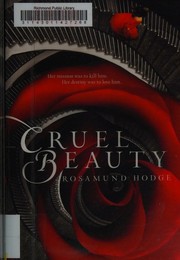
Cruel Beauty
A girl raised to kill the demon prince who rules her cursed land instead falls in love with him, in a retelling that mixes Beauty and the Beast with Bluebeard…
2,669-word summary · 12 min read

Demonglass
Sophie Mercer spends the summer at the Council's English estate, where two new demons, a suspicious host, and Archer's return complicate her plan to remove her…
2,771-word summary · 12 min read

Born at Midnight
Kylie Galen is sent to a camp for troubled teens and discovers it is a haven for vampires, werewolves, and witches, and that she may be something stranger…
2,310-word summary · 10 min read
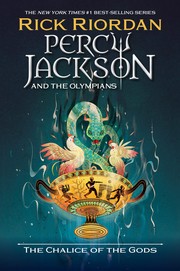
The Chalice of the Gods
Percy needs three recommendation letters from three gods to apply to college, so his first quest is recovering a stolen chalice from the god of old age.
2,106-word summary · 9 min read
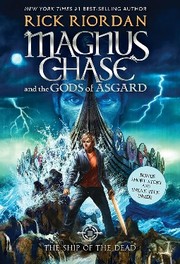
The Ship of the Dead
Magnus and his crew sail to the edges of the Norse worlds to stop Loki from launching Naglfar, the ship of the dead.
2,426-word summary · 11 min read

The Rose & the Dagger
Shahrzad is pulled from her Caliph husband and left in a desert camp of rebels, needing to break his curse and end a war before it ends her.
2,520-word summary · 11 min read

We Hunt the Flame
In a fractured Arabia-inspired world, a disguised huntress and a prince-assassin race to find a magic-restoring book and confront an ancient evil.
2,195-word summary · 10 min read
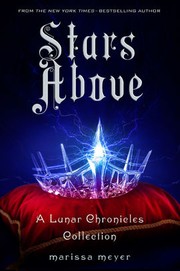
Stars Above: A Lunar Chronicles Collection
Nine Lunar Chronicles stories fill in the histories of Cinder, Wolf, Thorne, Cress, Winter, and Jacin, and end with a wedding after the war.
2,230-word summary · 10 min read

Lore
Lore Perseous, the last of a hunted bloodline, is pulled back into the Agon when a wounded Athena offers her revenge against the god who killed her family.
2,188-word summary · 10 min read
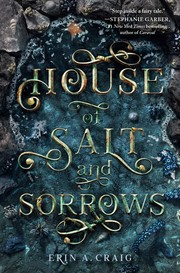
House of Salt and Sorrows
Annaleigh Thaumas investigates her sister's death in a cursed island manor where the balls are illusions and the sea god is always listening.
2,025-word summary · 9 min read
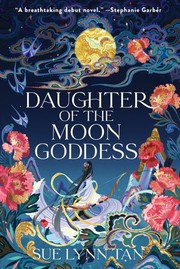
Daughter of the Moon Goddess
The daughter of Chang'e hides in the Celestial Court, trains as an archer, and risks everything to free her mother from the Emperor's punishment.
2,146-word summary · 10 min read
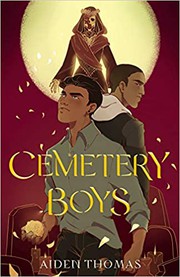
Cemetery Boys
A trans brujo in East Los Angeles summons the ghost of a boy who refuses to move on, and together they uncover a murder hidden beneath Día de los Muertos.
1,997-word summary · 9 min read