
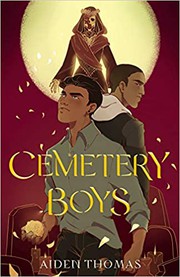
Cemetery Boys
1,997-word summary 9 min read 352 pages in the book
- First published
- 2020
- Publisher
- Swoon Reads
- Pages
- 352
- ISBN
- 9781250250469
- Series
- Cemetery Boys (#1)
Reading options
What's inside (2 sections)
Cemetery Boys is a young adult fantasy about a trans boy who wants his family to see him as he is. That description makes it sound like an issue book, and it is not. Aiden Thomas wrote a story about magic, ghosts, and first love, and the identity of the main character is central without being the only thing in the room. The novel was published by Swoon Reads in 2020, and it became a New York Times bestseller. It is 352 pages, and it moves quickly.
The hero is Yadriel, a sixteen-year-old brujo from a family of brujx in East Los Angeles. The brujx are a community descended from ancient people who were given power by Lady Death. The men are brujos, and their job is to help spirits cross into the afterlife. The women are brujas, and their job is to heal the living. The gender roles are strict, and they are enforced by tradition. Yadriel is trans, and his family has not fully accepted him as a boy. They love him, but they keep waiting for him to grow into a bruja. They will not let him perform the coming-of-age ceremony that would bind him to a portaje, the magical tool that channels Lady Death's power.
The book opens with Yadriel and his cousin Maritza breaking into the family church to perform the ceremony in secret. Maritza is a bruja who has her own problems with tradition. She is a vegan, which means she refuses to use animal blood in her healing, and that makes her an outsider too. The two of them are close in the way that cousins can be when they are the only people in a family who understand each other. Maritza has forged a dagger for Yadriel, a portaje of his own. They light the candles, say the words, and wait for Lady Death to answer. She does. Yadriel is recognized as a brujo.
Before they can celebrate, the whole community feels a stab of pain. Miguel, Yadriel's cousin, is dead. The brujos gather to search for his body so they can release his spirit. Yadriel wants to help, but his father, Enrique, tells him to stay behind with the women. Enrique misgenders him in the process. It is a small scene, but it cuts deep. Yadriel has just been acknowledged by a goddess, and his father still cannot say the right thing.
Yadriel decides to find Miguel himself. He and Maritza search the cemetery and the surrounding streets. Instead of Miguel, they find a St. Jude necklace. Yadriel uses it as a tether and summons the spirit of Julian Diaz, a fifteen-year-old boy from his school. Julian does not know how he died. He is not ready to move on. He is loud, reckless, and very protective of the people he loves. He refuses to cross over until he knows that his friends are safe.
That refusal creates the plot. Yadriel needs Julian to cross so he can get help finding Miguel. Julian needs Yadriel to help him check on his chosen family. They make a deal. Julian will stay with Yadriel, invisible to most people, until they have solved Julian's unfinished business. Then Julian will let Yadriel release him. Yadriel brings Julian home, hides him from his family, and takes him to school. The arrangement is ridiculous, and the book knows it. Julian sits in the back of classrooms, makes jokes, and eats food that Yadriel has to sneak out of the cafeteria.
The middle of the novel is where the romance grows. Julian is the first person who treats Yadriel's gender as obvious. He does not ask invasive questions. He does not make a production out of using the right pronouns. He just sees Yadriel, and that seeing gives Yadriel permission to relax. Julian helps him use the boys' restroom at school. He scribbles out Yadriel's deadname in a yearbook. He tells Yadriel that there is nothing wrong with him, and that he does not need to prove anything to anyone. For a boy who has spent his whole life being told that he is a problem to be solved, that is a revelation.
The book is also about grief. Miguel's death has left the brujx community shaken. His spirit has not returned to tell them what happened, which is unusual. The family is preparing for the Day of the Dead, and the absence of Miguel's spirit makes the holiday feel wrong. Yadriel is trying to find his cousin, hide his ghost boyfriend, and keep his secret from a family that is already suspicious. The tension builds slowly. Julian starts to have seizures that look like he is reliving his death. Yadriel worries that Julian will become malignant if he stays in the human world too long. He does not want to force Julian to cross, but he may not have a choice.
The mystery of Miguel's death is solved on the night of the Day of the Dead. Yadriel, Julian, and Maritza find a hidden crypt beneath the old church. Inside, they find Miguel's body, Julian's barely living body, and two other victims. They also find Tio Catriz, Yadriel's uncle, who was cast out of the community because he had no magic. Catriz has been sacrificing people to the jaguar god Bahlam. He wants to gain power and close the door between the human world and the spirit world. He is not a complicated villain, but he is a frightening one. He is a man who was rejected by his family and decided to make the whole world pay for it.
The final fight is messy. Yadriel is not a trained warrior. He is a boy with a dagger and a group of friends who are also not trained warriors. They fight Catriz with everything they have. Maritza uses her healing magic in ways she was told not to. Julian uses his ghostly strength. Yadriel summons Lady Death, and the goddess answers. Catriz is destroyed by his own power, or dragged into the underworld, depending on how you read the scene. The children survive.
Then comes the resurrection. Yadriel uses the jaguar amulet that Catriz was using, which contains the spirits of the four victims, to bring them back. Miguel wakes up and runs to get Enrique. Julian wakes up in his own body, alive again. The community rushes to the crypt. Everyone is taken to the hospital. Julian refuses to leave Yadriel's side. When they are finally alone, they kiss. It is the first time they have touched as two living people.
The epilogue takes place at Yadriel's official coming-of-age ceremony. The whole community attends, including the spirits of dead brujx. Yadriel is finally recognized as a brujo. His father apologizes, or at least tries to. The family does not become perfect overnight, but they show up. That is the point. The book is not interested in punishing the people who got it wrong. It is interested in what happens when they choose to do better.
The brujx community is one of the best parts of the novel. Thomas writes it as a real community, with all the warmth and all the problems that come with one. The family gathers for meals. The women cook. The men organize the search for Miguel. The old traditions are treated with respect, but they are also questioned. The Day of the Dead preparations are described in loving detail, from the marigold petals to the ofrendas to the food that is set out for the dead. The book does not explain every tradition to the reader. It trusts you to understand that these rituals matter to the people performing them, and that makes the world feel lived in.
Maritza is a strong supporting character. She is loyal, funny, and stubborn, and she has her own conflict with the community. Her veganism is not just a quirk. It is a rejection of the way the brujas have always done things, and it puts her at odds with her family in a way that mirrors Yadriel's conflict. She is also the one who performs the ceremony with Yadriel, and she is the one who forges his dagger. Without her, he would not have been recognized by Lady Death. The book does not make her a sidekick. She has her own moral code, and she is willing to break the rules when the rules are wrong.
The novel handles Yadriel's identity with care. It does not turn his transness into a lesson for the reader. It shows the small, everyday ways that his family fails him: the wrong pronoun, the assumption that he will grow out of it, the refusal to let him participate in the ceremony. It also shows the ways that Julian helps him. The scene where Julian scribbles out Yadriel's deadname in the yearbook is a small gesture, but it means a lot. It is the kind of thing a person does when they see you, not when they are trying to be an ally. The book understands that validation is not always a big speech. Sometimes it is a pen and a yearbook.
The resurrection at the end is more than a happy ending. It is a statement about the value of the people Catriz was willing to sacrifice. Catriz sees Miguel, Julian, and the others as fuel for his own power. Yadriel sees them as people who deserve to live. The fact that he is able to bring them back is a rejection of Catriz's worldview. It is also a rejection of the idea that death is always final. The book is not saying that grief can be undone. It is saying that love is stronger than the systems that try to control it. That is a simple message, but it is delivered with enough feeling to work.
What works best in Cemetery Boys is the worldbuilding. The brujx community feels specific and lived in. The food, the altars, the language, the family dynamics, all of it is rendered with care. Thomas does not explain every Spanish phrase, which is refreshing. The reader is trusted to keep up. The magic system is simple enough to follow but flexible enough to create real tension. The idea that a portaje is a reflection of the person who wields it is a nice touch, and it pays off in the final act.
The romance is charming. Julian is a great love interest because he is not there to fix Yadriel. He is there to see him. The two of them have real chemistry, and their scenes together are funny and tender. The book also does a good job of showing how transphobia works inside a loving family. Enrique is not a monster. He is a man who is afraid of losing his child and does not know how to express it. The pain comes from the gap between his love and his understanding.
The weaknesses are mostly pacing. The villain reveal happens late, and Catriz is not given enough time to become a fully realized character. The middle section, with Julian following Yadriel around school, is fun but repetitive. Some of the side characters, especially Yadriel's friends, are underdeveloped. The ending wraps up the emotional conflicts quickly, and the resurrection is a little too easy. I would have liked more time with Julian's family, and more time with the brujx community after the truth comes out.
Still, Cemetery Boys is a strong debut. It is warm, funny, and genuinely moving. It treats its protagonist with respect, and it lets him be angry, scared, and in love. It also tells a story about tradition that is not simply for or against it. The brujx traditions are flawed, but they are also a source of strength. Yadriel does not have to choose between his family and himself. He gets to have both, and the book earns that ending.
FAQ
Is Cemetery Boys a romance?
Yes. The romance between Yadriel and Julian is central, though the book is also a fantasy mystery about the brujx community.
Who is Lady Death?
Lady Death is the deity who gives the brujx their power and recognizes Yadriel as a brujo during his ceremony.
Does Cemetery Boys have a sequel?
A sequel titled Cemetery Boys: Espíritu was released in 2026, several years after the first book.
Similar books
More from Cemetery Boys first, then related titles.
Demonglass
Sophie Mercer spends the summer at the Council's English estate, where two new demons, a suspicious host, and Archer's return complicate her plan to remove her…
2,771-word summary · 12 min read
Born at Midnight
Kylie Galen is sent to a camp for troubled teens and discovers it is a haven for vampires, werewolves, and witches, and that she may be something stranger…
2,310-word summary · 10 min read
The First to Die at the End
On the night Death-Cast launches, a boy with a bad heart meets a model with everything ahead of him, and one of them gets the call.
2,908-word summary · 13 min read
Switched
A Minnesota teenager who can make people obey her discovers she is a changeling troll princess, and the hidden kingdom she came from wants her back.
2,131-word summary · 9 min read

The Indigo Spell
Sydney Sage hunts an aging witch, learns forbidden magic, and finally admits she loves Adrian, while the Alchemist tattoo on her cheek may be controlling her.
2,604-word summary · 12 min read
Wayward Son
Simon and Baz road trip America after the war to decide what normal means.
2,505-word summary · 11 min read
This Savage Song
Monster hunter Kate meets August, a monster who plays violin.
2,574-word summary · 11 min read
Half-Blood
Half-blood Alex trains at the Covenant while gods stir and rules close in.
2,601-word summary · 12 min read
Dreams of Gods & Monsters
Karou and Akiva unite chimera and seraphim against empires invading Earth.
2,179-word summary · 10 min read
Every Heart a Doorway
Nancy returns from the Halls of the Dead to a school for travelers, where a murder forces portal children to face grief, belonging and the price of going home.
2,400-word summary · 11 min read

The Golden Lily
Sydney Sage guards Jill at Amberwood Prep in Palm Springs, studies forbidden magic, favors Adrian over Brayden, and faces Alchemist custody in this second…
2,988-word summary · 13 min read
Queen of Air and Darkness
Emma and Julian face the Cohort, Thule, and the parabatai curse in Cassandra Clare's 880-page Dark Artifices finale of love, Faerie bargains, battle, weddings,…
2,653-word summary · 12 min read
Unearthly
Part-angel Clara moves to Wyoming to fulfill a vision of a boy and a forest fire.
2,241-word summary · 10 min read
Forever
Grace turns wolf, Sam scrambles for a cure, and Mercy Falls votes to hunt the pack in trilogy end.
2,217-word summary · 10 min read

Hex Hall
A witch who ruins prom with a love spell is sent to Hex Hall, where a vampire roommate and old family secrets wait.
2,991-word summary · 13 min read
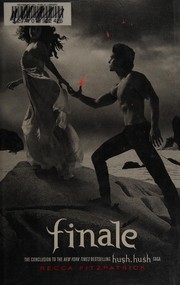
Finale
Nora Grey must lead the Nephilim while her bond with Patch is tested by old vows and looming war over Coldwater. Hank's shadow still drives hate from beyond…
2,898-word summary · 13 min read
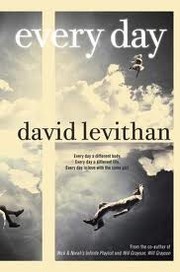
Every Day
A wakes in a new teen body daily until falling for Rhiannon breaks rules.
2,215-word summary · 10 min read
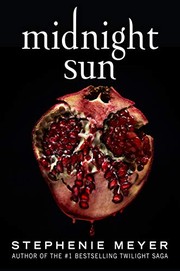
Midnight Sun
Twilight retold by Edward Cullen: a silent mind, singer blood in Forks, and restraint tested to the edge.
3,824-word summary · 17 min read
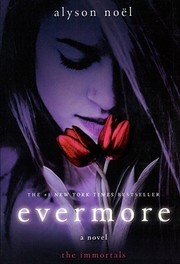
Evermore
Ever Bloom survives the crash that kills her family and meets Damen, whose touch quiets the psychic noise in her head.
3,604-word summary · 16 min read
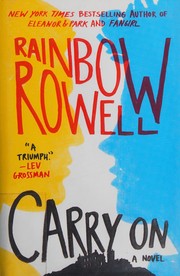
Carry On
Simon Snow returns to Watford for his last year as a failing Chosen One, with his roommate Baz missing and the Humdrum wearing his face.
2,662-word summary · 12 min read
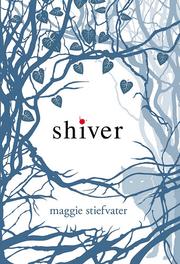
Shiver
Grace Brisbane loves yellow eyed wolf Sam, human in summer, as winter cold threatens to take him back for good in small town Mercy Falls.
2,408-word summary · 11 min read
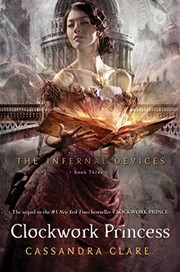
Clockwork Princess
Tessa chooses between Jem and Will as Mortmain's clockwork army closes on the London Institute.
3,289-word summary · 15 min read
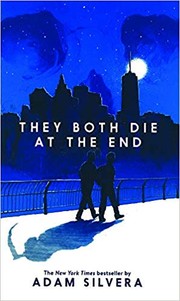
They Both Die at the End
Two teens called as dying meet through an app and share one full day.
1,968-word summary · 9 min read
Twilight
Stephenie Meyer's Twilight in full: Bella and Edward's romance in Forks, the Cullens' rules and the nomad vampires, and what the novel's restraint does to its…
2,494-word summary · 11 min read

Vow of Thieves
Kazi and Jase return to Tor's Watch to find it occupied, and their marriage is tested by captivity, betrayal, and a war for the town of Hell's Mouth.
2,059-word summary · 9 min read

The Lost Sisters
Taryn Duarte writes a letter to her twin, Jude, explaining how she fell for Locke and why she stayed silent while he used them both.
1,914-word summary · 9 min read

Magic Burns
A magic flare hits Atlanta, and mercenary Kate Daniels must recover stolen maps, find a missing witch, and keep a teenage girl alive while Celtic gods try to…
2,021-word summary · 9 min read