
Reading options
What's inside (9 sections)
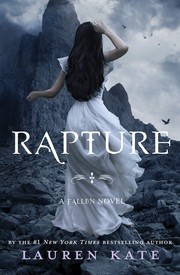
I picked up Rapture because I had stuck with the Fallen books through three volumes and I wanted to see how Lauren Kate would land the story. The fourth book in the Fallen series, published in June 2012 by Delacorte Press and running 443 pages in the hardcover edition listed on Wikipedia, closes the arc of Luce Price and Daniel Grigori. The setup carries straight out of Passion, where Luce threw herself through the Announcers to live inside her past lives and learn why she keeps dying young. Now she is back in the present, and the clock is short. She, Daniel, and their friends have nine days to find where the angels first fell to Earth and stop Lucifer from undoing the Fall and rewriting time. I read it in two sittings, half annoyed and half hooked, which feels about right for a finale.
If you have not read the earlier books, the core is simple. Luce is a girl who keeps falling in love with the same fallen angel, Daniel, across centuries, only to die in fire each time she starts to remember. Daniel is bound to her and cursed to lose her. Around them stands a crowd of other fallen angels, some allied with Daniel and some with Cam Briel, plus Nephilim friends, church school teachers with hidden roles, elders who enforce old law, and outcasts who fell between sides. Rapture gathers all of them for one last search and one last vote about the Fall itself.
Nine days and three relics
The book opens with urgency rather than summary. Lucifer is moving. The Throne, the distant power that cast the angels down, is silent. A second Fall is possible, which in this series means Lucifer could crash through time, erase human history since the first Fall, and start over with Luce at his side. Daniel and Luce must find the exact spot where the angels struck Earth long ago, because that place will be the stage for whatever happens next.
Nobody knows where that spot is. Daniel drew sketches centuries ago of three relics that, brought together, will point the way, but even he does not remember clearly what they are or where they rest. That is the quest engine for the first half. Luce can now recall her past lives without an Announcer, though the memories come in flashes and ache. She knows fragments about objects she once touched, rooms she once stood in, words once spoken to her by angels who loved her or used her. The group splits up to chase leads across continents, following old stories, church records, and faint angelic traces.
I liked the travel energy here even when the logic wobbled. One team goes after a relic tied to an old passion between angels, another follows a trail through ruins and reliquaries, a third leans on mortal contacts and Nephilim help. Cam, who spent earlier books as a smooth antagonist, works alongside Daniel now, and their truce is uneasy in a good way. They still snap at each other about Luce, about the past, about who failed whom. Gabbe tries to hold everyone to a kinder line. Molly complains and still shows up. Arriane brings wild humor that keeps the search from turning gray. Roland moves quiet between groups, carrying messages and old debts. Annabelle, Arriane's sister, steps forward more than before. Miles Fisher and Shelby, the Nephilim friends Luce made at Shoreline, return to help with mortal legwork and with heart.
The relic hunt is not really about puzzles. There are no clever codes to crack so much as places to endure. The angels and Luce have only rough images to go on, and Lucifer keeps bending the path. Shadows thicken. The Scale, the minor angels loyal to the Throne who act as watchers and enforcers, press in. Lyrica and Vivina, last of the elders, push for Luce's death as the clean solution. Miss Sophia's old faction still casts a shadow even after her fall. The outcasts, blind and bitter after being shut out by both Heaven and Hell, stalk the edges, hoping to trade Luce for readmission. Every lead costs something. Someone gets hurt. Someone has to stay behind.
What Luce learned in the Announcers
A lot of Rapture only makes sense if you carry what Passion showed. Luce spent that book dropping into her own past selves, a peasant girl here, a bride there, a sick child somewhere else, dying each time when the curse caught her. She saw Daniel find her again and again. She saw Cam court her in some lives and wound her in others. She learned that a small gargoyle guide named Bill who talked her through the shadows was Lucifer in disguise, nudging her toward a death that would break the pattern in his favor.
Rapture builds on that without replaying every life. Luce now understands that the curse kept her from knowing her own nature. Each time she neared the truth about who she was, flame took her. That is why Daniel could never just tell her plainly. Speech itself was barred. She also understands that her bond with Daniel is older than any single lifetime, and that Lucifer claims an even older bond. Long before the Fall, Luce, then an angel called Lucinda, stood close to Lucifer. They are described as having found something like love before others knew the word for it, a bright closeness that turned possessive on his side. Lucifer wanted her gaze to stay on him. She turned instead toward Daniel and toward the Throne's idea of love as giving rather than keeping. That choice, in Kate's telling, helped tip the first great vote in Heaven.
I found this backstory both moving and slippery. On a feeling level it works. Luce was not just a girl being chased through time. She was a person whose early choice helped shape the split between Heaven and Hell. On a plot level it raises questions the book does not fully answer. How free was that first vote. Why does the Throne let the same pain repeat for years. Kate gestures at answers, that love must be chosen freely, but she keeps the rules soft.
Cam, Daniel, and the crowded alliance
The middle of the book belongs to the group, for better and worse. Daniel is frayed. He has lived only to find Luce and lose her, and now he must watch her walk into danger he cannot block. He hovers, argues, apologizes, and tries to give her space. There are scenes where he draws her aside in ruined chapels or on cold hillsides and tells her pieces of their past he had kept back, not to excuse himself but to let her choose with open eyes. Those are among the best Daniel scenes in the series because he finally talks instead of brooding.
Cam carries the more interesting shift. In Fallen he was the bad boy with a smile, in Torment the rival who might steal Luce, in Passion a reluctant helper with his own wound. Here he fights beside Daniel without pretending the past is clean. He still loves Luce in his way, but he stops trying to win her. His help is practical. He guards doors, carries the hurt, faces down elders, and stands with the outcasts when no one else will speak to them. His history, the reason he leaned toward Lucifer, gets more airtime, though Kate keeps it brief enough that you fill in gaps yourself. I wished for one straight conversation where Cam says what he wants now, apart from Luce, but the book keeps him orbiting the couple.
The others crowd the pages fast. Gabbe counsels mercy and tries to keep faith with Heaven without cruelty. Molly spars with everyone and proves steady when it counts. Arriane jokes through fear and takes hits meant for friends. Roland, once firmly on Cam's side, speaks gently to Luce about past lives where he met her and knew she was out of time. Annabelle brings a calmer strength. Miles and Shelby remind Luce what mortal friendship felt like before wings filled the sky, and they insist on coming along even when angels tell them to hide.
That crowd is a strength and a strain. I liked seeing familiar faces get small payoffs. I also lost track of who was where during some jumps between search teams. Chapters cut from a desert ruin to a city archive to a hillside camp, and the relics blur together. Kate keeps the tone clear even when geography is not. You always know how Luce feels, even when you cannot picture the room she stands in.
Outcasts, elders, and the Scale
The politics get sharper as the nine days run down. Three kinds of pressure close in, and Kate does a decent job keeping them distinct.
The outcasts are the saddest party. During the first revolt they stood near Lucifer but did not follow him all the way down. When they tried to return to Heaven, the door was shut. When they tried Hell, Lucifer cast them out and blinded them. They have lived since with sharpened hearing and touch and with a hunger to belong again. In Torment they hunted Luce as a ticket back. Here Daniel and Luce offer them something better than a trade, a promise to speak for them if the end goes right. Their leader scenes are short and raw. You feel how tired they are of being used as threats.
The elders want the opposite. Lyrica, Vivina, and the remnant of their order see Luce as a fault in the design. Kill her, they argue, and the cycle stops. They command some of the Scale, the blue winged watchers in brown cloaks who police fallen angels on Earth and who nest at times inside the Announcers themselves. The Scale are eerie rather than grand, clerks with wings, and that makes them effective. They do not hate Luce personally. They enforce.
Miss Sophia, the great teacher villain of the first book, is gone by this point, but her teaching lingers in how mortals and young Nephilim talk about angels. People still quote her warnings. That echo gives weight to the elders' claim that mercy has been tried and failed. Daniel has to argue not only with swords but with history. He has to say that repeating punishment is not justice.
Lucifer works through all these cracks. He does not lead an army in the open for most of the book. He appears in stolen moments, in shadows, in dreams, in the shape of memory. He reminds Luce of their early closeness. He tells her Daniel will always mean loss. He offers to reset time so no one has to hurt again. His pitch is not fire and threats at first. It is relief. Stop the pain. Choose the one who knew you first. Forget the centuries of burning. That soft sell makes him more frightening than any monster form, and Kate writes those talks well, with Lucifer tender and tired rather than ranting.
The site of the Fall and the choice
Without giving away every beat of the final fight, the search resolves. The three relics, once gathered, point to a plain place that looks unremarkable until angels stand on it. I will keep the exact geography light because the book treats it more as a stage than a map, a field where Heaven once split. Armies gather in the sky and on the ground. Wings darken the light. Mortal friends are told to run and refuse. Old enemies stand shoulder to shoulder because there is nowhere else to stand.
Kate keeps the large battle general, which I think was wise. There are clashes, falls, cries, bursts of shadow and light, but she does not try to choreograph every duel. The focus stays on Luce. At the center of the noise, she finally sees herself clear. She was Lucinda, morning light to Lucifer, then love to Daniel, then a soul caught in a loop where she died before she could choose grown. The curse was not only Daniel's burden. It was hers, a price for a choice made at the Fall that neither Heaven nor Hell could unwind without her word.
Her decision is the heart of Rapture and the part readers will either accept or reject. She does not choose Lucifer's reset, though she pities him. She does not choose to return to Heaven as a high angel apart from Daniel. She chooses love as a mortal life, with memory wiped clean, alongside Daniel also made mortal. They will be born again, grow up knowing nothing of wings, live and die as people do, with no angel crossing their path. In exchange she asks one thing, that the outcasts be taken back into Heaven's fold. The Throne grants it, or allows it, in the book's quiet language of assent. The Fall is not repeated. History holds. The sky clears.
I will not pretend this is a tidy theology. Why the Throne needs Luce to bargain, why mortality is the price of freedom, why forgetting is mercy, these are asserted more than proved. But as a romance ending, it lands. After three books of kissing through doom, Luce gets to choose rather than repeat. Daniel gets to stop waiting at deathbeds. The curse that made every life a countdown breaks because she names what she wants without fear.
Seventeen years later at Emerald College
The epilogue jumps seventeen years. Luce is a new student at Emerald College, driven to campus by her parents. They pass the old Sword and Cross reform school on the way, and her parents joke that they are glad she is not going there. She does not remember that she once did, in another life, behind iron gates with Daniel watching from across a courtyard. She settles into a dorm, meets a lively roommate named Nora who drags her to a party, slips out for air because crowds tire her, and meets a boy in the courtyard with short gold hair and violet eyes.
He says he feels he has met her before. Readers of Fallen will hear the echo. In the first book Luce said a version of that line to Daniel. Now he says it to her. Above them, unseen, old friends watch, Arriane, Roland, Annabelle, Miles, Shelby, keeping a fond guard without stepping in. No wings show. No shadows reach. The suggestion is that love can start clean, without curse, without memory, and still find its shape.
I liked this ending more than I expected. It risks cuteness, and the Nora banter is broad, but the image of two mortals meeting without dread works after so much fire. It also lets Kate honor mortal friendship. Miles and Shelby, who were never angels, get to witness rather than vanish. The angels who once fought over Luce get to smile and leave her alone. After hundreds of pages of pursuit, stillness feels like a gift.
Where the book strains
Rapture does not fix the series' weak spots. It leans into them. The time travel rules stay foggy. Announcers are doors, memories, prisons, and weather by turns. Luce's new power to recall past lives without help arrives when the plot needs it and fades when it would solve too much. Daniel's sketches of the relics are vague enough to justify any discovery. If you reread for mechanics, you will find seams. I stopped trying to map the nine days hour by hour and just followed Luce's feelings from stop to stop, which is clearly how Kate wants it read.
The cast is large enough to thin the middle. With Cam, Gabbe, Molly, Arriane, Roland, Annabelle, Miles, Shelby, the outcasts, the elders, the Scale, Lucifer, and Daniel all needing lines, some chapters feel like roll call. Gabbe and Molly get strong moments but not full arcs. Roland's kindness to Luce deserved more room. Annabelle arrives late for new readers and the book assumes you remember her pink hair and calm from Passion. Miles and Shelby, my favorite mortals in the series, are brave here but mostly carry bags and ask what angels mean by half said things. A tighter focus on four or five voices would have given the quest more weight.
The romance payoff will divide readers. If you bought into Luce and Daniel from book one, the choice to become mortal together will feel like relief. If you never bought in, no late speech will convince you. Kate tells us Daniel wants Luce for who she is while Lucifer wanted to keep her, but Daniel withholds so often that his growth must be taken largely on faith. Cam's steadier care here almost outshines him.
Even with those strains, I closed the book satisfied on the terms Kate set. The search gives the finale a shape the middle books lacked. The alliance scenes give the last stand texture beyond kissing. The epilogue at Emerald College earns its smile. Readers who want hard rules should look elsewhere. Readers who stayed for Luce learning to name herself will find the close they were promised.
FAQ
Who was Luce before her mortal lives?
She lived as the angel Lucinda, stood near Lucifer before the Fall, then loved Daniel and helped tip the first vote. The curse made her die whenever she neared that memory.
Is Rapture the last Fallen book?
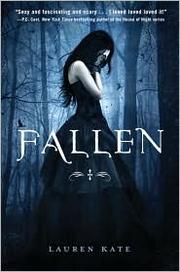
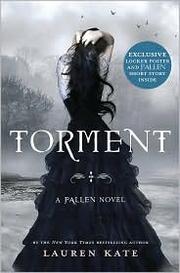
Yes, as the fourth Fallen novel. It follows Fallen, Torment, and Passion, with the side collection Fallen in Love set before it. Unforgiven later follows other characters.
Does the finale fix the series flaws?
The Announcer rules stay vague, the cast is large enough to blur some search scenes, and the romance payoff works best if you already trust Luce and Daniel.
Similar books
More from Fallen first, then related titles.

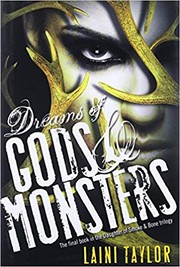
Dreams of Gods & Monsters
Karou and Akiva unite chimera and seraphim against empires invading Earth.
2,179-word summary · 10 min read
Unearthly
Part-angel Clara moves to Wyoming to fulfill a vision of a boy and a forest fire.
2,241-word summary · 10 min read
Finale
Nora Grey must lead the Nephilim while her bond with Patch is tested by old vows and looming war over Coldwater. Hank's shadow still drives hate from beyond…
2,898-word summary · 13 min read

Demonglass
Sophie Mercer spends the summer at the Council's English estate, where two new demons, a suspicious host, and Archer's return complicate her plan to remove her…
2,771-word summary · 12 min read

Born at Midnight
Kylie Galen is sent to a camp for troubled teens and discovers it is a haven for vampires, werewolves, and witches, and that she may be something stranger…
2,310-word summary · 10 min read
Cemetery Boys
A trans brujo in East Los Angeles summons the ghost of a boy who refuses to move on, and together they uncover a murder hidden beneath Día de los Muertos.
1,997-word summary · 9 min read
Switched
A Minnesota teenager who can make people obey her discovers she is a changeling troll princess, and the hidden kingdom she came from wants her back.
2,131-word summary · 9 min read
World After
Penryn wakes from near-death to find her altered sister Paige hunted as a monster, and follows her into the angels' scorpion factory and Uriel's coup.
2,213-word summary · 10 min read

The Indigo Spell
Sydney Sage hunts an aging witch, learns forbidden magic, and finally admits she loves Adrian, while the Alchemist tattoo on her cheek may be controlling her.
2,604-word summary · 12 min read
This Savage Song
Monster hunter Kate meets August, a monster who plays violin.
2,574-word summary · 11 min read
Half-Blood
Half-blood Alex trains at the Covenant while gods stir and rules close in.
2,601-word summary · 12 min read
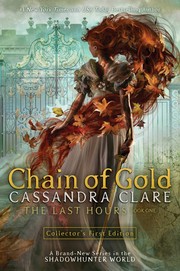
Chain of Gold
Cordelia and James hunt demons in Edwardian London while hearts tangle.
2,364-word summary · 11 min read

The Golden Lily
Sydney Sage guards Jill at Amberwood Prep in Palm Springs, studies forbidden magic, favors Adrian over Brayden, and faces Alchemist custody in this second…
2,988-word summary · 13 min read

Forever
Grace turns wolf, Sam scrambles for a cure, and Mercy Falls votes to hunt the pack in trilogy end.
2,217-word summary · 10 min read


Hex Hall
A witch who ruins prom with a love spell is sent to Hex Hall, where a vampire roommate and old family secrets wait.
2,991-word summary · 13 min read
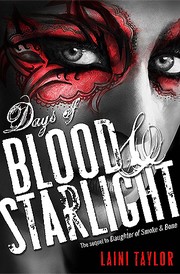
Days of Blood and Starlight
Karou takes up Brimstone's resurrection work while Akiva breaks with his empire as war burns Eretz.
2,866-word summary · 13 min read

Angelfall
After angels destroy the world, Penryn trades help with a wingless angel to rescue her sister from their stronghold.
2,420-word summary · 11 min read

Silence
Nora wakes in a cemetery with five months missing and a stranger called Jev who feels familiar.
3,615-word summary · 16 min read
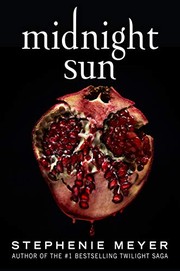
Midnight Sun
Twilight retold by Edward Cullen: a silent mind, singer blood in Forks, and restraint tested to the edge.
3,824-word summary · 17 min read

Evermore
Ever Bloom survives the crash that kills her family and meets Damen, whose touch quiets the psychic noise in her head.
3,604-word summary · 16 min read
Crescendo
Nora and Patch survived book one, but distance, Marcie Millar, and a letter about her father's killer pull them apart.
2,980-word summary · 13 min read
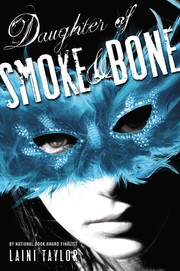
Daughter of Smoke and Bone
Art student Karou with blue hair runs errands for chimera Brimstone until war finds her.
2,563-word summary · 11 min read
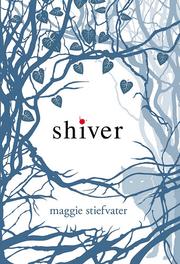
Shiver
Grace Brisbane loves yellow eyed wolf Sam, human in summer, as winter cold threatens to take him back for good in small town Mercy Falls.
2,408-word summary · 11 min read
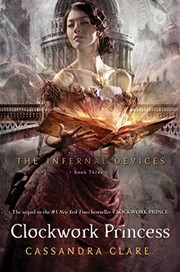
Clockwork Princess
Tessa chooses between Jem and Will as Mortmain's clockwork army closes on the London Institute.
3,289-word summary · 15 min read

Hush, Hush
Nora Grey's new biology partner Patch is gorgeous, infuriating, and hiding wings he was never meant to keep.
2,137-word summary · 9 min read