
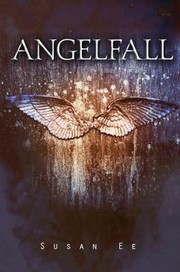
Angelfall
2,420-word summary 11 min read 288 pages in the book
- First published
- 2011
- Publisher
- Skyscape
- Pages
- 288
- ISBN
- 9780761463276
- Series
- Penryn & the End of Days (#1)
Reading options
What's inside (7 sections)
I picked up Angelfall because it kept appearing on lists of fantasy worth reading, including a well-known magazine ranking of the best fantasy of all time, and the premise sounded like nothing else on those lists. Angels as the villains of the apocalypse. A teenage girl walking through ruined California with a sword she stole from a dead angel and a deal with a live one. I expected something pulpy and fast, the kind of book you finish on a plane. It is fast, but it surprised me twice: first with how grim it is willing to be, and second with how much I liked the two leads. Penryn is one of the most capable heroines I have met in young adult fiction, and her angel is interesting precisely because he is not kind. This is the first book in the Penryn and the End of Days trilogy, followed by two more volumes, and it tells a complete arc while leaving the larger war wide open.
The publishing story is part of the book's legend and worth a sentence. Susan Ee wrote it and first released it herself in 2011, and readers passed it to each other until it became a genuine word-of-mouth hit. A traditional edition followed through Amazon's Skyscape imprint in 2012, and the UK editions came through Hodder. The facts I cite here match that Skyscape paperback: just under three hundred pages, original publication year 2011. Whatever edition you find, the text is the same story, told in Penryn's dry, flat, funny voice.
The night the street exploded
Penryn Young is seventeen and already the adult in her family. Her father is dead. Her mother lives with paranoid schizophrenia, convinced for years that demons walk among people, and Penryn has spent her childhood managing that illness: the missed medication, the strange accusations, the weary diplomacy with neighbors and social workers. Her little sister Paige uses a wheelchair and needs care Penryn provides without complaint. The book opens with this household already displaced, camping in a parking area with other refugees, because six weeks earlier angels descended and began destroying cities. Street gangs control the daylight. Fear controls the night. Nobody understands what the angels want, only that resistance gets you killed.
Then, on an empty street at dusk, the angels come down fighting. Penryn watches, frozen, as winged warriors battle each other in the air and crash to the asphalt. One of them is killed. His sword, a real angel blade, ends up in Penryn's hands, and she discovers two things at once: the sword is impossibly well made, and she is now holding something every survivor in California would kill for. Worse, in the chaos, one of the surviving angels seizes Paige and carries her into the sky. Penryn's mother, whose delusions about demons suddenly look less delusional, reacts with a strange mixture of terror and recognition. Penryn makes the only decision available. She will follow the angels to their stronghold in San Francisco and take her sister back, or die trying. She has a sword she barely knows how to use, no plan, and a mother who cannot be left alone. What she needs is what no human in this book has: knowledge of the enemy.
The angel in the driveway
She finds him bleeding in an alley behind a wrecked building. He is young-looking, beautiful in the way all the angels are, and missing his wings. They have been cut off at the back, and he is in shock, losing blood, helpless in a way angels are never supposed to be. Penryn's first instinct is practical rather than kind. She ties him up. She takes stock. A wingless angel is a bargaining chip, a source of information, and possibly a ticket through territory no human can cross alone. The angel's name, he eventually tells her, is Raffe, short for something much older and more famous. Readers will guess the full name before Penryn confirms it, and the book knows they will guess. It lets the reveal wait until it matters.
The deal they strike is the engine of the whole novel. Raffe wants his wings back, or at least wants to reach his own kind and settle the matter of who took them. Penryn wants an armed escort to San Francisco and someone who can get her inside the angels' stronghold, a fortified place the survivors call the aerie. Neither trusts the other. Raffe is blunt about the hierarchy of his world: humans are scenery, occasionally useful, mostly irrelevant. Penryn is blunt right back: she does not care about his war, his honor, or his species. She cares about Paige. The book earns its chemistry here, in negotiation rather than flirtation. They argue about routes, about whether to travel by day or night, about what the sword can and cannot do. Raffe begins, grudgingly, to teach her how to carry and draw the blade. Penryn begins, grudgingly, to admit that the enemy has manners, humor, and wounds that look a lot like hers.
One early scene sets the tone for their partnership. Raffe is too weak to walk far, and Penryn has to get him out of exposed territory. She improvises: a wheelchair found in the ruins, the wingless angel pushed along like an invalid, his bulk hidden under blankets, Penryn playing the devoted daughter wheeling her father to safety. It is absurd, it is humiliating for him, and it works. The book is full of these small cons and disguises, and they do more than any battle scene to sell the relationship. He is ancient and powerful and currently being pushed around in a chair by a teenager. She is seventeen and currently responsible for the survival of a being out of scripture. Neither of them is used to needing anyone, and the story lets that discomfort breathe.
Walking to San Francisco
The middle of the book is a road story through a California that has gone feral in six weeks. Highways are choked with abandoned cars. Houses stand open. Dogs run in packs. Penryn and Raffe move mostly on foot and by scavenged transport, hiding from gangs by day and from worse things by night, because the angels are not the only predators. There are the angels' human followers, people who worship the invaders and serve them in hope of favor. There are rival gangs who have learned that a girl with a good sword is worth robbing. And there are things in the dark that the book reveals slowly, failed experiments and cast-off horrors that suggest the angels' war has been going on much longer, and much dirtier, than anyone on Earth guessed.
Along the way they collect allies. A pair of twins, Dee and Dum, attach themselves to Penryn with jokes and unexpected competence; they are among the few warm things in a cold book, and Penryn, who has spent years being the caretaker, is visibly thrown by people who want to help her for free. Later the group reaches a larger pocket of organized survivors, led by a man called Obi, who has turned an office building into a fortress and a hospital. The resistance chapters give Penryn her first full night of sleep in weeks and the reader the first clear picture of the war: the angels are not united, their factions scheme against each other, and humanity's best hope is that the enemy stays divided. Obi wants the angel sword. He wants Raffe's knowledge. He wants Penryn to stay and fight for the group instead of chasing one girl into the aerie's mouth. Penryn refuses, politely and absolutely, and the book respects her for it. Her loyalty is narrow and total. That narrowness is both her strength and the thing everyone around her criticizes.
The quiet chapters in this section matter more than the fights. Raffe heals slowly, and as he heals he talks: about angel politics, about the coming of a new Messenger, about how his own side disposes of its inconvenient members. Penryn practices with the sword until her hands blister. She thinks about her mother, left behind in questionable safety, and about whether her years of managing her mother's illness trained her for exactly this, reading dangerous beings, staying calm, never showing the full extent of her fear. There is a tenderness developing between Penryn and Raffe that the book handles with unusual restraint. He is centuries old and she is seventeen, and Ee keeps the dynamic anchored in mutual debt and banter rather than letting it slide into anything queasy. They save each other's lives several times. They keep score. The scorekeeping is the romance, for now.
The aerie
The angels' stronghold sits in San Francisco, and getting in requires the book's best sequence. The aerie hosts gatherings where favored humans are invited to mix with angels: part court, part party, part livestock show. Penryn goes in disguised, dressed up and playing the role of a willing pet, with Raffe posing as her captor to explain her presence. The chapters inside are genuinely frightening in a way the road chapters are not. The angels are beautiful, courteous, and utterly indifferent to human suffering. They discuss people the way collectors discuss acquisitions. Penryn smiles, plays along, and maps the exits while trying not to shake.
What she finds inside breaks the mission open. Paige is alive, held with other taken children in the aerie's lower levels, and the angels have been altering the captives. The book shows this through Penryn's eyes in fragments: medical rooms, restraints, children changed in ways that make them useful to the angels' plans. Paige herself has been harmed and remade into something that frightens even the angels' servants, and Penryn's reunion with her sister is one of the rawest scenes in young adult fiction I have read. There is no easy rescue here. Paige is not the same girl who was carried off, and getting her out will mean fighting through the heart of the aerie with a child who can barely be moved.
The villains come into focus in these chapters. Uriel, a high-ranking angel with ambitions to become the angels' chosen Messenger, runs the aerie's operation with polished cruelty. Beliel, a demon of the old stories, wears a stolen prize: great feathered wings sewn onto his own back, wings that Raffe recognizes with horror as his own. The revelation reframes everything. Raffe was not wounded in battle. He was ambushed, mutilated, and discarded by rivals who wanted him out of the way. His wings, the symbol of everything he is, are being paraded around on a demon's shoulders. The book plays this for exactly the right emotion, not self-pity but cold fury. Raffe stops being a patient teacher and becomes what he actually is, a warrior of terrible competence, and Penryn finally sees the full distance between them. It only makes her more determined. If the angels did that to one of their own, she thinks, imagine what they have planned for Paige.
Escape and what it costs
The climax moves fast and takes no prisoners. Penryn gets Paige out of the holding area and into the chaos of the aerie itself, where a gathering of angels turns into a battleground. Raffe confronts Beliel to take back his wings, a fight the book stages with brutal economy: no speeches, no posing, just two immortal beings trying to kill each other while the building burns around them. Uriel's schemes collapse into violence as rival angel factions turn on each other, and humans, the scenery, start dying in large numbers. Penryn fights with the angel sword she has carried since the first chapter, and the practice chapters pay off. She is not suddenly a master. She is a desperate girl with a very good blade and nothing to lose, and against opponents who have never been desperate a day in their existence, that counts for more than it should.
Ee does not give the ending away cheaply. People Penryn cares about are hurt. Paige survives but is changed in ways the book refuses to minimize; her altered body and her trauma will clearly drive the later volumes. Raffe is restored in one sense and broken in another, his wings back but his place among his kind destroyed. He and Penryn part with debts still unpaid and feelings still unnamed, which is honest. The final pages put Penryn back on the road with her family patched together but not whole: her mother lucid in flashes and lost in others, Paige alive and different, Penryn herself harder than the girl from the parking lot. The war is still on. The angels are still in San Francisco. Nothing is resolved except the only thing Penryn ever cared about, which is that her sister is breathing.
The fair criticism starts with the middle. The road chapters, strong as the character work is, follow a pattern of threat, escape, and exposition that repeats a few times too many, and readers who want plot velocity may skim. The angels' politics stay blurry by design, but occasionally the blurriness feels like the book itself has not decided what Uriel's plan actually is beyond menace and experimentation. Penryn's voice, dry and capable, can flatten the emotional peaks; she narrates her worst moments with the same even tone as a supply run, which is realistic for her character and occasionally distancing for the reader. And the romance, restrained as it is, still centers on a bond between a teenager and an ancient being, which some readers will find uncomfortable no matter how carefully it is handled.
I recommend it anyway, strongly, to a specific reader: anyone who likes post-apocalyptic stories but is tired of zombies and plagues, anyone who wants a heroine whose competence is practical rather than prophetic. Penryn has no destiny, no powers, no chosen-one mark. She has a sword, a deal, and a sister. The book's best idea is that this is enough, barely, at great cost. My doubts are real but narrow. The voice held me, the deal between the girl and the angel felt new, and the aerie chapters scared me more than most horror I have read this year. I started the second volume the same night, which is the only review that matters. If angels with swords and appetites sound like your thing, clear an evening. Penryn does not waste your time, and neither does her book.
FAQ
Is Angelfall part of a series?
It is the first book in the Penryn & the End of Days trilogy, followed by World After and End of Days. This volume completes Penryn's rescue mission while the larger war continues.
When was Angelfall published?
Susan Ee first released it herself in 2011, and the Skyscape paperback edition followed in 2012 with just under three hundred pages. The facts here match that edition with the original year kept.
Is Angelfall violent?
Yes. It opens with a city attack, moves through gang territory and the angels' stronghold, and includes body horror around the captive children. The violence serves the story but it is constant.
Similar books
More from Penryn & the End of Days first, then related titles.
World After
Penryn wakes from near-death to find her altered sister Paige hunted as a monster, and follows her into the angels' scorpion factory and Uriel's coup.
2,213-word summary · 10 min read
Dreams of Gods & Monsters
Karou and Akiva unite chimera and seraphim against empires invading Earth.
2,179-word summary · 10 min read
Chain of Gold
Cordelia and James hunt demons in Edwardian London while hearts tangle.
2,364-word summary · 11 min read
Shadow Me
Kenji Kishimoto narrates for the first time as he joins Nazeera on a quiet mission after Restore Me, carrying painful secrets into Defy Me.
2,512-word summary · 11 min read
Unearthly
Part-angel Clara moves to Wyoming to fulfill a vision of a boy and a forest fire.
2,241-word summary · 10 min read
The Young Elites
Adelina survives fever and execution to join a secret group of gifted malfettos plotting against the queen of Kenettra.
3,310-word summary · 15 min read
Finale
Nora Grey must lead the Nephilim while her bond with Patch is tested by old vows and looming war over Coldwater. Hank's shadow still drives hate from beyond…
2,898-word summary · 13 min read
Days of Blood and Starlight
Karou takes up Brimstone's resurrection work while Akiva breaks with his empire as war burns Eretz.
2,866-word summary · 13 min read
King's Cage
Chained by Maven with Silent Stone, Mare endures while Cal and the Guard gamble on rescue and alliance.
2,001-word summary · 9 min read
Daughter of Smoke and Bone
Art student Karou with blue hair runs errands for chimera Brimstone until war finds her.
2,563-word summary · 11 min read
Powerless
Ordinary Paedyn hides in Ilya, saves Kai, and enters the Purging Trials while pretending an ability.
3,079-word summary · 14 min read
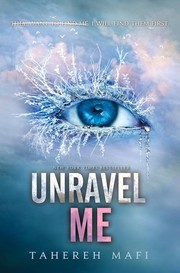
Unravel Me
Juliette trains at Omega Point while Warner hunts her and Adam's touch starts to hurt them both.
2,262-word summary · 10 min read

Vow of Thieves
Kazi and Jase return to Tor's Watch to find it occupied, and their marriage is tested by captivity, betrayal, and a war for the town of Hell's Mouth.
2,059-word summary · 9 min read

The Lost Sisters
Taryn Duarte writes a letter to her twin, Jude, explaining how she fell for Locke and why she stayed silent while he used them both.
1,914-word summary · 9 min read

Iron Widow
Wu Zetian enlists to avenge her sister, kills her pilot, and becomes an Iron Widow in a mecha Huaxia where the machines are built to kill women.
2,444-word summary · 11 min read

Archenemies
Nova steals for the Anarchists while Adrian hides his Sentinel identity, and a serum that erases prodigy powers puts them both at risk.
2,485-word summary · 11 min read

The Siren
Saved from a shipwreck in 1930, Kahlen becomes a siren who sings men to their deaths for the Ocean, until a boy in a college library makes her want a life she…
2,369-word summary · 11 min read

Cruel Beauty
A girl raised to kill the demon prince who rules her cursed land instead falls in love with him, in a retelling that mixes Beauty and the Beast with Bluebeard…
2,669-word summary · 12 min read
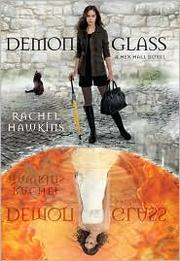
Demonglass
Sophie Mercer spends the summer at the Council's English estate, where two new demons, a suspicious host, and Archer's return complicate her plan to remove her…
2,771-word summary · 12 min read

Born at Midnight
Kylie Galen is sent to a camp for troubled teens and discovers it is a haven for vampires, werewolves, and witches, and that she may be something stranger…
2,310-word summary · 10 min read

The Rose & the Dagger
Shahrzad is pulled from her Caliph husband and left in a desert camp of rebels, needing to break his curse and end a war before it ends her.
2,520-word summary · 11 min read

We Hunt the Flame
In a fractured Arabia-inspired world, a disguised huntress and a prince-assassin race to find a magic-restoring book and confront an ancient evil.
2,195-word summary · 10 min read

Stars Above: A Lunar Chronicles Collection
Nine Lunar Chronicles stories fill in the histories of Cinder, Wolf, Thorne, Cress, Winter, and Jacin, and end with a wedding after the war.
2,230-word summary · 10 min read
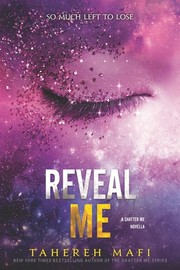
Reveal Me
A Shatter Me novella told by Kenji, set between Defy Me and Imagine Me, as the rebels learn Anderson has taken hostages and Juliette faces Emmaline.
2,098-word summary · 9 min read

Lore
Lore Perseous, the last of a hunted bloodline, is pulled back into the Agon when a wounded Athena offers her revenge against the god who killed her family.
2,188-word summary · 10 min read
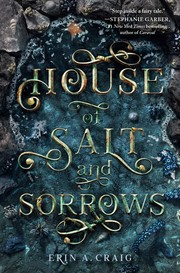
House of Salt and Sorrows
Annaleigh Thaumas investigates her sister's death in a cursed island manor where the balls are illusions and the sea god is always listening.
2,025-word summary · 9 min read