
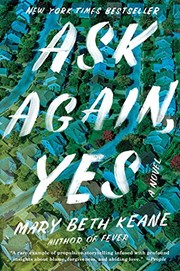
Ask Again, Yes
2,096-word summary 9 min read 400 pages in the book
- First published
- 2019
- Publisher
- Scribner
- Pages
- 400
- ISBN
- 9781982106980
Reading options
What's inside (7 sections)
I picked up Ask Again, Yes because a friend pressed it on me with the kind of insistence that usually means one of two things: the book wrecked her, or she needs someone to talk about it with. Both turned out to be true. Mary Beth Keane published it in 2019 with Scribner, a 400-page novel that follows two families across four decades, and it became one of those rare literary bestsellers that book clubs actually finish. I finished it in three sittings and then sat still for a while, thinking about how forgiving someone can really be asked to do.
The setup sounds almost cozy at first. Two young cops, Francis Gleeson and Brian Stanhope, meet as rookies with the NYPD in the Bronx in the early 1970s. They like each other well enough. They marry around the same time, Francis to Lena and Brian to Anne, and they buy houses next door to each other in Gillam, a fictional suburb north of New York City where the lawns are wide and the commuter trains run on time. Their kids grow up running between the two kitchens. If you have ever lived on a street like that, Keane gets the texture exactly right: the borrowed cups of sugar, the shared fences, the way children treat a neighbor house as an annex of their own.
From the beginning, though, something is off next door. Anne Stanhope is volatile in ways that go past ordinary unhappiness. She is suspicious, then withdrawn, then suddenly warm. She says things that do not quite track. Brian, a decent man who loves her, handles it the way a lot of husbands of that generation handled it: he minimizes, he covers, he tells himself and everyone else that Anne is fine. Lena Gleeson sees more than Brian wants to admit, and the friendship between the two women carries a constant low charge because of it. Keane never turns Anne into a villain. What she shows, patiently, is an illness going untreated inside a family that has decided not to name it.
The kids are the heart of the early chapters. Kate Gleeson, the eldest Gleeson child, and Peter Stanhope, the only Stanhope child, grow up as best friends and then, in the way of teenagers who have known each other forever, as something more. Their romance is sweet without being sentimental. They do homework at each other's tables. They know each other's parents' moods the way you know weather. Keane writes young love well because she does not oversell it. It just feels inevitable, which is exactly what makes the next part so hard to read.
The afternoon everything breaks
There is no way to summarize this book without saying what happens, so here it is. Anne, deep in psychosis and fixated on the idea that Kate is a threat or an intruder in her unraveling logic, shoots Kate with Brian's service revolver. Kate is badly wounded in the face. She survives, but she loses an eye, and her face is rebuilt over a series of surgeries that Keane describes with an unflinching attention to pain, drains, bandages, and the particular horror of looking in a mirror and meeting a stranger.
I want to pause here because this scene is the reason some readers will put the book down, and they should know that going in. It is sudden, it is violent, and Keane does not cushion it. But she also does not exploit it. The shooting takes up very little page space. What takes up page space is everything around it: Lena sleeping in a hospital chair, Francis standing in a hallway trying to be a cop and a father at the same time, Peter told he cannot see the girl he loves, Brian finally forced to confront what his denial helped allow. The gun was his. That fact sits in the middle of the book like a stone, and nobody gets to walk around it.
The aftermath scatters everyone. The Stanhopes leave Gillam. Brian and Anne's marriage does not survive what happened, though its ending is slow and grinding rather than clean. Peter is sent away to relatives, cut off from Kate by furious adults who cannot separate the boy from his mother's act. The two houses on the street in Gillam go on standing there, and the Gleesons go on living in one of them, and that simple fact starts to feel like its own kind of sentence.
The long middle, and why it matters
A weaker novel would jump straight from the shooting to a reunion. Keane does something harder and better: she makes you live through the years in between. Kate goes to college and trains as a social worker, building a working life in the city devoted to people most of the system has given up on. There is a clear line, though Keane never draws it in neon, between what Kate survived and the work she chooses. She knows what it means to need help and not get it in time. She also carries visible scars into every room she enters, and Keane is honest about what that costs a young woman: the stares, the questions she has to decide whether to answer, the way some people flinch and then hate themselves for flinching.
Peter's road is rougher. He drifts through his twenties, in and out of trouble, estranged from the wreckage of his parents and from the girl he was told to forget. Keane does not give him a tidy redemption arc or a single rock-bottom scene that explains everything. He just moves through years the way lost young men do, working, leaving, coming back, disappointing people who love him. When I say this section of the book is the reason to read it, I mean that Keane respects slow damage. She lets time pass the way it actually passes, in jobs and apartments and small failures, until one day the characters look up and twenty years are gone.
Meanwhile the parents age. Francis and Lena settle into the long routines of a good marriage, the kind built more on loyalty than on passion. Lena is the steadier and more perceptive of the two, the one who kept the family talking when silence would have been easier. And then Francis begins to decline. His memory slips, then his judgment, then larger pieces of himself, until Lena is caring full time for a man who is only intermittently the husband she knew. These chapters are among the most painful in the book, and Keane writes them without a trace of sentimentality. Dementia does not ennoble anyone here. It just takes, day after day, and Lena keeps showing up.
Kate and Peter, twenty years later
Sooner or later, in a book like this, the two young lovers have to meet again, and Keane handles the reunion with unusual restraint. There is no single thunderclap scene. Kate and Peter circle back into each other's lives as adults who have been shaped, and in some ways misshapen, by everything that happened. They know exactly what loving each other will cost. Kate's family cannot understand how she could take up with the son of the woman who shot her. Peter cannot offer Kate a version of himself untouched by his family history, because no such version exists.
They marry anyway. They have a daughter. And this is where the book gets genuinely interesting to me, because Keane refuses to treat their marriage as the happy ending. It is the start of a harder question: what does it mean to build a family on top of a wound that never fully closed? Peter loves Kate, and Kate loves Peter, and both of them are also, at times, furious about what the other one represents. Their fights have a particular charge because every argument carries the weight of the past inside it. A disagreement about money or parenting or holidays is never only about money or parenting or holidays. Keane writes married conflict with rare accuracy. Nobody says the perfect cruel thing. People say clumsy, half-true things, and then they have to live in the same house afterward.
Francis's opposition, or at least his inability to accept Peter, adds another pressure. Put yourself in his place: this is the boy whose mother put a bullet in your daughter's face. Forgiveness as an abstraction is easy. Forgiveness at the dinner table, watching your grandchild climb onto that boy's lap, is something else entirely. Keane does not judge Francis for struggling. She just shows it, and shows what it costs Lena to stand between her husband and her daughter.
Anne comes back
The last movement of the novel belongs, in a sense, to Anne. Older now, stabilized by medication and the grinding routines of managed illness, she re-enters Peter's life. She is not cured. Keane is careful about that. Anne remains fragile, limited, a woman who missed decades she cannot get back. But she is present, and Peter, who lost his mother twice (once to illness and once to what the illness made her do), begins the slow work of caring for her.
This is the part of the book that will divide readers, and I think that is intentional. Kate is asked to make room in her life for the woman who shot her. Not to excuse her, not to pretend it was anything other than what it was, but to allow Peter to love his mother without it being a betrayal of his wife. There are scenes here of almost unbearable awkwardness: Anne in their home, Anne near their daughter, everyone performing normal while the past fills the room like smoke. Keane earns these scenes by refusing to rush them. Nobody has a breakthrough. People just keep showing up, and showing up starts to count for something.
The title, which puzzled me until late in the book, finally lands. Without spoiling the exact moment, I will say it is about being asked something enormous a second time, after the first answer went up in flames, and finding it in yourself to say yes again. Marriage, forgiveness, family: everything in this novel gets a second asking. Whether yes is the right answer is left, wisely, a little open.
What works and what does not
So much works. Keane's greatest strength is her even-handed compassion. Every major character, including Brian in his denial and Anne in her illness and Francis in his stubbornness, gets to be a full person rather than a position in an argument. The time structure is handled beautifully; decades pass without whiplash, and the reader always knows where they stand. The prose is plain in the best way, clear and unshowy, with dialogue that sounds like people actually talk. And the central questions are real ones: how much does a parent owe a dangerous partner, how much does a victim owe anyone, whether love can be wise and still be love.
My criticisms are honest but mild. The middle sags in places, particularly in the long stretch where Peter is drifting; a few of those chapters feel like variations on a theme rather than forward motion. Sara, Kate's sister, never quite comes into focus as more than a sounding board, and I wanted either more of her or less. Some readers will find the ending too forgiving, too willing to gather everyone into a fragile peace that real life rarely grants. I understand that reaction. There were moments when I wanted Keane to be angrier, particularly at Brian, whose refusal to act on Anne's illness reads in retrospect as its own kind of violence.
But here is what I keep coming back to. This is a book about gun violence that is not really about guns, about mental illness that refuses to make illness an excuse or a verdict, about marriage as a daily practice rather than a feeling. It asks whether a family can absorb the worst thing and keep going, not by getting over it but by carrying it differently. If you like big-hearted, patient family sagas in the line of Alice McDermott or Elizabeth Strout, with an unblinking eye for how damage moves through generations, this one belongs on your shelf. Just know that the shooting comes without much warning, and that the book will stay with you longer than you expect. Mine has been sitting on my nightstand for weeks. I am not ready to put it away yet.
FAQ
When was Ask Again, Yes published?
Scribner published it on May 28, 2019. The first hardcover runs 400 pages with ISBN 9781982106980.
Who are the main characters?
Kate Gleeson and Peter Stanhope, the neighbors who fall in love as teenagers, plus their parents Francis and Lena Gleeson and Brian and Anne Stanhope.
Is Ask Again, Yes part of a series?
No. It is a standalone novel. Keane's earlier books are The Walking People and Fever, about Typhoid Mary, with different characters.
Similar books

A Spool of Blue Thread
Four generations of the Whitshank family in Baltimore, and the silences, resentments and quiet love they hand down without ever saying so.
2,408-word summary · 11 min read

The Berry Pickers
A four year old vanishes from a Maine blueberry camp in 1962, and two families carry the loss for decades until Joe and Norma face the truth.
2,606-word summary · 12 min read
Tender Is the Night
Dick Diver marries his patient Nicole, and their Riviera marriage slowly breaks apart in Fitzgerald's 1934 novel of money, care, and drinking.
2,607-word summary · 12 min read
Commonwealth
An uninvited kiss at a christening breaks two marriages, and six stepsiblings share wild summers until loss and a novel pull them apart.
2,348-word summary · 10 min read

Violeta
A woman born in 1920 writes her life story to her grandson, from one pandemic to another, through wealth, ruin, passion, and dictatorship in South America.
2,555-word summary · 11 min read

Revolutionary Road
A Connecticut couple who believe they are too good for the suburbs plan to move to Paris, and the plan slowly exposes everything they cannot say to each other.
2,085-word summary · 9 min read

Lisey's Story
Two years after her novelist husband dies, Lisey Landon follows a trail of clues into his childhood and the other world that made him a writer.
1,998-word summary · 9 min read

Howards End
Forster's 1910 novel follows two families, a house in Hertfordshire, and a burned note, asking whether money and feeling can ever be connected.
2,187-word summary · 10 min read

The Lowland
Two brothers grow up beside a marshy lowland in Calcutta, and the choices of the younger one draw the older into a life of duty, distance, and quiet grief that…
2,213-word summary · 10 min read
Stones from the River
Trudi Montag is born a dwarf in a small German river town in 1915 and grows up to keep the town's library and its secrets, from the First World War to the…
2,818-word summary · 13 min read

On Chesil Beach
Two newlyweds spend one terrible night on Chesil Beach in 1962, and the rest of their lives is decided by it.
2,456-word summary · 11 min read

The Pilot's Wife
Kathryn Lyons's husband dies in a plane crash, and the investigation reveals a secret life that forces her to rethink their marriage.
2,006-word summary · 9 min read
The House of Mirth
Lily Bart, beautiful and penniless at twenty-nine, navigates New York's marriage market until a Dorset yacht scandal strips her of the only currency she has.
2,468-word summary · 11 min read
We Were the Mulvaneys
After a rape following a school dance, the Mulvaneys, a family that believed it was blessed, comes apart over fifteen years. Narrated by the youngest son.
2,094-word summary · 9 min read
The Most Fun We Ever Had
Four Sorenson sisters orbit perfect parents hiding old cracks.
2,590-word summary · 12 min read
Change of Heart
Jodi Picoult's Change of Heart follows June Nealon, her ill daughter Claire, and death-row inmate Shay Bourne, whose wish to donate his heart forces a trial…
2,746-word summary · 12 min read
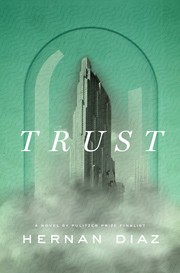
Trust
Four rival accounts of one Wall Street fortune collide: a 1930s novel, a tycoon's memoir, a secretary's story, and a wife's diary.
2,217-word summary · 10 min read

Lady Chatterley's Lover
A baronet's wife, starved in a marriage the war broke, takes the gamekeeper as her lover. Lawrence's banned 1928 novel of class and touch.
2,566-word summary · 11 min read
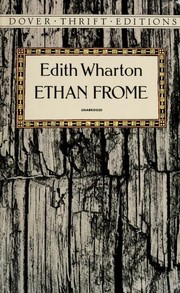
Ethan Frome
In snowy Starkfield, farmer Ethan Frome falls for his wife's young cousin Mattie, and one sled ride ends any hope of escape.
2,558-word summary · 11 min read

South of the Border, West of the Sun
A married Tokyo bar owner reunites with his lost childhood sweetheart and must choose between steady family life and a haunting first love.
2,844-word summary · 13 min read
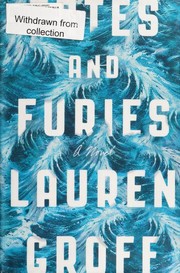
Fates and Furies
Lauren Groff tells one 24 year marriage twice, first through Lotto's bright luck, then through Mathilde's hidden past and quiet control.
2,992-word summary · 13 min read

Cleopatra and Frankenstein
A British painter and an older ad man marry on impulse in New York, then face depression, drinking, and tangled friends.
2,168-word summary · 10 min read

White Teeth
Archie and Samad's wartime bond tangles their London families across generations, genes, and faith.
2,110-word summary · 9 min read

Middlemarch
Idealistic Dorothea marries dry scholar Casaubon while ambitious doctor Lydgate marries Rosamond, and a Midlands town watches both marriages strain.
2,883-word summary · 13 min read
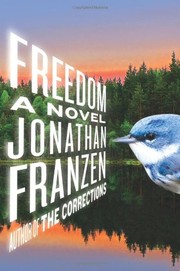
Freedom
A St. Paul couple and their grown children strain marriage, loyalty, and ideals in 2000s America.
2,678-word summary · 12 min read

The Vegetarian
After a bloody dream, Yeong-hye stops eating meat, and her ordinary marriage cracks open in Han Kang's spare and unsettling novel.
2,302-word summary · 10 min read

The Story of a New Name
Married Lila and student Elena grow apart and collide again across shops, Ischia, and Pisa.
2,523-word summary · 11 min read
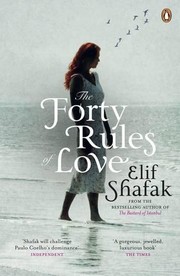
The Forty Rules of Love
A bored housewife reads a manuscript about Rumi and Shams, and the old story starts to change her life.
2,070-word summary · 9 min read

Stoner
William Stoner trades farm life for literature, then endures a cold marriage and petty campus wars in John Williams's quiet classic.
2,282-word summary · 10 min read
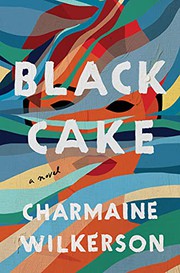
Black Cake
After their mother dies, estranged siblings Byron and Benny inherit a black cake and taped confession revealing her hidden life from Jamaica to London.
2,063-word summary · 9 min read