
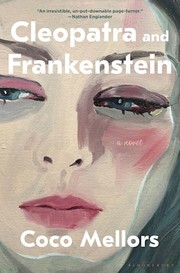
Cleopatra and Frankenstein
2,168-word summary 10 min read 370 pages in the book
- First published
- 2022
- Publisher
- Bloomsbury Publishing
- Pages
- 370
- ISBN
- 9781635576818
Reading options
What's inside (8 sections)
I picked up Cleopatra and Frankenstein because a friend kept talking about the first chapter and would not stop. She said it starts at a New Year's Eve party and ends with a marriage that should never have worked, and she was right. Coco Mellors published it with Bloomsbury Publishing in 2022, a 370 page debut set mostly in New York, and I read it fast, then sat with it for a few days.
The setup sounds like a screwball comedy. Cleo is 24, British, living in New York on a student visa that is about to run out. She paints, works odd jobs, shares a cramped place, goes out on New Year's Eve because staying home feels worse. Frank is in his mid forties, American, loud and generous, the kind of advertising man who pays for the whole table and means it. They meet outside in the cold while the party churns behind them. He is twenty years older. She is broke and unsure where she will live in three months. They talk. They kiss. A few months later they are married.
I liked how little Mellors explains that decision at first. Cleo needs a green card, yes, and the book does not hide it. Frank wants to be wanted in a way his money cannot buy. Both of them are lonely in a crowded city. So they do it.
Outside the party in the cold
The New Year's Eve meeting takes up a lot of space in my memory because it sets the tone for everything after. Cleo has come with friends. Frank has come with his own crowd. Neither of them really wants to be inside. Cleo is smoking or trying to get air, as I remember, and Frank finds her funny in a way that surprises him. He is used to pitching, to talking people into things, and here he is trying too hard and knowing it.
What makes the scene work is the imbalance. She notices his watch, his coat, the ease of a man who can call a car without checking his balance. He notices that she does not perform for him. She tells him she paints. He asks to see the work. Most men in his position would offer to buy something. Frank offers attention, which is rarer and more dangerous.
They leave together. Not to bed right away, or not only that. They walk. They get food. They talk about London and New York, about mothers and fathers, about what it feels like to be far from home. Cleo is sharp and a little guarded. Frank is open in a way that feels both kind and careless. By morning they have each other's numbers and a story they will retell at dinner parties.
I think Mellors wants you to feel the romance and the warning at the same time. It is exciting. It is also fast in a way that makes your stomach drop.
That drop stayed with me through the whole book.
A fast wedding and a big loft
Cleo and Frank marry within months. The book treats the wedding as both joke and contract. Friends raise eyebrows. Paperwork gets filed. Cleo's visa problem goes quiet. Frank gets a young wife who finds him interesting when most people his age want something from him.
They move into Frank's orbit, which means a large loft, dinners out, bottles that appear without anyone ordering. Frank works in advertising and does well. He has the confidence of a man who spent decades learning how to read a room. He is also drinking more than he admits. Morning drinks to steady himself. Evening drinks to celebrate. Drinks because the day went badly.
Cleo tries to paint in this new life. She has talent and training, and Mellors gives her studio scenes that felt true to me. Stretching canvas. Mixing colors that look wrong until they look right. Wiping a face out because the eyes came out dead. She wants to make work about bodies and faces and closeness, but her head keeps filling with noise. She misses London without wanting to go back. She loves the light in the loft and hates how quiet it gets when Frank is at work.
Money changes small fights into strange ones. Frank buys her things she did not ask for. A coat. A trip. Help for a friend. Cleo feels grateful and then trapped by the gratitude. She tells herself she would love him without the loft. She also knows she would not be in the country without the marriage certificate. That knowledge sits between them at breakfast.
Sex is good at first, then less steady. Frank wants closeness on demand. Cleo pulls back when she feels low. They both pretend it is stress.
Short paragraph for honesty: I found these early married chapters sadder than romantic.
When low moods settle in
Cleo lives with depression, and Mellors writes it without making it tidy. Some days Cleo cannot get up. Some days she gets up and paints for six hours and feels almost okay. She cancels plans. She answers texts late. She drinks with Frank because refusing feels like accusing him.
Frank has his own pattern. He is charming at parties and hard to live with after midnight. He lies about how much he drank. He promises to cut back. He means it for a week. Work stress gives him an excuse, and New York gives him bars on every block. He loves Cleo in a possessive way. He checks her phone in his mind even if he does not pick it up. He wants her to need him and then resents her for needing him.
They try therapy, both together and apart. The therapist scenes are some of the best pages. Cleo says she feels invisible inside the marriage. Frank says he feels judged for trying to help. The therapist asks simple questions that land hard. Who cleans up after a bad night. Who calls whom when panic hits at 2 a.m. Neither of them likes the answers.
Pregnancy enters the story and complicates everything. I will not lay out every medical detail because the book keeps it messy on purpose, as I remember, with a mix of want and fear and bad timing. Cleo is not sure she wants to be a mother. Frank thinks a baby might fix what drink keeps breaking. Friends give loud advice that helps no one. What happens around this part leaves Cleo raw and Frank helpless, and they grieve in opposite directions. She goes inward. He goes out.
Frank's drinking is not a background detail. It shapes fights, money choices, mornings after. Mellors does not let him off easy, but she does not turn him into a villain either.
Quentin and the people at the table
One reason the book runs to 370 pages is that Mellors keeps leaving the couple to follow their friends, chapter by chapter. At first I minded. Then I got attached.
Quentin is Cleo's best friend, funny and blunt, working through questions around gender and desire and how to be loved without shrinking. Quentin loves Cleo fiercely and tells her when she is lying to herself. The scenes between them, cooking in a small kitchen, walking home late, arguing about a boyfriend who treats Quentin badly, felt more alive than some of the loft scenes. Quentin is trying to live openly while Cleo is trying to disappear a little. That contrast hurts.
Zoe is Frank's younger sister, broke in New York and used to men paying for things. She dates older men with money, accepts gifts and rent help, tells herself it is practical. Mellors writes Zoe without sneering. Zoe knows the math of her choices. She wants safety and pretty things and to be taken seriously, and those wants pull in different directions. Her chapters show the same bargain Cleo made, only without the marriage license to make it respectable.
Then there is Jodie, steady and tired, who sees Frank clearly because she has known him longer. Santiago, who parties hard and covers pain with jokes. Eleanor, Frank's colleague or former partner depending on the scene, who brings out his worst need to impress. Each of them gets a full turn, with a past and a flat and a morning after.
Some readers will love this widening. I did, mostly. A few chapters slow the main story. Santiago's long night out, funny as it is, kept me from Cleo for too long. Still, the point lands. Marriage does not happen in a closed room. Friends carry parts of it.
Drinking, money, and the slow split
Halfway through, the marriage starts to crack in ways that cannot be patched with a weekend away. Frank gets a work win and celebrates by getting drunk and cruel. Cleo has a show or a chance to show, and Frank makes it about himself. They fight about antidepressants, about who drinks more, about whether love should feel this hard after less than two years.
Mellors is good at fight dialogue. People interrupt. They bring up old things. They apologize for tone instead of content. Frank says Cleo is cold. Cleo says Frank only listens when other people are watching. Both are partly right, which is why the fights go nowhere.
Money keeps warping things. Frank pays for Cleo's painting costs, for dinners with her friends, for a therapist Cleo likes. Generosity becomes control without anyone deciding it should. Cleo starts hiding small purchases and small feelings, which makes her feel guilty, which makes her withdraw more.
There is a stretch where they separate, or half separate, sleeping apart and seeing other people in unserious ways. Cleo stays with Quentin for a bit. Frank stays out late and tells himself he is fine. Neither of them is fine. Cleo paints darker work that is better for being honest. Frank misses meetings and lies to his boss. Friends take sides quietly, then refuse to take sides at all.
I should say the book can be frustrating here. Frank repeats promises. Cleo repeats silences. You want to shake both of them. I think that repetition is on purpose, to show how habits hold even when love is still there.
There is one dinner scene I kept thinking about. Frank hosts clients at home and drinks through the whole meal, getting louder with each course while Cleo refills water glasses and smiles. Later he says the night went well. Cleo says she felt like staff. He laughs it off, then sulks when she does not laugh with him. The next morning he brings her coffee and acts tender, and she forgives him before she has decided to. That loop, bright apology after dull hurt, explains why leaving takes so long.
It wore me down in a way I respected.
An ending without fairy lights
The last part does not give you a neat reunion. Cleo and Frank face what months of drinking and avoidance cost. They talk about whether to stay married, and the talk is plain and tired rather than dramatic. Lawyers are mentioned. Apartments are looked at. Friends stop joking about divorce and start helping with boxes.
Cleo keeps painting. That matters more than any speech. She makes self portraits that do not flatter. She sees a doctor regularly. She lets Quentin see her when she looks bad. She starts to imagine a life in New York that is hers, not borrowed from a husband. It is small progress, the kind you only notice looking back.
Frank tries to get sober, or sober enough to be honest about not being sober. He goes to meetings. He slips. He tells Zoe the truth about money for once. He writes Cleo a letter that is not a pitch. Whether he stays sober is left open, and I was glad Mellors did not tie it shut. Recovery in this book looks like effort, not transformation.
Quentin finds a steadier footing too, though not a perfect one. Zoe makes a harder choice about a man paying her rent. Jodie stops cleaning up Frank's messes. Nobody gets everything. Most people get a little clearer.
My fair criticism is this. The episodic shape means some side chapters feel like short stories stitched in. If you came for Cleo and Frank only, you will skim. The prose can lean into party talk, clever lines at dinner, hangovers described in loving detail, until grief has to push through. And Frank at times reads as a type, the rich older man with a bottle, even when Mellors tries to fill him in.
Still, I closed the book thinking about Cleo in her studio, alone and working. Not saved. Not ruined. Just present. For a novel about young marriage in a loud city, that felt honest. Mellors wrote a 2022 New York book that smells like rain on hot pavement and cheap wine and turpentine, and the smell lingers after the plot fades.
FAQ
Who is Cleo at the start of the book?
She is 24, British, living in New York as her student visa ends, and she paints while working odd jobs. She meets Frank outside a New Year's Eve party.
Does drinking play a large part in the marriage?
Yes, drinking shapes the marriage. Frank drinks to steady himself and to celebrate, lies about it, promises to stop, and his habits feed fights about money and care.
Do side characters get their own chapters?
Yes. Chapters follow Quentin, Zoe, Jodie, Santiago, and Eleanor in turn. Their choices show the same bargains around money, love, and need from other sides.
Similar books

Big Swiss
A transcriptionist for a sex coach falls for one of his clients, the tall Swiss gynecologist she calls Big Swiss, in a funny novel about work and secrets.
2,523-word summary · 11 min read

The Story of a New Name
Married Lila and student Elena grow apart and collide again across shops, Ischia, and Pisa.
2,523-word summary · 11 min read

My Year of Rest and Relaxation
A young art graduate tries to sleep for a year with pills and Reva while the city drifts toward 2001.
3,146-word summary · 14 min read

A Little Life
Four friends in New York orbit Jude, whose hidden past of abuse shapes every page of this 720-page epic.
1,972-word summary · 9 min read
The Perks of Being a Wallflower
Chbosky's Perks retold: Charlie's letters, Sam and Patrick, first year of high school in Pittsburgh.
1,951-word summary · 9 min read

Revolutionary Road
A Connecticut couple who believe they are too good for the suburbs plan to move to Paris, and the plan slowly exposes everything they cannot say to each other.
2,085-word summary · 9 min read
Lisey's Story
Two years after her novelist husband dies, Lisey Landon follows a trail of clues into his childhood and the other world that made him a writer.
1,998-word summary · 9 min read
Alone With You in the Ether
Two people in Chicago agree to six conversations, and the experiment becomes a love affair that is also a study of bipolar disorder, obsession, and the shape…
2,713-word summary · 12 min read

Howards End
Forster's 1910 novel follows two families, a house in Hertfordshire, and a burned note, asking whether money and feeling can ever be connected.
2,187-word summary · 10 min read

We Are Okay
Marin fled San Francisco after her grandfather vanished and stopped answering anyone. When Mabel visits her college dorm, she has to say what happened.
2,253-word summary · 10 min read

The Chosen
A shattered pair of glasses in a 1944 Brooklyn softball game starts a friendship between a Hasidic boy and his Orthodox neighbor, and their fathers pull them…
2,443-word summary · 11 min read
Infinite Jest
A film that kills its viewers, a tennis academy, a halfway house for addicts, and a future America where corporations name the years, all tangled together.
2,084-word summary · 9 min read

On Chesil Beach
Two newlyweds spend one terrible night on Chesil Beach in 1962, and the rest of their lives is decided by it.
2,456-word summary · 11 min read

A Spool of Blue Thread
Four generations of the Whitshank family in Baltimore, and the silences, resentments and quiet love they hand down without ever saying so.
2,408-word summary · 11 min read
The Pilot's Wife
Kathryn Lyons's husband dies in a plane crash, and the investigation reveals a secret life that forces her to rethink their marriage.
2,006-word summary · 9 min read
The House of Mirth
Lily Bart, beautiful and penniless at twenty-nine, navigates New York's marriage market until a Dorset yacht scandal strips her of the only currency she has.
2,468-word summary · 11 min read
The Most Fun We Ever Had
Four Sorenson sisters orbit perfect parents hiding old cracks.
2,590-word summary · 12 min read
Let the Great World Spin
A wire walker crosses the towers as Bronx lives collide below.
2,338-word summary · 10 min read
Every Last Word
A girl with OCD finds poetry and friends who know her secrets.
2,434-word summary · 11 min read
An Object of Beauty
Lacey climbs the art world from Sotheby to fraud and fall.
2,629-word summary · 12 min read

The Interestings
Meg Wolitzer follows Jules Jacobson from 1974 arts camp into middle age, as friendship with Ethan and Ash turns into envy, money gaps, marriage strain, and…
2,990-word summary · 13 min read
Summer Sisters
Vix and Caitlin share Martha's Vineyard summers from age twelve into adulthood, through first love, grief, marriage, and a disappearance that still haunts Vix.
3,633-word summary · 16 min read
Radio Silence
Head girl Frances loves a secret podcast made by shy Aled, and both crack under A-levels in Oseman's warm 2016 story of friendship, fandom, family and choosing…
2,778-word summary · 12 min read
Trust
Four rival accounts of one Wall Street fortune collide: a 1930s novel, a tycoon's memoir, a secretary's story, and a wife's diary.
2,217-word summary · 10 min read
Solitaire
Gloomy Tori Spring hunts school prank group Solitaire with odd Michael Holden while brother Charlie heals.
2,068-word summary · 9 min read
Lady Chatterley's Lover
A baronet's wife, starved in a marriage the war broke, takes the gamekeeper as her lover. Lawrence's banned 1928 novel of class and touch.
2,566-word summary · 11 min read
Ethan Frome
In snowy Starkfield, farmer Ethan Frome falls for his wife's young cousin Mattie, and one sled ride ends any hope of escape.
2,558-word summary · 11 min read
The Story of the Lost Child
Elena and Lila age through motherhood, quakes, and a vanishing.
2,500-word summary · 11 min read
Tender Is the Night
Dick Diver marries his patient Nicole, and their Riviera marriage slowly breaks apart in Fitzgerald's 1934 novel of money, care, and drinking.
2,607-word summary · 12 min read