
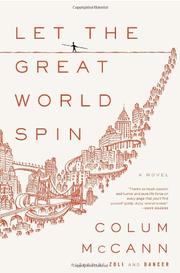
Let the Great World Spin
2,338-word summary 10 min read 368 pages in the book
- First published
- 2009
- Publisher
- Random House
- Pages
- 368
- ISBN
- 9781400063734
Reading options
What's inside (8 sections)
Everyone in New York looked up on the morning of August 7, 1974. A young Frenchman named Philippe Petit had strung a cable between the two towers of the World Trade Center, still new then, and he was walking back and forth across it, dancing a quarter mile above the street. Office workers stopped typing. Cab drivers stalled traffic. For a few minutes a city famous for minding its own business paid attention to one small figure in the sky. Colum McCann's novel Let the Great World Spin, published by Random House in 2009 at 368 pages, takes that morning as its still center and builds a whole city around it. It won the National Book Award, and it is easy to see why the judges bit. This is the rare big mosaic novel that earns its shape.
The structure first, because it decides everything about how the book reads. Eleven or so narrators tell overlapping stories out of order, and their lives touch without most of them knowing it. An Irish monk in the Bronx. His older brother. A Park Avenue widow grieving a son lost in Vietnam. Two young artists with a gold car and a drug habit. A grandmother turning tricks beside her own daughter. A judge. A nurse. And thirty years later, a young woman flying in to see an old lady after a stroke. The walker passes above all of them like a needle pulling thread. McCann got the title from Tennyson, from the line about letting the great world spin forever down the ringing grooves of change, and the book is his attempt to catch that spinning for one summer.
The man on the wire
Petit himself barely appears as a character, which is the right choice. We see him the way the city saw him: a rumor, a speck, a story people tell differently. Office girls on a coffee break watch through binoculars. A judge reads a police report. A grieving mother hears about it on the radio and flinches. One chapter follows the preparations obliquely, the rigging and the waiting, but McCann keeps the focus on the watchers. The walk matters because everyone witnesses it together and separately. For a few minutes the towers belong to a single human body instead of money and concrete.
I found these passages the most purely enjoyable writing in the book. McCann can describe height and air and crowds with a physical joy that lifts off the page. But he also uses the walk as a moral tuning fork. Every character measures their own private balancing act against the public one. A monk walking the line between vows and love. A mother balancing grief and guilt. An artist balancing freedom and responsibility. The parallel is never subtle, and readers allergic to symbolism should be warned now: this novel believes in it the way cathedrals believe in arches.
Corrigan and Ciaran
The heart of the book, for me, is the story of two Irish brothers in the Bronx. Corrigan is the younger, a Jesuit novice turned monk who has chosen to live in the projects among addicts and prostitutes. He works in a nursing home. He leaves his apartment door unlocked so the street women can use his bathroom. He has befriended Tillie and her daughter Jazzlyn, who work the same corners, and their small kindnesses to each other form one of the tenderest threads McCann has ever written. Corrigan is also falling in love with Adelita, a nurse from the home, and the love frightens him more than the neighborhood ever could. He has taken vows. He has also developed a blood condition, a clotting sickness that bruises his arms and reminds him daily that his body has its own plans.
Ciaran, the older brother, flies in from Dublin thinking he will rescue Corrigan from squalor and bad choices. He finds a man more at peace than anyone he knows back home, and it infuriates him. Their chapters together are full of the particular comedy and cruelty of brothers: drinking, arguing about God, misunderstanding each other in bars, then a sudden moment of clarity that neither can take back. Ciaran notices the bruises and assumes drugs. Corrigan confesses the illness and the love for Adelita in the same conversation. The scene where Ciaran sits with Adelita and talks through what his brother is, a good man caught between devotions, is one of the novel's high points, quiet and adult in a book that sometimes reaches for the large gesture.
What happens to Corrigan I will state plainly, since these are summaries and the event drives everything: on the morning of the walk, driving Jazzlyn home from court after her acquittal, his van is struck on the FDR Drive. Jazzlyn dies at once. Corrigan holds on long enough for Ciaran and Adelita to reach the hospital, tells Adelita he saw something beautiful, and dies. It is a measure of McCann's control that the death lands even though the book has been signaling it for a hundred pages. The "something beautiful" is the walker, glimpsed through a windshield, and the image binds the high wire to the low street in a single look.
The mothers on Park Avenue
If the Bronx chapters are the book's conscience, the Park Avenue chapters are its most sustained piece of social portraiture. Claire, a wealthy Southern transplant married to a judge, hosts a regular gathering of mothers who have lost sons in Vietnam. They drink coffee in a beautiful apartment and try to say the unsayable to each other. The group crosses lines of money and race that 1970s New York policed hard, and McCann writes the awkwardness honestly. The women bond and chafe in the same breath.
Claire's own story is the anchor. Her son Joshua was not even in combat. He was a programmer, writing code that tallied American casualties by machine, and he died when a grenade went off in a coffee shop. Claire tells the group how she smiled and thanked the officers who brought the news, and the detail is devastating precisely because it is so small and so believable. She cannot forgive herself for that smile. She cannot forgive the walker either, at first. When another mother mentions seeing the tightrope man and feeling that it was her dead son come back, Claire feels something close to rage. How dare a stranger risk his life for applause when her boy was forced to give his for nothing.
The chapters build to an evening that goes wrong and then rights itself in an unexpected way. Claire, frayed and thoughtless, offers her favorite of the group, a Black woman named Gloria, money for staying late, and both women are stung by what the offer reveals. Gloria leaves, is robbed of her purse with her sons' photographs on the way home, and comes back to Claire's apartment in distress. The two women talk through the night. When Claire's husband Solomon, the judge, comes home, he mentions almost in passing that he presided over the walker's case that day and fined him a dollar and ten cents, a penny a floor, plus a free performance for the city's children. It is a lovely comic beat, and it quietly reframes the walker for Claire: not a daredevil mocking the dead, but a young man being folded, gently, back into the city's life.
Then comes the thread that ties Park Avenue to the Bronx. Riding home in Claire's taxi, the two women see small children being led away by a social worker. They are Jazzlyn's daughters. Gloria, who has lost sons and knows exactly what unused love feels like, steps forward and claims them. By the end of the novel she has raised them. It is the book's boldest coincidence and its warmest payoff, and your tolerance for the first will decide how you feel about the second.
Lara, Blaine, and the gold car
The crash has another side, and McCann gives it full weight. Lara and Blaine are young artists, married, living upstate in a cabin where they went to get clean. The night before the crash they slip, drive back to the city still high, and their gold car is the one that hits Corrigan's van. Blaine is driving. Lara begs him to stop. He does not. They leave a dead girl and a dying monk on the highway and carry the secret home like a second addiction.
Lara's chapters are guilt rendered almost physically. She checks hospitals. She lies to nurses, claiming to be Corrigan's cousin, and collects his few belongings, including a keychain of photographs she mistakes for his children. She drives to his address and walks into his apartment to find Ciaran and Adelita cleaning it out, and the scene that follows is excruciating in the best way: three mourners being polite to each other while only one of them knows the whole truth. Lara starts visiting. She goes to Jazzlyn's funeral, where Tillie is brought in handcuffs. She accepts a ride from Ciaran, who recognizes her car mid journey, and the confrontation that follows in a bar is one of the rawest things in the book. Ciaran tells her about his brother. She tells him almost everything. Almost.
I admire how McCann refuses to make Lara and Blaine simple villains. Blaine armors himself with excuses. Lara does the harder thing and stays inside the guilt until it changes her. Years later, the coda reveals that she and Ciaran married, which sounds impossible on paper and feels inevitable once you have watched them sit with each other in grief. The book's argument is that responsibility taken on, rather than fled, is what lets broken people go on living. It is not a subtle argument. McCann makes it with enough concrete suffering that it lands anyway.
Tillie and the price of the plea
Tillie is the character I cannot shake. A grandmother in her fifties who works the streets alongside her teenage daughter, funny and profane and clear eyed about exactly what the world thinks of her. The night before the crash, mother and daughter are arrested. A detective offers the standard ugly bargain: if Tillie pleads guilty to a heavier charge, Jazzlyn walks free. Tillie takes it. She always takes it. That is what mothers in her position do, and McCann writes the decision without a flicker of sentimentality. Then Jazzlyn dies the next morning in the crash, and the bargain becomes a epitaph. Tillie's remaining chapters take place in prison, serving time for a daughter who no longer exists.
Her case, in another of the book's braided ironies, passed through Solomon's courtroom, the same judge who fined the walker his dollar and ten cents. Tillie does not know this. She knows her cell, her memories, and the visits from Lara, who brings her volumes of Rumi at Ciaran's suggestion and reports on the granddaughters. Tillie plans her own death with the same practicality she brought to everything else, and carries it out. Before she goes, Gloria brings Jazzlyn's children to see her, and Tillie decides it is better to stay a story rather than a grandmother, convinced her life poisoned her daughter's. It is the bleakest judgment in the book, delivered by the character least able to afford it, and McCann does not soften it. Some damage, the novel suggests, cannot be repaired, only acknowledged. The walker gets a fine and a round of applause. Tillie gets a cell and a choice no one should have to make. The contrast is deliberate and furious.
Jaslyn, 2006, and what holds it together
The final movement jumps thirty-two years forward. Jazzlyn's daughter, who has renamed herself Jaslyn, flies into New York to visit Claire, now mostly incapacitated after a stroke. In the airport security line she meets Pino, a doctor with a joke and a detention, and their brief encounter gives the book one last reminder that cities run on strangers colliding. Jaslyn's visit to Claire is quiet, almost plotless, and that is the point. The great events are decades gone. What remains is a young woman standing in a room with an old woman, both of them alive because of choices made by people they barely knew.
So who should read this, and what should they brace for? The strengths first: McCann's sentences are gorgeous without turning purple, and his New York in the seventies feels researched down to the last detail without ever reading like research. The linked structure pays off again and again; a throwaway line in one chapter becomes a hammer blow two hundred pages later. The best chapters, Corrigan and Tillie and Claire, stand with anything in recent American fiction.
The strains are real too. Not every voice is equally convincing, and a couple of the shorter bridge chapters feel like scaffolding the author needed rather than people the reader needs. The coincidences pile high: the same judge, the same crash, the same children passed hand to hand across a city of millions. If you demand strict plausibility, the machinery will show. And the uplift, the insistence that all these threads form one humane pattern, can feel willed in the final pages, as if McCann loved his people so much he could not leave them in the mess he found them in.
I landed, finally, on admiration with reservations, which seems to be where most serious readers of this book end up. It won the National Book Award in 2009 and the Dublin prize in 2011, and whatever you think of prizes, the ambition here is the real thing: a novel that tries to hold an entire city, high wire to gutter, in a single gaze. Read it slowly. Let the chapters echo each other. And when you finish, look up Petit's actual walk, the photographs of that small figure between the towers. The novel sends you back to the real morning, which is exactly what the best historical fiction should do.
FAQ
Is the tightrope walker based on a real person?
Yes. Philippe Petit crossed between the Twin Towers on August 7, 1974, and McCann builds the novel around that date.
Do I need to read the chapters in order?
The book is deliberately non-linear, so read in order the first time; later chapters reframe earlier ones.
Similar books

Sophie's Choice
A young Southern writer in 1947 Brooklyn befriends a brilliant, unstable couple and slowly learns the story of the Polish Catholic woman at the center of their…
2,798-word summary · 12 min read
Disgrace
A professor falls after an affair, then faces violence at his daughter farm.
2,533-word summary · 11 min read
An Object of Beauty
Lacey climbs the art world from Sotheby to fraud and fall.
2,629-word summary · 12 min read
House of Sand and Fog
A foreclosed California house pits recovering addict Kathy against Iranian immigrant Behrani, with a deputy whose obsession turns fatal.
2,008-word summary · 9 min read
The Catcher in the Rye
J. D. Salinger's The Catcher in the Rye explained: Holden's weekend in New York, the phony adults, Phoebe's carousel, and why readers keep coming back to him.
2,477-word summary · 11 min read
Violeta
A woman born in 1920 writes her life story to her grandson, from one pandemic to another, through wealth, ruin, passion, and dictatorship in South America.
2,555-word summary · 11 min read
Take My Hand
In 1973 Montgomery, a young nurse discovers that two sisters were sterilized without consent, and spends the rest of her life living with what she could not…
2,126-word summary · 9 min read

Revolutionary Road
A Connecticut couple who believe they are too good for the suburbs plan to move to Paris, and the plan slowly exposes everything they cannot say to each other.
2,085-word summary · 9 min read
The Lowland
Two brothers grow up beside a marshy lowland in Calcutta, and the choices of the younger one draw the older into a life of duty, distance, and quiet grief that…
2,213-word summary · 10 min read

The Chosen
A shattered pair of glasses in a 1944 Brooklyn softball game starts a friendship between a Hasidic boy and his Orthodox neighbor, and their fathers pull them…
2,443-word summary · 11 min read
Infinite Jest
A film that kills its viewers, a tennis academy, a halfway house for addicts, and a future America where corporations name the years, all tangled together.
2,084-word summary · 9 min read
The Storyteller's Secret
A New York journalist goes to India to learn why her grandmother loved a British officer, and why a family servant kept the truth for forty years.
2,270-word summary · 10 min read
Stones from the River
Trudi Montag is born a dwarf in a small German river town in 1915 and grows up to keep the town's library and its secrets, from the First World War to the…
2,818-word summary · 13 min read

Ivanhoe
A disinherited Saxon knight, a great tournament, a besieged castle and a trial by combat. Scott's most famous novel, set in England in 1194.
2,834-word summary · 13 min read
Euphoria
Three anthropologists in 1930s New Guinea turn fieldwork into a love triangle, and a real history breathes behind them.
2,048-word summary · 9 min read

Wide Sargasso Sea
Jean Rhys gives the first Mrs. Rochester a Caribbean childhood, a marriage built on money and suspicion, and a voice that Charlotte Bronte left in the attic.
2,021-word summary · 9 min read
The Sisters Brothers
Two hired killers ride from Oregon to Gold Rush California to murder a prospector, and find their trade, their brotherhood, and the frontier myth coming apart.
2,095-word summary · 9 min read
The Silence of the Girls
Briseis, queen of Lyrnessus, is captured by Achilles and narrates the Trojan War from inside the Greek camp, where women are prizes and survival is its own…
2,098-word summary · 9 min read
The Diviners
In 1920s New York, Evie O'Neill's ability to read objects pulls her into an occult investigation that awakens something far older and more dangerous.
2,045-word summary · 9 min read
The Birth of Venus
A Florentine merchant's daughter trains as an artist, marries a man who hides a secret, and survives Savonarola's bonfire of the vanities.
2,404-word summary · 11 min read
Mother Night
Howard W. Campbell Jr., a Nazi propagandist and American spy, tells the story of his double life from an Israeli prison cell while waiting to be tried for war…
1,988-word summary · 9 min read
Bring Up the Bodies
Thomas Cromwell sets out to destroy Anne Boleyn, building a case from rumor and revenge while Henry VIII waits to marry Jane Seymour.
2,066-word summary · 9 min read

The Story of Edgar Sawtelle
A mute boy on a Wisconsin dog-breeding farm relives Hamlet as his uncle returns, his father dies in the barn, and the dogs inherit what is left.
2,392-word summary · 11 min read
The Orphan Master's Son
Adam Johnson's Pulitzer-winning novel follows Pak Jun Do from a North Korean orphanage to a deadly identity swap, under a state whose loudspeakers never stop…
2,219-word summary · 10 min read
The House of Mirth
Lily Bart, beautiful and penniless at twenty-nine, navigates New York's marriage market until a Dorset yacht scandal strips her of the only currency she has.
2,468-word summary · 11 min read
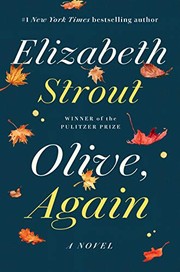
Olive, Again
Elizabeth Strout returns to Crosby, Maine, as Olive Kitteridge marries Jack Kennison, confronts her son, and faces old age, grief, and small-town judgment.
2,333-word summary · 10 min read
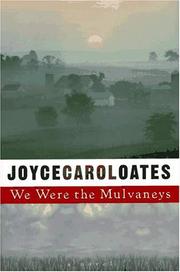
We Were the Mulvaneys
After a rape following a school dance, the Mulvaneys, a family that believed it was blessed, comes apart over fifteen years. Narrated by the youngest son.
2,094-word summary · 9 min read
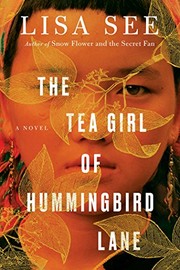
The Tea Girl of Hummingbird Lane
A Chinese tea farming mother gives up a daughter who later seeks roots.
2,607-word summary · 12 min read
The Red Badge of Courage
Henry Fleming runs at Chancellorsville, then returns to stand.
2,486-word summary · 11 min read
The Prisoner of Heaven
Fermin Christmas past returns with a stranger and a prison debt.
2,388-word summary · 11 min read