
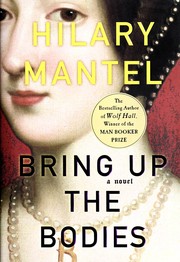
Bring Up the Bodies
2,066-word summary 9 min read 432 pages in the book
- First published
- 2012
- Publisher
- Fourth Estate
- Pages
- 432
- ISBN
- 9780805090031
- Series
- Thomas Cromwell (#2)
Reading options
What's inside (9 sections)
The first thing to say about Bring Up the Bodies is that it is not a standalone book. It begins where Wolf Hall left off, with Thomas Cromwell near the height of his power and Anne Boleyn still queen. If you have not read Wolf Hall, the opening chapters will feel like walking into a conversation that has been going on for years. Names arrive without explanation. Alliances shift in a sentence. Cromwell's household is a crowd of cousins, wards, clerks, and servants, and Mantel expects you to keep up. Once you do, the novel is one of the most gripping pieces of historical fiction written in the last twenty years.
Hilary Mantel published it in 2012. Fourth Estate published the UK edition and Henry Holt published the American edition. The first edition runs 432 pages and carries the ISBN 9780805090031. It is the second book in the Thomas Cromwell trilogy, between Wolf Hall and The Mirror & the Light. It won the Man Booker Prize in 2012 and the Costa Book of the Year, and it was shortlisted for the Walter Scott Prize. The novel covers a short period, roughly 1535 to 1536, and its subject is the destruction of Anne Boleyn.
The world of the court
The book opens at Wolf Hall, the Seymour family seat. Henry VIII and his court are guests. Cromwell is there, watching. Jane Seymour is quiet, pale, and careful. Henry notices her. Cromwell notices Henry noticing her. The whole novel is built out of moments like this, moments when a glance becomes a policy and a policy becomes a death.
Mantel writes in the present tense, and she writes in a free indirect style that stays close to Cromwell's mind. The pronoun "he" almost always means Cromwell, which can be confusing when there are other men in the room. The effect is deliberate. We are inside Cromwell's head, and Cromwell is a man who is always calculating. He watches faces, remembers favors, and files away weaknesses. The prose has the texture of a mind at work.
Cromwell is the son of a blacksmith, a self-made man in a court of inherited privilege. He is also a widower, a father, a patron, and a collector of people. His household includes his son Gregory, his ward Rafe Sadler, his sister's children, and a circle of clerks and agents. He is loyal to those inside his circle and ruthless to those outside it. The novel does not soften him. It makes him fascinating.
The King is tired of Anne. The marriage that began with such promise has produced a daughter, Elizabeth, and a series of miscarriages. Anne is sharp, intelligent, and politically astute, and she has made enemies. Henry wants a son. He also wants Jane Seymour. He tells Cromwell, "I cannot live as I have lived." That sentence is the engine of the plot. Cromwell understands that the King is asking him to end the marriage, and he understands that the request is also a test.
The legal machine
Cromwell does not simply murder Anne. He builds a case. He talks to her father, her brother, her household, and her enemies. He collects rumors. He listens to Mark Smeaton, a musician in Anne's service, and to Lady Rochford, Anne's sister-in-law. He hears stories about Anne's supposed lovers: Smeaton, Henry Norris, Francis Weston, William Brereton, and Anne's brother George Boleyn. Some of the stories are plausible. Some are contradictory. Some are clearly invented. Cromwell assembles them into a narrative of adultery and treason.
The novel's central subject is how a legal system can be used to destroy a person. Cromwell is not a monster who enjoys killing. He is a bureaucrat who believes that the state must be protected, and he is willing to bend evidence to do it. He also has personal motives. Anne and her circle helped bring down Cardinal Wolsey, Cromwell's mentor. The men he targets are the men who mocked Wolsey and celebrated his fall. Cromwell's revenge is not the official reason for the trial, but it is part of the truth.
Mantel is careful to keep the question of Anne's guilt open. The novel does not say that Anne was innocent. It says that the case against her was constructed, that the men accused with her were not given a fair chance, and that the King wanted her gone. The ambiguity is the point. Cromwell himself is not sure what happened. He knows that the evidence is thin. He proceeds anyway, because the King's desire is the closest thing to law in England.
The title comes from the legal instruction to bring the accused forward, to produce the bodies in court. It also carries a darker suggestion, the bodies of the men who will die. Mantel uses the phrase as a threat and as a joke. The court is a place where words can kill.
Anne's fall
Anne's fall is gradual and then sudden. She is arrested, taken to the Tower, and tried. Her brother George is tried with her. The men accused of being her lovers are tried and executed. Anne is found guilty of adultery and treason. She makes a final speech at the scaffold, calm and controlled. She praises the King and asks God to bless him. Then the sword falls.
Mantel does not linger on the gore. The execution is described in a few lines, and the horror comes from the anticipation. The reader knows what is going to happen. The characters know what is going to happen. The only question is how they will behave while it happens. Anne's dignity is the strongest rebuke to the men who destroyed her. She does not beg. She does not confess. She plays the role that is required of her and leaves the stage.
Cromwell watches. He is not triumphant. He is tired. He has won, but the victory is not clean. He has destroyed a queen and her friends, and he has done it with paperwork and testimony. The novel's moral weight comes from the gap between the elegance of the prose and the ugliness of the work. Mantel never lets the reader forget that this is a man who sends people to their deaths and then goes home to dinner.
The subplot involving Katherine of Aragon, Henry's first wife, is also important. Katherine dies during the novel, and her death removes one obstacle to Henry's plans. The novel treats her with respect. She is stubborn, proud, and deeply religious. Her death is not a release for Anne. It is a reminder that the King's marriages are not private affairs. They are political settlements, and the women in them are expendable.
Cromwell's household and the private man
The scenes at home are the novel's counterweight to the court. Cromwell's household is noisy, warm, and complicated. His son Gregory is growing up. His ward Rafe is becoming a useful agent. His sister Bet is managing the household. His clerks are loyal. The domestic scenes show a man who is capable of affection, and they make his public actions more disturbing. He is not a cold machine. He is a person who loves his family and still does terrible things.
Mantel is good at the physical details of sixteenth-century life: the food, the clothes, the fires, the smells, the cold. The novel is full of small sensory observations that make the world feel lived in. A room is described by its light. A person is described by the way they hold a cup. The historical research is invisible because it has been absorbed into the prose.
The relationship between Cromwell and Jane Seymour is handled with restraint. Cromwell is attracted to her, or at least interested in her. He notices her stillness, her pale skin, her calm. He also knows that she is going to be the next queen, and that his own future depends on managing her family. The attraction is never allowed to become a romance. It is another piece on the board.
The ending
The novel ends with Henry married to Jane Seymour and Cromwell raised to the peerage as Baron Cromwell of Wimbledon. He has engineered the King's new marriage and secured the alliance with the Seymour family. His position seems stronger than ever. The final scenes are quiet. The court moves on. The dead are buried. Cromwell sits in his new title and looks at the future.
The irony is that the reader knows what Cromwell does not. The third book, The Mirror & the Light, will cover his fall. Bring Up the Bodies is the story of a man at the top of his power, and the pleasure of the book is watching him work. The shadow of the third volume gives the ending a chill. He has learned how to destroy a queen. He has not learned how to protect himself.
The last line is famous, and it is a good one. It is a small, human moment after hundreds of pages of political maneuvering. Mantel understands that history is made of ordinary gestures as well as executions. The novel's final image is not a crown or a scaffold. It is a man in a room, thinking about what comes next.
Style and criticism
Mantel's prose is the main event. She writes in a compressed, elliptical style that rewards attention. Pronouns shift. Sentences are short and then long. Dialogue is embedded in narration without quotation marks. The effect is intimacy. We are not told what Cromwell thinks. We are inside his thoughts, and the thoughts are not always clear even to him.
The style is also the book's biggest obstacle. Some readers find the pronoun confusion frustrating. Others find the present tense affected. The novel assumes a lot of historical knowledge, and it does not provide a glossary. If you do not know who Thomas More, Cardinal Wolsey, or the Boleyn family are, you will struggle. Wolf Hall is essential preparation. Bring Up the Bodies is not an entry point.
The critical reception was almost universally positive. Reviewers praised the prose, the psychological depth, and the moral complexity. Janet Maslin in the New York Times called the retelling fresh and terrifying. The Booker Prize judges called it a masterpiece of historical fiction. Some critics argued that the novel is cold, that Cromwell's interiority is a performance, and that the supporting characters are less vivid than in Wolf Hall. Those criticisms have some force. The book is more focused than its predecessor, and focus can feel like narrowness.
The novel also raises questions about historical fiction and truth. Mantel is not writing a biography. She is writing a novel that imagines the inner life of a man who left few personal records. She fills the gaps with plausible speculation. The result is not a documentary. It is an interpretation, and it is honest about its own constructedness. The reader is invited to see the past as a place where people made choices, not as a set of inevitable events.
Why it matters
Bring Up the Bodies is a book about power and the people who exercise it. It is also a book about women who are destroyed by men who claim to be protecting order. Anne Boleyn is not a saint. She is ambitious, sharp, and sometimes cruel. She is also a victim of a legal system that was designed to serve the King. Mantel refuses to simplify her. That refusal is what makes the novel endure.
I read it in a few days, and then went back to the trial scenes. They are terrifying because they are so calm. The outcome is never in doubt, but the procedure matters. The forms are observed. The law is cited. The men who condemn Anne believe they are doing the right thing, or they believe they have no choice. That is how institutions fail. Not with a shout, but with a memorandum.
The novel is not for everyone. It is dense, slow in places, and demanding. It is also one of the best books I have read about the relationship between language and violence. Cromwell's weapon is not a sword. It is a sentence. Mantel shows how a sentence can be built, repeated, and used to kill. That is a lesson worth learning, and the book teaches it without a lecture.
FAQ
Do I need to read Wolf Hall before Bring Up the Bodies?
Yes. Bring Up the Bodies begins where Wolf Hall ends and assumes you know the characters, alliances, and previous events.
Did Bring Up the Bodies win the Booker Prize?
Yes. It won the 2012 Man Booker Prize and the 2012 Costa Book of the Year.
Is Bring Up the Bodies historically accurate?
It follows the documented events of Anne Boleyn's fall closely but imagines Cromwell's inner life and leaves the question of Anne's guilt open.
Similar books
More from Thomas Cromwell first, then related titles.
Wolf Hall
In Mantel's Booker winner, Thomas Cromwell rises from a Putney forge to Henry VIII's council, steering the annulment crisis past Wolsey's fall toward a break…
2,911-word summary · 13 min read

Violeta
A woman born in 1920 writes her life story to her grandson, from one pandemic to another, through wealth, ruin, passion, and dictatorship in South America.
2,555-word summary · 11 min read
The Boleyn Inheritance
Three women narrate Henry VIII's fourth and fifth marriages: a foreign bride who survives, a teenage queen who does not, and the widow who opens the door.
2,391-word summary · 11 min read
The Queen's Fool
A young Jewish refugee with second sight becomes a court fool to Edward VI, Mary I, and Elizabeth, and learns what it costs to tell the truth.
2,412-word summary · 11 min read
Trust
Four rival accounts of one Wall Street fortune collide: a 1930s novel, a tycoon's memoir, a secretary's story, and a wife's diary.
2,217-word summary · 10 min read
Midnight's Children
Saleem Sinai, born at India's independence midnight, narrates his family's saga as his life mirrors the new nation's history.
2,734-word summary · 12 min read

Heretics of Dune
Fifteen centuries after Leto II, the Bene Gesserit raise a new Duncan Idaho while the Honored Matres return and Rakis burns.
2,673-word summary · 12 min read

The Shadow Sister
Star D'Apliese steps out of her sister's shadow and follows a bookshop clue into the Edwardian life of Flora MacNichol, a woman who gave up love for duty.
2,260-word summary · 10 min read

Howards End
Forster's 1910 novel follows two families, a house in Hertfordshire, and a burned note, asking whether money and feeling can ever be connected.
2,187-word summary · 10 min read

Sophie's Choice
A young Southern writer in 1947 Brooklyn befriends a brilliant, unstable couple and slowly learns the story of the Polish Catholic woman at the center of their…
2,798-word summary · 12 min read
Only Time Will Tell
A Bristol dockworker's son wins a scholarship, falls in love with the daughter of the family that owns the shipyard, and learns that his father's death was not…
2,082-word summary · 9 min read

Fathers and Sons
Arkady brings the nihilist Bazarov home to his father's estate, and a generational argument turns into love, a duel, and an early death.
2,192-word summary · 10 min read
The Lowland
Two brothers grow up beside a marshy lowland in Calcutta, and the choices of the younger one draw the older into a life of duty, distance, and quiet grief that…
2,213-word summary · 10 min read
The Storyteller's Secret
A New York journalist goes to India to learn why her grandmother loved a British officer, and why a family servant kept the truth for forty years.
2,270-word summary · 10 min read
Stones from the River
Trudi Montag is born a dwarf in a small German river town in 1915 and grows up to keep the town's library and its secrets, from the First World War to the…
2,818-word summary · 13 min read
On Chesil Beach
Two newlyweds spend one terrible night on Chesil Beach in 1962, and the rest of their lives is decided by it.
2,456-word summary · 11 min read

Ivanhoe
A disinherited Saxon knight, a great tournament, a besieged castle and a trial by combat. Scott's most famous novel, set in England in 1194.
2,834-word summary · 13 min read
Euphoria
Three anthropologists in 1930s New Guinea turn fieldwork into a love triangle, and a real history breathes behind them.
2,048-word summary · 9 min read

Wide Sargasso Sea
Jean Rhys gives the first Mrs. Rochester a Caribbean childhood, a marriage built on money and suspicion, and a voice that Charlotte Bronte left in the attic.
2,021-word summary · 9 min read
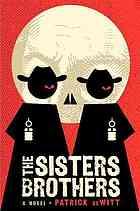
The Sisters Brothers
Two hired killers ride from Oregon to Gold Rush California to murder a prospector, and find their trade, their brotherhood, and the frontier myth coming apart.
2,095-word summary · 9 min read
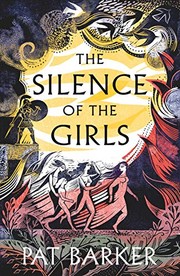
The Silence of the Girls
Briseis, queen of Lyrnessus, is captured by Achilles and narrates the Trojan War from inside the Greek camp, where women are prizes and survival is its own…
2,098-word summary · 9 min read
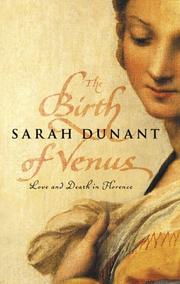
The Birth of Venus
A Florentine merchant's daughter trains as an artist, marries a man who hides a secret, and survives Savonarola's bonfire of the vanities.
2,404-word summary · 11 min read
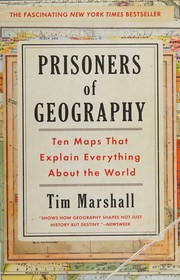
Prisoners of Geography: Ten Maps That Tell You Everything You Need to Know About Global Politics
Tim Marshall explains how mountains, rivers, coasts, and resources shape the choices of nations, from Russia's flat borders to the chokepoints of the South…
2,328-word summary · 10 min read
Mother Night
Howard W. Campbell Jr., a Nazi propagandist and American spy, tells the story of his double life from an Israeli prison cell while waiting to be tried for war…
1,988-word summary · 9 min read
The Orphan Master's Son
Adam Johnson's Pulitzer-winning novel follows Pak Jun Do from a North Korean orphanage to a deadly identity swap, under a state whose loudspeakers never stop…
2,219-word summary · 10 min read
Exodus
Leon Uris's sweeping 1958 novel follows Jewish refugees, Haganah fighters, and Holocaust survivors from Cyprus to the founding of Israel and the 1948 war.
2,529-word summary · 11 min read
Death Comes to Pemberley
P.D. James drops a murder onto the Pemberley estate and sends Wickham to trial, reading Austen's most famous marriage through the machinery of Georgian justice.
2,318-word summary · 10 min read
The War That Saved My Life
Ten-year-old Ada has never left her London flat, hidden away because of her clubfoot. Wartime evacuation sends her to Kent, where a reluctant guardian and a…
2,252-word summary · 10 min read
The Last Kingdom
Kidnapped by Danish raiders as a boy and raised in their halls, Uhtred of Bebbanburg must choose what he is when the fight for England begins.
1,997-word summary · 9 min read
The Prisoner of Heaven
Fermin Christmas past returns with a stranger and a prison debt.
2,388-word summary · 11 min read