

Ivanhoe
2,834-word summary 13 min read 544 pages in the book
- First published
- 1819
- Publisher
- Penguin Classics
- Pages
- 544
- ISBN
- 9780140436587
- Series
- Waverley Novels (#10)
Reading options
What's inside (10 sections)
I went into Ivanhoe expecting a textbook version of the Middle Ages, the kind that sits next to the encyclopedias in a school library. What I got was a book that behaves like a fairground show. There is a tournament, a siege, a trial by combat, and a great deal of shouting in the first person. That is a compliment. Walter Scott wrote it in 1819, and it is still, by a wide margin, the only one of his novels that almost everybody has heard of.
It came out in three volumes on 20 December 1819, published in Edinburgh by Archibald Constable and Co. and issued in London a few days later by Hurst, Robinson and Co. Every first edition title page is dated 1820, which catches out anyone cataloguing it. Like all the Waverley novels before 1827, it was published anonymously, the title page claiming only "by the author of Waverley". Scott did not admit to writing it until 1827. The edition I read is the Penguin Classics paperback, 544 pages, with an introduction and notes by Graham Tulloch, and it carries the ISBN 9780140436587. It is the tenth of the Waverley Novels in publication order, counting the Tales of My Landlord novellas, and the first of Scott's novels to address a purely English subject, and for most of the next century it was the one that carried Scott's name across Europe.
The feast at Rotherwood
The novel opens in the wrong century for a Scott novel. The year is 1194, the king is Richard I, and the people gathered at Rotherwood are the last of the Anglo-Saxon nobility, who spend their evenings grieving about a country they no longer run. Cedric of Rotherwood is raising the Lady Rowena, who is descended from the old Saxon kings and who is the object of a marriage plan to Athelstane of Coningsburgh, a Saxon nobleman with a claim to a crown that no longer exists. Cedric also has a son, Wilfred of Ivanhoe, whom he has disinherited for backing Richard the Lionheart and for falling in love with the same Rowena.
The household supplies our two narrators, the swineherd Gurth and the jester Wamba, who grumble about taxes, about the disappearance of the Saxon language, and about the Norman knights who keep turning up for free meals. They are funny, and they are also the moral baseline of the book. When Wamba makes a joke, he is usually right about the people above him.
A pilgrim arrives at Rotherwood on pilgrimage, which is to say he is Wilfred of Ivanhoe in disguise, back from the Third Crusade and unwilling to be recognised. The same night Isaac of York, a Jewish moneylender, turns up asking for sanctuary. The palmer helps him escape when Brian de Bois-Guilbert, the Templar knight with the reputation for breaking locks, quietly orders his Saracen soldiers to take Isaac. That is the whole arrangement of the book in one scene: two men, one Saxon and one Jewish, both of whom need protecting from a Norman with a sword. The palmer strikes a bargain with Isaac to get the story moving. Isaac will provide a war horse and a suit of armour, and in exchange the palmer will fight in the tournament.
The tournament at Ashby
The tournament at Ashby-de-la-Zouch is the loudest and most enjoyable stretch of the novel. Prince John, Richard's brother, is presiding, and he mostly wants to humiliate the Saxons. He mocks Athelstane and mocks Isaac. The knights in armour are so hard to tell apart that the heralds have to identify them by their shields and their horses, and the two sides fight to watch-words rather than to names. It is confusion and comedy at once, and the first sign that Scott intends to build the book out of set pieces rather than sustained character analysis.
The mystery knight who calls himself Desdichado, which the Saxons take to mean "the Disinherited", and whose shield carries an uprooted oak tree and that same word, wins the first day's jousting and beats Bois-Guilbert in the final. His party shouts Desdichado while the Temple side shouts Beau-seant. He refuses to unmask, chooses Rowena as the Queen of the Tournament, and then, during the melee on the second day, is nearly beaten and rescued by a knight in black armour who bears no device at all on his shield and who is called Le Noir Faineant, the Black Sluggard, who vanishes as soon as the fighting is over. In the end the Disinherited Knight has to be unmasked to receive his coronet, and the Saxons find out it is their lost son. He collapses from his wounds.
Two more things happen at Ashby that matter later. Locksley, a yeoman archer in the stands, wins the archery contest by splitting a willow reed with an arrow. And at the tournament banquet John and his adviser Waldemar Fitzurse heap contempt on the Saxon guests, while Cedric, who will not disown his son's choice of friends, drinks to the health of Richard rather than John. It is a tournament novel in the full eighteenth-century sense: pageantry first, then poison in the well. Scott took the material from the tournament literature of his own youth and made it move.
The road to Torquilstone
Rebecca is Isaac's daughter, and she is the reason most readers stay with this book. She is a physician, or at least a healer and apothecary, trained by her father and by the rabbi Nathan of York. She is also the most capable person in the novel. She keeps her head when everyone else loses theirs. She nurses the wounded Ivanhoe after the tournament, talks him into letting her carry him off to York, and tends him again in his cell at Torquilstone, all with a composure that is difficult to watch. And she is a Jew in England in 1194, which means that nearly every other character treats her as a curiosity, an object, or a problem to be solved.
Rebecca secures Ivanhoe's removal to her father's house near York, but their hired guards abandon them on the road for fear of bandits, taking the horses with them. Cedric, Athelstane and Rowena come upon the half-starved party and agree to travel with them. They are captured by Maurice de Bracy and taken to Torquilstone, the castle of Reginald Front-de-Boeuf, a Norman who holds an old Saxon fortress. Wamba and Gurth get out and find Locksley.
Inside the castle, Front-de-Boeuf wants a thousand pounds from Isaac and wants Rowena. De Bracy wants Rowena. Bois-Guilbert wants Rebecca. Isaac agrees, under threat of torture, to pay Front-de-Boeuf a thousand pounds, but only if Rebecca is released. Rebecca repels Bois-Guilbert twice, once physically and once with words. A Saxon crone called Urfried turns out to be Ulrica, the daughter of the castle's original Saxon lord, who tells Cedric how her family was murdered and swears revenge. Wamba gets inside the walls disguised as a priest and swaps places with Cedric, who escapes to tell the besiegers what the garrison looks like.
The burning of Torquilstone
The assault is the most violent sequence in the book and the one most reviewers flinched from. Scott does not cut away from the killing. The barbican is taken by force, the Normans fall back into the inner court, and the castle burns behind them while they are still fighting for it, because that is roughly what the period's warfare looked like and Scott wanted the reader to feel it rather than hear about it.
Ulrica lights the fire. Front-de-Boeuf dies in it, and Ulrica appears on a turret yelling out a Saxon war-song as the flames take the castle, which is her revenge and her end together. De Bracy surrenders to the Black Knight, who turns out to be King Richard, and Richard releases him, because honouring a surrendered enemy is the one thing Richard is good at. Richard also carries the wounded Ivanhoe out of the burning building.
Two things go wrong for the Saxons. Bois-Guilbert escapes with Rebecca as his captive, and Athelstane, who has gone into the castle to rescue Rowena and mistaken Rebecca for her, is found apparently dead. Wamba and Gurth get Cedric and Rowena away. Isaac is taken prisoner by the friar Tuck. And somewhere in the middle of all that, a reader is expected to work out for himself that the Black Knight is the King.
The trial at Templestowe
Rebecca is carried off to the Templar preceptory and put on trial for witchcraft by Lucas de Beaumanoir, the Grand Master. The charge is absurd on its face. Modern editors make the point that in England in 1194 it would have been anachronistic to charge a Jewish woman with witchcraft, since the belief in witchcraft was prosecuted as a heresy and a non-Christian woman would not have been subject to it at all.
Beaumanoir is less interested in justice than in discipline. He treats the whole business as a chance to tidy up the order, and he finds the Templar's obsession with Rebecca an embarrassment that needs cleaning away. Bribed witnesses supply the prosecution with whatever it wants. Rebecca is convicted and sentenced to burn at the stake.
Then she does the one thing that saves her life. She demands trial by combat. The Grand Master cannot refuse without looking weak, so he appoints Bois-Guilbert as the order's champion, which is its own kind of torture, since the Templar is in love with her and she is in love with nobody. Rebecca sends word to her father asking for a champion of her own. Isaac looks for one. Nobody comes.
Rowena and the parting
The ending contains a resurrection, which is the book's comic relief and its weakest joke. Athelstane was not dead after all. Monks at Coningsburgh had laid him in his coffin alive, hoping to claim the fees for his funeral, and he reappears at his own burial feast. Francis Jeffrey in the Edinburgh Review thought it was "introduced out of the very wantonness of merriment", which is about right.
But the reconciliation that comes out of it is the point of the whole novel. Richard talks Cedric round, and Athelstane, restored to life and sobered, tells Cedric plainly that he never wanted Rowena, that he will kneel to Richard, and that he surrenders her. Cedric agrees to the marriage. Rowena gets what she wanted.
The sharpest line in the book comes from Rebecca, at the moment she throws down the glove that Beaumanoir will take as the gage for the combat:
"Cast my innocence into the scale, and the glove of silk shall outweigh the glove of iron."
It is the argument of the novel in one sentence: a woman with nothing but her own word, betting it against an institution in armour.
Then the last scene, which I think Scott wrote better than anything else in the book. Rebecca visits Rowena to say goodbye before leaving England for Granada with her father. She does not go as a supplicant. She reminds Rowena of what she did for Ivanhoe in the prison at Torquilstone, and Rowena answers that she can only repay a fraction of it. Rebecca's verdict on England is not flattering. The people are fierce, they quarrel with their neighbours, and they are ready to plunge a sword into each other's bowels. And then she adds that they at least quarrel about who shall do her the most honour, which is worth more than safety.
Rebecca and Isaac leave for Granada, where the book promises them a more tolerant king. Ivanhoe and Rowena marry. Five years later Richard dies, and Ivanhoe's military career ends with him.
Why the book outlived the century it came from
Scott wrote the thing for the ear. He dictated much of it to two amanuenses, John Ballantyne and William Laidlaw, while he was in poor health, and took up the pen himself for the second half. It is packed with verse, songs and set-piece speeches, and the dedicatory epistle that opens the book argues, over Chaucer rather than over Ivanhoe, that reading old words aloud beats reducing them to modern spelling. The dedicatory epistle is a letter from a supposed Laurence Templeton to the Reverend Doctor Dryasdust, a frame that treats the whole book as something you are told rather than something you read in silence. That matters for how it lands now. Ivanhoe is still a book that wants a voice.
Then there is the reach. Scott, Carlyle and Ruskin all get credit for turning people's minds towards the Middle Ages, and the novel certainly shaped how the public thought about Richard and about Prince John. The cheerful, decent, patriotic picture of Robin Hood owes a lot to it as well. The Eglinton Tournament of 1839 was modelled on it. It has been filmed since 1911, turned into television serials, into comic books and into operettas, and the town of Ivanhoe in North Carolina carries its name. In 2019 the BBC put it on a list of the 100 most influential novels.
It is also the template for a great deal of adventure fiction that came after it: the secret identity at the tournament, the wise companion, the wronged heir, the besieged castle, the trial by combat at the end. You have read this book before, in a dozen other guises, and that is not a complaint about the book. It is the highest praise you can give a plot.
What works and what does not
The first thing that works is speed. People describe Ivanhoe as slow and it is not. It is 544 pages, it has a chapter that is mostly a fight, and it moves. If you have been meaning to read a classic and keep falling asleep in the first chapter, this is the one to try.
Rebecca is the other thing that works. She is a woman with a profession in a book that has no other one. She heals, she argues, she refuses to be a prize, and in the scene where she calmly explains to Christian soldiers what her religion requires of her, Scott is doing something genuinely radical for 1819. The farewell with Rowena is worth the whole book on its own.
What does not work is the plumbing. The plot is a chain of set pieces linked by coincidence, and Scott sometimes wires them together in ways that hold up only if you do not look closely. The dialogue has a period flavour that occasionally turns into nonsense, and a good deal of the page-turning is furniture.
The violence is graphic in a way that belongs to its century rather than to ours. Several of the original reviewers judged the Torquilstone scenes horrible, with particular attention to Ulrica, and the burning of the castle is not a sequence that flinches easily. It is also the sequence that makes the book.
A modern reader should know how the Jewish characters are spoken about. Rebecca is called "the Jewess" dozens of times, and she and her father are described as heathens and infidels, which was the period's stock vocabulary rather than Scott's invention. Prince John's mockery of them is drawn for laughs. Scott protects Rebecca by giving her the best lines in the book and by having Rowena treat her with real respect, and Isaac is a warm and dignified man, but the idiom around them is the idiom of 1819, not the courtesy of a modern page. Isaac is played for comic money in more than one scene.
The history is a mixture. The tournament at Ashby owes more to the fourteenth century than to the twelfth, the Grand Master of the Templars is called Lucas de Beaumanoir when the real man was Gilbert Horal, and some of the coins are exotic. Scott conceded as much, ruefully, in the dedicatory epistle: it is extremely probable, he writes, that he may have confused the manners of two or three centuries. A reader who wants accuracy should read him with one eye open.
And the series itself has a reputation problem. Ivanhoe is the popular Waverley novel, not the good one. The later books are usually preferred by readers who come back to Scott, and Redgauntlet in particular is now widely regarded as among the finest of the whole cycle. If you want the best of Scott, read Waverley, The Heart of Midlothian and Redgauntlet. If you want the one that will keep you awake on a train, read this.
I am glad I read it, and I suspect I will read it again. It is a book about a man who gives up everything that is supposed to be his, and it is written by someone who had just watched his own country change hands.
FAQ
Which Waverley novel is Ivanhoe, and do I need to read the rest?
It is the tenth in the usual publication order, counting the Tales of My Landlord novellas, and the first of Scott's novels set entirely in England. You can read it on its own. It is also the only one most readers have heard of.
Is the violence in Ivanhoe too graphic for a modern reader?
The siege of Torquilstone is genuinely brutal, and the original reviewers found it so. Scott also talks about Jews in the period's idiom, using words like Jewess, heathen and infidel. A reader who is sensitive to that should know it is there.
Do I need to know the medieval history to follow the plot?
No. Scott supplies what you need, and concedes in his dedicatory epistle that he may have confused the manners of two or three centuries. The tournament resembles the fourteenth century more than the twelfth, and the Templar Grand Master he invented, Lucas de Beaumanoir, stands in for the real Gilbert Horal.
Similar books
More from Waverley Novels first, then related titles.
Daughter of Fortune
Eliza Sommers flees Chile for California gold rush San Francisco, disguised and searching for her lover, finding freedom with Tao Chi'en.
2,009-word summary · 9 min read
The Scarlet Pimpernel
A foppish baronet rescues aristocrats from the guillotine while his French wife hunts the hero she scorns.
2,980-word summary · 13 min read
The Valley of Horses
Exiled from the Clan, Ayla survives alone in a hidden valley, tames a horse and a cave lion, and nurses a wounded stranger back to life.
2,311-word summary · 10 min read

Sophie's Choice
A young Southern writer in 1947 Brooklyn befriends a brilliant, unstable couple and slowly learns the story of the Polish Catholic woman at the center of their…
2,798-word summary · 12 min read
Euphoria
Three anthropologists in 1930s New Guinea turn fieldwork into a love triangle, and a real history breathes behind them.
2,048-word summary · 9 min read

Wide Sargasso Sea
Jean Rhys gives the first Mrs. Rochester a Caribbean childhood, a marriage built on money and suspicion, and a voice that Charlotte Bronte left in the attic.
2,021-word summary · 9 min read
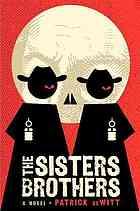
The Sisters Brothers
Two hired killers ride from Oregon to Gold Rush California to murder a prospector, and find their trade, their brotherhood, and the frontier myth coming apart.
2,095-word summary · 9 min read
The Last of the Mohicans
During the French and Indian War, Hawkeye and two Mohican warriors try to save two British sisters from a Huron chief whose revenge will end the Mohican line.
2,017-word summary · 9 min read
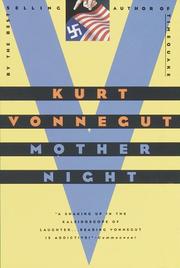
Mother Night
Howard W. Campbell Jr., a Nazi propagandist and American spy, tells the story of his double life from an Israeli prison cell while waiting to be tried for war…
1,988-word summary · 9 min read
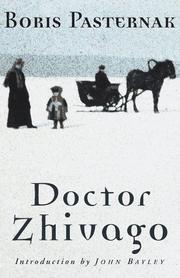
Doctor Zhivago
A doctor and poet lives through revolution, war, and love in Pasternak's novel of private life under the pressure of Russian history.
2,213-word summary · 10 min read
The Last Kingdom
Kidnapped by Danish raiders as a boy and raised in their halls, Uhtred of Bebbanburg must choose what he is when the fight for England begins.
1,997-word summary · 9 min read
I Capture the Castle
Cassandra journals six months of love and money trouble in a castle.
2,402-word summary · 11 min read
Bleak House
Jarndyce and Jarndyce grinds through Chancery while Esther finds her family.
2,480-word summary · 11 min read
Anne's House of Dreams
Newlyweds Anne and Gilbert start in a seaside house with kind neighbors.
2,465-word summary · 11 min read
Song of Solomon
Milkman Dead leaves Michigan to hunt for family gold and finds instead the old song of his ancestor Solomon.
2,465-word summary · 11 min read
The Signature of All Things
Botanist Alma Whittaker grows up in Philadelphia trade wealth, studies mosses, marries distant Ambrose Pike, and sails to Tahiti seeking how species change.
2,535-word summary · 11 min read
The Evening and the Morning
Edgar, Ragna, and Aldred build a bridge town that becomes Kingsbridge around 997, facing Viking raids, harsh law, and a scheming bishop in Follett's prequel.
2,833-word summary · 13 min read
Written in My Own Heart's Blood
1778 war splits Jamies and Claires across rebellion and time as Brianna hunts a kidnapped son.
2,008-word summary · 9 min read
The English Patient
In a ruined Italian villa in 1945, a burned man, a nurse, a thief, and a sapper trade pasts shaped by desert love and war.
2,006-word summary · 9 min read
One Thousand White Women: The Journals of May Dodd
May Dodd journals joining Cheyenne as a bride in an 1875 government swap, learning prairie life and loss.
2,036-word summary · 9 min read
Lady Chatterley's Lover
A baronet's wife, starved in a marriage the war broke, takes the gamekeeper as her lover. Lawrence's banned 1928 novel of class and touch.
2,566-word summary · 11 min read
Brooklyn
Eilis Lacey leaves Enniscorthy for Brooklyn boarding house work, love with Tony, then a home death forces divided choice.
2,143-word summary · 10 min read
All the Pretty Horses
John Grady and Rawlins ride to Mexico for ranch work, finding love, prison, and a code that costs all.
2,677-word summary · 12 min read
The Pilgrim's Progress
Christian flees the City of Destruction for the Celestial City through sloughs, fairs, and giants in Bunyan's plain and sturdy allegory.
2,988-word summary · 13 min read
The Gentleman's Guide to Vice and Virtue
Bisexual heir Monty flees across Europe with his crush Percy and sister Felicity after stealing a dangerous box.
2,724-word summary · 12 min read
Middlemarch
Idealistic Dorothea marries dry scholar Casaubon while ambitious doctor Lydgate marries Rosamond, and a Midlands town watches both marriages strain.
2,883-word summary · 13 min read
A Breath of Snow and Ashes
Jamie and Claire Fraser face the coming Revolution on Fraser's Ridge, torn between Crown oaths and rebel neighbors as old enemies return.
2,362-word summary · 10 min read
Shogun
An English pilot wrecked in 1600 Japan becomes a pawn in Lord Toranaga's patient bid for power, and slowly becomes Japanese himself.
2,251-word summary · 10 min read
Lonesome Dove
Two retired Texas Rangers drive cattle from Texas to Montana in a harsh and tender western epic.
2,410-word summary · 11 min read
How to Stop Time
Tom Hazard, aging one year in fifteen, hides behind new identities until a London classroom and a lost daughter force him to live.
2,597-word summary · 12 min read