
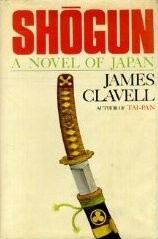
Shogun
2,251-word summary 10 min read 802 pages in the book
- First published
- 1975
- Publisher
- Atheneum
- Pages
- 802
- ISBN
- 9780689105654
- Series
- Asian Saga (#1)
Reading options
What's inside (8 sections)
I avoided this novel for years for the shallowest possible reason. It was too big. Every copy I saw in a used bookstore looked like a brick, and I had caught part of the old television version as a teenager, so I told myself I already knew the story. I did not know the story. When I finally read it, on a long trip with nothing else at hand, I finished the last hundred pages standing in an airport line, annoyed at every announcement. Shogun was published in 1975 by Atheneum, and the first edition runs 802 pages. It became a phenomenon anyway, sitting on bestseller lists for months and selling millions of copies around the world. Readers in 1975 had no streaming adaptation to lean on. They just kept turning pages.
A word on where it sits. The novel belongs to James Clavell's Asian Saga, and it is listed first in the saga's internal chronology because the action takes place around 1600. It was actually the third of the six novels Clavell published, after King Rat and Tai-Pan. Clavell got the idea, by his own account, from a sentence in one of his daughter's schoolbooks: in 1600, an Englishman went to Japan and became a samurai. That Englishman was real. His name was William Adams, a pilot who reached Japan in 1600 and rose in the service of the future shogun Tokugawa Ieyasu. Clavell read everything he could find about Adams, traveled for research, and wrote a first draft thousands of pages long before cutting it down with his editor. The opening line survived the cutting: "Blackthorne was suddenly awake." Few first lines promise so much trouble so efficiently.
The setup is as clean as an old adventure yarn. John Blackthorne is an English pilot serving aboard a Dutch trading ship, the Erasmus, trying to break the Portuguese monopoly on trade with Japan and China. Storms, scurvy, and bad luck leave the ship a floating coffin by the time it staggers into Japanese waters. Blackthorne crawls ashore into a country he does not understand, among people who regard him as a barbarian, at the exact moment when Japan's great lords are circling each other for control. Within days his life depends on the favor of the most dangerous man in the country.
A shipwreck with guns aboard
The early chapters move fast for such a long book. The Erasmus limps into a village on the coast with most of its crew dead or dying. Local samurai seize the ship. Jesuit priests arrive and recognize at once what this Dutch vessel means: Protestant heretics with cannon, charts, and a pilot who knows the secret sea routes, parked inside Portugal's private lake. The priests want the crew dead. Their Japanese patrons mostly agree. Blackthorne, who speaks some Portuguese and no Japanese, understands just enough to know that the smiling priests are discussing his execution.
Clavell is good at this kind of pressure. Blackthorne is thrown into prison with his remaining men, fed slop, and watched by guards who find him physically revolting. Everything he tries fails. He attempts pride, and it nearly gets him killed. He attempts humility, and nobody notices. What saves him is not courage but inventory. Word travels up the chain that the foreign ship carries muskets and cannon, plus a pilot who can explain the wider world. The great lord Toranaga sends for him, and Blackthorne is hauled to Osaka Castle to be inspected like a strange animal.
Toranaga is the novel's center of gravity, and Clavell introduces him the way a strong player is introduced: by letting lesser players lose first. The old ruler of Japan, the Taiko, has died, leaving a child heir and a Council of Regents meant to govern until the boy grows up. The council is splitting into factions. Toranaga, lord of the Kanto, is the strongest member and therefore the target of all the others, led by his rival Ishido. One false step means ordered suicide or civil war. Toranaga's gift, which the whole novel studies, is making his enemies' strength work against them while appearing to do nothing at all.
Blackthorne walks into this stalemate as a minor piece that might become a major one. Toranaga questions him through an interpreter, a Jesuit priest who edits every answer. Blackthorne realizes he is being mistranslated and says so, in Portuguese, to the priest's face. It is reckless and exactly right. Toranaga notices everything. He notices the pilot's charts. He notices the guns. Above all he notices that Blackthorne hates the Portuguese priests as much as any Japanese lord with reason to fear them might. A Protestant Englishman who can sail, shoot, and explain European politics is a weapon Toranaga did not know he needed.
Toranaga plays the long game
The middle of the novel belongs to Toranaga's slow squeeze toward power, and Clavell asks the reader to admire a man who lies the way other men breathe. Toranaga's public posture is obedience. He submits to the council. He apologizes. He retreats to his own territory when ordered. Each retreat leaves him stronger. He seizes the Erasmus and its guns. He has Blackthorne teach his men to handle cannon in the European style. He studies the pilot the way a commander studies a captured map, drawing out knowledge about the world beyond Japan: the size of empires, the rivalry of Spain and England, the fact that a Pope once divided the whole globe between two Catholic crowns.
Blackthorne's education runs in the other direction and takes much longer. Toranaga makes him a retainer, a hatamoto, with a house, servants, a stipend, and eventually a Japanese wife. Blackthorne resents every gift because each one is a chain. He wants his ship back and a wind home. Clavell makes his frustration physical. The food revolts him, then sustains him. The language defeats him, then opens in pieces. The customs around honor, obedience, and suicide strike him as insane, then as coherent, then as something he half accepts in himself. There is an early scene where Blackthorne watches a samurai ordered to take his own life over a minor failure, and his horror is the reader's horror. Hundreds of pages later he understands the logic without forgiving it, and that distance is the whole book in miniature.
This is where the novel's size starts to feel like a method rather than an indulgence. Clavell wants Japan's codes to stop sounding exotic and start sounding normal, and the only way to do that is repetition across hundreds of small encounters. Baths and meals. The depth of a bow. The correct way to hand over a sword. The layers of obligation between lord and vassal. Some of it drags, and I will say more about that below. But when Blackthorne finally acts on instinct in a Japanese way, saving face for someone at cost to himself, the moment lands because the reader has done the same coursework.
Toranaga, meanwhile, keeps winning without fighting. He marries off relatives, trades hostages, leaks rumors, and lets Ishido's coalition spend itself on ceremony. Clavell never lets us inside Toranaga's head for long, which is wise. A schemer explained is a schemer diminished. We watch him the way his enemies do, trying to guess which courtesy hides a knife, and the pleasure is in realizing, a chapter late, what he just did.
Mariko, caught between masters
If Toranaga is the mind of the book, Lady Mariko is its conscience, and her chapters are the ones I remembered afterward. Mariko is a noblewoman of high birth and terrible history. Her father disgraced the family by murdering his overlord, and Mariko has lived her whole life under that stain. She is also a Catholic convert, educated by the Jesuits, fluent in Portuguese and Latin, married to a brutal husband she despises, and bound in absolute loyalty to Toranaga. When Toranaga assigns her as Blackthorne's interpreter, he chains two lonely people together and pretends it is administration.
The romance that follows is slow and mannered, and genuinely moving. Neither of them can speak plainly. Every conversation passes through layers of language and rank, and Clavell turns translation itself into a love scene. Mariko renders Blackthorne's blunt sailor talk into courtly Japanese and softens Japanese evasions into something he can grasp. They fall in love through the work of understanding each other, which happens in fiction far less often than it should. She teaches him the language. He shows her a picture of a world where a person might choose a life rather than inherit one.
Mariko's position is impossible, and Clavell does not soften it. Her church teaches her one loyalty, her lord commands another, her marriage demands a third, and her heart has chosen a fourth. Without giving away the final movement in detail, since it deserves to be read cold: Toranaga sends her into danger at Osaka Castle, Ishido tries to hold her as a hostage against Toranaga's obedience, and she refuses captivity the only way her code allows. Her death is the hinge of the novel. It destroys Ishido's standing, frees Toranaga's hand, and costs Blackthorne the person who made Japan legible to him. The chapters around it are the best sustained writing in the book.
The slow middle and the rough edges
Honesty requires admitting what sags. Around the halfway mark, the plot idles while Blackthorne studies Japanese, attends ceremonies, and quarrels with his household. Readers who came for swords and storms will fidget. I fidgeted. Clavell repeats lessons about obligation and face that the reader absorbed two hundred pages earlier. The Erasmus sits in harbor like a parked promise. Toranaga schemes offstage, which means long stretches where the most interesting character is elsewhere.
The viewpoint has limits that show more now than in 1975. Everything Japanese arrives filtered through Blackthorne's eyes, and for much of the book the Japanese characters exist to instruct, threaten, or enchant him. Clavell works hard to give Toranaga and Mariko interior weight, and largely succeeds with those two, but minor figures blur into types. The Jesuits in particular get little benefit of the doubt. They read as cynical agents of empire first and men of faith a distant second. Given Portugal's real history in Japan, the suspicion is earned, but as portraits they stay flat.
There is also the matter of the women. Mariko is magnificent and doomed, and her doom serves the men's plots. Blackthorne's Japanese wife is loyal, graceful, and mostly silent about her own inner life. A modern reader may feel the novel loves its heroines the way its hero does: deeply, and on his terms. I felt that too, and I still cared about them, which says something about Clavell's skill and something about the era's blind spots. Go in expecting a 1975 epic rather than a modern one and you will be fine.
An ending that stays with you
The final movement tightens like a drawn bow. Toranaga's enemies commit themselves, his traps close, and the great battle toward which everything pointed waits just beyond the last page. History remembers the campaign as Sekigahara. Clavell ends before the clash of armies, which annoyed some readers and struck me as exactly right. This was never a novel about a battle. It was a novel about how a battle becomes unnecessary.
Blackthorne's fate is quieter and stranger. He does not go home. The ship he dreamed of, the fortune, the return in glory, all of it dissolves, and he accepts a life inside the walls that once imprisoned him. In the closing pages he begins building a new ship for Toranaga, a foreigner making vessels for a Japan that will soon close its doors to the world. Whether that is tragedy or peace depends on the reader. I read it as both. He has lost everything he wanted and gained something he cannot name, which is the oldest ending in adventure fiction and still effective when earned across eight hundred pages.
What remains after the plot fades is an attitude. Clavell believed, or Toranaga believed, or both, that patience defeats force. Wait, watch, and let your enemy's haste become your weapon. The novel practices what it preaches. It waits. It watches. It turns the reader's hurry into attention. That is why the slow middle, for all my complaints, belongs. You cannot write a book praising patience and refuse to demand any.
Should you take the voyage
This is historical fiction for readers who like their immersion total. If you enjoy novels that build a whole society around you and let you live inside it, this is among the best ever written. If you need a fast plot and constant action, the page count will punish you. Read it in large blocks rather than sips. It rewards momentum the way a voyage rewards a steady wind.
Two adaptations exist for the curious, though neither replaces the book. The 1980 television miniseries made the story famous in America, and the 2024 series won a record eighteen Emmy Awards for a single season. Both are worth watching. But the novel holds something they cannot: eight hundred pages of slow conversion, in which a barbarian becomes, almost without noticing, a man of two worlds who belongs fully to neither. I closed it understanding why it made its author's name, and why readers still press it on friends with the warning that it starts slow. It does start slow. Then the wind rises.
FAQ
Is Shogun part of a series?
Yes. It belongs to the Asian Saga and is listed first in the saga's internal chronology because it is set around 1600, though it was the third of the six novels Clavell published.
Is Shogun based on a true story?
Loosely. Blackthorne is based on William Adams, the real English pilot who reached Japan in 1600 and rose in the service of the future shogun Tokugawa Ieyasu. Toranaga is modeled on Ieyasu, and most of the court intrigue is invented.
How long is Shogun, and are there screen versions?
The 1975 Atheneum first edition runs 802 pages. The story was filmed as a 1980 television miniseries and again as a 2024 series whose first season won a record eighteen Emmy Awards.
Similar books
More from Asian Saga first, then related titles.
The Last of the Mohicans
During the French and Indian War, Hawkeye and two Mohican warriors try to save two British sisters from a Huron chief whose revenge will end the Mohican line.
2,017-word summary · 9 min read

Sophie's Choice
A young Southern writer in 1947 Brooklyn befriends a brilliant, unstable couple and slowly learns the story of the Polish Catholic woman at the center of their…
2,798-word summary · 12 min read

Ivanhoe
A disinherited Saxon knight, a great tournament, a besieged castle and a trial by combat. Scott's most famous novel, set in England in 1194.
2,834-word summary · 13 min read

Doctor Zhivago
A doctor and poet lives through revolution, war, and love in Pasternak's novel of private life under the pressure of Russian history.
2,213-word summary · 10 min read

Exodus
Leon Uris's sweeping 1958 novel follows Jewish refugees, Haganah fighters, and Holocaust survivors from Cyprus to the founding of Israel and the 1948 war.
2,529-word summary · 11 min read
The Last Kingdom
Kidnapped by Danish raiders as a boy and raised in their halls, Uhtred of Bebbanburg must choose what he is when the fight for England begins.
1,997-word summary · 9 min read
The Red Badge of Courage
Henry Fleming runs at Chancellorsville, then returns to stand.
2,486-word summary · 11 min read

Edge of Eternity
Five families cross civil rights, Cold War and Berlin Wall to the eighties.
2,489-word summary · 11 min read

Cryptonomicon
Codebreakers in World War II and hackers in the 1990s chase gold, ciphers, and a secret data haven.
2,280-word summary · 10 min read
The Scarlet Pimpernel
A foppish baronet rescues aristocrats from the guillotine while his French wife hunts the hero she scorns.
2,980-word summary · 13 min read
Winter of the World
Five families from Berlin to Moscow live through the Nazis, World War II, and the atomic age in Follett's second Century volume.
2,402-word summary · 11 min read

Caliban's War
Ganymede burns, Bobbie survives it, Avasarala curses through politics, and Prax hunts daughter Mei.
2,080-word summary · 9 min read

Lonesome Dove
Two retired Texas Rangers drive cattle from Texas to Montana in a harsh and tender western epic.
2,410-word summary · 11 min read
Robinson Crusoe
Shipwrecked near South America, Crusoe spends 28 years farming, building, praying, and facing who he becomes alone.
2,520-word summary · 11 min read
For Whom the Bell Tolls
An American dynamiter joins Spanish guerrillas for three days to blow a mountain bridge, finding love and doomed courage.
2,286-word summary · 10 min read
War and Peace
Pierre, Natasha, and Andrei search for meaning amid the Napoleonic wars.
2,536-word summary · 11 min read
The Three Musketeers
Young dArtagnan joins Athos, Porthos and Aramis to recover the queens diamonds and face Milady.
2,569-word summary · 11 min read
Fall of Giants
Five families from Wales to Russia live through World War I, the Russian Revolution, and the fight for women's votes.
2,255-word summary · 10 min read
A Farewell to Arms
Frederic loves Catherine in Italy until desertion leads to Switzerland and stillbirth.
2,502-word summary · 11 min read
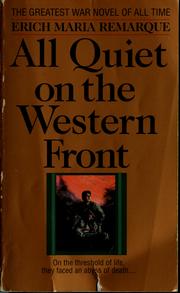
All Quiet on the Western Front
Paul Bäumer enlists at nineteen and faces the trenches of World War I in Remarque's 1929 classic, told from the German side of the wire.
2,543-word summary · 11 min read
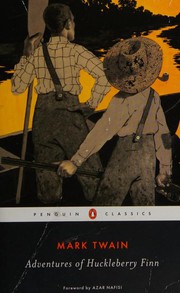
The Adventures of Huckleberry Finn
Huck Finn fakes his death, floats the Mississippi with the runaway Jim, and tears up the letter that would betray him. Twain's river classic, its cons and…
2,605-word summary · 12 min read

Violeta
A woman born in 1920 writes her life story to her grandson, from one pandemic to another, through wealth, ruin, passion, and dictatorship in South America.
2,555-word summary · 11 min read
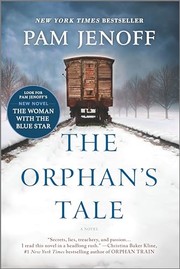
The Orphan's Tale
A Dutch teenager rescues a Jewish baby from a death train and joins a German circus, where a Jewish aerialist teaches her to fly.
2,943-word summary · 13 min read

The Long Winter
Dakota Territory, 1880: seven months of blizzards cut a town off from the railroad, and a family survives on twisted hay, ground wheat, and a dangerous wheat…
2,210-word summary · 10 min read

The Blinding Knife
Kip trains to join the Blackguard while the Prism hides his true identity, loses his colors, and fights a war against a rogue drafter who wants to birth a god.
2,049-word summary · 9 min read

Prelude to Foundation
A young Hari Seldon arrives on Trantor with a theory he cannot yet prove, and a hunt through the planet-city forces him to turn psychohistory into a real…
2,013-word summary · 9 min read

Little Town on the Prairie
In the spring after the Long Winter, fifteen-year-old Laura sews shirts, studies for a teaching certificate, and helps send her blind sister Mary to college.
2,071-word summary · 9 min read
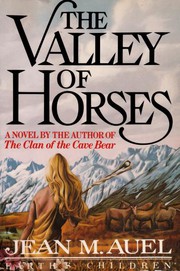
The Valley of Horses
Exiled from the Clan, Ayla survives alone in a hidden valley, tames a horse and a cave lion, and nurses a wounded stranger back to life.
2,311-word summary · 10 min read
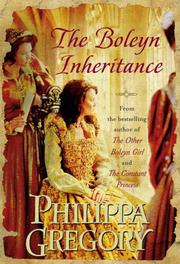
The Boleyn Inheritance
Three women narrate Henry VIII's fourth and fifth marriages: a foreign bride who survives, a teenage queen who does not, and the widow who opens the door.
2,391-word summary · 11 min read
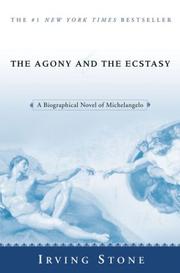
The Agony and the Ecstasy
Irving Stone turns Michelangelo's seventy years of carving, painting, and arguing with popes into a novel about the cost of making something that outlives you.
2,260-word summary · 10 min read