

The Long Winter
2,210-word summary 10 min read 334 pages in the book
- First published
- 1940
- Publisher
- Harper & Brothers
- Pages
- 334
- ISBN
- 9780064400060
- Series
- Little House (#6)
Reading options
What's inside (10 sections)
- August: the muskrat house
- October: the first blizzard and the warning
- November and December: town, school, and the closing of the road
- The cold house: hay, wheat, and the coffee mill
- The wheat trip
- Christmas, and the Laura and Almanzo thread
- April: the last blizzard and the trains
- What stays, and what does not
- Key takeaways
- FAQ
The best way to read this book is in a warm room with the heat turned up, and then to notice how guilty that feels. Laura Ingalls Wilder spends three hundred pages describing cold that gets into the walls, the bedding, the bread, and the conversation, and she does it without much drama. That is the trick of it. The Long Winter is not a story about a single disaster. It is a story about a disaster that will not stop, and about a family that keeps deciding, every morning, to get up anyway.
I came to it expecting a cozy prairie book, the kind people give to children alongside a tin of cookies. What I found was closer to a survival log. Wilder wrote it in 1940, the sixth of the nine Little House books, with illustrations by Helen Sewell and Mildred Boyle, later redrawn by Garth Williams in 1953. It was a runner up for the 1941 Newbery Medal. The series books from 1938 to 1943 kept landing as runners up, and those are now called Honor Books. The book is autobiographical fiction, which matters, because the parts that feel invented often are not, and the parts that feel true have been rearranged.
August: the muskrat house
It opens in heat. Laura is fourteen, and the family is out on the homestead in southeastern Dakota Territory, near the town of De Smet. Pa is putting up hay, and Laura is helping, and the sun is doing what August sun does. The scene is almost pleasant, which is the point. Wilder wants you to feel how far away winter seems.
Then Pa finds a muskrat house, and the walls are thicker than usual. He reads that as a sign. Animals build deep when a hard season is coming, and Pa has been on the prairie long enough to trust the animals more than the almanac. It is a small moment, easy to miss, and it sets the whole book in motion. Wilder is not subtle about it, but she does not need to be. She is telling you that the warning was there in August, and nobody was listening.
The homestead chapters are the last stretch of ordinary life in the book. There is hay to stack and a garden to worry over, and Laura is thinking about school and about growing up, and the family is poor in the way that is normal rather than frightening. Reading it now, with the rest of the book behind me, those pages feel like the last warm afternoon before something closes.
October: the first blizzard and the warning
In mid October a blizzard hits the claim shanty, early enough to be strange. The family survives it the way they survive everything, by staying put and keeping the stove fed. But it rattles them, and it makes the next thing land harder.
An old Native American man comes into the general store in town and tells the settlers what he knows. Hard winters run in cycles of seven years, he says, and the worst one comes at the end of the third cycle. This is the twenty first winter. There will be seven months of blizzards. Then he leaves.
That scene has bothered readers for decades, and it bothers me. The man has no name and no life beyond the warning. He exists to deliver information and then vanish, and the book never wonders what he thinks about the settlers who are taking up the land his people have used. The strangeness is that the book is otherwise so careful about people. Ma gets a whole interior world from the way she folds a tablecloth. The warning figure gets a paragraph. And the larger silence around Native presence in Dakota Territory sits right next to that scene, which makes it harder to excuse rather than easier.
Still, the warning works as a story engine. Pa listens. He does not argue and he does not wait. He decides to move the family off the homestead and into the store building in town for the winter, where there is a stove and walls and other people within shouting distance. It is the single best decision anyone makes in the book, and it is made on the strength of a stranger's word.
November and December: town, school, and the closing of the road
Town is not comfort. It is a wooden building with a stove and a lot of people who are all in the same position. Laura and Carrie go to school for a while, and there is something almost normal about it, recitations and cold fingers and the walk home. Then the cold and the coal shortage make school impossible, and the ordinary routines fall away one at a time.
The railroad is the town's only supply line. Everything the town eats or burns comes in on the train, and the trains get stuck at Tracy. At first that is an inconvenience. Then it is a crisis. Eventually the railroad gives up on digging them out until spring, and that sentence, delivered plainly, is the moment the book changes shape. The town is now on its own, and nobody knows for how long.
The town itself becomes a pressure cooker. There is a store with a stove, and men standing around it arguing about the weather and about who has coal to spare, and the arguments get smaller and sharper as the supplies get thinner. Wilder is good at this. She shows the grudges forming over a sack of flour and the way a rumor about hidden wheat travels through a room in a single afternoon. The store is a stage, and the whole town is on it.
Blizzard follows blizzard. Wilder does not vary the rhythm much. A storm comes, the family waits it out, the storm ends, they dig out, another storm comes. The repetition is deliberate. It is also, honestly, repetitive. There is a stretch in the middle where the book becomes a list of storms and meals, and the effect is less like tension and more like the actual experience of a bad winter, which is boredom punctuated by fear. I think Wilder knew exactly what she was doing. I also think a modern editor would have cut forty pages and the book would be better for it, and worse.
The cold house: hay, wheat, and the coffee mill
Here is where the book earns its reputation. The town runs out of coal, and then out of wood. The Ingallses start twisting hay into tight bundles to burn. It is slow, hard, hand punishing work, and it produces a flame that is barely worth the effort, and they do it anyway, hour after hour. Wilder describes the twisting in enough detail that you can feel the stalks cutting your palms.
They grind wheat in a coffee mill to make flour for bread. A coffee mill. Think about the size of the hopper and the number of turns it takes to make one loaf. The book does not sentimentalize this. It just shows the arithmetic of it, and the arithmetic is the horror.
Food runs low and prices rise. The family eats potatoes, then bread, then less. Ma keeps her manners. That detail is the one I keep coming back to. She sets the table, she speaks politely, she does not let the fear into her voice, and that composure is a kind of labor just as real as the hay twisting. Laura notices it, and the noticing is how Wilder shows us what it costs.
Pa's optimism is the other engine. He jokes, he plans, he insists the weather will break, and the family runs on that insistence as much as on the hay. Reading it as an adult, I hear the strain underneath. A man with four children in a starving town has to perform confidence, and the performance is not dishonest, but it is work, and the book rarely lets him offstage long enough to show the cost.
The cold gets into everything. Laura and Carrie are caught outside in a storm at one point, and the scene is genuinely frightening in a way the book has not been until then. The whiteout takes away direction, and direction is the only thing keeping them alive, and the prose gets short and flat in a way that feels like panic held down.
The wheat trip
Then Almanzo Wilder and his friend Cap Garland hear a rumor. A settler out on a claim about twenty miles away raised wheat and might have some to sell. Twenty miles, in that weather, with a sled and a team, is not a trip. It is a gamble with a bad payout if it goes wrong.
They go. They find the man. They buy the wheat and they get back. That is the plot, and it takes almost no space, and it is the most tense sequence in the book. Wilder keeps the stakes concrete. If the sled tips, if the horses falter, if the storm comes down early, the town does not eat. The wheat is rationed afterward, and Pa pays for the family's share out of the savings, and the town survives on it.
I have read criticisms that the book softens how much the family depended on the Wilders' money and horses, and I think that is fair. Almanzo is not a savior in a cape, but he is a young man with a team and capital in a town where almost nobody has either, and the book is more comfortable framing the rescue as pluck than as class. The wheat trip is brave. It is also the kind of brave that only a person with horses can attempt.
Christmas, and the Laura and Almanzo thread
Christmas is thin. The family makes do, and Wilder does not pretend otherwise. There is no turkey and no pile of presents, and the scene is short, and the shortness is the sadness.
Running underneath the winter is the beginning of the Laura and Almanzo thread. He notices her. He gives her a ride. There is a quiet, formal courtship starting, and it is conducted mostly in glances and small courtesies because there is no room in this book for anything else. He is older, he has a farm and a team, and Laura is not sure what she thinks of him. That uncertainty is the most honest thing in the romance. She is fourteen and hungry and cold, and a suitor is one more thing to figure out.
Readers who come to this book from the later ones will find the romance frustratingly thin. It is. It is also correct for the season. Nobody falls in love in a blizzard. They notice each other and wait.
April: the last blizzard and the trains
The blizzards continue into spring. That is the part that breaks the pattern of the book, because by March you have been trained to expect the storm to end, and it does not. The last great blizzard comes in April, and by then the town is running on reserve and stubbornness.
Then the trains finally get through and supplies arrive, and the town comes back to life. Wilder does not make a speech about it. She shows the goods coming off the cars and the faces of people who have been counting days, and she lets the relief be physical rather than moral.
That ending has been used to sell a certain idea of the frontier, the pioneer spirit, the sturdy family that pulls through. I am suspicious of that framing. The Ingallses pull through because Pa guessed right in October, because the town shared, because two young men had horses, and because the railroad eventually did its job. That is not a myth. It is a network, and the book is more interesting when it admits the network than when it pretends the family did it alone.
What stays, and what does not
What stays is the physical detail. The twisted hay. The coffee mill. The way cold makes a room smaller. Ma's manners. The wheat trip. The scene where Laura and Carrie are lost in the whiteout. These are not decorative. They are the book's argument, which is that survival is a series of small, boring, repeated acts, and that the people who do them rarely get to be heroic about it.
What does not stay is the middle, and the warning figure, and the framing. The repetitive stretch is the point and it is still a slog. The old man in the store is a device where a person should be, and the book's silence about the people who were there first is a real cost. The pioneer spirit language has been used to sell a harder and lonelier history than the pages actually show.
I would still hand this book to a reader. Not as a comfort and not as a lesson, but as a record of what a bad winter does to a small town, written by someone who was fourteen when it happened and remembered the hay and the coffee mill for the rest of her life.
FAQ
How old is Laura in The Long Winter?
She is fourteen. The book opens in August on the family homestead near De Smet, and she spends the winter in the store building in town.
Is The Long Winter based on a real winter?
Yes. It draws on the winter of 1880 to 1881 in southeastern Dakota Territory. Wilder wrote it as autobiographical fiction, so the historical record differs in details.
Did The Long Winter win the Newbery Medal?
No. Published in 1940, it was a runner-up for the 1941 Newbery Medal, and those runners-up are now called Honor Books.
Similar books
More from Little House first, then related titles.
Little House in the Big Woods
The Ingalls family spends a full year in a Wisconsin log cabin, filling the attic, marking Christmas, and sugaring maples in spring.
3,884-word summary · 17 min read
Little House on the Prairie
The Ingalls family leaves Wisconsin for Kansas, builds a log house, and faces wolves, fire, and fever.
3,002-word summary · 13 min read
On the Banks of Plum Creek
The Ingalls family trades their horses for a dugout on Plum Creek and bets a single wheat harvest on a house above ground, in Wilder's fourth Little House book.
2,090-word summary · 9 min read

Little Town on the Prairie
In the spring after the Long Winter, fifteen-year-old Laura sews shirts, studies for a teaching certificate, and helps send her blind sister Mary to college.
2,071-word summary · 9 min read
The Borrowers
A family of tiny people live under the floorboards of an English house, borrowing what they need until a lonely boy and a suspicious housekeeper change…
2,164-word summary · 10 min read
Anne's House of Dreams
Newlyweds Anne and Gilbert start in a seaside house with kind neighbors.
2,465-word summary · 11 min read
Song of Solomon
Milkman Dead leaves Michigan to hunt for family gold and finds instead the old song of his ancestor Solomon.
2,465-word summary · 11 min read
Roll of Thunder, Hear My Cry
In Depression-era Mississippi, nine-year-old Cassie Logan learns what her Black family's land costs and why they keep it.
2,273-word summary · 10 min read
We Were the Lucky Ones
Based on her own family, Hunter follows the Kurc family of Radom as war scatters five siblings from Siberia to Brazil and back toward reunion.
2,805-word summary · 12 min read
The Things We Cannot Say
A Florida mother travels to Poland to answer her silent grandmother's plea, uncovering a wartime love story and a decades-old identity swap.
2,365-word summary · 11 min read
The Good Earth
Wang Lung, a poor farmer in 1920s China, rises with his wife O-lan through famine and wealth, holding to land above all else.
2,125-word summary · 9 min read
Between Shades of Gray
In 1941, fifteen-year-old Lina is deported from Lithuania to Siberia and uses her drawings to survive and send word to her father.
2,263-word summary · 10 min read
Robinson Crusoe
Shipwrecked near South America, Crusoe spends 28 years farming, building, praying, and facing who he becomes alone.
2,520-word summary · 11 min read
Island of the Blue Dolphins
Left alone on San Nicolas Island for eighteen years, Karana builds shelter, faces wild dogs, and finds company with Rontu.
2,559-word summary · 11 min read
The Red Tent
Dinah retells Genesis from the women's tent, loving Jacob's wives and surviving Shechem and Egypt.
2,014-word summary · 9 min read

The Japanese Lover
A Polish refugee and the son of a Japanese gardener fall in love in San Francisco in 1939, then keep the affair secret for nearly seventy years.
2,286-word summary · 10 min read

Make Way for Ducklings
A pair of mallards raise eight ducklings on the Charles River and lead them across Boston to the Public Garden, with a little help from a friendly policeman.
2,044-word summary · 9 min read

The Shadow Sister
Star D'Apliese steps out of her sister's shadow and follows a bookshop clue into the Edwardian life of Flora MacNichol, a woman who gave up love for duty.
2,260-word summary · 10 min read
The Power of One
A boy in apartheid South Africa decides to become welterweight champion of the world, and the novel follows every mentor, fight, and loss that gets him there.
2,145-word summary · 10 min read

Amelia Bedelia
A literal-minded housekeeper follows her employer's list to disastrous and funny effect in the 1963 picture book that made wordplay a children's staple.
2,038-word summary · 9 min read

Mrs. Everything
Two Jewish sisters in Detroit grow up, apart and together, across seven decades of American life, from the 1950s to the 2016 election.
2,362-word summary · 10 min read

Howards End
Forster's 1910 novel follows two families, a house in Hertfordshire, and a burned note, asking whether money and feeling can ever be connected.
2,187-word summary · 10 min read
The Valley of Horses
Exiled from the Clan, Ayla survives alone in a hidden valley, tames a horse and a cave lion, and nurses a wounded stranger back to life.
2,311-word summary · 10 min read
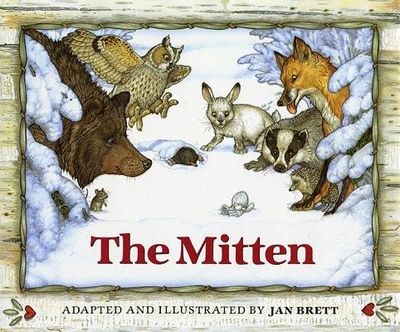
The Mitten
Jan Brett retells a Ukrainian folktale about a boy, a lost white mitten, and the woodland animals that crowd inside until a bear sneezes.
2,609-word summary · 12 min read
The Agony and the Ecstasy
Irving Stone turns Michelangelo's seventy years of carving, painting, and arguing with popes into a novel about the cost of making something that outlives you.
2,260-word summary · 10 min read

Sophie's Choice
A young Southern writer in 1947 Brooklyn befriends a brilliant, unstable couple and slowly learns the story of the Polish Catholic woman at the center of their…
2,798-word summary · 12 min read

Fathers and Sons
Arkady brings the nihilist Bazarov home to his father's estate, and a generational argument turns into love, a duel, and an early death.
2,192-word summary · 10 min read
A Long Walk to Water
Two eleven-year-olds in southern Sudan, twenty-three years apart: a Dinka boy fleeing war and a Nuer girl walking hours for water, until their stories meet at…
2,217-word summary · 10 min read

The Chosen
A shattered pair of glasses in a 1944 Brooklyn softball game starts a friendship between a Hasidic boy and his Orthodox neighbor, and their fathers pull them…
2,443-word summary · 11 min read

Ivanhoe
A disinherited Saxon knight, a great tournament, a besieged castle and a trial by combat. Scott's most famous novel, set in England in 1194.
2,834-word summary · 13 min read