

Reading options
What's inside (8 sections)
There is a moment in Make Way for Ducklings when Mrs. Mallard steps off the curb at Beacon Street with eight ducklings behind her, and four policemen stand in the intersection holding back the traffic. I remembered that image long before I remembered the plot. It is one of those pictures that gets into your head as a child and stays there, not because it is dramatic, but because it is orderly. The ducks are small. The street is wide. The policemen are calm. Everything is going to be fine.
Robert McCloskey published the book in 1941, and it won the Caldecott Medal in 1942. The edition I have is the Viking hardcover, 68 pages, with the Caldecott seal on the cover. It is a picture book for very young children, which means it has fewer words than a single chapter of most novels, and yet it has outlasted thousands of books that were written for adults. Trying to explain why is a useful exercise, because the book's virtues are not the ones we usually talk about.
The story
The plot is simple. Mr. and Mrs. Mallard are looking for a place to raise a family. They fly over New England, and Mr. Mallard keeps choosing spots that Mrs. Mallard rejects. One place has too many foxes, another has too many turtles, another has too many people. They land in the Boston Public Garden lagoon to rest, and in the morning they see the swan boat. They mistake it for a real bird and enjoy the peanuts that people throw from it. Mrs. Mallard thinks the Garden might be a good home, but then a bicyclist nearly runs over Mr. Mallard, and she changes her mind.
They keep flying, past Beacon Hill, the Massachusetts State House, and Louisburg Square, and they finally settle on an island in the Charles River. A policeman named Michael feeds them peanuts from the shore. Then the mallards molt, which means they cannot fly until their new feathers grow in. Mrs. Mallard lays eight eggs, and eight ducklings hatch: Jack, Kack, Lack, Mack, Nack, Ouack, Pack, and Quack.
Mr. Mallard decides to swim up the river to see what is there, and he and Mrs. Mallard agree to meet at the Public Garden in a week. While he is gone, Mrs. Mallard teaches the ducklings how to swim, dive, march in a line, and avoid bicycles and other wheeled dangers. Then she leads them across the highway, where Michael stops traffic. He calls headquarters, and a police car is sent to block the route. The ducks cross Embankment Road, go down Mount Vernon Street, turn onto Charles Street, and head toward the Garden. At Beacon Street, four policemen hold the intersection. Mr. Mallard is waiting in the lagoon. The family decides to stay, and every night they swim back to their little island to sleep.
That is the whole book. There is no villain, no crisis that lasts more than a page, and no lesson stated out loud. The tension comes from traffic and from the sheer vulnerability of eight small birds in a city built for cars.
A very specific Boston
What makes the book more than a cute animal story is the geography. McCloskey did not invent a generic city. He drew the actual route the ducks take, and he drew it accurately enough that you can still walk it today. The Public Garden, the lagoon, the swan boat, Beacon Hill, Charles Street, Louisburg Square, the State House: these are real places, and the book treats them with the care of a mapmaker.
That specificity is why the book still works for adults. A child does not know Boston, but a child understands that the world in the book is a real world, with corners and curbs and shops. McCloskey's drawings are full of small details that reward looking: the Corner Book Shop, the people on the sidewalk, the different expressions on the ducklings' faces. Paul Zelinsky, another Caldecott winner, pointed out that if the action moved from left to right on the page, the ducks could not have been shown passing the Corner Book Shop, which means McCloskey was thinking about the layout of the street and the layout of the page at the same time.
The book is also a portrait of a city at a particular moment. Storrow Drive did not exist when McCloskey wrote it, so the ducks cross Embankment Road instead. The policemen are friendly, the drivers are patient, and the city briefly arranges itself around a family of ducks. That is a fantasy, but it is a generous one. Boston in 1941 was not a paradise, and the book is not a documentary. It is a wish for a city that makes room.
How McCloskey made it
The story came from McCloskey's own life. He studied at the Vesper George Art School in Boston in the 1930s and spent time in the Public Garden feeding the ducks. Later, after studying at the National Academy of Design in New York, he returned to Boston to paint a mural and brought a rough draft of the duck story with him. To get the illustrations right, he went to the American Museum of Natural History, talked to an ornithologist, and brought home six live ducklings. He kept them in his apartment and studied how they moved, how they stood, how they turned their heads. The book's ducklings are not generic cute birds. They have individual personalities because McCloskey spent weeks watching real ones.
That research is visible on every page. The ducks' bodies have the right weight. Their feet push against the water in the right way. The ducklings walk in a line because ducklings walk in a line, and McCloskey shows how the line bends and breaks and reforms. He also gives each duckling a different attitude: one is bored, one is inquisitive, one is sleepy, one is scratching, one is talking over its shoulder, one is running to catch up. If you have spent time with small children, you recognize the dynamics immediately.
The illustrations were drawn in charcoal and then lithographed on zinc plates. That process gives them a soft, grainy texture, and the book was printed in sepia rather than the black and white that was common in children's books at the time. The sepia makes the pictures feel warm and slightly old, like photographs from a family album. It also makes the ducks stand out. Their white bodies and dark bills are easy to see against the brown buildings and gray streets.
The pictures
Picture books are usually judged by the relationship between words and images, and Make Way for Ducklings is a master class in leaving things out. The text tells you what happens. The pictures tell you what it feels like. When Mrs. Mallard crosses the street, the text says that Michael stops the traffic. The picture shows the cars piling up, the policemen with their hands raised, and the ducks proceeding with absolute confidence. The humor is in the contrast between the small scale of the ducks and the large scale of the machinery.
The book also uses the page turn well. McCloskey understood that a picture book is a sequence of reveals. He withholds the full view of the ducklings until the moment they hatch, and then he gives you a line of eight small faces. He builds the crossing scene across several pages, so that the tension accumulates. By the time the ducks reach Beacon Street, you are genuinely anxious for them, even though you know the book is not going to kill a duckling.
The language is worth noticing too. The eight names, Jack, Kack, Lack, Mack, Nack, Ouack, Pack, and Quack, are silly in a way that children find irresistible, and the repeated sounds make the list easy to remember. The prose is plain and declarative, with short sentences that a parent can read aloud without stumbling. McCloskey does not talk down to children, and he does not show off. He tells the story at the pace of a walk, which is the pace of the ducks, and the book's rhythm matches its subject.
The most famous image is probably the cover: Mrs. Mallard in front, the eight ducklings behind her, the whole line moving from left to right. It is simple enough to work as a logo. The statue in the Public Garden uses the same formation, which is why the book and the sculpture have become almost inseparable in the public imagination.
The ending and the statue
The book ends with the family settling in the Public Garden. Mr. Mallard is waiting. The ducklings have made it. There is no final joke and no moral. The last lines are about the family swimming to the island at night and going to sleep. It is a quiet ending, and it is the right one. The book has been about finding a safe place, and the ending confirms that the safe place is real.
The popularity of the book led to a statue. Nancy Schön's bronze sculpture of Mrs. Mallard and the eight ducklings was installed in the Public Garden in 1987, and it is now one of the most visited works of public art in Boston. Children climb on the ducklings, and the bronze has been polished smooth in places by generations of hands. In 1991, Barbara Bush gave a duplicate of the sculpture to Raisa Gorbacheva as part of the START treaty, and it stands in Novodevichy Park in Moscow. The book is also the official children's book of the Commonwealth of Massachusetts. By 2003 it had sold more than two million copies, and it has never gone out of print.
That kind of longevity is usually explained by nostalgia, but nostalgia alone does not keep a book alive for eighty years. Children who have never been to Boston still respond to the story. The reason, I think, is that the book takes a child's view of the world seriously. The ducks are small, the city is large, and the adults are mostly kind. That is how a small child experiences a city, and the book validates both the fear and the comfort.
What holds up, what does not
The book is not perfect. The gender roles are traditional. Mr. Mallard chooses the neighborhood, leaves for a week, and comes back for the reunion, while Mrs. Mallard does the nesting, the teaching, and the dangerous crossing. You can read that as a product of 1941, and you can also read it as a story about a mother doing an enormous amount of work while the father is absent. Some parents today notice the imbalance and talk about it with their children. That is fine. A book does not have to be ideologically pure to be worth reading, and a conversation about why the duck father is not there is not a bad thing.
The bigger limitation is that the book is very small in scope. It is a slice of life, not a story with a character arc. Mrs. Mallard does not change. The city does not change. The ducklings are cute and vulnerable and then they are safe. If you are looking for a picture book with emotional complexity, this is not it. If you are looking for a picture book that does one thing perfectly, it is hard to beat.
I read it again as an adult and was surprised by how much of it is about traffic. The ducks are constantly in danger from bicycles, cars, and crowds, and the policemen are the heroes because they create a temporary order. That is a strange thing for a children's book to care about, but it is also honest. Cities are dangerous for small creatures. The book does not pretend otherwise. It just insists that people can make way.
That is the phrase, after all. Make way. It is an instruction, and it is addressed to the reader as much as to the drivers. The book asks you to notice the small family crossing the street and to stop for them. Eighty years later, that is still a good thing to ask.
FAQ
What are the eight ducklings named in Make Way for Ducklings?
They are Jack, Kack, Lack, Mack, Nack, Ouack, Pack, and Quack.
Why did Make Way for Ducklings win the Caldecott Medal?
It won the 1942 Caldecott Medal for Robert McCloskey's illustrations, which were drawn in charcoal, lithographed on zinc plates, and printed in sepia.
Is the Boston setting in Make Way for Ducklings real?
Yes. The ducks' route from the Charles River to the Public Garden follows real Boston streets, and the bronze statue of the duck family now stands in the Public Garden.
Similar books
Are You My Mother?
A newborn bird falls from the nest and asks a kitten, a hen, a dog, a cow, a plane and a giant Snort if any will be his mother.
2,351-word summary · 10 min read
The Mitten
Jan Brett retells a Ukrainian folktale about a boy, a lost white mitten, and the woodland animals that crowd inside until a bear sneezes.
2,609-word summary · 12 min read

Clifford the Big Red Dog
Emily Elizabeth picks the smallest puppy in the litter, loves him as hard as she can, and wakes up to a dog the size of a house.
2,092-word summary · 9 min read
The Story of Ferdinand
A gentle Spanish bull would rather smell flowers than fight, and when he is taken to the bullring he simply sits down among the flowers in the ladies' hats.
2,135-word summary · 9 min read
Caps for Sale
A peddler balances his caps on his head, naps under a tree, and wakes to find monkeys wearing his stock in this 1940 picture book.
2,787-word summary · 12 min read
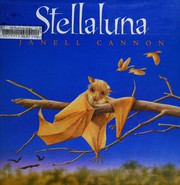
Stellaluna
A baby fruit bat falls into a bird nest, learns to perch and eat bugs, then reunites with her mother in Cannon's acclaimed 1993 picture book about difference…
2,486-word summary · 11 min read
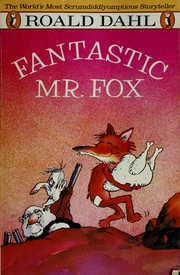
Fantastic Mr. Fox
Mr. Fox raids three cruel farmers to feed his family, then outdigs tractors and a siege to host a feast underground.
2,910-word summary · 13 min read
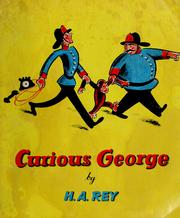
Curious George
Curious George retold: a monkey sails from Africa to the city, phones the fire station, floats off on balloons, and finds home.
2,979-word summary · 13 min read
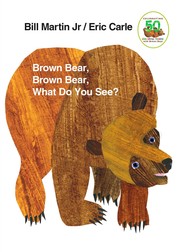
Brown Bear, Brown Bear, What Do You See?
A rhythmic animal parade teaches colors and names, from brown bear to schoolchildren.
3,226-word summary · 14 min read
Alexander and the Terrible, Horrible, No Good, Very Bad Day
Alexander has one bad day from gum in his hair to bedtime, while his family copes and his mother stays honest.
2,548-word summary · 11 min read
The Tale of Peter Rabbit
Peter Rabbit disobeys his mother, squeezes under the gate into Mr. McGregor garden, and ends in a chase back home to chamomile tea.
2,157-word summary · 10 min read
Goodnight Moon
A small bunny says goodnight to each object in the green room in this 1947 bedtime classic.
2,600-word summary · 12 min read

Little Town on the Prairie
In the spring after the Long Winter, fifteen-year-old Laura sews shirts, studies for a teaching certificate, and helps send her blind sister Mary to college.
2,071-word summary · 9 min read
Amelia Bedelia
A literal-minded housekeeper follows her employer's list to disastrous and funny effect in the 1963 picture book that made wordplay a children's staple.
2,038-word summary · 9 min read
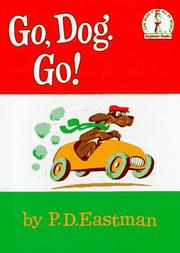
Go, Dog. Go!
Dogs drive, work, play, and climb a tree for a party in this Beginner Book built on repetition, opposites, and one very unpopular hat.
2,196-word summary · 10 min read
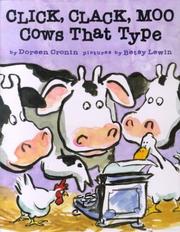
Click, Clack, Moo: Cows That Type
Cows learn to type, demand electric blankets, and go on strike in a deadpan picture book about negotiation and withheld labor.
2,617-word summary · 12 min read
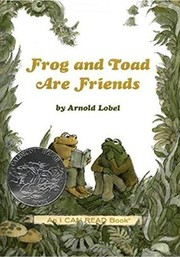
Frog and Toad Are Friends
Five short stories about a cheerful frog and a grumpy toad who need each other for waking up, swimming, and waiting for the mail.
1,969-word summary · 9 min read
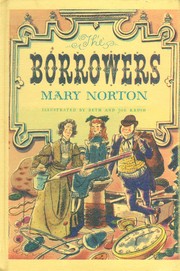
The Borrowers
A family of tiny people live under the floorboards of an English house, borrowing what they need until a lonely boy and a suspicious housekeeper change…
2,164-word summary · 10 min read
The Snowy Day
Peter in his red snowsuit explores fresh snow, from footprints and angels to a melted pocket snowball, in Keats classic winter day.
2,375-word summary · 11 min read
The Little Engine That Could
Watty Piper follows a stranded toy train past proud engines that refuse, to a small blue switcher who agrees to try the mountain and pulls her chanting load…
2,311-word summary · 10 min read
The Jungle Book
Mowgli, raised by wolves in the Seeonee Hills, learns the Law from Baloo and Bagheera while Shere Khan circles. Kipling's 1894 story collection.
2,799-word summary · 12 min read
Stuart Little
A two-inch boy in a New York family befriends a canary, loses her, and drives off alone to find her.
2,591-word summary · 12 min read
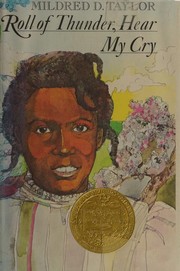
Roll of Thunder, Hear My Cry
In Depression-era Mississippi, nine-year-old Cassie Logan learns what her Black family's land costs and why they keep it.
2,273-word summary · 10 min read
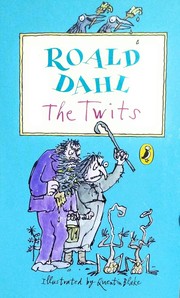
The Twits
Mr. and Mrs. Twit trade vile pranks and torment caged monkeys until the birds and monkeys flip the house on them.
2,864-word summary · 13 min read
Guess How Much I Love You
Two nutbrown hares try to outshow their love at bedtime in this gentle picture book classic.
2,282-word summary · 10 min read
Cloudy with a Chance of Meatballs
A grandfather tells of Chewandswallow, where soup rains and meatballs fall, until giant food storms force everyone to flee.
2,873-word summary · 13 min read
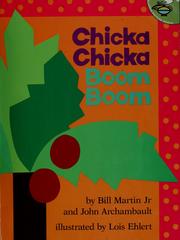
Chicka Chicka Boom Boom
Letters race up a coconut tree, tumble down with a boom, then climb again with help in this chant classic.
2,120-word summary · 9 min read
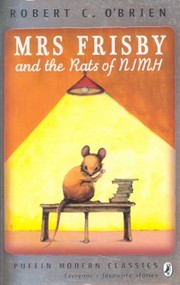
Mrs. Frisby and the Rats of NIMH
A widowed mouse races the spring plow to save her sick son Timothy, and finds help from the intelligent rats of NIMH hiding under the rosebush.
3,159-word summary · 14 min read
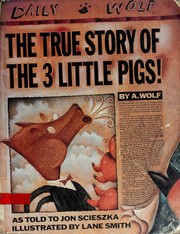
True Story of the Three Little Pigs
A. Wolf tells his side from the Pig Pen: he only wanted sugar for a cake, had a bad cold, and sneezed. You decide.
2,975-word summary · 13 min read
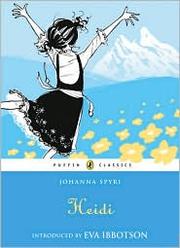
Heidi
Orphan Heidi blooms with her grandfather in the Swiss Alps, wilts in Frankfurt as a companion, then helps Klara walk.
2,952-word summary · 13 min read