
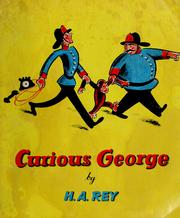
Curious George
2,979-word summary 13 min read 56 pages in the book
- First published
- 1941
- Publisher
- Houghton Mifflin
- Pages
- 56
- ISBN
- 9780395150238
Reading options
What's inside (8 sections)
I grabbed Curious George because my neighbor's kid asked me why the monkey on her shirt never talks. I did not have a good answer. I remembered the balloons and the yellow hat from childhood but little else, so I sat down with the book one evening. The edition I used is the standard Houghton Mifflin printing, first published in 1941, 56 pages with big color pictures facing short blocks of text. It took maybe twenty minutes to read and then another hour of staring at the pictures and thinking about how strange and sweet it is.
What surprised me first was how plain the storytelling feels. H. A. Rey gets his name on the cover of this one, though the book was really made with his wife Margret Rey, who wrote and shaped the stories with him and went uncredited on the early copies. You can feel two minds in it, I think. One mind loves order and careful lines. The other loves trouble. George lives exactly between those poles. He wants to be good. He keeps getting pulled sideways by whatever catches his eye.
If you have never read it, or only know the cartoons, the original is shorter and odder than you might expect. George starts in Africa. He ends in a zoo. In between he nearly drowns, gets arrested, breaks out of jail, and flies over a city holding balloons. Adults fix things with money and patience. George fixes nothing. He just keeps looking. That is the whole engine.
A Hat Left on the Ground
George lives in the jungle in Africa when the story opens. Rey draws him small against big trees, always moving, always reaching. The pictures do half the work here. You see what curiosity looks like before the words tell you. He swings, he tastes leaves, he watches birds. He is not naughty in these pages. He is busy.
Then the man with the yellow hat shows up. In this first book he is called the man with the yellow hat, lowercase and plain, not yet the capitalized friend from later covers. He watches George through binoculars. He seems kind and a little clever in a way that bothered me on this reread. He puts his big yellow straw hat on the ground and steps back. George comes down to look. He tries the hat on. It slides over his eyes and covers his face.
While George cannot see, the man picks him up and puts him in a bag.
I remember this scene hitting differently as a grownup than as a kid. As a kid I thought it was funny. The hat trick felt like a game. Now I paused. A man lures a wild animal with a hat and bags him. Rey draws it lightly, almost like hide and seek, and the text keeps moving so a small child will not get stuck there. But you notice it if you are reading aloud. My advice is to keep reading and let the next pages soften it, because the book does soften it, though it never really answers it. We will come back to that later because critics have a lot to say about this opening and some of it is worth hearing.
They walk to the shore in a rowboat and then board a big ship. George is sad in the bag but still peeking out. The man tells him they are going to a big zoo in a big city. He asks George to promise to be good and try to stay out of trouble. George promises. He means it, as far as a monkey can mean a promise about a world he has never seen.
The Big Ship and the Seagulls
The ship section is my favorite part to read out loud. The man lets George out of the bag once they are at sea. George gets a little room to roam. Sailors walk past with ropes and buckets. Gulls follow the ship. George watches them for a long time.
Rey builds the joke slowly. George sees the gulls float and dip. He wonders what it would feel like. He climbs up to try. For a page or two you get that held breath feeling where you know what will happen and the character does not. Then George pushes off and drops straight into the ocean.
He cannot swim well and starts to struggle. The crew spots him and throws a white lifebelt. They haul him back on board, wet and shocked and clinging. The sailors wave goodbye later when the ship docks, and Rey gives them round friendly faces. No one scolds George for long. The man dries him off. The trip goes on.
What I love here is how little moralizing there is. A lot of modern picture books would stop for a lesson about listening. This one does not. The man does not give a speech. George does not say he learned something. He just shivers and then gets curious again about the next thing. That rhythm, trouble then recovery then new trouble, sets the pattern for the rest of the book. It also explains why kids latch onto George. He reacts the way they feel inside when something goes wrong on a trip or at school. Big scare, quick comfort, eyes already moving to the next interesting thing.
The drawings carry the scale. The ship looks huge next to George. The sea looks wide and gray green. When George is in the water he is tiny. A parent reading this will probably hold the page a beat longer there. I did.
At Home With the Man
Once they reach land, the man takes George to his house. This part always makes me smile because it is so domestic after the ocean. They eat together. The man smokes a pipe. George gets sleepy and climbs into bed wearing large human pajamas that swallow him. Rey draws him half asleep with the pajama buttons wrong, and it is hard not to laugh.
The next morning the man has to make a phone call to the zoo. He dials, talks, hangs up, and then leaves the house. George watches the whole routine with total focus. You know where this is going. The minute the door closes, George drags the phone over and starts playing with the dial.
He calls number after number just to hear the clicks and voices. Then he reaches the fire station by accident. He says nothing into the receiver, because he is a monkey, and the firemen on the other end hear silence and decide there must be a fire. They trace the call on a big wall map. Rey shows the map with a light blinking where George sits. It is a clever picture for 1941, when tracing a call felt modern. Trucks roll out with bells ringing.
When they arrive there is no fire. Just a monkey holding a phone. The firemen are angry. They tell George he will have to be shut up where he cannot cause more harm. A policeman takes him to prison.
Reading this with adult eyes, the jump from prank call to prison feels wild. No warning, no phone bill, straight to a cell. Kids tend to accept it because picture book logic runs on quick cause and effect. You do the thing, you face the thing. Still, I found myself adding a soft line when I retold it, something like how phones were serious business then and false alarms pulled real trucks away from real help. That helped the kid I was thinking of understand why the firemen were so stern. The book itself does not pause to explain. It trusts the pictures of big red trucks to carry the excitement.
Jail, Balloons, and the Traffic Light
The jail pages are short and physical. George sits in a cell with bars on the window. He wants out. He grabs the bars and tries to pull himself up. A watchman comes in to catch him and climbs onto the wooden bed to reach higher. The bed is light and the watchman is heavy, so the bed tips and pins him against the wall. George slips past while the man is stuck and runs for the open door.
He gets to the roof and then out onto telephone wires above the street. Rey draws him balancing high over a guard who looks up with his mouth open. It is pure chase energy. No one is hurt. Everyone is surprised. George is already gone.
Then comes the scene everyone remembers. George climbs down near a man selling balloons on the sidewalk. He reaches for one red balloon and ends up tangled with the whole bunch. The strings wrap around him or his wrist, depending how you read the picture, and a gust lifts him straight up. Suddenly the city spreads below him. Houses look like toys. People look like dolls. Rey pulls the view far back so George is small against the sky.
He drifts until he bumps against a traffic light pole and grabs hold. His body gets tangled with the signals and drivers below get confused about when to stop and go. Cars bunch up. People point. The man with the yellow hat happens to drive by, looks up, and sees his monkey stuck on the pole. George slides down into his arms.
I laughed at what happens next because it is so practical. The man pays the balloon seller for the balloons. No argument, no lecture. He just pays. Then he drives George to the zoo, which was the plan from the ship, and gives the balloons out to the animals there. The last picture shows animals with balloons in their paws, George settled in his new home, the man waving or standing close. It reads as a happy ending, and for a small child it is.
A few things worth noticing if you are reading closely. George never talks, though he understands a lot. The man never punishes for long. Money smooths over the balloon mess. The zoo is framed as a wonderful home rather than a cage. Those choices made sense in 1941 and they still make the story move, but they land differently now, which brings us to the harder parts of the book's history.
Two Bicycles Out of Paris
You cannot really talk about this book without talking about how it got here. Hans Augusto Rey and Margret Rey were German Jews living in Paris in the late 1930s. They had met in Brazil, married in Rio in 1935, and settled in Paris to make books. The monkey that became George first showed up as Fifi in a French book they made in 1939 called Rafi et les 9 Singes. A London publisher saw promise and offered them a deal for more books about the monkey, with the name changed to George.
Then the war closed in. In June 1940, with German forces near Paris, the Reys left early one morning on bicycles Hans had pieced together from spare parts. They carried papers and the manuscript and drawings for the monkey book with them. They rode south in a stream of refugees, reached Orleans, caught a crowded train toward the Spanish border, and kept going through Spain to Lisbon. From there they sailed to Brazil and then to New York, arriving in the fall of 1940. Hans kept careful diary notes of the days and the money spent, which later helped writers piece the trip together.
They signed with Houghton Mifflin in early 1941. Curious George came out in America in August 1941 in a first printing of 7,500 copies priced at two dollars. Margret had shaped the text from the start, but only Hans was credited on those early copies, a choice the publisher later explained as worry about too many women making children's books. Her name came onto their books a few years later. The book sold slowly at first. Houghton Mifflin almost let it go out of print within five years. Then it caught on and never really stopped. It has since sold more than 25 million copies, stayed in print in many forms, and been translated into languages from Japanese to Afrikaans to Norwegian.
I keep thinking about that bicycle ride when I look at the ship pages. The Reys knew what it felt like to be packed into a train, to wait at a border, to arrive tired in a new city. George's trip across the water is a sunny version of a hard trip they had just lived. They do not put that into the text. There is no war in the book, no soldiers, no fear that lasts. But the kindness of sailors and the safety of a bed after travel feel lived in. Knowing the backstory made me gentler toward the simple plot. Two tired people who had lost a home wrote a story where a small stranger loses his home and finds a safe one.
Why It Still Charms and Where It Rubs
So why does it last. Part of it is the art. Rey uses clear shapes and big movement. A child can follow the story from pictures alone. George's face stays readable in every scene, puzzled one minute and pleased the next. The man with the yellow hat stays steady in his yellow suit, easy to spot on a busy page. The city pages reward pointing and searching. My neighbor's kid loves that kind of hunt and this book gives her plenty without clutter.
Part of it is the structure. Each small adventure finishes before the next starts. Hat, ship, phone, jail, balloons. A tired parent can stop after any of them and pick up later. A child can ask for one part again without needing the whole book. The words are plain and the sentences are short enough to read aloud without tripping. There is humor in the situation rather than in jokes that age out. A monkey in pajamas is funny in any decade.
The sequels helped too. Curious George Takes a Job came next, then books where George rides a bike, flies a kite, and goes to the hospital, among others. Seven titles by the Reys form the core set. Shows, films, and later activity books kept George in front of new kids. But the first book remains the one people return to because it sets the deal. George looks, George touches, the world answers.
Now the rubs, because there are real ones and it helps to name them before you hand the book to a child.
The opening is the biggest. A man takes a wild monkey from Africa in a bag and ships him across the ocean for a zoo. Scholars have pointed out the uncomfortable echo with capture and slave narratives, with George as a cheerful stand in for a much darker history. June Cummins and others have written about this at length, arguing that the book's sunny tone hides a colonial idea about who gets taken and who gets to keep. Rivka Galchen wrote about it in the New Yorker too, noting how the plenty George finds in America sits oddly next to that crossing. You do not need to bring all that to a four year old, but a grownup should know it is there. I found it useful to say out loud that people do not take animals from the wild now, and zoos talk more about care and saving species. That one sentence lets the old story sit inside new values without pretending the problem away.
There are smaller rubs. George calls the fire station by playing with the phone, which is worth a direct talk about phones and emergency numbers. Jail as a quick fix for mischief feels harsh and old style. Smoking a pipe at the table dates the home scene. Girls and women barely appear, which reflects who got drawn into children's books then and who gets left out. None of these sank the book for me, but they changed how I read it aloud. I slowed down, I added a word here and there, I let questions come.
If you want a way in, try this. Read it once straight through for the ride. Then go back to the pictures and ask what George is looking at in each scene. Kids usually have sharp answers. That question turns the theme into something they can feel. Looking is how George learns. Looking gets him into messes and also gets him out, because he spots the bars, the door, the balloons. You can talk about when to look and when to ask first, which is probably the most useful lesson hidden here.
For age, the publisher puts it around four to seven, and that feels right. Younger kids enjoy the pictures and the balloon flight. Older ones start to catch the chain of causes. It works as a bedtime read in two sittings if attention runs short. It also pairs well with a nonfiction book about real monkeys or about firefighters, since George gets both wrong in funny ways that invite correction.
I closed my copy thinking about the Reys on those patched bicycles, manuscript tucked close, riding south while shells sounded far off. They could not have known the monkey in the basket of papers would outlive them and sit on shirts and lunch boxes decades later. They just kept going, city to border to ship to new home, the same shape as George's trip but with fear where George has fun. Maybe that is why the ending lands. A small creature carried far finds people who feed him and make room. After what the Reys had seen, that must have felt like the best wish they could put on paper.
FAQ
Who really made Curious George?
Hans Augusto Rey and Margret Rey made it together in Paris and New York. Early Houghton Mifflin copies from 1941 credit only H. A. Rey, though Margret shaped the text throughout.
What happens in the first book?
The man with the yellow hat brings George from Africa by ship, George sets off a false fire alarm and drifts off holding balloons, and the man pays for the balloons and settles George at the zoo.
Is the original Curious George right for a four year old?
Yes for most, with a grownup nearby. The 56 page story reads fast, and the capture, phone, and jail scenes give natural spots to talk about animals, emergency calls, and asking first.
Similar books
Caps for Sale
A peddler balances his caps on his head, naps under a tree, and wakes to find monkeys wearing his stock in this 1940 picture book.
2,787-word summary · 12 min read

Make Way for Ducklings
A pair of mallards raise eight ducklings on the Charles River and lead them across Boston to the Public Garden, with a little help from a friendly policeman.
2,044-word summary · 9 min read

Amelia Bedelia
A literal-minded housekeeper follows her employer's list to disastrous and funny effect in the 1963 picture book that made wordplay a children's staple.
2,038-word summary · 9 min read
The Mitten
Jan Brett retells a Ukrainian folktale about a boy, a lost white mitten, and the woodland animals that crowd inside until a bear sneezes.
2,609-word summary · 12 min read
Clifford the Big Red Dog
Emily Elizabeth picks the smallest puppy in the litter, loves him as hard as she can, and wakes up to a dog the size of a house.
2,092-word summary · 9 min read
The Story of Ferdinand
A gentle Spanish bull would rather smell flowers than fight, and when he is taken to the bullring he simply sits down among the flowers in the ladies' hats.
2,135-word summary · 9 min read
Click, Clack, Moo: Cows That Type
Cows learn to type, demand electric blankets, and go on strike in a deadpan picture book about negotiation and withheld labor.
2,617-word summary · 12 min read
The Twits
Mr. and Mrs. Twit trade vile pranks and torment caged monkeys until the birds and monkeys flip the house on them.
2,864-word summary · 13 min read
Fantastic Mr. Fox
Mr. Fox raids three cruel farmers to feed his family, then outdigs tractors and a siege to host a feast underground.
2,910-word summary · 13 min read
Brown Bear, Brown Bear, What Do You See?
A rhythmic animal parade teaches colors and names, from brown bear to schoolchildren.
3,226-word summary · 14 min read
Madeline
Ludwig Bemelmans's 1939 Madeline: the twelve girls in Paris, Miss Clavel, the midnight appendix scare, and why the smallest girl became a classic.
2,944-word summary · 13 min read
The Tale of Peter Rabbit
Peter Rabbit disobeys his mother, squeezes under the gate into Mr. McGregor garden, and ends in a chase back home to chamomile tea.
2,157-word summary · 10 min read
Are You My Mother?
A newborn bird falls from the nest and asks a kitten, a hen, a dog, a cow, a plane and a giant Snort if any will be his mother.
2,351-word summary · 10 min read
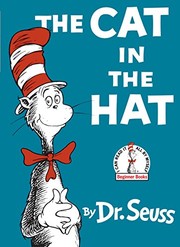
The Cat in the Hat
A tall Cat turns a rainy day upside down for Sally and her brother, with Thing One and Thing Two in tow.
2,546-word summary · 11 min read
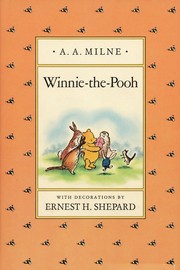
Winnie-the-Pooh
Edward Bear comes downstairs bump-bump-bump and into the Hundred Acre Wood for honey, hunneys, and heffalumps.
2,068-word summary · 9 min read
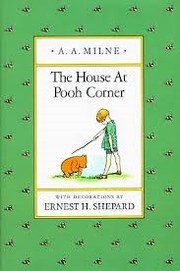
The House at Pooh Corner
Tigger bounces into the Hundred Acre Wood while Pooh builds Eeyore a house and Piglet does a grand thing.
2,022-word summary · 9 min read
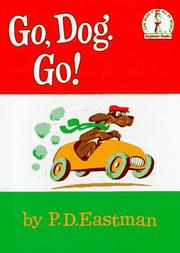
Go, Dog. Go!
Dogs drive, work, play, and climb a tree for a party in this Beginner Book built on repetition, opposites, and one very unpopular hat.
2,196-word summary · 10 min read
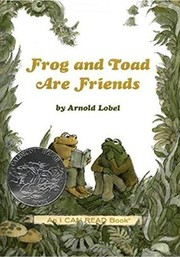
Frog and Toad Are Friends
Five short stories about a cheerful frog and a grumpy toad who need each other for waking up, swimming, and waiting for the mail.
1,969-word summary · 9 min read
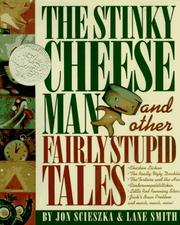
The Stinky Cheese Man and Other Fairly Stupid Tales
Scieszka and Lane Smith take nine fairy tales apart, joke by joke, while Jack, the narrator, keeps losing the pages.
2,206-word summary · 10 min read
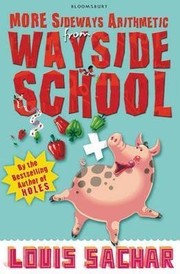
Sideways Stories from Wayside School
Thirty stories, one class per floor, and a teacher who turns students into apples: Louis Sachar's absurd school classic.
2,045-word summary · 9 min read
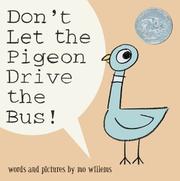
Don't Let the Pigeon Drive the Bus!
A bus driver leaves the reader in charge with one rule, and a very persuasive pigeon spends the rest of the book trying to break it.
2,084-word summary · 9 min read
Miss Nelson Is Missing!
Room 207 gets kind Miss Nelson, then terrible Viola Swamp instead.
2,597-word summary · 12 min read
Hoot
Roy tracks a shoeless boy to save burrowing owls from a pancake house.
2,290-word summary · 10 min read
The Snowy Day
Peter in his red snowsuit explores fresh snow, from footprints and angels to a melted pocket snowball, in Keats classic winter day.
2,375-word summary · 11 min read
The Little Engine That Could
Watty Piper follows a stranded toy train past proud engines that refuse, to a small blue switcher who agrees to try the mountain and pulls her chanting load…
2,311-word summary · 10 min read
Stellaluna
A baby fruit bat falls into a bird nest, learns to perch and eat bugs, then reunites with her mother in Cannon's acclaimed 1993 picture book about difference…
2,486-word summary · 11 min read
The Monster at the End of This Book
Grover begs readers not to turn pages for fear of a monster, until the ending reveals himself.
2,061-word summary · 9 min read
The Jungle Book
Mowgli, raised by wolves in the Seeonee Hills, learns the Law from Baloo and Bagheera while Shere Khan circles. Kipling's 1894 story collection.
2,799-word summary · 12 min read
Cloudy with a Chance of Meatballs
A grandfather tells of Chewandswallow, where soup rains and meatballs fall, until giant food storms force everyone to flee.
2,873-word summary · 13 min read
Chicka Chicka Boom Boom
Letters race up a coconut tree, tumble down with a boom, then climb again with help in this chant classic.
2,120-word summary · 9 min read