
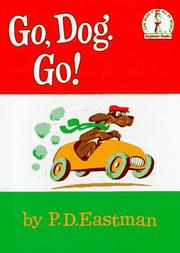
Go, Dog. Go!
2,196-word summary 10 min read 64 pages in the book
- First published
- 1961
- Publisher
- Beginner Books
- Pages
- 64
- ISBN
- 9780394800202
Reading options
What's inside (10 sections)
The first time I read Go, Dog. Go! to a child, I did not expect to laugh. The book is sixty-four pages long, most of the pages have fewer than ten words, and the plot is about dogs driving cars to a party in a tree. It is not supposed to be funny to an adult. And yet, by the third reading, I was doing voices. The big dog with the hat. The little dog who does not like the hat. The chorus of dogs chanting "Go, dog. Go!" The book had turned me into a performer, which is exactly what a good picture book is designed to do.
P.D. Eastman published Go, Dog. Go! in 1961 as part of the Beginner Books line created by Dr. Seuss and Phyllis Cerf. The series was built on a simple idea: give young children real stories told with a limited vocabulary, so they can read a whole book by themselves and feel the pleasure of mastery. Eastman had worked in animation and had a gift for clean, expressive drawings. His dogs are not realistic. They are shapes with legs, ears, and enormous personalities. That is why they work.
What happens, more or less
There is no protagonist. There is a world. Dogs of different colors, sizes, and breeds drive cars, ride scooters, sail boats, work on roads, sleep in beds, climb trees, and play. The book moves through opposites and prepositions: up and down, in and out, over and under, stop and go. The dogs are always in motion. Even when they are sleeping, the page feels like it is about to move.
The closest thing to a plot is the party. A group of dogs climbs a tree, and at the top of the tree there is a party. The party is the destination the whole book has been driving toward, literally and figuratively. When the dogs finally arrive, the pages are crowded with bodies, hats, balloons, and noise. It is a satisfying payoff because the book has been promising it without ever saying it outright.
The other running thread is the hat joke. One dog, usually a small one, asks another dog, "Do you like my hat?" The other dog says, "I do not like that hat." This happens several times, with increasingly elaborate hats. The final hat is apparently acceptable, and the exchange ends with "Good-by!" and "Good-by!" It is a tiny comic routine, and children love it because they can predict it. Prediction is one of the first reading skills, and Eastman builds it into the structure of the book.
The art of the simple sentence
The prose is not simple because Eastman was lazy. It is simple because he was precise. Sentences like "Dog. Big dog. Little dog." do a lot of work. They teach size, sequence, and the relationship between a word and an image. The illustrations carry the meaning that the words leave out. A dog is not just a dog. It is a dog with a specific expression, a specific car, a specific place in the world.
The book is also a masterclass in repetition. Words and phrases come back in new contexts, which is how children learn to read fluently. "Go, dog. Go!" is repeated until it becomes a chant. "Do you like my hat?" is repeated until it becomes a joke. "Good-by!" is repeated until it becomes a game. The repetition is not filler. It is the engine of the reading experience.
The illustrations are deceptively casual. Eastman uses flat colors, bold outlines, and a lot of white space. The dogs are drawn with a few lines, but their bodies are expressive. A dog leaning out of a car looks like it is leaning out of a car. A dog sleeping in a bed looks like it has had a long day. The book is full of small visual jokes that reward a second and third reading: a dog carrying a ladder, a dog wearing a hat that is too big, a dog driving a car with a friend in the back.
The world of the book
The world of Go, Dog. Go! is a cheerful, busy, industrial place. There are roads, construction sites, boats, and trees. The dogs are workers, drivers, sailors, and partygoers. There are no humans. There are no parents. The dogs run their own society, and it seems to function pretty well. They cooperate. They wait their turn. They help each other climb. They go to parties together.
The dogs have jobs, but the book never treats work as a burden. They build roads, drive trucks, and sail boats, and the tone is always playful. That is a fantasy of adulthood as much as a fantasy of childhood: a world where everyone has something useful to do and nobody is exhausted. The book does not show money, bosses, or deadlines. It shows dogs cooperating on a construction site and then going to a party. The simplicity is the point.
That utopian quality is part of the book's charm. It presents a world where everyone has a job and everyone has time to play. The colors are bright, the weather is always good, and the biggest conflict is whether someone likes a hat. For a child, that is a comforting vision. For an adult, it is a reminder that picture books do not have to be about danger or lessons. Sometimes they can be about the pleasure of a well-organized day.
The book is also a celebration of movement. Cars, scooters, boats, and legs. The dogs are always going somewhere. The title is an imperative, and the book takes it seriously. It is not a book about sitting still. It is a book about the joy of motion, which is why it works so well as a read-aloud. You cannot read it in a flat voice. The words demand momentum.
The party at the top of the tree
The tree party is the book's climax, and it is worth looking at closely. The dogs do not just arrive at the party. They climb. The tree is a vertical space, and the book uses the pages to show height. The higher they go, the more crowded the branches become. By the time they reach the top, the page is a swirl of dogs, hats, and decorations.
The party is also a social event. The dogs who have been driving, working, and playing all day come together in one place. The hat joke pays off. The repeated phrases pay off. The book has been building a community without announcing it, and the party is the moment when the community becomes visible. It is a simple idea, but it is executed with real craft.
For a beginning reader, the party is a reward. They have made it through the whole book. They have decoded the words, followed the pictures, and understood the joke. The party is their party too. That is the secret of the Beginner Books formula. The book is not just teaching reading. It is teaching the pleasure of finishing a book.
Why it works for early readers
Go, Dog. Go! is often recommended for children who are just starting to read, and there is a reason. The vocabulary is controlled. The sentences are short. The pictures support the text. The repetition is predictable without being boring. The book uses sight words, color words, size words, and prepositions, all of which are foundational.
It also uses punctuation in a way that is easy to hear. Questions, exclamations, and periods are clear. The dialogue is simple enough to read aloud with expression. A child can practice the rise and fall of a question, the emphasis of an exclamation, and the pause of a period. The book is a tiny drama, and the child is the actor.
The illustrations do more than decorate. They provide context clues. If a child does not know the word "boat," the picture shows a boat. If a child does not know "up," the picture shows a dog climbing. That is how reading comprehension develops: words and images working together. Eastman understood that better than most.
The book also respects the child's intelligence in a way that many easy readers do not. It does not talk down. It does not explain the joke. It lets the pictures carry the irony, and it trusts the child to notice that the dog with the enormous hat is being ridiculous. That trust is why children return to it. A book that explains everything is a lesson. A book that lets you in on the joke is a pleasure.
There is a practical reason the book works in classrooms, too. It is short enough to finish in one sitting, which gives a beginning reader a sense of accomplishment. The words are predictable enough to be read aloud by a child who is still sounding out letters, and the pictures provide the meaning when the decoding fails. Teachers use it because it is efficient. Children use it because it is fun. The two things do not always coincide, and when they do, a book stays in print for decades.
What has not aged well
The book is a product of its time. The dogs are mostly male-coded, the jobs are mostly traditional, and the world is remarkably homogeneous. There are no dogs with disabilities, no diverse family structures, and no hint of the messier parts of life. That is not a criticism of Eastman, who was writing for a specific market in 1961, but it is something to notice when you read it now.
The book is also not a story in the conventional sense. There is no character arc, no problem to solve, no emotional development. It is a series of scenes that build toward a party. Some adults find it repetitive. Some children find it mesmerizing. The difference is usually whether the adult is willing to read it with energy. A flat reading of Go, Dog. Go! is a boring experience. A playful reading is a joy.
The hat joke, in particular, can feel a little mean if you read it literally. One dog keeps asking for approval, and another dog keeps rejecting the hat. It is played for comedy, and the final hat is accepted, but the dynamic is worth talking about with a child. Why does the dog keep asking? Why does the other dog keep saying no? What makes a hat good? These are not deep questions, but they are the kind of questions that turn a read-aloud into a conversation.
Go, Dog. Go! has been in print for more than sixty years, and it has become a staple of early childhood classrooms and libraries. It has been adapted into an animated series, which says something about the durability of the characters and the world. The book's influence is visible in countless easy readers that followed: the short sentences, the bold pictures, the repetition, the humor.
It is also a reminder that simplicity is hard. Anyone can write a simple sentence. Not everyone can write a simple sentence that is funny, clear, and worth reading fifty times. Eastman could. The book is a small masterpiece of design, and it deserves its place on the shelf next to The Cat in the Hat and Green Eggs and Ham.
How to read it
If you are reading this with a child, do not rush. Let the pictures do their work. Point to the dogs. Ask what color the car is. Ask why the dog does not like the hat. Let the child finish the repeated phrases. "Go, dog. Go!" is a line they can own. "Good-by!" is a line they can shout.
If you are reading it as an adult, try to remember what it felt like to read a whole book for the first time. The book is not trying to impress you. It is trying to give a child a victory. That is a modest goal, and it is achieved with more skill than most novels manage. The dogs are silly. The hats are silly. The party is silly. And underneath all of it is a careful, generous understanding of how children learn.
Who should read it
Go, Dog. Go! is for children who are learning to read, for parents who are tired of books with too many words, and for anyone who wants to remember that a picture book can be a complete work of art. It is not for readers looking for plot complexity or emotional depth. It is for readers looking for a good time with a dog and a hat.
I keep a copy on my shelf, even though there are no small children in my house. I take it down sometimes when I need to remember that reading is supposed to be fun. The dogs are still driving. The party is still at the top of the tree. The hat is still, apparently, not very good. And the book still works, which is the whole point.
FAQ
What is Go, Dog. Go! about?
It is a Beginner Book about dogs driving, working, and playing, built around simple words, opposites, and a party at the top of a tree.
What reading level is Go, Dog. Go!?
It is aimed at very early readers, with a controlled vocabulary, short sentences, repetition, and pictures that support the text.
Who wrote and illustrated Go, Dog. Go!?
P.D. Eastman wrote and illustrated it, and it was published by Beginner Books in 1961.
Similar books
Clifford the Big Red Dog
Emily Elizabeth picks the smallest puppy in the litter, loves him as hard as she can, and wakes up to a dog the size of a house.
2,092-word summary · 9 min read
One Fish, Two Fish, Red Fish, Blue Fish
Counting fish and silly creatures from here to there, with rhymes for beginning readers.
1,900-word summary · 8 min read
The Cat in the Hat
A tall Cat turns a rainy day upside down for Sally and her brother, with Thing One and Thing Two in tow.
2,546-word summary · 11 min read
Are You My Mother?
A newborn bird falls from the nest and asks a kitten, a hen, a dog, a cow, a plane and a giant Snort if any will be his mother.
2,351-word summary · 10 min read

Make Way for Ducklings
A pair of mallards raise eight ducklings on the Charles River and lead them across Boston to the Public Garden, with a little help from a friendly policeman.
2,044-word summary · 9 min read

Amelia Bedelia
A literal-minded housekeeper follows her employer's list to disastrous and funny effect in the 1963 picture book that made wordplay a children's staple.
2,038-word summary · 9 min read
The Mitten
Jan Brett retells a Ukrainian folktale about a boy, a lost white mitten, and the woodland animals that crowd inside until a bear sneezes.
2,609-word summary · 12 min read
The Story of Ferdinand
A gentle Spanish bull would rather smell flowers than fight, and when he is taken to the bullring he simply sits down among the flowers in the ladies' hats.
2,135-word summary · 9 min read
Caps for Sale
A peddler balances his caps on his head, naps under a tree, and wakes to find monkeys wearing his stock in this 1940 picture book.
2,787-word summary · 12 min read
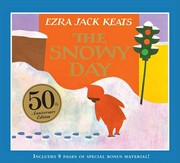
The Snowy Day
Peter in his red snowsuit explores fresh snow, from footprints and angels to a melted pocket snowball, in Keats classic winter day.
2,375-word summary · 11 min read
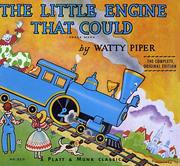
The Little Engine That Could
Watty Piper follows a stranded toy train past proud engines that refuse, to a small blue switcher who agrees to try the mountain and pulls her chanting load…
2,311-word summary · 10 min read
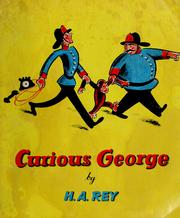
Curious George
Curious George retold: a monkey sails from Africa to the city, phones the fire station, floats off on balloons, and finds home.
2,979-word summary · 13 min read
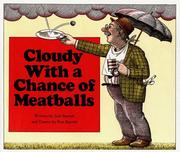
Cloudy with a Chance of Meatballs
A grandfather tells of Chewandswallow, where soup rains and meatballs fall, until giant food storms force everyone to flee.
2,873-word summary · 13 min read
Chicka Chicka Boom Boom
Letters race up a coconut tree, tumble down with a boom, then climb again with help in this chant classic.
2,120-word summary · 9 min read
Brown Bear, Brown Bear, What Do You See?
A rhythmic animal parade teaches colors and names, from brown bear to schoolchildren.
3,226-word summary · 14 min read
True Story of the Three Little Pigs
A. Wolf tells his side from the Pig Pen: he only wanted sugar for a cake, had a bad cold, and sneezed. You decide.
2,975-word summary · 13 min read
Alexander and the Terrible, Horrible, No Good, Very Bad Day
Alexander has one bad day from gum in his hair to bedtime, while his family copes and his mother stays honest.
2,548-word summary · 11 min read
Madeline
Ludwig Bemelmans's 1939 Madeline: the twelve girls in Paris, Miss Clavel, the midnight appendix scare, and why the smallest girl became a classic.
2,944-word summary · 13 min read
The Tale of Peter Rabbit
Peter Rabbit disobeys his mother, squeezes under the gate into Mr. McGregor garden, and ends in a chase back home to chamomile tea.
2,157-word summary · 10 min read
The Polar Express
A doubting boy rides a night train to the North Pole and keeps a bell only believers hear.
2,195-word summary · 10 min read
The Lorax
The Once-ler fells Truffula Trees for Thneed greed despite the Lorax, who speaks for the trees, warning him to stop.
2,563-word summary · 11 min read
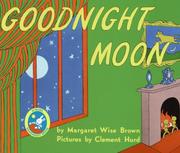
Goodnight Moon
A small bunny says goodnight to each object in the green room in this 1947 bedtime classic.
2,600-word summary · 12 min read
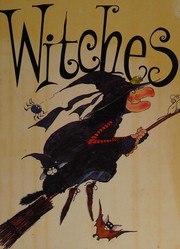
Witches
Colin Hawkins's rhyming picture book teaches small readers to spot witches, flaps and all.
2,783-word summary · 12 min read
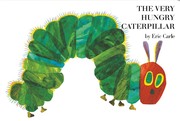
The Very Hungry Caterpillar
Eric Carle's hungry caterpillar eats through the week and turns into a butterfly: what the holes, counts, and days teach, and why kids still ask for it again.
2,413-word summary · 11 min read
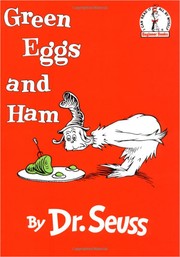
Green Eggs and Ham
Sam-I-Am will not stop asking until his friend tries green eggs and ham.
1,977-word summary · 9 min read
Where the Wild Things Are
Maurice Sendak follows Max in his wolf suit from mischief to a forest of Wild Things, through the wordless rumpus and back home to supper waiting still hot…
2,585-word summary · 11 min read
The Giving Tree
A boy and a tree grow older together as he takes her apples, branches, and trunk until only a stump remains.
2,249-word summary · 10 min read

Little Town on the Prairie
In the spring after the Long Winter, fifteen-year-old Laura sews shirts, studies for a teaching certificate, and helps send her blind sister Mary to college.
2,071-word summary · 9 min read
Click, Clack, Moo: Cows That Type
Cows learn to type, demand electric blankets, and go on strike in a deadpan picture book about negotiation and withheld labor.
2,617-word summary · 12 min read
Frog and Toad Are Friends
Five short stories about a cheerful frog and a grumpy toad who need each other for waking up, swimming, and waiting for the mail.
1,969-word summary · 9 min read