
Witches
2,783-word summary 12 min read 32 pages in the book
- First published
- 1981
- Publisher
- Granada
- Pages
- 32
- ISBN
- 9780246115133
Reading options
What's inside (8 sections)
I met this book on a low shelf at a library sale, spine bent and one flap half torn, with a small child tugging my sleeve to open it. The cover showed a grinning witch with a warty chin and a black cat tangled in her skirts, and the pages inside rattled with flaps that did not quite sit flat anymore. I sat on the floor and read it twice while the sale swirled around us. First published in 1981 by Granada in London, Witches runs 32 pages, and it reads like it was made by people who had recently been up at night with toddlers and knew exactly how a lap reader behaves.
Colin Hawkins is named on that first edition in a playful way, with credit given to Colin Hawkins and an old witch. His wife and collaborator Jacqui Hawkins, who worked on the book with him, was left off those earliest credits, though later editions name them together. It is worth saying plainly at the start because the book launched more than a hundred books from the Hawkins team over the following decades. This small rhyming toy book was the start of a working life in picture books. It also came out two years before Roald Dahl's The Witches of 1983, and the two books share nothing but a title word and an interest in spotting witches. They are unrelated in story, text, and pictures.
What you get here is not a plotted story with a beginning and an end. It is a mock guide. The speaker pretends to help you learn how to tell a witch from an ordinary neighbor, what she keeps in her kitchen, what spells she tries, what cures you might attempt if she catches you, and what odd bits of witch lore you should know so you are not fooled. The pages move by rhyme and by picture jokes. Almost every spread has something to lift or open. The pleasure is in the handling as much as the words.
A Book Made To Be Grabbed
The size tells you the intent before you even open it. This is a chunky small format toy book, meant for a child aged roughly three to six to hold and work. The flaps are large enough for clumsy fingers. You lift a skirt and find striped stockings and boots. You open a cupboard and find jars with labels you can partly sound out. You fold back a cloak and find a cat. Nothing here asks for quiet study. It asks for poking, lifting, guessing aloud, and laughing at what was hidden.
The art sets that tone. Hawkins draws in bright flat color with thick black outlines, round faces, big noses, and hats that flop. Witches have chins that jut and eyes that bulge, but they are never drawn to frighten. A cauldron bubbles with green blobs that look more like soup than poison. A broomstick bends under shopping bags. Backgrounds stay simple, a cottage wall, a wood floor, a night sky with a lopsided moon, so the flap remains the star. Your eye goes where your hand goes.
I watched this work with a four year old who normally wriggles through picture books. She would listen to the lines on a page, then stop listening until she had opened everything, then demand the lines again once she knew what lay under. That stop and start is the point. The book expects interruption. If you try to read it straight through like a bedtime tale, you fight the design. If you let the child lead the lifting, the rhymes land better on the second pass.
The rhyming itself is plain and bouncy rather than clever. Hawkins favors short lines with clear end rhymes that a child can predict. Aloud it smooths out because you naturally stretch a syllable to keep the beat. I fell into a chant without trying. That helps in a group, because children join in on repeated sounds before they know the words. The vocabulary stays concrete. Hat, cat, broom, spoon. You can point to almost every noun.
Walking The Pages From Cover To Back
The front cover acts as an invitation. You see one witch in full, front on, with the visual checklist the book will keep returning to. Pointed hat, wild hair, hooked nose, long dress, cat at her feet. Inside, the first spreads lay out the basic test. How would you know a witch if one moved in next door. The answer comes in looks and habits rather than powers. Clothes patched and layered, shoes that curl, hair that will not sit down. One flap lets you check what sits under a hat. Another shows what travels in a shopping basket that looks innocent from outside. The joke repeats with small changes, which suits children who love to guess right the second time.
Then the book moves to the home. The cottage kitchen gets a lot of attention. Shelves of jars and bottles, bundles of herbs hung to dry, a black kettle that never leaves the fire. Flaps hide cupboard contents and pantry shelves. Some hide food that looks normal until you look closer. Some hide tools for stirring that look oversized in a witch's hands. The humor is domestic. It treats witch life as housekeeping with stranger groceries. A child who knows where biscuits live at home enjoys finding where a witch keeps her stock.
From the kitchen the tour widens to animal companions. A black cat appears often, sometimes curled, sometimes startled, sometimes staring at the reader from under a flap. Owls and toads and spiders sit in corners, drawn with the same round soft lines so they read as pets rather than pests. One spread plays with the idea that you can tell a witch by who follows her. If odd creatures trail a woman down the lane, you might have your answer. You hear the clue, you lift, you see the proof.
The middle turns to spells and cures, still in that mock practical voice. It lists the sorts of tricks witches are said to try, changing shapes, mixing drinks that fizz, muttering over a pot, then offers equally silly defenses a child could pretend to use. Keep a charm in your pocket. Say a rhyme back. Do not drink what bubbles in a strange cup. The tone stays light. Nothing would worry a three year old at night. The spells sound like cooking gone wrong. The cures sound like playground rules. I was glad Hawkins kept it there, because a child turning flaps solo should not meet a sudden fright.
Later pages lean into trivia. Short bits about brooms and hats and night flying sit between jokes, the kind of folklore scraps adults half remember and children love to repeat as facts. The book does not pause to explain sources or separate old belief from invention. It presents everything in the same cheery voice. A teacher could pull at that thread later, asking what people really believed and why, but inside the book it works as texture.
Near the back the pace picks up. The flaps come faster, the reveals get broader, and the final spreads act like a test. Can you spot the witch now. The pictures crowd with more faces in a market or lane, and the child gets to play expert. My lap reader insisted on closing the book herself and announcing she knew them all now.
I learned to let the child lift first and read second, because guessing makes the rhyme stick.
I describe the action generally rather than quoting lines. My copy was an early printing and flap books vary slightly across reissues, and I do not want to misremember a couplet and present it as text. The through line is steady across editions I have seen. Look, lift, laugh, learn the sign, repeat with a twist.
Two Young Parents And A Pile Of Roughs
The creation story helps explain why the book feels so physical. Colin and Jacqui were young parents in the late 1970s, making picture book dummies at home between feeds and naps, testing what made their own small children reach out. Colin had trained in art and worked in illustration, Jacqui brought a sharp sense of what kept a toddler engaged, and they built roughs that already had working flaps cut from scrap. They were not writing a manuscript to be illustrated later. They were building a toy that happened to have words.
Granada, then active in children's publishing in London, bought the idea and produced it as a full color lift the flap book in 1981. For a debut this was a bold production choice, because flaps cost more to print and bind and can tear. Granada clearly trusted that handling was the selling point. The credit line on that first edition reads as a joke, by Colin Hawkins and an old witch. Behind the joke was a real omission. Jacqui's work on the concept and build went uncredited at first, a pattern from those early years when publishers sometimes treated a husband and wife team as a single male name. Later editions and later books put both names on the cover, and the Hawkins output from that point forward is properly understood as joint.
That joint method shows in how pages work. Many teams split writing and pictures cleanly. The Hawkinses passed dummies back and forth, adjusting a rhyme to fit a flap and cutting a new flap to fit a rhyme. The words rarely describe what the picture already shows. They set up a question the hand answers.
The sales that followed are easy to underrate now because series are everywhere. In the early 1980s a British rhyming flap book that sold through reprints and branched into activity formats was notable. The Hawkinses went on to produce well over a hundred books together, and Witches stayed in print in various forms while they built that list. It did not make them literary celebrities. It made them working makers whose names librarians recognized on sight.
The Hawkins Look And Sound
Line up Hawkins books from the 1980s and 1990s and the style holds steady. Outlines stay heavy. Colors stay high key, greens and purples that reproduce well on cheap paper. Faces are built from circles, noses and chins doing most of the character work. Hands are mitten like, which helps small readers read gestures from a distance. Perspective stays flat on purpose. A table is a top and four legs. That plainness leaves room for the flap to add depth. When you lift, you get the only real shadow on the page.
The writing shows the same priorities. Short words, strong beats, repetition with a small change. Hawkins keeps stanzas short and returns to the same nouns with new verbs. The hat appears again but does something new. The cat returns but sits somewhere else. Children track the return.
Aloud, the book rewards timing more than voices. Say the clue line, pause, let the child guess, lift on the rhyming word. You do not need a witch cackle, though most adults will attempt one. Leave a beat between question and reveal so anticipation builds. On a second reading, let the child speak the clue while you lift, reversing roles. The text on each page is brief, so no one has to hold a long sentence in memory while small hands fumble.
For classroom or library use, the strengths are clear. Children learn that text runs in order, that a page turn brings a new idea, that a flap hides information you can predict. It builds vocabulary around home and clothes through pointing. It also teaches a soft version of checking clues. Is this person what she seems. What signs do we have.
There are limits. The rhymes offer little stretch beyond initial sounds and rhyming pairs. The folklore bits are too compressed to teach from directly. And the format fights large groups. One copy held up to twenty children means most cannot see the reveal. This is a lap book or small group book first. I learned to pass my copy around after reading so each child could work the flaps solo.
Not Dahl And Why The Confusion Persists
Because titles match and dates sit close, 1981 for Hawkins and 1983 for Dahl, people assume a link. There is none. Dahl's The Witches is a 224 page novel published by Jonathan Cape with drawings by Quentin Blake, about a boy and his Norwegian grandmother who face a convention of child hating witches in a seaside hotel. Hawkins's Witches is a 32 page rhyming flap book for preschoolers about recognizing witches by looks and habits, with no continuing characters and no plot beyond the tour. One has real menace and a bittersweet ending where the boy stays a mouse. The other is a toy to be lifted and laughed at.
The contrast helps when choosing. Dahl writes in prose with long buildups and passages that can frighten at bedtime. His witches hide claws under gloves and bald heads under wigs, and plot to turn children into mice. His humor has an edge. Hawkins keeps everything round and brief. His scares dissolve on the lift of a flap, and his reader is asked to giggle rather than worry. A five year old who loves Hawkins may still need a couple years before Dahl's hotel meeting feels fun rather than intense.
Hawkins came from maker culture, building interactive dummies at home and selling a production idea to Granada. Dahl came as an established author whose books could carry a longer text with black and white drawings. Both succeeded, but they solved different problems. It is a useful reminder that same title words can hide opposite aims.
I sometimes shelve them together for Halloween and watch what happens. Toddlers pull Hawkins and work the flaps on the floor. Older primary children pull Dahl and read the spotting guide to compare notes. If a child asks whether one copied the other, dates answer simply. Hawkins came first by two years, and neither borrowed from the other. They drew on the same stock of folk images, pointed hats and black cats and bubbling pots, and took them in different directions.
Who It Suits And Where It Thins
For the right age this remains a strong pick. Children between three and six who like to touch books, who memorize refrains, who want to be the one to find the hidden thing, will get a lot from it. It suits Halloween without being tied to it. You can read it in October for costume fun and again in March when a child needs a familiar joke. It also suits adults who feel awkward doing voices, because interaction carries the show. You do not have to act. You have to pause and lift.
Older children will find it thin, and that is fair criticism rather than a flaw. There is no character to follow, no problem to solve, no language to puzzle over. A seven or eight year old who reads alone may enjoy it once for nostalgia or for reading to a younger sibling, but will not return to it solo. In a home with mixed ages, pair it rather than present it as the main event.
Some bits date. That is unavoidable in a book from 1981. Clothing details and kitchen tools look old fashioned now, which most children find funny. More worth noting is the credit history itself. Inside, the portrayal of witches as ugly old women with warts leans on a stereotype modern books often revise. Hawkins plays it gently for laughs, but a parent may want to say aloud that real people do not look evil because they are old or dress oddly, and that the book is playing a dress up game.
Durability is the practical complaint. Flap books from this period tear at the hinge, and tape repairs change how they sit. If you buy secondhand, check that flaps still cover their reveals. If you buy new, check whether your edition uses the same paper engineering as the original or a simplified version. Some reissues flatten a flap into print, which removes the point.
I keep my battered copy because it still does its job. It invites a child to sit close, to guess, to lift, to speak the rhyme before I do. It does not try to be a novel. It tries to make a small reader feel sharp for noticing a hat, a cat, a pot. On that measure, more than forty years after Granada first published it, it still works.
FAQ
When was Witches published and how long is it?
Granada published Witches in London in 1981. The edition cited here runs 32 pages.
Is this the same as Roald Dahl's The Witches?
No. Hawkins's 1981 rhyming flap book for preschoolers is unrelated to Dahl's 1983 novel about a boy and his grandmother. They share folk images but no story, text, or characters.
Who actually made Witches?
Colin Hawkins was credited first with an old witch, while Jacqui Hawkins went uncredited on earliest printings. Later editions credit Colin and Jacqui jointly, and the book launched over one hundred Hawkins titles.
Similar books
More like Witches →
The Cat in the Hat
A tall Cat turns a rainy day upside down for Sally and her brother, with Thing One and Thing Two in tow.
2,546-word summary · 11 min read
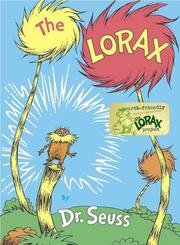
The Lorax
The Once-ler fells Truffula Trees for Thneed greed despite the Lorax, who speaks for the trees, warning him to stop.
2,563-word summary · 11 min read

Goodnight Moon
A small bunny says goodnight to each object in the green room in this 1947 bedtime classic.
2,600-word summary · 12 min read

The BFG
Orphan Sophie is taken by the Big Friendly Giant, who blows happy dreams and eats vile snozzcumbers, and helps her stop nine man eating giants.
2,812-word summary · 12 min read
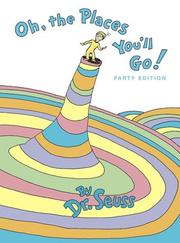
Oh, the Places You'll Go!
Seuss Sendoff follows life highs, slumps, and moving on with courage.
2,705-word summary · 12 min read

James and the Giant Peach
Lonely James escapes two cruel aunts inside a giant peach with huge insect friends, rolling to the sea and floating on gulls to New York City.
2,384-word summary · 11 min read