
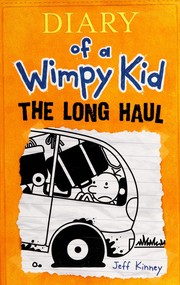
The Long Haul
2,311-word summary 10 min read 217 pages in the book
- First published
- 2014
- Publisher
- Amulet Books
- Pages
- 217
- ISBN
- 9781419711893
- Series
- Diary of a Wimpy Kid (#9)
Reading options
What's inside (8 sections)
I picked this one up because road trips in my house always followed the same script. Someone announced a fun drive, somebody else refused to leave until the right snacks were packed, and by hour two everyone was quiet in a way that meant nobody was happy. Jeff Kinney's ninth Diary of a Wimpy Kid book, published by Amulet Books in 2014, is 217 pages of exactly that kind of misery, told in the voice of a sixth grader who is certain he is the only sane person in the van. I read it in one evening and then spent a while wondering why a book about a family being stuck together made me laugh as hard as it did.
The book keeps the format that made the series famous. Greg Heffley writes in a journal, and Kinney's rough drawings sit beside the entries like evidence nobody asked for. Greg is not keeping a record for posterity. He is keeping a record of what happened to him, and the difference matters. When something goes wrong, his first question is usually how it affects him, and his second is whether anyone will blame him. That narrow point of view is funny for a few hundred pages and quietly sad if you stop to think about it.
Greg has never been a boy who wants a quiet life. In the earlier books he is always working an angle, trying to be seen as popular or cool without doing the work that might earn it. That part of him does not go away on vacation. He sizes up the motel, the fair, the other families, and the water park the way he sizes up a classroom, looking for who has power and where he might fit. It makes the road trip feel like an extension of school rather than an escape from it, which is probably the point.
A surprise trip and a boat nobody asked for
Greg's summer begins with the freedom he has been waiting for. There is no school, no homework, and nothing on the calendar except video games and whatever he can talk his way into. Susan Heffley ends that run almost immediately by announcing a surprise road trip. In her mind this is a gift to the family. In Greg's journal it is the theft of his summer, and he says so with the full drama of a kid who has never had to pay for a hotel room.
Frank Heffley then makes the decision that shapes everything that follows. He wants to bring the boat. Not a small one that fits on a roof rack, but a boat that has to be towed behind the van. Greg watches this happen with the dread of someone who knows he will be the one hauling the consequences. There is no big family meeting about it and no sensible objection that anyone listens to. A dad decides, and the kids absorb the result. Kinney lets that joke breathe instead of explaining it.
Kinney is good at the physical comedy of the thing. The boat has to be loaded, secured, and dragged behind the van, and every mile is a reminder that Frank made the call. Greg does not need to shout about it. A few lines in the journal about the boat bouncing along behind them say more than a page of complaining would. I also appreciated that the adults in this book are not presented as competent people who happen to have bad luck. They are tired, impatient, and convinced they know best, which is a very familiar combination on a family trip.
The first night on the road is spent at a run-down motel, and Greg picks a fight with the father of two kids by yelling about the noise they are making. He is genuinely frightened of the man afterward. That small scene plants the seed for the book's best running gag, which is that the Heffleys are not the only difficult family on the highway. Greg spends the entire trip convinced that other people are the problem. The book keeps handing him evidence that might suggest otherwise.
The next day brings the county fair, where Manny wins a live pig by guessing its weight correctly. I remember groaning at this when I first read it, because a live pig in a van is a problem with legs and no table manners. Greg barely has to comment on it. He writes down what the animal does and lets the reader do the laughing. It is a good example of how Kinney trusts the situation over the punch line.
The Beardos and the pig with an appetite
Back on the road, Greg notices the family from the motel in a purple van. He calls them the Beardos, after the father's beard, and from that moment they are the villains of his journal. This is one of the reasons the book works so well for me. Greg's account is private and more than a little unfair, and the narration never stops to correct him in a heavy way. We are inside his version of the trip, not a balanced report of it.
The pig turns out to be the real problem. At the next hotel it gets into the minibar in the room Greg and Rodrick are sharing, and the family has to pay for everything it eats. This is funny on the surface, but it also shows how the parents' choices keep creating work for everybody else. They wanted a surprise for the kids. What they got was a pig, a bill, a towed boat, and a van that smelled worse with every mile. Susan and Frank finally donate the animal to a petting zoo, which feels less like a solution than a concession.
The sequence also shows how quickly a small indulgence becomes a shared problem. One animal, one lucky guess at a fair, and suddenly the whole family is managing a creature that eats money and leaves messes. Greg's entries about this are short and furious. He is not angry at the pig so much as at the fact that nobody asked him what he thought before bringing it along.
Rodrick spends much of the trip doing as little as possible and still managing to make things worse. He is old enough to know better and young enough to enjoy not knowing better. His presence is a reminder that the Heffley house has its own version of the Beardos, just under one roof. Greg can escape the purple van, but he cannot escape his brother.
Soak Central and the missing key
Things fall apart properly after the beach. Greg feeds a seagull one of his snacks, which draws a whole flock of them into the car. Rodrick panics and hits the gas, and the van rear-ends another car. A mechanic tells the family the repair will take hours, so they pass the time at a water park called Soak Central.
This is the stretch of the book that feels most like an actual vacation to me. The water park is meant to be the reward, the part that makes the long drive worth it, and instead it is where everything disappears. After a raft ride, Greg sees that the Beardos have taken the family's beach chair. Susan and Frank put their phones and wallets in a locker, and when they go to leave they cannot find the key. An employee opens it for them, and their belongings are gone. Greg tells his family what he saw, but the Beardos drive away before anyone can confront them.
What struck me is how little the water park actually delivers. It exists as a promise the adults made, and the book lets it become another place where things go missing. That is a sharp observation for a children's book to make, even a funny one. Vacations often run on the idea that the next stop will fix the last one. Kinney keeps giving the Heffleys a next stop and letting it fail.
Kinney keeps the tone light even when the situation is not. Each disaster is one notch more irritating than the last, and Greg's reaction is always the same blend of outrage and calculation. He wants to be proved right. He also wants to stay out of trouble with his parents. Those two wishes pull against each other for the rest of the book, and the tension between them is what makes the journal voice feel real.
The break-in and the broken-down van
The mechanic gives the Heffleys one simple instruction: keep the heater on so the radiator will not break. They forget. On the way home the car dies, rolls to a stop, runs over a broken bottle, and pops a tire. This is the moment the trip finally admits what it has been all along, a long chain of small mistakes that nobody can quite undo.
Before the breakdown there is a stranger detour. Near home the family spots the Beardos' van at the motel. The door is unlocked, so they go inside to look for their missing things. They find nothing, the Beardos return, and the Heffleys have to get out. It is an odd little sequence, and it is easy to read as Greg getting exactly the comeuppance he has earned. He has spent the whole trip turning another family into cartoons. For a few pages the joke turns around and lands on him.
The break-in works because it is both petty and tense. Nobody is in real danger, but Greg writes about it as if they are, and the mismatch is the joke. It also quietly answers the question of what the Beardos are actually like. They leave a door unlocked and they take a beach chair. They are not monsters, just another family having a bad time. That is a more interesting choice than giving them a villain's speech.
Then help arrives from a purple van. Greg assumes the men inside are the Beardos, but they are two Spanish-speaking strangers who stop to help. Manny, who has been listening to a Spanish CD during the drive, speaks with them in perfect Spanish and convinces them to give the family a ride home. I liked this turn more than I expected to. Manny is usually the little brother who gets away with everything simply because he is little. Here his odd and very specific skill is the thing that rescues everyone. It is the closest the book comes to a real payoff.
The group stops at the petting zoo on the way, where Manny is reunited with his pig. It is a sweet moment in a book that is usually too busy being gross to be sweet. Kinney does not linger on it, which is probably the right call. A long scene about a boy and his pig would sit oddly beside the rest of the story.
What they bring home
Back at the house the pig is still around, so Greg has to adjust to sharing his life with it. Frank and Susan get new credit cards and new phones after the locker incident. The boat is handed over to the men who drove the family home, which is the funniest possible ending for the object that caused so much of the trouble. A boat on a road trip was a bad idea from the start, and the book finally finds someone willing to take it.
The last page is quieter than everything before it. Greg unpacks and finds the locker key from Soak Central in his shorts. The number on it is 292, which he had read as 929. He could tell his parents. He decides not to, and writes that it is hard to see this story having a happy ending.
It's hard to see this story having a happy ending.
That line made me stop. The book is full of loud, cartoon problems, and then it ends with a kid quietly choosing to keep a secret. Kinney never lectures about honesty or gives Greg a speech about the value of family. He just lets his narrator sit with the choice he made.
The honest assessment
The Long Haul is not a subtle book. If you want a plot with real stakes, look elsewhere. The same pattern repeats: someone makes a bad call, Greg complains, things get worse, and the family survives. Readers who bounced off earlier Diary of a Wimpy Kid books will probably find the formula tired by book nine. The Beardos never get a proper reckoning, and the ending arrives quickly after the long middle section.
There is also plenty of the physical humor the series is known for, and it will not be for everyone. The pig, the seagulls, and the various bodily disasters are played for laughs, and a reader who is sensitive to that sort of thing will find the book wearing. My sense is that Kinney knows exactly who he is writing for and is not trying to win over anyone else. That focus is part of why the jokes land so reliably.
What I keep coming back to is how well the book understands the feeling of being trapped with people you love. Greg's complaints are selfish and often unfair, but the frustration underneath them is real. He wants one summer that belongs to him, and the book never gives it to him. It also never pretends that family life is a reward for good behavior. That is why I would hand this to a reluctant reader who thinks a road trip story sounds like homework. It is short, it is mean in a harmless way, and it finishes with a sentence that stays with you longer than the pig does.
FAQ
Is The Long Haul part of the Diary of a Wimpy Kid series?
Yes. It is the ninth book, published by Amulet Books in 2014, after Hard Luck and before Old School.
What happens to the pig Manny wins at the fair?
It eats from the hotel minibar and causes trouble, so Susan and Frank give it to a petting zoo. Manny is reunited with it near the end.
Who are the Beardos?
They are a family Greg spots in a purple van early in the trip. He names them after the father's beard and suspects them when the family's things go missing.
Similar books
More from Diary of a Wimpy Kid first, then related titles.
Diary of a Wimpy Kid
Greg Heffley records middle school survival in his journal, dodging the Cheese Touch and Rowley's popularity.
1,912-word summary · 8 min read
Rodrick Rules
Greg Heffley starts a new school year hiding a summer secret with Rodrick, whose party, photos, and talent show chaos threaten to expose everything.
2,971-word summary · 13 min read
The Last Straw
Frank wants Greg toughened through sports while Greg dodges everything and military school looms.
2,020-word summary · 9 min read
Dog Days
Greg wastes summer perfectly through pools, dogs and dad fishing trips.
2,127-word summary · 9 min read
The Ugly Truth
Greg faces puberty, a school lock-in and Uncle Gary's wedding while Mom returns to college in Wimpy Kid book five.
2,766-word summary · 12 min read
Cabin Fever
Greg Heffley gets snowed in with his family before Christmas while dodging blame for school property damage.
2,221-word summary · 10 min read
The Third Wheel
Greg tries to find a date for the Valentine's dance, ends up the third wheel in his own plan, and watches Rowley get the girl.
2,019-word summary · 9 min read

Hard Luck
Rowley has a girlfriend, so Greg turns to a Magic 8 Ball, a family Easter hunt and the school yearbook for answers.
2,586-word summary · 11 min read
Kristy's Great Idea: A Graphic Novel (The Baby-Sitters Club Graphic Novels #1)
Raina Telgemeier adapts Ann M. Martin's first Baby-Sitters Club novel into a full-color graphic novel about four Stoneybrook friends who start a babysitting…
2,373-word summary · 11 min read
Beezus and Ramona
Nine year old Beezus tries to be a good older sister while four year old Ramona turns every ordinary day into a disaster, until a tenth birthday forces honesty.
2,062-word summary · 9 min read
Bud, Not Buddy
A ten year old orphan in the Depression walks to find a jazzman he thinks is his father.
2,568-word summary · 11 min read
The Trumpet of the Swan
A mute trumpeter swan learns to read, write, and play a stolen trumpet to win a mate, in E.B. White's quiet 1970 tale of a boy who watches.
2,309-word summary · 10 min read
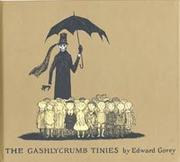
The Gashlycrumb Tinies
Edward Gorey's 1963 alphabet book marches twenty-six children through a series of very bad endings, in thirteen rhyming couplets and a handful of unnervingly…
2,200-word summary · 10 min read
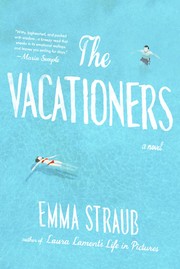
The Vacationers
A New York family's two-week stay in Mallorca turns into a comedy of exposed secrets when a magazine editor's affair and a son's debts come to light.
2,324-word summary · 10 min read
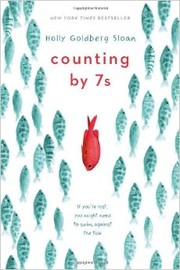
Counting by 7s
A gifted twelve-year-old who counts by sevens loses her parents in a car crash and gradually builds a new family with help from a counselor, a taxi driver, and…
2,306-word summary · 10 min read
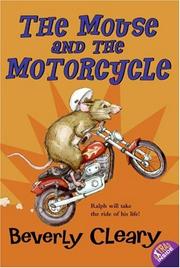
The Mouse and the Motorcycle
A bored mouse named Ralph finds a boy's toy motorcycle in a hotel room and starts a secret life of night rides, mishaps, and unlikely friendship.
2,254-word summary · 10 min read
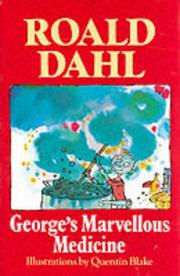
George's Marvellous Medicine
George stirs a brew of dozens of household chemicals and gives it to his grumpy grandmother, and the medicine works far better than anyone planned.
2,014-word summary · 9 min read
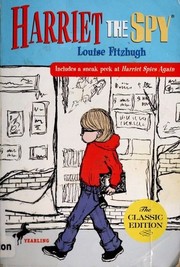
Harriet the Spy
Eleven year old Harriet Welsch fills notebooks with honest, often cruel observations about her neighbors, until her classmates read one and turn her spy route…
2,510-word summary · 11 min read
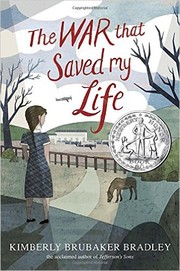
The War That Saved My Life
Ten-year-old Ada has never left her London flat, hidden away because of her clubfoot. Wartime evacuation sends her to Kent, where a reluctant guardian and a…
2,252-word summary · 10 min read
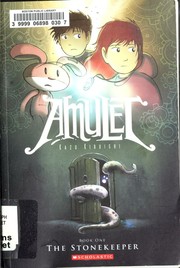
The Stonekeeper
After their father's death, Emily and Navin chase a monster into a hidden world to save their mother, and Emily's great-grandfather's amulet offers power at a…
2,753-word summary · 12 min read
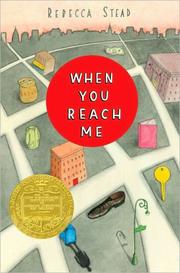
When You Reach Me
A sixth grader in 1970s New York gets strange notes that seem to predict the future.
2,456-word summary · 11 min read

The Penultimate Peril
Baudelaires as concierges in a hotel sort friends from foes before the end.
2,234-word summary · 10 min read
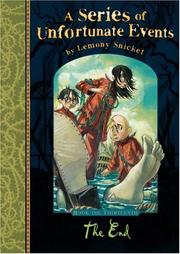
The End
Baudelaires wash on an island where others decide what safe means.
2,320-word summary · 10 min read
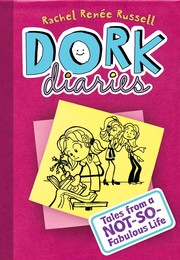
Tales from a Not-So-Fabulous Life
Nikki starts private school and writes mean-girl survival in her diary.
2,587-word summary · 11 min read
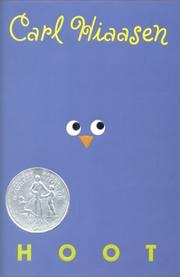
Hoot
Roy tracks a shoeless boy to save burrowing owls from a pancake house.
2,290-word summary · 10 min read

Esperanza Rising
Esperanza trades ranch life for farm labor camps in California.
2,338-word summary · 10 min read

Stellaluna
A baby fruit bat falls into a bird nest, learns to perch and eat bugs, then reunites with her mother in Cannon's acclaimed 1993 picture book about difference…
2,486-word summary · 11 min read
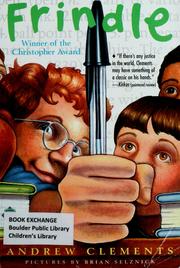
Frindle
Nick Allen calls a pen frindle, defies Mrs. Granger and a school ban, and watches the joke grow into news, trademarks, and a dictionary entry.
2,405-word summary · 11 min read
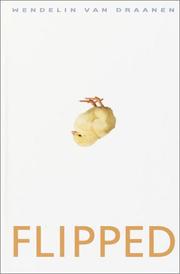
Flipped
Juli Baker and Bryce Loski retell second grade to eighth grade from opposite sides, through a sycamore sit, trashed eggs, a yard fix-up, and one tense family…
2,689-word summary · 12 min read
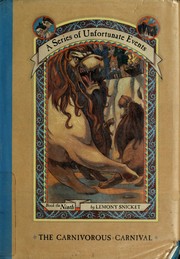
The Carnivorous Carnival
Baudelaires hide as carnival freaks to find V.F.D. clues, facing lions, Olaf, and a fateful cliff split.
2,027-word summary · 9 min read