
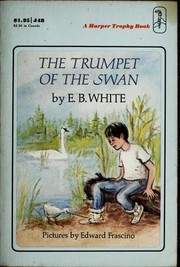
The Trumpet of the Swan
2,309-word summary 10 min read 210 pages in the book
- First published
- 1970
- Publisher
- Harper & Row
- Pages
- 210
- ISBN
- 9780064400480
Reading options
What's inside (8 sections)
The boy who kept coming back to the pond
I came to this book through Charlotte's Web, as a lot of readers do, and I was not ready for how quiet it is. E.B. White published The Trumpet of the Swan in 1970, and it is the last of the three animal books he wrote, after Stuart Little and Charlotte's Web. Where Charlotte's Web has a barn full of voices, this one opens in near silence, with an eleven-year-old boy named Sam Beaver camping in the Canadian woods with his father. Sam wanders down to a pond where a pair of trumpeter swans have built their nest on a small island. The cob, the male, watches him with suspicion. He has decided that boys are dangerous.
White spent much of his life at a farm in Maine, and the naturalist's patience in this book comes from years of watching real birds rather than inventing them. The opening chapters move at the pace of a boy sitting very still in the grass. Sam comes back to the pond day after day, and the cob keeps his eye on him, and the pen goes on sitting on her eggs. On paper almost nothing happens. But the stillness is the point. This is a book about learning to notice, and White asks his reader to do the same watching Sam does.
Sam's father is a gentle presence in these early pages, a man who takes his boy camping and lets him wander. White gives him very little dialogue, and what he does give is practical: advice about the woods, a quiet acceptance of whatever Sam brings back from the pond. The relationship matters because it models the kind of attention the book rewards. Sam learns to watch the swans the way his father has taught him to watch the weather and the trails.
What finally changes the cob's mind is a fox. While the pen steps off the nest to stretch her legs, a fox slips up behind her, and Sam drives it away with a stick. That single act buys the boy the swans' trust. When the cygnets hatch, the cob leads the whole brood over to introduce them to Sam, a moment of real pride in a bird White has spent chapters making wary. Four of the cygnets chirp at him. The fifth, the smallest, cannot make a sound. He pulls Sam's shoelace instead. This is Louis, and his parents understand at once what it means: their son was born mute.
White does not make a tragedy of it. He makes it a practical problem, which is the book's particular grace. The parents worry that Louis will never find a mate if he cannot trumpet like other swans. The cob promises to find a way for him to communicate. Sam, who loves all wild things, keeps returning to the pond, and the swans stop treating him as a threat. Everything that follows is planted in these opening pages: the trust, the silence, and a father's refusal to accept that his son is finished before he has begun.
A slate, a stolen horn, and going north alone
When summer ends, the family flies to the winter refuge at Red Rock Lakes in Montana. Louis decides that if he cannot call, he will learn to read and write instead. He flies off on his own to visit Sam, and the boy takes his swan friend to school with him the next morning. Louis turns out to be a natural at reading and writing, and Sam buys him a small slate and some chalk so he can carry his words with him. This solves part of the problem and leaves the larger one untouched, because swans cannot read. Louis can write a sentence to Sam and still be utterly alone among his own kind.
The school episode has a dry humor that the rest of the book only hints at. Sam takes his swan friend into a classroom built for children, and Louis proves a natural at reading and writing. White does not dwell on the spectacle of a swan in school. He is interested in the practical result: a slate, a piece of chalk, and a way for Louis to put a sentence into the world. That matter-of-factness is the book's best quality.
That loneliness is the quiet ache of the middle chapters. Louis can make himself understood to one boy, but every other swan he meets looks straight through the slate hanging at his neck. White never turns this into a lesson about fitting in. He simply keeps Louis at the edge of the flock, watching the birds he cannot answer, and lets the reader feel the distance.
Louis falls in love with a young swan named Serena, and she will not look at him. The cob, who has noticed that trumpeter swans are named for a human instrument, decides to get his son a trumpet. He crashes through the window of a music store in Billings, Montana, and steals a brass trumpet on a cord. It is a strange thing for a father to do, and White lets the oddness stand without a lecture. The theft hangs over the rest of the book like a small debt owed to a man Louis has never met.
By the time Louis can actually play the thing, Serena has migrated north. Rather than go north with his family and face her again, he stays with Sam and admits what is weighing on him. Sam's answer is the most sensible in the book: get a job and pay for the trumpet and the broken window. He helps Louis find work as a camp bugler at Camp Kookooskoos, the boys' camp Sam attends. It is a fine piece of plotting, because it turns a hole left by a crime into the thing that gives Louis a life of his own.
Camp Kookooskoos and the split webbed foot
To hold the instrument properly, Louis convinces Sam to cut a slit in one of his webbed feet with a razor blade, making fingers of a sort. I remember reading that scene twice, once in surprise and once to see whether White would soften it. He does not. It is a practical alteration to a practical problem, described in the same flat, calm voice as everything else in the book. A swan who cannot make a sound will do quite painful things to make music, and the story treats that as ordinary determination.
Through the summer Louis plays taps, reveille, and mess call. He writes a love song for Serena in the quiet hours. He also earns a Lifesaving Medal after pulling a drowning camper from the water. At the end of the season he has a hundred dollars, which he carries in a waterproof pouch around his neck along with the slate, the chalk, the medal, and the trumpet. White keeps returning to that pouch. It is Louis's account book, his conscience, and his awkward version of a swan's bright plumage all at once.
The camp chapters are the loosest in the book, a string of bugle calls and small triumphs, and some readers will feel the pace slacken there. They earn their place later. Every skill Louis picks up at Camp Kookooskoos, every dollar in the pouch, and every note he learns to hold on that horn will be needed when he finally meets Serena again.
Camp Kookooskoos also gives White a chance to write about music without turning it into a lesson. Taps and reveille are sounds with jobs to do, marking the day for boys who need to wake and eat and sleep. Louis learns them the way a working musician learns a trade, by repetition and attention. The love song he writes for Serena is the one piece of music in the book written for a person rather than a schedule, and it is the one that will matter later.
Sam suggests the Swan Boats in Boston, those little passenger craft shaped like swans that circle the Boston Public Garden. Louis flies east and becomes an immediate success, paid a hundred dollars a week and given a private suite at the Ritz Hotel. Then a Philadelphia nightclub offers him five hundred, and he moves again, taking rooms at the Philadelphia Zoo. The zookeeper promises that because Louis is only a guest, no one will pinion him, that is, cut a wing tip so he cannot fly away. Every other swan in the zoo has been pinioned. Louis is the exception, and the book keeps that promise in view. A successful musician may still be a bird who needs his wings.
Beautiful Dreamer at the Philadelphia Zoo
The reunion with Serena happens by accident in a storm. She is blown off course and falls into the zoo's Bird Lake. Louis finds her and plays Beautiful Dreamer on the trumpet, and she is won over by the song and by the collection of objects hanging around his neck. The moment is romantic in a very unhurried way. White does not give them a conversation. He gives them a tune and a show of possessions, which is exactly how a swan might fall in love in a story told by a man who spent years watching real birds.
The zookeepers want to clip Serena's wings once they spot her. Louis attacks them, then persuades the Head Man to delay the operation and sends a telegram to Sam for help. Sam comes to Philadelphia and makes a bargain: in every clutch of cygnets one bird needs special care, just as Louis did, so if the Head Man lets Louis and Serena go free, the pair will donate a cygnet to the zoo whenever one is needed. It is a neat solution, and I think too neat. A zoo official agrees to release two rare swans on the strength of an argument about future chicks, and the story moves past it quickly. Still, the scene gives Sam one last act of usefulness, and it lets Louis keep the freedom the whole book has been steering toward.
White's Boston and Philadelphia chapters are the book's most urban, and they work because Louis is never quite at home in them. He is a wild bird in a hotel suite, a celebrity who would rather be back at Red Rock Lakes. The money piles up in the pouch, but the story never suggests that the money is the point. Louis wants the trumpet paid for and Serena won, and the cities are places he passes through on the way to both.
Paying the storekeeper back
Back at Red Rock Lakes, Louis knows he no longer needs the slate. He writes an apology on it, hands it and the money bag to his father, and sends the old cob back to Billings to settle the account. The storekeeper, still jumpy about the window, shoots at the swan and nicks him in the shoulder. The cob lands, passes over the slate and the money, and faints at the sight of his own blood. The storekeeper reads the note and finds that the payment is several times what the trumpet and the window cost. Because trumpeter swans are a protected species, the cob is taken to a wildlife veterinarian, treated, and eventually released to rejoin his family.
This is the book's emotional center for me, and it is not the romance. It is a father who broke the law for his son, and a son who quietly repaid it with interest, and a storekeeper who is too astonished to be angry. White trusts young readers to sit with that. There is no speech about honesty at the end, just a wounded bird fainting on a shop floor and a man staring at a piece of slate. The moral is carried by the action, which is why it lands without any of the heaviness that usually comes with a book written for children.
The last note across the lake
Years later, when Sam is about twenty and camping in Canada again, he hears a trumpet across the water on a night when the wind is right. He can make out taps at dusk, and he knows it must be Louis. He writes in his journal that he heard the trumpet of the swan and that there is nothing in all the world he likes better. That is the whole ending, one boy listening in the dark. White refuses to explain how Louis and Serena live afterward, and the refusal feels correct. The sound is enough.
The book has never been mistaken for the funniest or busiest of White's three animal stories. John Updike, reviewing it in 1970, called it the most spacious and serene of the three and said it carried the author's sense of the precious instinctual heritage of wild nature, while admitting it was less rich in personality than Charlotte's Web. It was a finalist for the 1971 National Book Award in children's books and later won the 1973 William Allen White Children's Book Award. Both honors make sense. This is a book about patience, about a difference that becomes a gift, and about the debt one generation owes the next.
It also had a second life beyond the page. The Philadelphia Orchestra performed a piece based on it in 1972, an animated film appeared in 2001, and a stage adaptation with music by Jason Robert Brown and a cast including John Lithgow and Martin Short followed in 2011. None of that is why the book endures. It endures because of a boy sitting still by a pond and a swan who could not chirp, and because White understood that the smallest sound, once found, can carry across a whole lake.
FAQ
When was The Trumpet of the Swan published?
It was first published in 1970 by Harper & Row. The ISBN cited here belongs to a 1973 Harper Trophy paperback of 210 pages.
Who is Louis and why can't he call?
Louis is the youngest cygnet of a pair of trumpeter swans in Canada. He is born mute, so his father steals a brass trumpet in Billings, Montana, to give him a voice.
Is this book part of a series?
No. It is a standalone children's novel, the last of E.B. White's three animal books after Stuart Little and Charlotte's Web.
Similar books
Stuart Little
A two-inch boy in a New York family befriends a canary, loses her, and drives off alone to find her.
2,591-word summary · 12 min read

The Mouse and the Motorcycle
A bored mouse named Ralph finds a boy's toy motorcycle in a hotel room and starts a secret life of night rides, mishaps, and unlikely friendship.
2,254-word summary · 10 min read
Stellaluna
A baby fruit bat falls into a bird nest, learns to perch and eat bugs, then reunites with her mother in Cannon's acclaimed 1993 picture book about difference…
2,486-word summary · 11 min read
Redwall
A novice mouse hunts for Martin the Warrior's lost sword while Cluny the Scourge besieges Redwall Abbey.
2,727-word summary · 12 min read
The Wind in the Willows
Mole, Rat, Badger, and Toad mess about in boats, lose themselves in the Wild Wood, and retake Toad Hall.
2,033-word summary · 9 min read
The Long Haul
Greg Heffley's summer road trip goes sideways with a towed boat, a live pig, and a family in a purple van.
2,311-word summary · 10 min read
The Book of Three
A restless assistant pig-keeper in mythical Wales chases his escaped oracle pig and finds himself beside Prince Gwydion in a war against the Lord of Annuvin.
2,019-word summary · 9 min read
My Side of the Mountain
Sam Gribley leaves a crowded New York apartment for the Catskills, builds a home in a tree and trains a falcon to help him survive.
2,242-word summary · 10 min read

Kristy's Great Idea: A Graphic Novel (The Baby-Sitters Club Graphic Novels #1)
Raina Telgemeier adapts Ann M. Martin's first Baby-Sitters Club novel into a full-color graphic novel about four Stoneybrook friends who start a babysitting…
2,373-word summary · 11 min read
Make Way for Ducklings
A pair of mallards raise eight ducklings on the Charles River and lead them across Boston to the Public Garden, with a little help from a friendly policeman.
2,044-word summary · 9 min read
Hard Luck
Rowley has a girlfriend, so Greg turns to a Magic 8 Ball, a family Easter hunt and the school yearbook for answers.
2,586-word summary · 11 min read
Clifford the Big Red Dog
Emily Elizabeth picks the smallest puppy in the litter, loves him as hard as she can, and wakes up to a dog the size of a house.
2,092-word summary · 9 min read
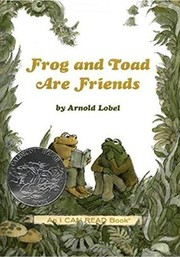
Frog and Toad Are Friends
Five short stories about a cheerful frog and a grumpy toad who need each other for waking up, swimming, and waiting for the mail.
1,969-word summary · 9 min read
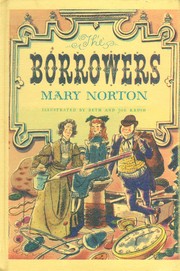
The Borrowers
A family of tiny people live under the floorboards of an English house, borrowing what they need until a lonely boy and a suspicious housekeeper change…
2,164-word summary · 10 min read
The Stonekeeper
After their father's death, Emily and Navin chase a monster into a hidden world to save their mother, and Emily's great-grandfather's amulet offers power at a…
2,753-word summary · 12 min read
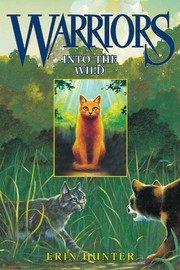
Into the Wild
Housecat Rusty joins ThunderClan and learns clan law before war.
2,597-word summary · 12 min read
Hoot
Roy tracks a shoeless boy to save burrowing owls from a pancake house.
2,290-word summary · 10 min read

Gregor the Overlander
Gregor follows Boots down a grate into the Underland and a war prophecy.
2,516-word summary · 11 min read
The Miraculous Journey of Edward Tulane
A china rabbit lost at sea learns to love through owners kind and cruel across many years.
2,002-word summary · 9 min read
The Jungle Book
Mowgli, raised by wolves in the Seeonee Hills, learns the Law from Baloo and Bagheera while Shere Khan circles. Kipling's 1894 story collection.
2,799-word summary · 12 min read
Cabin Fever
Greg Heffley gets snowed in with his family before Christmas while dodging blame for school property damage.
2,221-word summary · 10 min read
The Ugly Truth
Greg faces puberty, a school lock-in and Uncle Gary's wedding while Mom returns to college in Wimpy Kid book five.
2,766-word summary · 12 min read
Fantastic Mr. Fox
Mr. Fox raids three cruel farmers to feed his family, then outdigs tractors and a siege to host a feast underground.
2,910-word summary · 13 min read

A Dog's Purpose
A reincarnated dog lives four lives as Toby, Bailey, Ellie and Buddy while searching for his purpose with Ethan.
2,962-word summary · 13 min read
The Mysterious Benedict Society
Four gifted children pass strange tests and go undercover at a school hiding a mind control machine.
2,130-word summary · 9 min read
Mrs. Frisby and the Rats of NIMH
A widowed mouse races the spring plow to save her sick son Timothy, and finds help from the intelligent rats of NIMH hiding under the rosebush.
3,159-word summary · 14 min read
The Tale of Despereaux
A bookish mouse, a light loving rat, and a servant girl meet in a castle where soup is banned to save Princess Pea.
2,680-word summary · 12 min read
The One and Only Ivan
A mall gorilla who paints promises a dying elephant friend to get baby Ruby to a better home.
2,178-word summary · 10 min read
Pippi Longstocking
A super-strong nine-year-old lives alone in Villa Villekulla, upending school, circus and town rules with neighbors Tommy and Annika.
3,115-word summary · 14 min read