
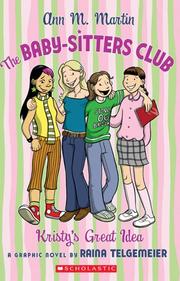
Kristy's Great Idea: A Graphic Novel (The Baby-Sitters Club Graphic Novels #1)
2,373-word summary 11 min read 186 pages in the book
- First published
- 2006
- Publisher
- Graphix
- Pages
- 186
- ISBN
- 9780439802413
- Series
- The Baby-Sitters Club (#1)
Reading options
What's inside (8 sections)
I came to this one late, long after I had decided graphic novels were a different job from the books I usually read. A friend handed me her old copy with a note that said it would take forty minutes and ruin me for the rest of the series. The forty minute part was about right. The ruining part took longer. This is the 2006 Graphix adaptation of Ann M. Martin's 1986 novel, drawn and adapted by Raina Telgemeier, and it is the first book in The Baby-Sitters Club graphic novel line. The standard edition runs 186 pages. Telgemeier is doing two jobs here, translating a story written twenty years earlier into pictures and also making four twelve year olds feel like actual people instead of a marketing demographic. She mostly pulls it off.
Where the idea comes from
Kristy Thomas is in eighth grade in Stoneybrook, Connecticut, and she is the sort of kid who has already decided what needs to happen before anyone else has finished describing the problem. She is the shortest girl in her grade, wears a baseball cap, plays softball, and dresses in the jeans and sweatshirts that get described as tomboy clothes in the original books. The idea for the Baby-Sitters Club comes from her own home. Her mother keeps having trouble finding someone to watch her younger brother David Michael, and Kristy figures out that a group of girls who share jobs and a phone could solve that problem for everybody at once.
That origin matters because the club is a business before it is a friendship thing. Kristy is not starting a club to have somewhere to cry about her feelings. She is starting it because her mother is stuck and because there are neighborhood kids who need sitters and because her friends could use the money. The first pages have the energy of a scheme being hatched at a kitchen table, which is exactly the right note. You can almost hear her talking faster than everyone else can keep up.
There is a second thing going on in Kristy's life, and the book lets it sit under the club plot the whole way through. Her mother is about to marry Watson Brewer, a wealthy man with a big house in the nicer part of Stoneybrook and two children of his own, Karen and Andrew. Kristy is against the move before she has even packed a box. She has her brothers Sam and Charlie, her little brother David Michael, and a collie named Louie, and the idea of folding all of that into somebody else's household makes her prickly in a way that is easy to recognize if you have ever been a kid facing a change nobody asked you about.
Telgemeier gives Kristy a face that can do a lot of work. Her eyebrows are usually up, her mouth is usually open, and her body is almost always leaning forward. Even when she is being unreasonable, the drawings make her energy legible instead of mean. That is a hard balance to strike with a character who is, let us be honest, frequently bossy.
Four girls and one telephone
The club has four founders with jobs. Kristy is president because it was her idea. Mary Anne Spier is secretary because she has the neatest handwriting in the grade and a head for details. Claudia Kishi is vice president for a wonderfully practical reason: she has her own phone in her room, so she takes the calls after hours. Stacey McGill is the treasurer because she is good at math. The meetings happen after school at Claudia's house, which gives the book its recurring picture of four girls crammed into a teenager's bedroom with snacks and a phone line that belongs to somebody else.
Each of them arrives with a whole life attached, and Telgemeier finds a visual shorthand for each one. Mary Anne is shy and sensitive, with long brown hair in braids for most of the book and a father named Richard who is a lawyer and far too careful with her. Her mother died when Mary Anne was small, and that absence is in the background of pretty much everything she does. Claudia is Japanese American and the most visually inventive person in the group. She draws and paints and makes jewellery, and she hides candy and Nancy Drew books around her room because her parents do not approve of either. Her older sister Janine is a genius and her grandmother Mimi is the person who really understands her. Claudia's clothes are wild compared with everyone else's, which Telgemeier draws with obvious delight.
Stacey is the new girl from New York, polished and fashion minded and much more sophisticated about boys and clothes than the others. She is also keeping something from them. She has type 1 diabetes, and she has learned to hide it because kids in New York made her life miserable about it. In the original novel this is a slow reveal. In the graphic novel it is still a slow reveal, but Telgemeier gives the reader little visual hints in Stacey's face and in the way she pulls her sleeve down or changes the subject, so you can feel the secret pressing even before it is named.
I liked that the book does not flatten these four into a single unit. They bicker. They get on each other's nerves. Mary Anne will say something quiet and careful and Kristy will bulldoze right over it. Claudia will disappear into her own world at exactly the wrong moment. Stacey will make a comment that lands differently than she meant it. The club works because these four keep showing up, not because they are especially good at getting along.
The jobs go sideways
The babysitting jobs are where the comedy lives, and they are deliberately ordinary. The phone rings, somebody needs a sitter, and the girls discover that looking after children is harder than it looked from the outside. There are crank calls to the club line. There are two year olds who will not be controlled by reason or bribery. There are pets that get loose. There are parents who leave out important information, which is a polite way of saying that some of the adults in this book are not reliable narrators about their own households.
What I appreciated is that the jobs are not solved by anybody being heroic. They are solved by the girls learning to split up tasks, to ask the right question before taking a job, and to admit when one of them is in over her head. That is a very small version of what a business is, and it is also a very useful thing for a twelve year old to see. The club notebook fills up. Money gets counted and argued over. A girl who was certain she could handle anything learns to say she needs help with something.
Telgemeier's pacing keeps all of this moving. A page might hold six small beats, with a close up of a face doing more work than a paragraph of explanation would in the novel. When a toddler loses it, the drawn version does not need a description of the noise. You see the shape of the scream and the adults frozen in the doorway and you get it immediately. That is the craft on display here. She knows which moments deserve a full page and which deserve a single tilted panel and a couple of words.
If there is a weakness in this section, it is that some of the sitting jobs blur together. In prose, the repetition of the original gives you the rhythm of a small business finding its feet. In pictures, three stories about difficult children can start to feel like one story drawn three times. I caught myself flipping faster through the middle stretch than I should have. The book is short enough that it recovers, but a reader looking for the texture of the original might find the adaptation a bit brisk.
Stacey's secret and Kristy's new family
The two emotional threads both come to a head in the second half. Stacey's diabetes stops being something she manages alone. The longer she is with these girls, the less sustainable the hiding becomes, and when it comes out the response is not the dramatic confession scene you might expect from a television version. The other girls are mostly practical about it. They ask questions. They are a little shocked. They adjust. Telgemeier draws the moment with restraint, which is the right call for a book aimed at younger readers who may be living the same thing.
Kristy's stepfamily plot gets more room and more mess. Watson's house represents everything she does not want right now, and Karen, who is seven and energetic and thoroughly herself, is not going to make it easier. Kristy keeps finding reasons to be angry about the wedding and the move, and the book lets her be genuinely difficult about it for a long stretch. She is not secretly sweet about the whole thing. She is annoyed and threatened and scared of being replaced, and only slowly does she see that gaining a stepfamily is not the same as losing her own.
The two threads echo each other more than the book comes right out and says. Stacey is holding something in because she thinks the truth will make people treat her differently. Kristy is pushing something away because she thinks accepting it will make her less herself. Both girls are wrong in different ways, and both get to the same place from opposite directions: the truth is less frightening once it is out in the room with four people who care about you. Telgemeier draws a lot of quiet faces in these chapters, girls looking at a floor or out a window, and she lets those silences carry the point instead of spelling it out in a caption.
That is the part of the adaptation I would hand to a parent first. The babysitting jokes are the surface. Underneath, this is a story about a kid who learns that her family is going to change shape and that she does not get a vote on all of it, but she does get a say in how she treats the people arriving. Kristy does not become a different person by the last page. She stays loud and impatient and bossy. She just stops fighting one specific thing, and that smaller change feels honest.
The ending brings the club back to itself. Jobs continue, the meeting routine holds, and the four girls are still four girls who argue and show up. There is no grand speech about friendship. The book closes on the idea that the thing they built works, which is a satisfying place to land a first volume.
What Telgemeier's drawing adds
The original novel came out in 1986. Telgemeier's version came out twenty years later, and she makes no attempt to disguise that. The faces, the hair, the clothes, and the whole visual rhythm belong to the mid 2000s. The result is a strange and pleasant double exposure, where a story about a landline in a teenager's bedroom gets told with the visual confidence of a cartoonist drawing the world she actually knows.
Her great strength is faces. Kristy's determination, Mary Anne's worry, Claudia's distracted creativity, and Stacey's careful self control are all readable in a single panel, and they shift constantly. A character can be annoyed and then immediately embarrassed and then pleased without a word of narration. Telgemeier also uses the space of the page well. A crowded meeting scene gets a wide frame so you can see everybody's reaction at once, while a private moment gets a small quiet panel that makes you slow down.
The full-color art is warm rather than flashy, and the line work is loose enough that the girls look like they move. This is the same cartoonist who would later make Smile and Drama and Ghosts, and you can see the habits forming. She is interested in the micro politics of friendships, in what people do with their hands when they are uncomfortable, and in the exact face someone makes when they are trying not to cry. Those interests fit this material extremely well.
Who it suits and what gets thinner
This is a book for readers around eight to twelve, and it is also one of the few graphic novels I would hand to an adult who thinks the format is only superheroes or manga. It is complete on its own. You do not need to have read the 1986 novel, and you do not need to know anything about the rest of the series. The cover says this is number one, and it behaves like a first book, introducing everybody and building the thing they will run for the rest of the line.
The trade off is compression. A novel can spend pages inside Mary Anne's head or let Stacey's diabetes subplot breathe across several chapters. An 186 page graphic novel has to choose, and some of the interior life gets traded for momentum. Kristy's bossiness also reads more strongly here than her insecurity, at least in the early pages, which can make her feel harder to like until the stepfamily story explains her. Readers arriving from the Netflix show may notice differences in tone and pacing. That is fine. This is its own version of the story, from 2006, with its own sense of humour.
I ended up understanding why my friend had written that note. The book takes less than an hour and then sits around in your head for days, mostly because Telgemeier makes these four girls feel like people you have met. The club is a small idea, four friends with a phone and a notebook, and the book treats it as something worth taking seriously. That combination of small scale and real stakes is the whole appeal of The Baby-Sitters Club, and it survives the change into pictures very well.
FAQ
Do I need to read the 1986 novel before this graphic novel?
No. This 2006 Graphix edition tells the complete story on its own and was made as the first book of the Baby-Sitters Club graphic novel line.
Who wrote Kristy's Great Idea?
The original novel is by Ann M. Martin. Raina Telgemeier adapted the story and drew the art for this 186-page edition, which is why this post lists her as the author.
Is this suitable for a younger reader?
Yes. It is aimed at roughly ages eight to twelve. The comedy comes from babysitting mishaps, and Stacey's diabetes is handled plainly and gently.
Similar books
More from The Baby-Sitters Club first, then related titles.
Hard Luck
Rowley has a girlfriend, so Greg turns to a Magic 8 Ball, a family Easter hunt and the school yearbook for answers.
2,586-word summary · 11 min read

Ghosts
Catrina moves to foggy Bahía de la Luna for her sister Maya's health and learns to face the town's ghosts.
2,946-word summary · 13 min read
The Long Haul
Greg Heffley's summer road trip goes sideways with a towed boat, a live pig, and a family in a purple van.
2,311-word summary · 10 min read
The Third Wheel
Greg tries to find a date for the Valentine's dance, ends up the third wheel in his own plan, and watches Rowley get the girl.
2,019-word summary · 9 min read

Harriet the Spy
Eleven year old Harriet Welsch fills notebooks with honest, often cruel observations about her neighbors, until her classmates read one and turn her spy route…
2,510-word summary · 11 min read
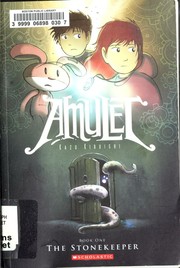
The Stonekeeper
After their father's death, Emily and Navin chase a monster into a hidden world to save their mother, and Emily's great-grandfather's amulet offers power at a…
2,753-word summary · 12 min read

Flipped
Juli Baker and Bryce Loski retell second grade to eighth grade from opposite sides, through a sycamore sit, trashed eggs, a yard fix-up, and one tense family…
2,689-word summary · 12 min read

Out of My Mind
Eleven-year-old Melody Brooks has cerebral palsy and cannot speak, but she remembers everything and fights to be heard in fifth grade.
2,298-word summary · 10 min read
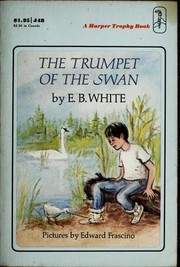
The Trumpet of the Swan
A mute trumpeter swan learns to read, write, and play a stolen trumpet to win a mate, in E.B. White's quiet 1970 tale of a boy who watches.
2,309-word summary · 10 min read

El Deafo
A deaf girl in a world of rabbits turns her bulky Phonic Ear hearing aid into a superhero identity while searching for a true friend.
2,515-word summary · 11 min read
Counting by 7s
A gifted twelve-year-old who counts by sevens loses her parents in a car crash and gradually builds a new family with help from a counselor, a taxi driver, and…
2,306-word summary · 10 min read
This One Summer
Mariko Tamaki and Jillian Tamaki's graphic novel about two friends at a lake town, where a mother's grief and a pregnant teenager reshape one summer.
2,324-word summary · 10 min read

The Mouse and the Motorcycle
A bored mouse named Ralph finds a boy's toy motorcycle in a hotel room and starts a secret life of night rides, mishaps, and unlikely friendship.
2,254-word summary · 10 min read
The War That Saved My Life
Ten-year-old Ada has never left her London flat, hidden away because of her clubfoot. Wartime evacuation sends her to Kent, where a reluctant guardian and a…
2,252-word summary · 10 min read
Beezus and Ramona
Nine year old Beezus tries to be a good older sister while four year old Ramona turns every ordinary day into a disaster, until a tenth birthday forces honesty.
2,062-word summary · 9 min read
When You Reach Me
A sixth grader in 1970s New York gets strange notes that seem to predict the future.
2,456-word summary · 11 min read

Tales from a Not-So-Fabulous Life
Nikki starts private school and writes mean-girl survival in her diary.
2,587-word summary · 11 min read

Esperanza Rising
Esperanza trades ranch life for farm labor camps in California.
2,338-word summary · 10 min read

Bud, Not Buddy
A ten year old orphan in the Depression walks to find a jazzman he thinks is his father.
2,568-word summary · 11 min read

Stellaluna
A baby fruit bat falls into a bird nest, learns to perch and eat bugs, then reunites with her mother in Cannon's acclaimed 1993 picture book about difference…
2,486-word summary · 11 min read

Frindle
Nick Allen calls a pen frindle, defies Mrs. Granger and a school ban, and watches the joke grow into news, trademarks, and a dictionary entry.
2,405-word summary · 11 min read
The School for Good and Evil
Best friends Sophie and Agatha are taken to fairy tale school and sorted to wrong sides.
2,042-word summary · 9 min read

Maniac Magee
Orphaned Jeffrey Magee runs to Two Mills, becomes a playground legend, and tests a town split by race while hunting for a real home.
2,219-word summary · 10 min read
Cabin Fever
Greg Heffley gets snowed in with his family before Christmas while dodging blame for school property damage.
2,221-word summary · 10 min read
The Ugly Truth
Greg faces puberty, a school lock-in and Uncle Gary's wedding while Mom returns to college in Wimpy Kid book five.
2,766-word summary · 12 min read
Tales of a Fourth Grade Nothing
Nine-year-old Peter Hatcher tries to get through fourth grade while his toddler brother Fudge steals every scene.
2,469-word summary · 11 min read
The Last Straw
Frank wants Greg toughened through sports while Greg dodges everything and military school looms.
2,020-word summary · 9 min read

Walk Two Moons
Sal rides west with her grandparents telling Phoebe's story while facing her own mother's absence in Idaho.
2,554-word summary · 11 min read