
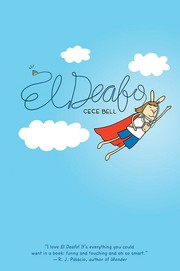
El Deafo
2,515-word summary 11 min read 248 pages in the book
- First published
- 2014
- Publisher
- Amulet Books
- Pages
- 248
- ISBN
- 9781419712173
Reading options
What's inside (8 sections)
I picked up El Deafo expecting a quick, cheerful read, the sort of children's graphic novel you finish on a rainy afternoon. Cece Bell's book runs 248 pages in the paperback, and at a glance it looks pure play: every human being in it is drawn as an anthropomorphic rabbit, with long ears and soft round faces. What surprised me was how much a story about a little girl and her hearing aid could ache. Bell published this semi-autobiographical graphic memoir with Amulet Books on September 2, 2014, and she is retelling her own childhood with a bluntness that a grown reader feels in the ribs. It is a book for children that does not talk down to them, and it is also a book that quietly assumes adults might be reading over their shoulders.
The premise is simple enough to state in a sentence. Cece loses her hearing at age four, grows up wearing increasingly conspicuous hearing equipment, and spends years trying to find a friend who sees past the device strapped to her chest. The execution is anything but simple, because Bell refuses to make her heroine either a tragic figure or a lesson. Cece is funny, vain, lonely, brave in her head and terrified in the hallway, and the book keeps all of those things in frame at once.
The year the sound went away
The story opens before the deafness, with a small rabbit living what looks like an ordinary life. Cece rides her bike with her dad, plays with her best friend Emma, and spends time with her older brother and sister, Ashley and Sarah. She takes her mother's makeup and watches television with her siblings. Bell spends real pages on this ordinary happiness, and the choice matters. The hearing loss is not Cece's starting point. It is something that happens to a kid who already has a self.
Then Cece falls ill with meningitis and ends up in the hospital. She survives, but she emerges severely to profoundly deaf. The doctors fit her with a hearing aid, and from here the book becomes a record of small, specific humiliations. The device is bulky and strange. It makes her stand out at an age when standing out is its own kind of punishment. Bell draws the hardware with care, and you can feel the weight of it on the page.
Her first school experience is a special kindergarten class for children with hearing loss. Her teacher, Dorn, is the warmest figure in these early chapters. Bell draws Dorn as a kind of Snow White, patient and loving, and she teaches the children how to lip-read and how to read the world for context. There is a moment about telling "bear" from "pear," where the shape of a conversation and a speaker's rubbing stomach stand in for the sound the ear cannot catch. Cece also learns that some words simply will not come through cleanly, and that a person can be talking right in front of you and still be lost.
The early chapters establish the pattern that the rest of the book will keep returning to. Cece's difficulty is rarely the mechanics of hearing. It is the way other people react to the machinery, and the way a child's social world tightens around anything that marks her as different. Even her old friend Emma cannot quite bridge the gap after the illness, and that quiet loss is handled without a speech.
A big house in a small town
After kindergarten, Cece's family leaves their small row house in the big city for a big house in a small town, in Roanoke, Virginia. For a kid who has been the only one with a cord and a box, the move feels like a clean slate. Cece is desperate to fit in. She wants the ordinary thing that every child wants, which is to be included without having to explain herself.
The new school has no special class for children with hearing loss. Instead Cece is handed the Phonic Ear, a powerful, school-only hearing aid that is even more physically prominent than her old device. It sits on her body in plain view, with a cord and a microphone that her teacher wears. Bell's artwork makes the thing impossible to ignore. Cece is sure every kid is staring at it, and the book never pretends that a nine-year-old could be blamed for caring about that.
What follows is a long, patient catalog of attempts at friendship that go sideways. The children in Cece's neighborhood are mostly kind, but kindness is not the same as understanding. Cece keeps arriving in a new room already marked as the girl with the hearing aid, and she keeps having to decide how much of herself to offer to kids who are only half seeing her. Bell would rather show this in scenes than explain it, and the pages are full of small, awkward exchanges that any reader who has ever been the odd one out will recognize.
The move also gives the book its engine. In the city, Cece had a classroom of children just like her. In Roanoke, she is the only one, and that isolation is what pushes her imagination into overdrive.
El Deafo, Listener for All
The title character is born from a discovery Cece makes about the Phonic Ear. The teacher wears a tiny microphone that sends sound straight into Cece's device, and one day Cece realizes the microphone does not stop working when the teacher leaves the room. She can hear her teacher in the hallway, in the teachers' lounge, in the faculty room, and yes, in the bathroom. Teachers, it turns out, do not always remember to switch the thing off.
For a lonely kid, this is not a inconvenience. It is power. Cece begins to imagine herself as El Deafo, a superhero whose ears can hear everything, a "Listener for All." Bell's drawings of this alter ego are joyous, full of capes and dramatic poses, and they give the book a second visual register. Whenever the real world gets too heavy, the panels open into a fantasy where Cece is the person with the gift instead of the burden.
But the fantasy never fully rescues her, and this is where Bell's book earns its keep. El Deafo can storm into a room and put rude people in their place. Cece, in the actual hallway, cannot. She watches her superhero self stand up to the children who hurt her, and the gap between the two only makes the loneliness sharper. Bell gives Cece a line that has stayed with me since I closed the book, and the sentiment is plain enough that it does not need a lecture attached:
Superheroes might be awesome, but they are also different. And being different feels a lot like being alone.
That is the whole book in one small sentence. The superhero identity is not a costume Cece can simply put on and feel better. It is another way of being marked as other, and Bell is too honest to pretend otherwise. The fantasy gives Cece language for her difference, but it cannot do the social work of a real friend. That work has to happen in the ordinary world, with ordinary, imperfect people.
Friends who got it wrong
The middle of El Deafo is full of friendships that teach Cece what she does not want. Laura, one of her first friends in Roanoke, seems unbothered by the hearing aids but turns out to be possessive and controlling. She wants Cece to herself, and when Cece reaches toward other kids, Laura pushes back. In one ugly episode Laura's dog bites Cece and Laura laughs. The lesson Cece draws is a hard one: a person can accept your disability and still be a bad friend.
Ginny, a classmate in third grade, represents a different problem. She likes the same books and games Cece likes, but she cannot stop treating the deafness as the most interesting thing about her. She speaks slowly and loudly, exaggerates her lip movements, and introduces Cece to other children as "my deaf friend." The phrase is said with kindness, and that is exactly why it stings. Ginny's attention fixes Cece in place as the girl with the aid, and eventually Cece finds the words to tell her to stop. The friendship does not survive it.
There is a quiet cruelty to the adults too, though Bell keeps them mostly sympathetic. Mr. Potts, the physical education teacher, favors athletic children and has little patience for a kid who cannot keep up or hear his instructions. He ends up breaking Cece's Phonic Ear, leaving her without the device she depends on for weeks of isolation. Bell does not paint him as a villain. He is simply a teacher who never learned to accommodate a child like Cece, and the damage he does is real even though it is not intended.
These chapters are the most uncomfortable in the book, and I mean that as a strength. Bell is showing a child learning to set boundaries, which is a messy business. Cece wants friends so badly that she tolerates poor treatment, and the book lets her be slow and clumsy about fixing it. There is no single assembly where everyone learns an important lesson about acceptance. There is just a girl, over several years, deciding she deserves better.
Martha, Mike, and the range experiment
The turn in the story comes with Martha Ann Claytor, a third-grader who lives across the street. Martha is the first friend who does not seem to register the hearing aid as a problem. She does not pity Cece or speak to her in a strange voice. She just wants to play. The two girls make dirt soup, trade favorite shows, have sleepovers, and sneak onto the trampoline of the new neighbor, Mike Miller, who is the object of Cece's first crush.
The friendship is not all smooth, and Bell gives it a real scare. During a game of tag, Cece runs into a tree branch and scratches her eye. Martha blames herself for not preventing it and pulls away, convinced that she might hurt her friend again. Cece has to do the reaching this time, assuring Martha that the injury was an accident that had nothing to do with her. It is a small plot beat, but it matters because it asks Cece to be the one who offers reassurance. She is no longer only the child who needs help.
Mike Miller turns out to be more than a crush. When Cece finally works up the nerve to talk to him, she tells him what the Phonic Ear can do, including the strange fact that she can hear teachers talking in other parts of the school. Mike does not react with pity. He is fascinated. He proposes an experiment to measure how far the microphone's signal will carry, and the other neighborhood kids get drawn in. Suddenly the device that marked Cece as different becomes a piece of technology the children want to test. The experiment turns her into a kind of celebrity on the block rather than an object of concern.
The payoff is both funny and satisfying. Cece learns to use the reach of the microphone to warn her classmates when a teacher is coming down the hall, giving everyone time to get back to their seats before the door opens. Mike calls her a hero. For once, the fantasy and the real world line up. Cece feels ordinary and extraordinary at the same time, and Bell does not need to underline the point because the drawings are already doing it.
When Cece finally tells Martha about her secret identity, Martha is delighted and agrees to be her sidekick. Sharing the name is the quiet climax of the book. The thing Cece kept locked inside, the alter ego that made her difference bearable, turns out to be something a friend can accept without flinching. She does not have to perform the superhero for Martha. She can just be the girl who made it up.
What the rabbits are really saying
The decision to draw everyone as rabbits is the first thing readers notice and, I think, the smartest choice Bell makes. A rabbit-eared Cece is visibly different from a human reader, so the story never has to argue about what she looks like. Difference is built into the design of every character. The odd one out is everyone, and the ears become a gentle visual shorthand for the way Cece feels: exposed, conspicuous, and unable to tuck herself away. David Lasky's colors give the panels a warm, flat clarity, and his work keeps the book cheerful even when the subject is not.
The graphic format does something a prose memoir could not. When Cece mishears a word, Bell can show the garbled sound right there in the lettering. When the Phonic Ear pulls in a conversation from down the hall, the page can split to show two rooms at once. The book is funny in a way that comes from timing and layout, not from jokes about disability, and that humor is doing serious work. It keeps Cece from being a lesson. She is a kid with a vivid, sometimes ridiculous inner life who happens to be deaf.
Awards followed quickly. El Deafo was named a Newbery Honor Book in 2015 and won the Eisner Award for Best Publication for Kids, and it spent time on the New York Times bestseller list. It is easy to see why it connected. It gives young readers a character who is lonely without being pitiful and different without being defined by that difference alone. The book has genuine criticism to make of schools and of people who mean well and still get it wrong, but it makes that criticism through Cece's experience rather than through a lecture.
I have one reservation, and it is a small one. Because the story is told through a child's eyes, some of the adults, especially the teachers who mishandle the Phonic Ear, stay flatter than they might in a fully adult memoir. Mr. Potts in particular reads more as a type than as a person. But that is also a fair reflection of how a child sees grownups, and Bell is writing a child's memory rather than a case file. The choices feel deliberate.
By the end, Cece has not been cured and the hearing aid has not vanished. What has changed is her willingness to be known, by Martha and by the kids who come to see the microphone as cool rather than strange. She stops treating El Deafo as a secret she has to guard and starts treating her difference as something she can share. The final pages land softly, without a bow. Bell lets her rabbit heroine simply stand there, ordinary and extraordinary, ears out in the open, with a friend beside her who never needed her to hide.
FAQ
Is El Deafo based on Cece Bell's real life?
Yes. It is a semi-autobiographical graphic memoir about Bell's own childhood with hearing loss, first published in 2014.
What is the Phonic Ear in El Deafo?
It is a powerful hearing aid Cece wears at school, paired with a microphone her teacher wears that lets her hear from across the building. When a teacher forgets to switch it off, she hears private conversations.
Why are all the characters in El Deafo rabbits?
Bell draws everyone with rabbit ears so that visible difference becomes a shared trait, which keeps Cece from being singled out by her design. Colorist David Lasky gives the panels their warm, flat look.
Similar books
Pumpkinheads
Deja and Josiah have worked the Succotash Hut together every autumn. On their last Halloween shift, she pushes him to chase a crush and they discover something…
2,409-word summary · 11 min read
This One Summer
Mariko Tamaki and Jillian Tamaki's graphic novel about two friends at a lake town, where a mother's grief and a pregnant teenager reshape one summer.
2,324-word summary · 10 min read
Kristy's Great Idea: A Graphic Novel (The Baby-Sitters Club Graphic Novels #1)
Raina Telgemeier adapts Ann M. Martin's first Baby-Sitters Club novel into a full-color graphic novel about four Stoneybrook friends who start a babysitting…
2,373-word summary · 11 min read
Harriet the Spy
Eleven year old Harriet Welsch fills notebooks with honest, often cruel observations about her neighbors, until her classmates read one and turn her spy route…
2,510-word summary · 11 min read
Paper Girls, Volume 1
Four paper girls in 1988 Ohio chase a stolen walkie-talkie into a basement and stumble into a time war, flying dinosaurs, and an older version of themselves.
2,235-word summary · 10 min read
Blankets
Craig Thompson recalls sharing a bed with brother Phil, falling for Raina at church camp, losing his faith, and keeping art through Michigan winters.
2,586-word summary · 11 min read
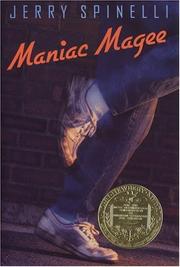
Maniac Magee
Orphaned Jeffrey Magee runs to Two Mills, becomes a playground legend, and tests a town split by race while hunting for a real home.
2,219-word summary · 10 min read
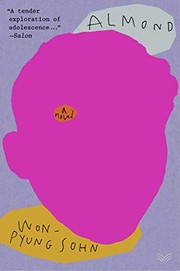
Almond
Yunjae, born with alexithymia, navigates grief and friendship with troubled Gon after losing mother and grandmother.
2,088-word summary · 9 min read
Anne of the Island
Anne leaves Avonlea for Redmond College, shares Patty's Place with friends, and learns to tell admiration apart from love.
2,766-word summary · 12 min read
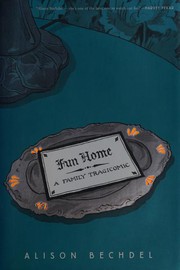
Fun Home: A Family Tragicomic
Alison Bechdel's graphic memoir about her father, their shared secrets, and the funeral home they called Fun Home in rural Pennsylvania.
2,755-word summary · 12 min read
The Trumpet of the Swan
A mute trumpeter swan learns to read, write, and play a stolen trumpet to win a mate, in E.B. White's quiet 1970 tale of a boy who watches.
2,309-word summary · 10 min read
The Teacher of Nomad Land
In 1941 Iran, an orphaned boy straps a chalkboard to his back and sets off to teach nomads, hoping to keep his little sister with him.
2,534-word summary · 11 min read
The Long Haul
Greg Heffley's summer road trip goes sideways with a towed boat, a live pig, and a family in a purple van.
2,311-word summary · 10 min read
The Rachel Incident
A funny, sharp novel about two twenty-somethings in recession-era Cork whose bookshop friendship, tangled romance and a married professor's lie leave a secret…
2,346-word summary · 10 min read
The Book of Three
A restless assistant pig-keeper in mythical Wales chases his escaped oracle pig and finds himself beside Prince Gwydion in a war against the Lord of Annuvin.
2,019-word summary · 9 min read
Stories I Only Tell My Friends
Rob Lowe's 2011 memoir runs from an Ohio lumberyard to the Oval Office, through Brat Pack fame, a public scandal, sobriety and a television comeback, told with…
2,234-word summary · 10 min read
Saving CeeCee Honeycutt
A twelve-year-old girl loses her mother and is packed off to Savannah, where a great-aunt, a housekeeper and a street of eccentric women teach her how to…
2,627-word summary · 12 min read
Pinocchio
A wooden puppet with a talent for trouble gets chance after chance to become a real boy. Collodi's 1883 original is stranger, darker and funnier than the…
2,600-word summary · 12 min read
Impulse
Three teenagers in a Reno residential hospital tell in free verse how they arrived there after suicide attempts and what recovery costs.
2,030-word summary · 9 min read
Girls in Pants: The Third Summer of the Sisterhood
The four friends face their last summer before college, with art school, an old flame, a guilty conscience and a new baby in the balance.
2,382-word summary · 11 min read
Dear Martin
Nic Stone's debut follows Justyce McAllister, a scholarship student at a mostly white Atlanta prep school, who starts writing letters to Dr. King after a…
2,596-word summary · 12 min read
Counting by 7s
A gifted twelve-year-old who counts by sevens loses her parents in a car crash and gradually builds a new family with help from a counselor, a taxi driver, and…
2,306-word summary · 10 min read
Today Tonight Tomorrow
On the last day of senior year, academic rivals Rowan Roth and Neil McNair team up for a citywide Seattle scavenger hunt and start seeing each other…
2,233-word summary · 10 min read
The True Confessions of Charlotte Doyle
A sheltered thirteen-year-old sails from Liverpool in 1832 and finds herself the only woman aboard a ship with a charming, dangerous captain.
2,330-word summary · 10 min read
The Mouse and the Motorcycle
A bored mouse named Ralph finds a boy's toy motorcycle in a hotel room and starts a secret life of night rides, mishaps, and unlikely friendship.
2,254-word summary · 10 min read

The Boston Girl
Eighty-five-year-old Addie Baum tells her granddaughter how she grew up in Boston's North End, chased education and love, and became the woman she is.
2,439-word summary · 11 min read
Tell Me Three Things
A grieving Chicago teen lands in her new stepfamily's Los Angeles mansion, then gets anonymous emails promising to guide her through a brutal private school.
2,292-word summary · 10 min read
Pollyanna
An eleven year old orphan arrives in a stern Vermont town and teaches it the Glad Game, until an accident tests her own optimism.
2,262-word summary · 10 min read