
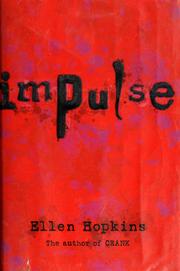
Impulse
2,030-word summary 9 min read 672 pages in the book
- First published
- 2007
- Publisher
- Simon Pulse / Margaret K. McElderry Books
- Pages
- 672
- ISBN
- 9781416903567
- Series
- Impulse (#1)
Reading options
What's inside (9 sections)
Three voices in verse
This is a young adult novel written in free verse, and it is told through three alternating first-person voices. The poems are arranged in short two-page chapters, and some are shaped on the page so that the form enacts the state of mind of the person speaking. Ellen Hopkins uses the technique she brought to Crank, and it works the same way here. The broken lines make the reader slow down, and the white space says as much as the words.
The book opens with a line about eyes telling stories and asking whether they know how to craft fiction. It is a question that each of the three narrators would answer differently. All three are skilled at concealing what is happening to them, and all three are desperate to be seen accurately.
They have one thing in common. They are patients at Aspen Springs, a residential mental hospital in Reno, Nevada, and each of them arrived after a suicide attempt. The book says this plainly in its description, and the restraint is part of its power. There is no shock reveal. The reader knows where they are from the first chapter and spends the novel learning how they got there.
Hopkins is interested in what a page can do. Some poems are arranged so that words fall down the page like something breaking, and others are so short that the white space takes up most of the chapter. A reader accustomed to prose novels will notice the silence between the lines. That silence is where the characters live. They are people who have learned to say very little about the things that matter most.
The book's opening question about eyes and fiction is a warning about all three narrators. They have all become skilled performers. Conner looks like the perfect son. Vanessa looks like a responsible sister. Tony looks like someone who does not need anyone. The verse form lets the reader see the difference between what they show and what they know.
I picked it up because the site has Hopkins's Crank and this is the same kind of book: direct, uncomfortable and written in a form that refuses to be a comforting page-turner. It is also the first book of an Impulse series, followed by Perfect in 2011.
Conner
Conner Sykes is the apparently perfect boy. He is handsome, gets top grades, is a star athlete and comes from a family that looks like a magazine spread. His parents measure him against his twin sister Cara, whom they regard as the one who truly achieved perfection. Cara later headlines the sequel, which tells you how little the parents' judgment has to do with reality.
Conner's private crisis is desire that he cannot reconcile with his parents' standards. He is attracted to older women, and he experiences this as a contamination of everything his family expects of him. His impulse is to pull the trigger. The gun is his chosen method, and the book treats the choice as a decision made in a moment that contains years of pressure.
Cara's perfection is a particularly cruel burden because Conner loves her. He is not jealous of a stranger. He is measured against a sibling he adores, and every comparison arrives as a form of disappointment in him. The parents' regard is not malicious, which makes it harder to resist. They believe they are being fair, and they simply cannot see the son who is standing in front of them.
His sections are the most controlled on the page, which is the point. He writes in clean lines and measured phrases, the way a person speaks who has practiced sounding fine. The cracks appear in the gaps between poems. Hopkins lets the reader notice what Conner will not say.
Vanessa
Vanessa O'Reilly cuts herself with a razor. Her father is overseas. Her mother is unraveling and talks to an angel. Vanessa is also responsible for looking after a younger brother, which means she has a job no fifteen-year-old should have and no permission to fall apart.
Her breaking point comes when her mother is hospitalized. Unable to bear the hurt, she attempts what the book calls the final cut. That phrase is typical of Hopkins's clarity. She does not soften the language of self-harm, and she does not turn it into a metaphor for something else. The blade is a blade.
Vanessa's poem sections are the most openly angry. She is furious at her mother, at her father's absence, at the brother who needs her and at herself for caring. That anger is the book's most honest emotion. The other patients are often ashamed of their attempts. Vanessa is furious that she had to make one.
Tony
Tony Ceccarelli grew up largely on the streets. His father abandoned him, and his mother takes up with a revolving series of men. One of those men sexually abused him, and Tony killed the abuser. The only person he trusts is his friend and mentor Phillip. When Phillip dies, Tony swallows pills in an overdose.
That is the impulse of the title in its pharmaceutical form. Three young people, three different methods, and the same structure of feeling: a moment of unbearable pain followed by an action that cannot be undone. Hopkins never suggests that the attempt is a rational choice. She shows how a person can reach a point where the only available thought is to make the pain stop.
Kirkus noted that the book explains Tony's sexuality through his abuse history, and that is a real weakness. The connection is presented as fact rather than as one possible reading. A novel this careful about the inner lives of its characters should have been more careful here.
The hospital
All three arrive numb, angry and embarrassed that their attempts failed. Kirkus described them as beginning in pits of numb despair, lacking human connection, and that is exactly where the book starts them. The levels and privileges system is one of the book's sharpest institutional observations. Progress is made visible through small rewards: more freedom, better status, the chance to be trusted. That is how a residential unit has to operate, and Hopkins does not condemn it. But she lets the reader see how strange it is to have your humanity measured in privileges, and how carefully the patients learn to perform the behaviors that earn them.
The treatment is depicted as more behavioral than psychiatric. The center awards levels and privileges for acts of progress, which structures the days and gives the chapters a rhythm.
Each narrator's section slowly discloses a grim secret. The verse form withholds and then reveals the origins of each attempt, so the reader reconstructs the lives that came before the hospital. That structure is the book's best decision. A prose novel would have explained these people too early. The fragments make the reader do the work of assembly, which is also what the characters are doing in therapy.
The three connect in group sessions and on the ward, and they find the first honest relationships of their lives. The jacket calls this the condition of a second chance at a better life. Kirkus noted that there is a tiny place for love here, which is a more accurate description. A small romance runs through the interactions, but nobody is rescued by it.
The book's governing idea is impulsivity itself. Each teenager acted in a single irreversible moment, and the novel asks what accountability and recovery look like after that moment fails. The attempt did not solve anything. It produced a new set of consequences, and the characters have to live inside them.
The ending and the reception
The ending is a point of interpretive tension. The jacket promises a second chance if the teens help one another. Kirkus warned that readers familiar with Hopkins's Burned would anticipate a tragic ending. I am not going to settle the question in this summary, because the book withholds more than it resolves. What matters is that the possibility of recovery is treated as real work, not as a gift someone gives them.
The reception was strong. Kirkus called it a fast, jagged, hypnotic read. Publishers Weekly acknowledged an almost unbelievable amount of grittiness but said that readers become invested. Both descriptions fit. The book is relentless, and it is hard to stop reading once the three voices begin to overlap.
It was also frequently challenged. In 2022 it was among fifty-two books banned by Utah's Alpine School District under H.B. 374. The stated concerns were sexual content, which is one of the things the book treats most honestly. Conner's desire and Tony's history are not presented for titillation. They are sources of shame and confusion that the characters cannot talk about anywhere except in this ward.
The awards tell a different story about its value. It was a 2008 ALA Quick Picks for Reluctant Young Adult Readers selection, won the 2008–09 Georgia Peach Book Award for Teen Readers and was listed among the 2011 ALA Amazing Audiobooks for Young Adults. Those are awards given by people who work with young readers, and they recognized the book's usefulness.
One more thing about the title. Impulse is a medical word and a moral word at the same time. In the first sense, an impulse is something that happens before reflection. In the second, it is something a person could have stopped. The book lives in the gap between those meanings. The characters are not evil and they are not innocent. They acted in a moment, and the rest of the novel is about living with the fact that the moment was theirs.
That is a demanding thing to ask of young readers, and it is probably why the book has been challenged. A story that treats teenagers as fully responsible for their actions while also treating their pain as real does not offer easy comfort. It refuses to let a reader say that they were simply victims, and it refuses to let a reader say they should have known better.
What I finished with
I finished the book thinking about the form. A novel in verse can feel like a gimmick, and in lesser hands it does. Here the broken lines are the only way to render what these people are experiencing. Conner cannot say a complete sentence about what he wants. Vanessa's anger comes in short, cutting pieces. Tony's poems are the most fragmented, which is how a person sounds when the story has been broken into parts.
The three voices never fully merge. They learn to trust each other, but they remain three separate people with three separate histories, which is a more honest account of friendship than most novels offer.
The title is doing more than naming a plot device. An impulse is something that happens before thought, and the book is about the long aftermath of a few seconds. Hopkins is interested in what comes after: the hospital, the group sessions, the slow business of learning to tell the truth about why you did it. That is a harder subject than the attempt itself, and it is the part of the book I remember.
The novel was published in January 2007 by Simon Pulse, an imprint of Simon & Schuster, and the first hardcover runs to 672 pages. A later paperback is longer. The verse form makes the book look shorter than it is, because so much of each page is white space.
The book's challenge to its readers is not that it shows three young people in crisis. Other novels do that. It is that it refuses to make them innocent. Each of them made a choice in a moment, and the novel treats that moment as theirs without treating it as the whole of who they are. That is a difficult balance, and it explains why the book has been both praised by librarians and banned by school districts. A story that gives teenagers responsibility for their actions while taking their suffering seriously does not offer anyone an easy position.
FAQ
Is Impulse part of a series?
Yes. It is the first book, followed by Perfect in 2011, which centers on Conner's twin sister Cara. The site has Ellen Hopkins's Crank under the same authorSlug.
Why is the book written in verse?
Hopkins uses broken lines and shaped poems to render what her narrators cannot say in complete sentences. The white space and short chapters make the reader slow down and assemble the story.
Does the book have a happy ending?
It is deliberately unresolved. The jacket promises a second chance if the teens help one another, while Kirkus warns that readers of Hopkins's Burned will expect something darker.
Similar books
More from Impulse first, then related titles.
Pumpkinheads
Deja and Josiah have worked the Succotash Hut together every autumn. On their last Halloween shift, she pushes him to chase a crush and they discover something…
2,409-word summary · 11 min read
Girls in Pants: The Third Summer of the Sisterhood
The four friends face their last summer before college, with art school, an old flame, a guilty conscience and a new baby in the balance.
2,382-word summary · 11 min read
Finding Audrey
A fourteen-year-old who cannot leave the house or remove her dark glasses finds her way back through therapy, a film project and a patient new friend.
2,559-word summary · 11 min read
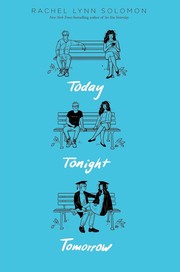
Today Tonight Tomorrow
On the last day of senior year, academic rivals Rowan Roth and Neil McNair team up for a citywide Seattle scavenger hunt and start seeing each other…
2,233-word summary · 10 min read
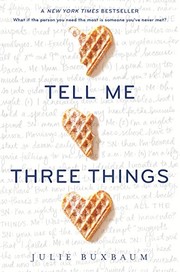
Tell Me Three Things
A grieving Chicago teen lands in her new stepfamily's Los Angeles mansion, then gets anonymous emails promising to guide her through a brutal private school.
2,292-word summary · 10 min read

Dumplin'
Willowdean Dickson enters her town's beauty pageant as a protest and discovers that confidence is harder to keep once she lets someone close.
1,922-word summary · 9 min read

The Second Summer of the Sisterhood
Four friends share the traveling pants through a summer of grandmothers, first loves, and mothers who are learning to let go.
2,209-word summary · 10 min read

Aristotle and Dante Dive into the Waters of the World
Ari and Dante return for senior year in El Paso, navigating first love, AIDS, family grief, and the cost of being openly gay in 1987 Texas.
2,188-word summary · 10 min read

Someone Like You
Halley and her best friend Scarlett face a summer of grief, a surprise pregnancy, and Halley's dangerous first romance in Sarah Dessen's 1998 young adult novel.
2,218-word summary · 10 min read
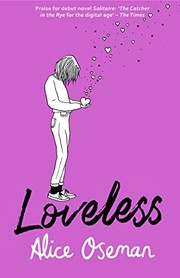
Loveless
Georgia starts university sure she wants love, then learns she is aro-ace.
2,539-word summary · 11 min read
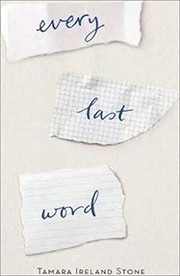
Every Last Word
A girl with OCD finds poetry and friends who know her secrets.
2,434-word summary · 11 min read

Since You've Been Gone
Shy Emily spends summer finishing her vanished best friend Sloane list of thirteen dares, finding Frank, Dawn, and courage.
2,566-word summary · 11 min read
Stargirl
Leo Borlock likes blending in until homeschooled Stargirl Caraway arrives at Mica High with a ukulele, a pet rat, and kindness that tests them both.
2,980-word summary · 13 min read
Will Grayson, Will Grayson
Two Chicago teens with one name collide, with Tiny Cooper's musical stealing every scene.
2,742-word summary · 12 min read
If He Had Been with Me
Childhood friends Autumn and Finn drift apart in high school until one August night changes everything.
2,785-word summary · 12 min read
The Perks of Being a Wallflower
Chbosky's Perks retold: Charlie's letters, Sam and Patrick, first year of high school in Pittsburgh.
1,951-word summary · 9 min read
The Distance Between Us
Seventeen-year-old Caymen Meyers distrusts rich people, then a wealthy boy keeps proving her wrong while her mother's doll shop struggles to survive.
2,231-word summary · 10 min read
Wake
Seventeen-year-old Janie Hannagan is pulled into other people's dreams whenever they sleep near her. A nursing-home job, a secretive boy and a drug bust give…
2,488-word summary · 11 min read
The Survivor Wants to Die at the End
The third They Both Die at the End novel follows two nineteen-year-olds who would rather not be alive, and the contract they sign to live for Begin Days…
2,986-word summary · 13 min read
Nick and Norah's Infinite Playlist
Rachel Cohn and David Levithan trade chapters as two music-obsessed teenagers spend one long New York night together, from a five-minute fake date to something…
2,355-word summary · 10 min read

Just One Day
A carefully planned European tour unravels when a Dutch actor takes Allyson to Paris for one day and vanishes, leaving her a year of searching for answers.
2,561-word summary · 11 min read
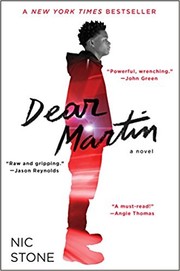
Dear Martin
Nic Stone's debut follows Justyce McAllister, a scholarship student at a mostly white Atlanta prep school, who starts writing letters to Dr. King after a…
2,596-word summary · 12 min read
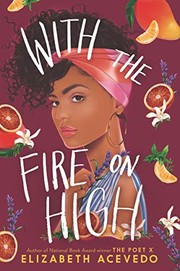
With the Fire on High
A seventeen-year-old Philadelphia teen mom discovers a culinary class and a chance to cook her way toward a future she had stopped imagining.
2,287-word summary · 10 min read
This One Summer
Mariko Tamaki and Jillian Tamaki's graphic novel about two friends at a lake town, where a mother's grief and a pregnant teenager reshape one summer.
2,324-word summary · 10 min read

What Happened to Goodbye
Mclean has reinvented herself in four towns since her parents divorced. In Lakeview she uses her real name, and for the first time staying put becomes a choice.
2,796-word summary · 12 min read
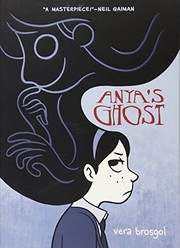
Anya's Ghost
A lonely Russian immigrant falls into a well, befriends the ghost trapped there, and discovers that the ghost's help comes with a dangerous price.
2,001-word summary · 9 min read
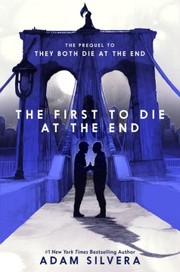
The First to Die at the End
On the night Death-Cast launches, a boy with a bad heart meets a model with everything ahead of him, and one of them gets the call.
2,908-word summary · 13 min read

Big Swiss
A transcriptionist for a sex coach falls for one of his clients, the tall Swiss gynecologist she calls Big Swiss, in a funny novel about work and secrets.
2,523-word summary · 11 min read
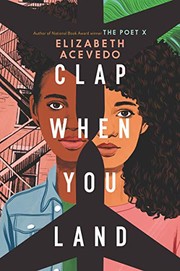
Clap When You Land
Two half sisters, one in Sosúa and one in Queens, discover each other after their father dies in a plane crash, in Elizabeth Acevedo's novel in verse.
2,890-word summary · 13 min read
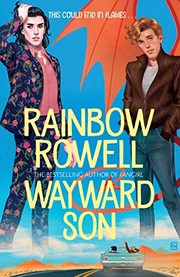
Wayward Son
Simon and Baz road trip America after the war to decide what normal means.
2,505-word summary · 11 min read