
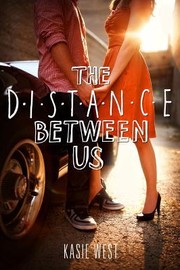
The Distance Between Us
2,231-word summary 10 min read 312 pages in the book
- First published
- 2013
- Publisher
- HarperTeen
- Pages
- 312
- ISBN
- 9780062235657
- Series
- Old Town Shops (#1)
Reading options
What's inside (8 sections)
I picked this up as a palate cleanser. I had been reading a run of bleak books about collapsing societies, and a reviewer called Kasie West's novel an antidote to that kind of fiction: a sweet, hopeful Cinderella story. That is a fair description, though it undersells how funny the book is. West published it in 2013 with HarperTeen, and it is the first of the Old Town Shops books, a set of standalones linked by crossover characters rather than a single continuing plot. The companion, On the Fence, follows a different girl and a different romance.
What caught me was the narrator. Caymen Meyers is seventeen and certain she has rich people figured out. She works the cash register at her mother's porcelain-doll shop, and years of watching wealthy customers come through the door have given her a set of rules. I have never met a book whose heroine diagnoses strangers by their purses so confidently, and West makes that habit both comic and sad. The facts I cite here come from the HarperTeen paperback, 312 pages, ISBN 9780062235657.
A shop on the wrong side of town
Caymen and her mother are barely making a living. Their shop sells porcelain dolls to people who can afford them, which means they spend their days surrounded by money they never quite touch. The town is divided, in Caymen's mind, between the rich and the people who cater to the rich. She puts herself firmly in the second group.
Her judgments come from her mother. Jackie has raised Caymen to be suspicious of wealthy men, and the reason is a old wound: her own history with a rich ex who left her with a daughter and a shop to run. West does not turn this into a lecture. It simply explains why Caymen has a answer ready for every rich person she meets. She is not bitter so much as forearmed. She has decided that money makes people careless with other people, and she has built a whole personality out of that decision.
That matters because Caymen is on the edge of leaving home for college and has no idea what she wants to study. The shop has been her whole education, and she is smart in a way school does not measure. She can read a customer in ten seconds and knows exactly which doll will sell. When she tries to imagine a future outside the shop, she comes up blank. That emptiness is part of why she is so certain about rich people. Being against something is easier than choosing a life.
West gives the mother and daughter a history that is more complicated than a simple warning. Jackie is not a bitter woman giving her child a speech. She is a working mother who made a life out of a bad one, and her silences tell Caymen as much as her advice does. When Jackie starts acting strangely, the shop and the marriage-shaped hole in their past both come into focus at once. It is one of the more mature threads in a book that is otherwise very light.
The shop itself is one of the best parts of the book. It is small, dusty in the way a small business gets dusty, and full of objects that cost far more than Caymen will ever earn. She knows the names of the dolls and the stories customers tell about them. When the shop starts to fail, the stakes are not abstract. This is the place where she and her mother have built their lives, and the threat to it is real.
Xander walks in
Xander Spence arrives at the shop and beckons to her, which confirms everything Caymen believes about the wealthy. He is tall, handsome, and, in the words of the author's own description, oozing rich. He expects service. What he does not expect is Caymen's wit, and that is the first crack in her assumptions. He is charmed rather than offended when she answers him back, and she finds herself noticing that he looks suspiciously like a doll himself.
The early courtship is built out of small, specific gestures. He sends muffins. He notices what she actually likes rather than what a girl in his circle is supposed to like. West is good at this stage of a romance, where attraction shows up as attention to detail. Caymen keeps waiting for the other shoe to drop, because in her experience rich boys lose interest. Xander keeps refusing to behave as predicted. The tension comes from her certainty being tested, not from a misunderstanding that could be cleared up with one conversation.
There is a scene involving a private jet that is pure wish fulfillment, and West knows it. She lets Caymen enjoy it while still being Caymen about it. The book rarely pretends that money is neutral. It lets the glamour be fun and then asks what it costs.
The career dates
The middle of the novel has a clever structure. Xander is being pushed by his parents toward the family hotel chain, a future he does not want. Caymen, meanwhile, has no idea what she wants to do after high school. So they go on a series of playful dates built around possible careers, trying on lives the way other couples try on restaurants.
This device does real work. It gives them a reason to talk about something other than their feelings, and it lets West explore the class gap without turning it into a debate. Xander's options are enormous and unwanted. Caymen's options are narrow and largely unexamined. Watching them trade assumptions is more interesting than watching them simply fall in love. One of the lines that sticks with Xander's advice to Caymen, that she has as many options as she gives herself, is the sort of sentiment that could sound hollow in another book. Here it lands because he has spent the whole novel resisting a future chosen for him.
The dates also give West room to be funny. There are awkward jobs, mistaken identities, and moments where Caymen's sharp tongue gets her into trouble with people who can fire her. The comedy is light, and the pacing is brisk. This is a book that moves.
Xander's side of the argument is just as specific. His parents expect him to take over the family hotel chain, and he is expected to treat that as a gift rather than a cage. West does not make his wealth into a weakness to be pitied. He is genuinely good at his life, and genuinely unhappy in it. That balance keeps the romance from turning into a rescue story. Caymen is not going to save Xander from money, and Xander is not going to save Caymen from the shop. They are two people trying to figure out what they actually want, and the dates are the only place they can be honest about it.
The structure has a small cost. Because each chapter is built around a bit, the emotional arc sometimes pauses while a joke plays out. Readers who want a steady march toward the relationship will notice the detours. But the digressions are the best material in the book, and I would not trade them for a tighter plot.
When the shop starts to fail
The tone shifts when the practical problems catch up. The shop is failing, and Caymen's mother begins acting strangely. For a girl whose whole view of the world rests on not trusting rich people, a money problem at home is more than a money problem. It is a test of the story she has told herself.
Then her mother is hospitalized, and Xander unveils a large gesture meant to help. That is the moment the title starts to mean what it means. Money has been the invisible third person in the relationship from the first scene, and now it is in the room openly. Caymen has to work out whether accepting help means accepting everything she has always disliked about the people who have it.
West handles this better than I expected. The book does not solve the class divide by discovering that rich people are actually nice. Xander is an exception in some ways, and the novel is honest that his ease comes from a life Caymen cannot share. The question is whether two people can close a distance that large without one of them pretending to be someone else. The answer the book reaches is hopeful, but it does not come for free. Caymen has to admit that her rules were built from her mother's hurt as much as from her own experience.
The hospital scenes change the pace of the book. Until then, the money problem has been a background hum. Once Jackie is in the hospital, Caymen is forced to act like an adult in a world where she has always been the child behind the counter. The romance does not go away, but it stops being the only thing at stake. That shift is the reason the last chapters feel earned rather than sweet for the sake of being sweet.
It is also where the title stops being a cute reference to two teenagers from different zip codes. The distance between Caymen and Xander is about more than their bank accounts. It lives in what they have been allowed to expect from life, and in how much a single bad decision can cost them. West never uses the word privilege, and the book is lighter for it, but she understands the shape of the problem.
The ending, and what it asks of Caymen
Without giving away the final scene, the resolution asks Caymen to choose between the safety of her judgments and the risk of trusting someone who has repeatedly earned it. That is a small stakes ending compared with the books I had been reading, and that is the point. Nobody dies. Nobody saves the world. A girl decides to stop treating every rich person as a prediction.
The romance ends where a first book in a companion series should: satisfied on its own terms, with the wider town left open for other readers. There is no cliffhanger about Caymen and Xander. On the Fence moves to Charlie Reynolds, a tomboy working in a boutique and dealing with her neighbor Braden, and it shares the setting rather than the plot. If you want the whole Old Town Shops set, read them in publication order, but you do not need this one to understand the other.
What works, and where it thins out
The best thing here is Caymen's voice. West writes a first-person narrator who is quick, defensive, and funny without being cute about it. She gets to be wrong about people, which makes her more likable than a heroine who is always right. Xander works as a counterweight because he is patient without being bland. Their scenes have the rhythm of two people enjoying a argument, and that carries a lot of the book.
West had already written Pivot Point, a much stranger book about a girl who can see the outcomes of her choices, so the realism here is a deliberate change of gear. Kirkus, reviewing the book before its July 2013 release, called it an antidote to the dystopian fiction that was everywhere at the time. That framing still holds. There are no trials, no arenas, no revolutions. A girl has to decide what she thinks about money and whether she can trust a boy who keeps proving her wrong.
The supporting cast is thin, and that is a fair criticism. Friends exist mostly to echo Caymen's doubts or to give Xander a chance to be thoughtful in a different scene. The adults are functional rather than fully drawn, with the exception of Jackie, whose history gives the book its weight. West is writing a romance first, and the other relationships are there to serve it.
The class material is lighter than it could be. Caymen's objections to wealth are real, but the story resolves them largely through one good individual rather than through any honest look at the system that made her mother struggle. The private jet and the family hotel chain are there as fantasy as much as critique, and the book is content to have it both ways. A reader looking for a sharp account of money and romance will find this too comfortable. A reader looking for a clean, charming summer romance will find exactly what they came for.
The misunderstandings in the middle are the other weak spot. A few conflicts could have been avoided with a question asked one chapter earlier, and West sometimes stretches a secret to fill space. The 312-page paperback is not long, but a handful of scenes repeat the same worry from a slightly different angle. I forgave it because the dialogue is good and because the ending earns its warmth.
I would hand this to a reader who wants contemporary romance with actual jokes and a heroine who talks back. I would skip it for anyone who needs a plot with real danger or a serious treatment of poverty. It is a small book about a small, human distance, and it is at its best when it stays in that register.
FAQ
Is The Distance Between Us part of a series?
Yes. It is book one of the Old Town Shops series, a set of standalones linked by crossover characters. The companion novel, On the Fence, is book two.
When was The Distance Between Us published?
HarperTeen published it on July 2, 2013. The paperback cited here runs 312 pages with ISBN 9780062235657.
Is there a sequel about Caymen and Xander?
No. On the Fence follows a different heroine, Charlie Reynolds, and her neighbor Braden. Caymen and Xander's story finishes within this novel.
Similar books
More from Old Town Shops first, then related titles.
Finding Audrey
A fourteen-year-old who cannot leave the house or remove her dark glasses finds her way back through therapy, a film project and a patient new friend.
2,559-word summary · 11 min read

Today Tonight Tomorrow
On the last day of senior year, academic rivals Rowan Roth and Neil McNair team up for a citywide Seattle scavenger hunt and start seeing each other…
2,233-word summary · 10 min read

Dumplin'
Willowdean Dickson enters her town's beauty pageant as a protest and discovers that confidence is harder to keep once she lets someone close.
1,922-word summary · 9 min read
Every Last Word
A girl with OCD finds poetry and friends who know her secrets.
2,434-word summary · 11 min read

Since You've Been Gone
Shy Emily spends summer finishing her vanished best friend Sloane list of thirteen dares, finding Frank, Dawn, and courage.
2,566-word summary · 11 min read
When Life Gives You Lululemons
Emily Charlton leaves Runway for Hollywood and ends up in Greenwich, where a supermodel's DUI and a senator husband's ambitions draw three women into a…
2,028-word summary · 9 min read
The Collected Regrets of Clover
A death doula who writes down the last words of strangers keeps her own heart locked away, until a new neighbor, a dying photojournalist and a road trip to…
3,055-word summary · 14 min read
Pumpkinheads
Deja and Josiah have worked the Succotash Hut together every autumn. On their last Halloween shift, she pushes him to chase a crush and they discover something…
2,409-word summary · 11 min read

Nick and Norah's Infinite Playlist
Rachel Cohn and David Levithan trade chapters as two music-obsessed teenagers spend one long New York night together, from a five-minute fake date to something…
2,355-word summary · 10 min read
Impulse
Three teenagers in a Reno residential hospital tell in free verse how they arrived there after suicide attempts and what recovery costs.
2,030-word summary · 9 min read

Girls in Pants: The Third Summer of the Sisterhood
The four friends face their last summer before college, with art school, an old flame, a guilty conscience and a new baby in the balance.
2,382-word summary · 11 min read
Everyone Worth Knowing
A young woman quits her banking job after a friend's engagement and lands in a New York PR firm where everyone is paid to know everyone.
2,360-word summary · 10 min read
Dear Martin
Nic Stone's debut follows Justyce McAllister, a scholarship student at a mostly white Atlanta prep school, who starts writing letters to Dr. King after a…
2,596-word summary · 12 min read
Chasing Harry Winston
Three friends turn thirty in Manhattan and make a wild pact: Emmy will sleep her way around the world, Adriana will settle down, and Leigh watches from the…
2,185-word summary · 10 min read

Breathe
A seventeen-year-old takes her pregnant mother's housekeeping job on an Alabama island and meets the owner, a teen rock star who wants nothing more than to be…
2,983-word summary · 13 min read
Betting on You
Bailey and Charlie clash on a flight to Omaha over whether guys and girls can be friends. Three years later, a wager at a waterpark changes everything.
2,293-word summary · 10 min read
Tell Me Three Things
A grieving Chicago teen lands in her new stepfamily's Los Angeles mansion, then gets anonymous emails promising to guide her through a brutal private school.
2,292-word summary · 10 min read

Rules of Attraction
Carlos Fuentes moves from Mexico to Boulder to live with his brother Alex, then falls for a car-loving tomboy while a gang from his past closes in.
2,345-word summary · 10 min read

Forever Too Far
Engaged and pregnant, Blaire Wynn expects a quiet life in Rosemary Beach with Rush Finlay, but his loyalty to his troubled sister Nan puts their wedding at…
2,342-word summary · 10 min read

What Happened to Goodbye
Mclean has reinvented herself in four towns since her parents divorced. In Lakeview she uses her real name, and for the first time staying put becomes a choice.
2,796-word summary · 12 min read
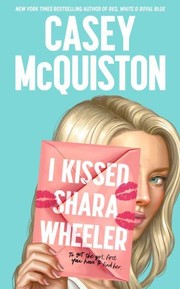
I Kissed Shara Wheeler
Shara Wheeler kisses her rival Chloe Green at prom and disappears, leaving a scavenger hunt that forces Chloe to rethink everything she knew about her.
2,083-word summary · 9 min read

Amy & Roger's Epic Detour
Amy Curry has not driven since the crash that killed her father. With Roger at the wheel and a box of maps between them, a cross-country trip becomes a slow…
3,034-word summary · 13 min read
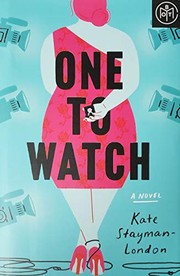
One to Watch
A plus-size fashion blogger takes the lead role on a reality dating show to prove she belongs on television, and finds she might want what the cameras offer.
2,478-word summary · 11 min read

The First to Die at the End
On the night Death-Cast launches, a boy with a bad heart meets a model with everything ahead of him, and one of them gets the call.
2,908-word summary · 13 min read

Big Swiss
A transcriptionist for a sex coach falls for one of his clients, the tall Swiss gynecologist she calls Big Swiss, in a funny novel about work and secrets.
2,523-word summary · 11 min read

The Second Summer of the Sisterhood
Four friends share the traveling pants through a summer of grandmothers, first loves, and mothers who are learning to let go.
2,209-word summary · 10 min read
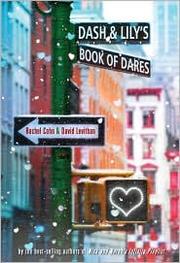
Dash & Lily's Book of Dares
Two lonely New York teenagers trade dares in a red notebook left at the Strand, falling for each other on the page before they meet.
2,228-word summary · 10 min read

Aristotle and Dante Dive into the Waters of the World
Ari and Dante return for senior year in El Paso, navigating first love, AIDS, family grief, and the cost of being openly gay in 1987 Texas.
2,188-word summary · 10 min read

One of Us Is Dead
In Buckhead, Atlanta, five women narrate a murder among manicures, fundraisers, and social warfare. Jeneva Rose's 2022 thriller is a gossipy revenge fantasy…
2,471-word summary · 11 min read
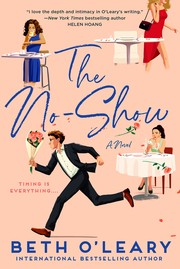
The No-Show
Three women are stood up on Valentine's Day by the same man, but the timeline is not what it seems. O'Leary's warmest book with a knife in it.
2,127-word summary · 9 min read