

Rules of Attraction
2,345-word summary 10 min read 360 pages in the book
- First published
- 2010
- Publisher
- Walker Books
- Pages
- 360
- ISBN
- 9780802720856
- Series
- Perfect Chemistry (#2)
Reading options
What's inside (8 sections)
I had read Perfect Chemistry already, so I came to this one knowing Alex Fuentes and the broad shape of his family. What surprised me was how little the sequel leans on Alex as a hero. Instead it hands the spotlight to his younger brother Carlos, drops him in a city where neither of them grew up, and spends most of its length asking whether a guy with a dangerous past can be given room to change. Rules of Attraction appeared in 2010 from Walker Books, roughly 360 pages in the first edition tied to ISBN 9780802720856. It is the second book in the Perfect Chemistry series, and it keeps the alternating voices, the heat, and the messy family negotiations that made the first one stick.
The premise is almost comically specific. Carlos Fuentes, tall, tattooed, and used to being wanted for the wrong reasons, moves from Mexico to Boulder, Colorado, to live with Alex. Alex is now at Colorado State University and trying to stay clean himself, which makes him both a lifeline and a wary chaperone. Carlos enrolls at Flatiron High School, where he is assigned a peer guide named Kiara Westford. She is a tomboy who fixes cars, keeps her thoughts in tidy logical rows, and has a stutter she worked through in speech therapy. She is also the daughter of Professor Richard Westford, a psychology professor who takes in troubled kids and does psychological evaluations for the DEA. That last detail is the hinge the whole plot turns on.
Carlos lands in Boulder
Carlos is no newcomer to trouble. Back in Mexico he joined a gang to put money and protection around his mother and his younger brother Luis, the one the family calls the good son. He has a reputation that follows him across the border, and in Boulder he finds people only too willing to read him by it. He is handsome in a way that draws stares, a ladies' man with a past he is tired of explaining. The book is at its best when it lets him be both vain and frightened, funny and genuinely trapped. He knows how he looks to people. He also knows that looking that way has gotten him jobs he did not want and enemies he did not choose.
Flatiron High School is its own small ecosystem, and Elkeles is good on the way a new student reads a hallway. Carlos has learned to size up a room before he walks into it, a habit from a life where misreading someone could cost him. At school that habit makes him seem colder than he is. He keeps his head down, answers in short sentences, and lets other people decide what his silence means. Kiara is the first person who pushes past it, mostly because she has no patience for the performance. Their early exchanges are brief and sharp, and the fact that she does not flinch becomes the thing he cannot stop thinking about.
Almost immediately someone frames him. Drugs turn up in his locker, and the story planted around him says he is dealing. The culprit turns out to be Nick, a dealer who uses what he sells and who has his own reasons for wanting Carlos out of the way. Carlos is arrested, and the sentence lands him in a REACH program for troubled kids. The arrangement sends him to live with Professor Westford, of all people, under a set of house rules read out loud like a contract.
Those rules are a small delight. No drugs or alcohol, and he is under court order to stay clean. No profanity, because the professor's six-year-old son Brandon is impressionable. Curfew at midnight on weekdays and two on weekends. Clean up after himself and help around the house. No television until homework is finished. And if he brings a girl to his room, the door stays open. Elkeles gets a lot of comic mileage out of a tough kid from a gang being lectured by a calm academic with a tea-drinking wife, but the rules also do real work. They are the first stable expectations Carlos has had in years, and the book keeps circling back to them.
Kiara and the Westford house
Kiara is the reason the house rules matter. She is smart, blunt, more comfortable under a car than at a school dance, and unimpressed by Carlos's posturing. Their first real moment is a prank: he acts as though he is about to kiss her, watching to see her flinch, and she does not give him the reaction he wants. It is a mean trick, and the book does not pretend otherwise. What follows is a slow, awkward thaw in which two people who both expect the worst from each other keep ending up in the same room.
The attraction is physical and immediate, but Elkeles takes care to make it more than that. Kiara notices that Carlos is careful with Brandon, who adores him and follows him around like an older brother. Carlos notices that Kiara's stutter does not make her timid, that she will argue a point until he runs out of breath. They study together, they bicker, and they circle each other in the way teenagers do when both are convinced the other person is the problem. When things finally go far enough that they nearly have sex, Carlos stops. He wants out before he is in too deep, because he knows he has nothing solid to offer her yet. That choice is one of the clearer moral beats in the book. Desire is not treated as permission.
The Westford household is full of small, specific life. Colleen, the professor's wife, runs a tea store called Hospitali-Tea and fusses over everyone. Brandon is six and looks up to Carlos, which is both sweet and dangerous given what Carlos is running from. Tuck, Kiara's gay best friend, teases Carlos mercilessly and becomes one of the book's best sources of friction and relief. Professor Westford himself has a history that explains why he opens his door: he lost his parents and a younger brother in a car accident as a child, survived the crash alone, spent time in and out of foster care, and eventually enlisted in the military. He understands what it means to be a kid with no safe place to land.
The setup, and who is really pulling strings
The drug charge is not random. Wes Devlin, a man who calls himself a businessman, wants Carlos back in the gang because he needs a link to Mexican drug dealers. Devlin had recruited Carlos in the first place by threatening his mother and Luis, so the pressure was never really about money. Carlos tries to fight Devlin's people when the threats reach home, and he gets badly beaten for it, stomach and jaw, tasting blood and knowing he is outnumbered. The scene is brutal in a way that fits the stakes. This is not a gang that exists to supply dark clothing and brooding dialogue.
What complicates matters is that Carlos is also working with the DEA. Mrs. Garcia, the mother of his friend Ramiro, is an agent, and she is the one who eventually tells Kiara that Carlos is cooperating. That revelation lands badly at first. Kiara feels misled, and with reason, since Carlos had been living in her house under rules that included staying clean while quietly dealing with the people who put him there. The book handles the fallout with the same mix of heat and hurt that drives the rest of the romance. Trust breaks, then has to be rebuilt through ordinary acts rather than grand speeches.
There is a smaller, sharper subplot involving Madison Stone, a popular girl who lets Carlos think she wants him and then uses him to make her ex, Ramiro, jealous. They nearly sleep together before he learns what she is doing. Michael Barra, Kiara's ex, breaks up with her by text and picks a fight with Carlos over her. Destiny, an old girlfriend back in Mexico, lingers in Carlos's thoughts as the road not taken. None of these people get deep arcs, which is one of the book's weaknesses. They exist primarily to press on the central pair, and at times the machinery shows.
Alex, Brittany, and the echo of the first book
Readers coming from Perfect Chemistry will recognize the Fuentes family dynamics immediately. Alex is trying to build a life that does not repeat the one he escaped, and now he has to coach his brother through the same choices. Mrs. Fuentes is the worried mother who lost her husband when Carlos was four and who had Alex at sixteen because she wanted nothing more than to be a mother. Her fear for her sons is not a plot device; it is the emotional weather the brothers grew up in. Luis, the youngest, stays in Mexico and carries the label of the good son, which quietly lets the other two be the complicated ones.
Brittany appears too, now Alex's girlfriend, still managing a disabled sister and parents who disapprove of the relationship because of Alex's history. In this book they break up under that pressure and find their way back, deciding to stay together with or without her parents' blessing. It is a smaller thread here, but it rhymes with Carlos's problem. Both brothers have to decide whether love is worth the risk of being judged by where they came from, and both families have to decide whether a mistake made at seventeen is a life sentence. Elkeles is clearly interested in the question of whether a family can learn to see a person change. The answer, in both cases, is slow and conditional.
Getting out of Devlin's grip
The turn comes when Carlos decides he wants out for good. He does not want his gang connections to reach the Westfords, and he has seen what Devlin's people do when they feel crossed. Professor Westford offers a way through, but with a condition: Carlos must either enter the military or go to college. It is the same structure as the house rules, a hard boundary paired with a real path forward. Carlos later gets shot in the thigh while protecting the professor, an event that underlines how serious the threat has become and how far he has come from the kid who only looked out for himself.
He chooses the military. The reasoning is painfully practical and a little heartbreaking. He wants to be a boyfriend Kiara can be proud of, with something to offer beyond a good face and a bad reputation. In one of the book's most quoted admissions, he says he is going to enlist so he can make himself a better man. That line could be cheesy in another book. Here it lands because Carlos has spent the whole story being told what he is by people who have never tried to know him. Choosing a path that requires discipline and time is his way of answering them.
The epilogue jumps twenty years ahead. Carlos and Kiara are married with three daughters. Professor Westford, now a father-in-law, takes in a troubled teenager of his own and recites a new set of rules, this time in Spanish-numbered order, with curfews adjusted for a different generation. Carlos cannot remember the sixth rule, but he supplies one of his own: dating his daughter is out of the question. It is a funny, warm closing that completes the circle. The kid who once sat in a stranger's house being read rules is now the man handing them down.
What holds up, and what does not
The alternating voices of Carlos and Kiara keep the pace moving, and the Spanish sprinkled through the brother dialogue is clear from context rather than explained to death. The Boulder setting is drawn with care, down to the tea shop and the high school hallways. Reviews at the time praised the witty dialogue and the way the book chips away at stereotypes without lecturing, and I think that largely holds. There is real affection here for families that are messy and still showing up.
There is also real pleasure in the brother conversations. Alex and Carlos speak a mix of English and Spanish that the book trusts readers to follow, and their arguments carry years of shared history in a few lines. Alex is not a wise older brother dispensing advice; he is a young man who has made some of the same mistakes and is frightened for his sibling. When he helps Carlos, it costs him something. That matters, because the first book spent so much time on Alex's own exit that a sequel could easily have treated him as a finished product. Here he is still a work in progress, which is more honest.
But the plot is also contrived in places, and minor characters are thinly sketched. The gang threat escalates quickly, coincidences do a lot of work, and the framing device depends on a dealer planting drugs in a locker with remarkable convenience. The near-sex scenes and the stutter subplot feel at times like checkboxes rather than lived experience. Kiara's grease-monkey hobby and speech history give her texture, but she is also asked to be the patient, intelligent anchor for a volatile boy, which is a familiar and slightly tired role in teen romance. Carlos's violence is treated seriously, yet the story still rushes toward a resolution that would take years in real life.
Still, as a sequel it does the job a good sequel should. It gives a secondary character a full story, keeps the family stakes intact, and argues that leaving a life of violence takes paperwork, patience, and someone willing to read you the rules. I finished it more convinced by the quiet structure than by the fireworks. The rules are the point. A kid who can follow them, and eventually write his own, has a way out.
FAQ
Do I need to read Perfect Chemistry first?
No. Alex Fuentes and Brittany appear, and their breakup makes more sense if you know book one, but Carlos and Kiara carry this story on their own.
Is this the same novel as Bret Easton Ellis's The Rules of Attraction?
No. This is a 2010 young adult romance by Simone Elkeles and book two of the Perfect Chemistry series. Ellis's novel is a different 1987 book.
How violent and steamy is it?
There is a severe gang beating and a shooting, plus several near-sex scenes that stop short of explicit detail. The language is rough and the street violence is played straight.
Similar books
More from Perfect Chemistry first, then related titles.

Perfect Chemistry
Perfect rich girl and gang tied boy tutor each other into love that must survive threats.
2,029-word summary · 9 min read

Today Tonight Tomorrow
On the last day of senior year, academic rivals Rowan Roth and Neil McNair team up for a citywide Seattle scavenger hunt and start seeing each other…
2,233-word summary · 10 min read

Dumplin'
Willowdean Dickson enters her town's beauty pageant as a protest and discovers that confidence is harder to keep once she lets someone close.
1,922-word summary · 9 min read

I Kissed Shara Wheeler
Shara Wheeler kisses her rival Chloe Green at prom and disappears, leaving a scavenger hunt that forces Chloe to rethink everything she knew about her.
2,083-word summary · 9 min read

The Upside of Falling
Two teens fake-date for a summer dare and end up facing grief, family secrets, and first love.
2,274-word summary · 10 min read

To All the Boys I've Loved Before
Lara Jean's secret love letters get mailed and she fake-dates Peter Kavinsky to dodge Josh.
3,683-word summary · 16 min read

The Distance Between Us
Seventeen-year-old Caymen Meyers distrusts rich people, then a wealthy boy keeps proving her wrong while her mother's doll shop struggles to survive.
2,231-word summary · 10 min read
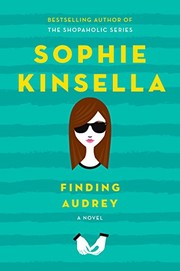
Finding Audrey
A fourteen-year-old who cannot leave the house or remove her dark glasses finds her way back through therapy, a film project and a patient new friend.
2,559-word summary · 11 min read

Betting on You
Bailey and Charlie clash on a flight to Omaha over whether guys and girls can be friends. Three years later, a wager at a waterpark changes everything.
2,293-word summary · 10 min read

What Happened to Goodbye
Mclean has reinvented herself in four towns since her parents divorced. In Lakeview she uses her real name, and for the first time staying put becomes a choice.
2,796-word summary · 12 min read

The Awakening / The Struggle
A popular high school girl falls for a vampire, then discovers that his dangerous brother wants her too, in the first two books of the Vampire Diaries series.
2,660-word summary · 12 min read

Amy & Roger's Epic Detour
Amy Curry has not driven since the crash that killed her father. With Roger at the wheel and a box of maps between them, a cross-country trip becomes a slow…
3,034-word summary · 13 min read

Dash & Lily's Book of Dares
Two lonely New York teenagers trade dares in a red notebook left at the Strand, falling for each other on the page before they meet.
2,228-word summary · 10 min read

Every Last Word
A girl with OCD finds poetry and friends who know her secrets.
2,434-word summary · 11 min read

Since You've Been Gone
Shy Emily spends summer finishing her vanished best friend Sloane list of thirteen dares, finding Frank, Dawn, and courage.
2,566-word summary · 11 min read

Isla and the Happily Ever After
Shy Isla Martin finally dates longtime crush Josh Wasserstein after a Manhattan summer and senior year at SOAP Paris, then learns love needs honesty to last.
2,293-word summary · 10 min read

The Statistical Probability of Love at First Sight
Hadley misses a flight, meets Oliver to London, and faces her father wedding in one day.
2,002-word summary · 9 min read

The Do-Over
Emilie relives awful Valentine Day with cheating boyfriend until Nick helps fix it.
2,071-word summary · 9 min read
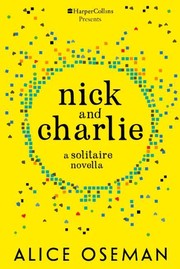
Nick and Charlie: A Heartstopper Novella
Nick is off to university and Charlie is staying behind. One last summer to decide if first love can survive distance.
2,329-word summary · 10 min read

Holding Up the Universe
Libby Strout reclaims high school after loss while Jack Masselin hides face blindness, until a cruel prank forces them to see each other.
2,979-word summary · 13 min read


Lola and the Boy Next Door
Costume maker Lola must choose between older Max and inventor Cricket while her two dads hold home steady.
2,045-word summary · 9 min read


Bully
Tate returns from France to face Jared, the boy who bullied her for years and still will not leave her alone.
1,934-word summary · 9 min read

Binding 13
Shy Shannon Lynch transfers to Tommen College for a fresh start and crosses paths with rugby star Johnny Kavanagh, sparking a slow friendship tested by injury,…
2,950-word summary · 13 min read

Always and Forever, Lara Jean
Senior year brings college letters, distance from Peter, and a dad wedding Lara Jean helps hold together.
2,037-word summary · 9 min read
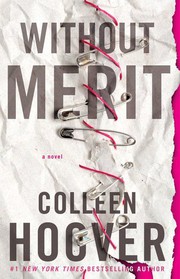
Without Merit
Merit Voss feels invisible in a crowded converted church home until Sagan, Luck, and a painful night force the truth out.
3,300-word summary · 15 min read


Simon vs. the Homo Sapiens Agenda
Closeted Simon Spier trades emails with Blue while Martin blackmails him over Abby and the school musical nears.
2,952-word summary · 13 min read

Better than the Movies
A rom com obsessed senior hires her annoying next door neighbor to win her crush, then finds real love is messier and kinder than any movie plot.
2,438-word summary · 11 min read