

Quicksilver
2,311-word summary 10 min read 624 pages in the book
- First published
- 2024
- Publisher
- Grand Central Publishing
- Pages
- 624
- ISBN
- 9781538774199
- Series
- Fae & Alchemy (#1)
Reading options
What's inside (10 sections)
Why I opened it
I came to this book late, after it had already been declared a phenomenon. Callie Hart's novel was a number one bestseller on both sides of the Atlantic, a BookTok fixture, and the first volume of a trilogy called Fae & Alchemy. I am usually suspicious of books that arrive with that much noise attached. Romantasy, the label it is given, can mean a thin story dressed up in pointed ears and a heavy atmosphere. What won me over was the opening, which is set in a desert and is far more interested in water than in romance. The traditional edition appeared in December 2024, but the book was first published by Hart herself in June of that year. It is a big, blunt, absorbing read, and it is not quite the book the hype describes.
The girl who steals water
Saeris Fane is twenty-four and lives in Zilvaren, a desert land where water is the thing that matters most. The novel opens on a stark premise: in a place like this, there is not much a girl would not do for a glass of water. Saeris does a great deal, it turns out. She picks pockets and steals from the reservoirs of the Undying Queen, the ruler whose power rests on controlling the supply. She has been doing it for as long as she can remember, and she is very good at it.
The Undying Queen is a distant, almost abstract presence in these chapters, which makes her more unsettling. Saeris never doubts what the woman is capable of. Water is rationed, guarded, and used as a weapon, and every transaction in the market is shadowed by the threat of thirst. Hart keeps the economics of the place simple and brutal. If you control the water, you control the people, and the people who steal it are not heroes in their own story. They are survivors. Saeris knows exactly what she is, and she carries no particular guilt about it. That clarity is part of what makes her such a different heroine from the ones who usually populate this kind of book.
She is also good at keeping secrets. Nobody knows about the strange powers she possesses, which she keeps buried as carefully as she hides her thefts. Hart gives the reader three instructions early on, and they are worth remembering: do not touch the sword, do not turn the key, do not open the gate. They read like a children's rhyme until the book starts showing what each one costs. There is a line about a secret being like a knot, bound to come undone, and that is the engine of the opening chapters. Saeris has built a whole life around not being noticed, and the plot is the slow, inevitable undoing of that caution.
Her voice is the best part of the early pages. She is practical and dry, unimpressed by her own legend, and entirely focused on the next meal and the next drink. Then she comes face to face with Death, and the life she has built comes apart.
The gate and the man called Death
Death, it turns out, is not a figure of speech. Saeris encounters him, and in the process she inadvertently reopens a gateway between worlds. One moment she is in the desert; the next she has been transported to a land of ice and snow. The Fae, which her world treats as myth and nightmare, are real, and she has landed in the middle of a conflict that has been running for centuries.
The frozen mountains of Yvelia are the next great setting, and Hart makes the contrast do a lot of work. Saeris is the first of her kind to tread those mountains in more than a thousand years. She is a creature of dust and heat dropped into a place of snow, cold, and ancient grudges. She knows nothing of the politics she has stumbled into, and her ignorance is not treated as a charming quality. It gets her hurt. The book is at its strongest when it stays close to her confusion, to the simple physical fact of a desert girl trying to survive a winter she has no language for.
The shift in setting also changes the rules of the story. In Zilvaren her skills made her invisible. In Yvelia they make her conspicuous, because there has not been a human on those mountains in a very long time. People stare. They want things from her. Her knowledge of how to palm a coin or slip out of a locked room still helps, but it cannot protect her from the cold or from the politics she has wandered into. Hart is good at showing the gap between competence in one world and helplessness in another, and she never lets Saeris become instantly skilled at the things she needs most.
The gateway itself is the hinge of the story. Once it is open, the two worlds are no longer separate, and the centuries-old war has a new variable in it. Saeris did not mean to open it. That is the point. Most of what happens to her begins with an accident she cannot undo.
Kingfisher's bargain
The Fae warrior she meets is called Kingfisher, of the Ajun Gate, and he has several names. One of them is Death. Hart is careful to keep him both alluring and alarming: handsome, yes, but carrying secrets and what the story calls nefarious agendas. Saeris mistakenly binds herself to him, and the binding is the central relationship of the novel, in every sense.
He needs her. Her powers are alchemical, and his people are facing a war he believes only she can help them win. He will use her Alchemist's magic to protect his kind, the book tells us plainly, no matter what it costs him or her. In exchange, he is her only route home. The deal is simple to state and complicated to live inside, because the two people who made it do not trust each other and cannot agree on what the terms mean. He has a murky past and an attitude that Saeris finds infuriating. She has powers she barely understands and no reason to believe he will keep his word.
The bond between them is an unequal one, and Hart does not pretend otherwise. Kingfisher has the knowledge, the status, and the upper hand. Saeris has a power nobody else can use and a stubborn refusal to be disposed of. Their arguments carry the book for long stretches, and the repeated question underneath them is whether a bargain made under duress can become anything else. The answer arrives slowly, which is the whole point of the slow burn the book is known for.
The slow burn
The romance between Saeris and Kingfisher is enemies to lovers in its most deliberate form. They irritate each other, they fight, they are thrown together by the demands of the bond, and neither will admit that the other has become important. Hart stretches this out across hundreds of pages, and the restraint is what makes it work. A glance or a hand at the right moment lands harder because the book has spent so long refusing to give the reader an easy payoff.
Around them, the supporting cast fills out the fae court and the warrior circle. There are politics, alliances, and the usual machinery of an immortal society that has been fighting for too long to remember clearly why. Hart gives these figures distinct voices and motives, though a few of them are drawn broadly enough that they function as types. The banter is sharp, and Saeris's desert cynicism plays well against the formal, ritual-bound behavior of the fae.
There are also long stretches where the two of them are simply working, travelling, or recovering from a fight, and the relationship develops in those quiet intervals rather than in set pieces. Hart understands that a slow burn needs ordinary time to burn in. She gives them conversations that go nowhere, small arguments about nothing, and the kind of forced proximity that makes both characters aware of the other's breathing. The payoff, when it finally comes, is less explosive than the book's reputation suggests. It is a relief, more than anything, as though two people have finally stopped fighting a fact they both knew was true.
This is an adult book, and the publisher recommends it for readers seventeen and older. There is graphic violence and explicit sexual material, and the two are sometimes intercut. The fight scenes are frequent and rough. That intensity is part of the appeal for the book's audience, but it also means the softer moments have to work harder to feel earned. For my money they mostly do, because the attraction is built out of character rather than proximity alone.
The war under the romance
The conflict that brings Saeris into the fae world is larger than any single relationship. A war against vampires is gathering, and the balance between humans, fae, and the undead is unstable. Hart has said in interviews that she drew on Frank Herbert's Dune for the deserts of Zilvaren and on Tolkien for the naming and the scale of the world building. Both debts show. The desert has the harsh, resource-driven logic of a place where water shapes every relationship, and the fae names and lineages have the weight of invented history.
Her alchemist magic is the other thread. It is presented as something Saeris has never been trained to control, which lets Hart use it as both a source of wonder and a plot problem. She can do things she does not understand, and the people around her want to use what she can do. That tension runs through every stage of the story, from Kingfisher's original bargain to the larger war that needs her powers. It also makes her valuable in a way she resents, which keeps her from becoming a passive chosen one.
The vampire threat stays in the background for much of the first book, which is a sensible choice. Hart is saving it. What the story does instead is build the fae side of the conflict in detail: the old families, the gates, the rules that govern who can make a binding agreement and what such an agreement costs. The machinery is intricate, and at times it slows the book down, but it gives the romance a real setting to occupy. Kingfisher's people are not simply background figures waiting for the heroes to kiss. They have a history, and they have a reason to want Saeris's power that has nothing to do with attraction.
The novel ends with the central conflict still open. The war is not settled, and the bond between Saeris and Kingfisher has further to go. That is appropriate, since this is the first of three books. Readers looking for a complete arc in one volume will find the ending abrupt. Readers who came for a doorway into a larger story will find it inviting.
How the book reached readers
The publication history is almost as striking as the plot. Hart self published Quicksilver in June 2024, after earlier books had underperformed, and she has described it as her Hail Mary. She sent early copies to BookTok creators, and mentions of the book on TikTok passed three million views within two months. In September 2024 a ten way auction for the traditional rights was won by Hodderscape, an imprint of Hodder and Stoughton, with Grand Central Publishing handling the American edition.
The December 2024 release debuted at number one on the New York Times bestseller list and reached number one on the Sunday Times list in Britain. It was nominated for a Goodreads Choice Award in the best romantasy category. Netflix acquired the film rights in a competitive auction that same December, with a seven figure deal reported, and Hart is attached as an executive producer. The second book, Brimstone, followed in 2025 and debuted at the top of the UK charts. A third volume is projected, and the author has spoken about additional side character books after the trilogy.
What works and what grates
The opening is the best thing here. A girl stealing water in a desert, a ruler called the Undying Queen, and three warnings that sound like a nursery rhyme give the book a strong, strange footing. The dynamic between Saeris and Kingfisher is the second best thing. Hart lets their relationship develop through argument and reluctant respect rather than instant attraction, and the long delay makes the eventual warmth feel deserved. The scale of the world, with its frozen mountains and its old wars, gives the romance somewhere real to happen.
The weaknesses are easy to name. The prose is functional rather than lovely, and Hart sometimes stops the story to explain the world at length. Kingfisher's arrogance, which is meant to be charming, wears thin in the middle chapters. The ingredients are familiar: hidden powers, a binding bargain, an enemies to lovers arc, a hero line, a threatened world of ice. Readers who have spent time in this corner of fantasy will recognize the shape before the book fills it in. The graphic violence is also more constant than the story always needs, and a few fight scenes seem to exist to keep the pace up.
What I kept thinking about, though, was the beginning rather than the ending. Saeris in the desert, picking a pocket, stealing water from a reservoir, certain that her biggest problem is staying unnoticed. She has no idea the gate is there. That version of her is the most vivid person in the book, and I wished the later chapters had kept a little more of her sharp, thirsty certainty.
FAQ
What is the correct series name and reading order?
The series is Fae & Alchemy, and Quicksilver is book one. The sequel is Brimstone, published in 2025, and a third volume is planned.
When was Quicksilver first published?
Callie Hart self-published it in June 2024. Hodderscape and Grand Central Publishing brought out the traditional edition in December 2024, and the book then reached number one on the New York Times and Sunday Times lists.
Is Quicksilver appropriate for younger readers?
No. The publisher recommends it for readers aged seventeen and older because of graphic violence and explicit sexual content.
Similar books
More from Fae & Alchemy first, then related titles.

Forced Bonds
The Sanctuary's shield is down and the Resistance is inside. Oli must complete her bond group, including the hostile Nox, before the war costs her everything.
2,316-word summary · 10 min read
The Knight and the Moth
Six of seven Diviners vanish, and the last one flees a cathedral with a mocking knight and a gargoyle who calls everyone Bartholomew. Gillig's gothic fantasy…
2,936-word summary · 13 min read

The Darkest Part of the Forest
In a town built around a sleeping horned boy in a glass coffin, a girl discovers she has been spending her nights as a faerie king's knight and remembers none…
2,012-word summary · 9 min read
Spark of the Everflame
A village healer stops taking the powder that keeps her strange powers quiet. After a dying king names her his heir, Diem Bellator faces a choice between a…
2,293-word summary · 10 min read

Blood Bonds
Oleander is chained in a Resistance camp, and her five Bonds have to find her before Silas Davies finishes what he started in this third Bonds that Tie book.
2,018-word summary · 9 min read
An Enchantment of Ravens
Isobel, a mortal artist in the fairy town of Whimsy, paints a portrait of the autumn prince and falls in love with him, breaking the laws of her craft.
2,087-word summary · 9 min read

Savage Bonds
Oli's deadly gift is out in the open, her Bond runs the show, and the Resistance is closer than ever in the second Bonds that Tie novel.
2,431-word summary · 11 min read
A Deal with the Elf King
A village herbalist is exposed as the hidden Human Queen, married to a cold elf king, and given three months to save his dying kingdom or be bound to it…
2,094-word summary · 9 min read
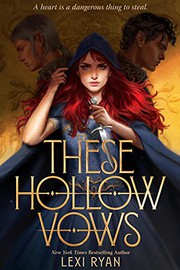
These Hollow Vows
Brie trades with the Unseelie to save her sister and steals for a prince.
2,384-word summary · 11 min read
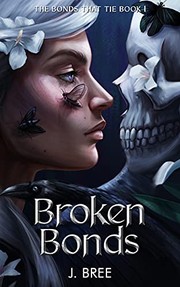
Broken Bonds
Oleander returns after five years on the run to face the five men she is bonded to, in J. Bree's 2021 opener of resentment, training, and slow trust.
2,582-word summary · 11 min read
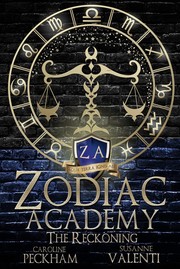
The Reckoning
Twin heirs survive trials and hazing at Zodiac Academy while the heirs start to split.
1,984-word summary · 9 min read
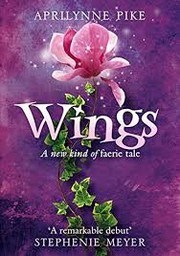
Wings
A homeschooled fifteen-year-old grows a blue flower from her back and learns she is a faerie sent to guard a hidden gate. Pike's debut makes plant lore feel…
2,506-word summary · 11 min read
Water Moon
A woman inherits a Tokyo pawnshop that trades in regrets, finds her father gone and one glowing bird freed, and crosses into another world to learn what her…
2,087-word summary · 9 min read
The Unicorn Hunters
Arden trades Russian folklore for fifteenth-century Brittany in a standalone about a duchess, a forced marriage, and a unicorn hunt that hides a secret wedding.
2,559-word summary · 11 min read
The Girl of Fire and Thorns
Rae Carson's debut follows Elisa, an insecure princess born with a godstone in her navel, who is married to a foreign king and must grow into the leader a…
2,331-word summary · 10 min read
The Binding
In an alternate Victorian England, binders remove unbearable memories into books, and a young apprentice discovers his own past was erased from him.
2,036-word summary · 9 min read
Temple of the Winds
In Sword of Truth book four, a magical plague sweeps the Midlands and prophecy demands that Richard enter the Temple of the Winds, but only through an…
2,962-word summary · 13 min read
Shadowland
Ever Bloom cannot touch Damen without risking his life. As she hunts for a cure, a mysterious surfer named Jude arrives and her loyalty to Damen is tested.
2,301-word summary · 10 min read
Nightbane
Isla Crown has thirty days to defend Lightlark after Grim threatens to destroy it, while memories of the year she spent with him return.
2,353-word summary · 10 min read

Magic Study
Sentenced to die in Ixia, Yelena returns to the land she was stolen from to learn the magic that made her an outlaw.
2,542-word summary · 11 min read

Magic Bleeds
The fourth Kate Daniels novel finds Kate investigating a magical plague in Atlanta while her relationship with Curran fractures and an ancient enemy tied to…
2,236-word summary · 10 min read
Lords and Ladies
The elves are coming and Lancre is not ready. Pratchett's 1992 novel sends Granny, Nanny and Magrat into a cruel, glittering invasion that spoofs A Midsummer…
2,476-word summary · 11 min read

Heartless Sky
The seventh Zodiac Academy novel hides the Vega twins in an underground rebel base, where a hidden killer, shadow rifts and Darius's fatal bargain lead to a…
2,443-word summary · 11 min read
Glow
In the fourth Plated Prisoner book, Auren escapes Midas's death only to stand trial for it, while Slade fights to keep her and their world from tearing apart.
2,667-word summary · 12 min read

Daggermouth
A trained killer is sent to execute the Executioner, then bound to him in a forced marriage that could ignite a revolution. H. M. Wolfe's dark dystopian…
2,798-word summary · 12 min read

Brida
A young Irishwoman convinced she has a spiritual Gift seeks out a forest Magus and a Dublin witch, and learns that her gift is to bridge the visible and…
2,012-word summary · 9 min read
Blood of the Fold
In Sword of Truth book three, Richard Rahl takes command of Aydindril while a zealot army and an emperor who walks in dreams threaten everything he loves.
2,321-word summary · 10 min read

The Paper Magician
A graduate magician is assigned to paper magic instead of metal, then must face a woman who tears out her mentor's heart.
2,454-word summary · 11 min read
Onyx Storm
A quest south with Violet Sorrengail, a dragon rider racing to cure Xaden before he turns venin. Yarros trades the academy for islands, irids and a costly war.
2,368-word summary · 11 min read
Magic Strikes
Drafted into the Order of Merciful Aid, Kate Daniels investigates the beating of her friend Derek and finds a hidden tournament where rakshasas fight in human…
2,012-word summary · 9 min read