
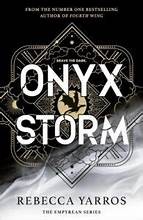
Onyx Storm
2,368-word summary 11 min read 544 pages in the book
- First published
- 2025
- Publisher
- Red Tower Books (Entangled Publishing)
- Pages
- 544
- ISBN
- 9781649377159
- Series
- The Empyrean (#3)
Reading options
What's inside (9 sections)
I came to Onyx Storm already invested in Violet Sorrengail, which is both a help and a handicap. Rebecca Yarros's third Empyrean book was published in 2025 by Red Tower Books, an imprint of Entangled Publishing. It runs 544 pages and carries ISBN 9781649377159. The story picks up in the immediate aftermath of Iron Flame, so there is no gentle catching of breath. If you have not read the first two books, this will read like a conversation you walked into halfway through. That is partly a complaint and partly just a fact about where the series now sits.
What struck me first is how the book reorganizes its world. The continent of Navarre, its allies in Poromiel, and the revolutionaries of Tyrrendor are forced into an uneasy coalition against the venin. These are the magic-wielding enemies who have been draining the land itself, and the threat they pose is larger than any single battle. The alliance is uneasy for good reason. These groups have spent the earlier books fighting one another, and now they have to share command, share intelligence, and trust people who recently tried to kill them. Yarros spends real time on the friction. The politics of the coalition are never far from the surface, and they give the war a weight that a simple good-versus-evil setup would not.
The venin themselves are an unusual enemy. They do not simply want territory or victory in the ordinary sense. They have been draining the land, drawing power out of the world around them, and that makes the conflict feel environmental as much as military. It also raises the stakes of Xaden's condition. When the enemy's magic works by taking from the earth, his turn toward it is not a simple case of a hero going bad. It is a slow conversion into the thing that is hollowing out the places he is trying to defend. Yarros uses that irony without ever quite naming it, and it hangs over the voyage.
I should say how much the first-person narration shapes the reading. Everything reaches us through Violet's perception, so the big political moves and the large battles are always filtered through a woman who is watching her own body and her own relationship come apart. That can be claustrophobic in a good way. It can also mean that other characters only exist as Violet reads them, and a few of the allies never quite step out of that shadow. It is a trade I was willing to make for the intimacy, but it is worth noticing.
Violet, Xaden, and the clock that is running
The book is narrated in the first person by Violet, and that choice matters. She is slight, chronically ill, and bonded to two dragons: the formidable Tairn and the younger Andarna. Being a dragon rider has never come easily to her, and her body keeps setting limits on what she can do. That physical fragility sits beside a stubbornness that drives the whole plot. She is the kind of narrator who notices details others miss and then acts on them before anyone has given permission. Her illness is not scenery. It shapes what she can endure on a voyage and how she reads the people around her.
Her two dragons give the book its other great relationship axis. Tairn is the formidable presence, older and powerful, a dragon whose authority Violet has to earn and then negotiate with. Andarna is younger, the bond with her gentler and stranger. Having two bonds means Violet is never simply a rider with one mount. She is a person divided between two creatures with different temperaments and different claims on her, and Yarros writes those bonds as relationships rather than as equipment. When the irids later make their judgment, it lands because the reader has come to know Andarna as someone, not something.
The emotional center of the book is Xaden Riorson, the Duke of Tyrrendor and Violet's partner. He has begun turning into a venin himself. That is the clock that runs beneath everything. Much of the emotional weight comes from Violet's determination to find a cure before his transformation is complete, and Yarros keeps that deadline in view even when the plot wanders to other islands and other problems. Every alliance struck, every risk taken, is shadowed by the question of how much time Xaden has left.
I found this the strongest part of the book. A romance can coast on longing and banter, but here the relationship has a hard limit built into it. Violet is not simply trying to protect someone she loves. She is racing a process that is changing the person she loves from the inside. That gives their scenes an urgency that is easy to feel, and it is the thread I kept returning to when the magical machinery got dense.
A quest to the islands south of the continent
The central plot is a quest. Violet, Xaden, and a handpicked group of riders and gryphon fliers sail to the islands south of the continent. The party is a deliberate mix: Rhiannon Matthias, Violet's best friend; Sloane Mairi, a siphoner; Garrick Tavis; Bodhi Durran; Imogen Cardulo; and Catriona Cordella, Xaden's former lover, whose gryphon fliers are needed for the alliance. Bringing Catriona along is not comfortable for anyone, and Yarros lets that discomfort sit in the room. The mission requires her people, so personal history has to be set aside, at least for the moment.
Rhiannon gives Violet a steady presence, the friend who can be trusted when the group fractures. Sloane, as a siphoner, brings an ability that matters when venin magic is the problem. Garrick, Bodhi, and Imogen round out the riders, each carrying their own history with Xaden and with the war. The mix of riders and gryphon fliers is itself a small political statement, since these are forces that have not always fought on the same side. Putting them on one ship is the coalition in miniature.
The voyage itself gives the book a change of air. The story leaves the familiar halls of the riding academy behind and moves onto water, toward islands that operate by different rules. That shift is one of the things the book is most praised for and most criticized for. It opens up the world, but it also removes the structure that made the earlier novels easy to settle into. I found the change bracing at first and exhausting by the later chapters. The sea legs never fully leave.
Their goals are threefold. They need to find more irids, the rare golden dragons of Andarna's kind. They need to locate manuscripts written by Violet's father that may explain how to reverse venin magic. And they need to win new allies for the war. Three objectives, one voyage, and a shrinking window in which to achieve them. The structure is clean even when the execution is sprawling, and it gives the middle of the book a clear spine to hang on.
Manuscripts, a mother, and alliances with a price
The expedition produces several key beats in fairly quick succession. They discover the manuscripts, which raises the possibility that Violet's father understood more about venin magic than anyone realized. For Violet, that find is personal as well as strategic. A parent's notes become a possible key to saving Xaden, and the book lets the weight of that settle. There is a quiet irony in a father's work, set down for reasons that had nothing to do with this crisis, becoming the most hopeful thing anyone has found. The manuscripts are the closest the book comes to a solution, and for a while it feels as though the quest might actually deliver one.
There is a meeting with Xaden's mother, whom he has not seen since childhood. That scene carries a different kind of tension than the battles do, because it is about a son confronting a parent who has been absent and a past he has been carrying alone. Yarros handles it with more restraint than some of the louder sequences, and it is one of the moments where Xaden stops being a romantic lead and becomes a person with an old wound.
Several alliances are struck, and they come at the cost of team members' lives. This is where the book earns its place in the war genre rather than the romance shelf. Yarros does not let the quest be a clean sequence of wins. People die to secure the agreements the coalition needs, and the survivors have to live with what those deaths bought. During this stretch Aaric Graycastle reveals a precognition signet. It turns out he is really Cam Tauri, King Tauri's son, traveling under an alias. The reveal recontextualizes his presence in the group and adds another layer to the political maneuvering.
I appreciated that the book lets these losses land. The alliances are not free, and the characters who pay for them are people the reader has come to know. That is the kind of choice that makes a long fantasy series feel consequential rather than decorative.
The irids and the loss of Andarna
The expedition reaches the irids, but the meeting does not go as Violet hopes. The dragons reject Andarna, disappointed at how Navarre's warlike culture has shaped her. This is a pointed bit of writing. Andarna is one of Violet's two dragons, younger and bound to her, and the irids judge her for the company she has kept. The rejection hurts because it contains a measure of truth. Navarre has raised these dragons into a culture of war, and the irids will not simply overlook that.
The group returns to find venin attacking Tyrrendor. One irid reappears and strengthens the wardstone protecting the province, turning the tide of the battle. Then that same irid persuades Andarna to return with him to the other irids. Violet consents, and she is devastated by the loss. This is the moment the book's emotional gamble pays off for me. Andarna has been a constant presence, and giving her up, even for a reason that makes sense, costs Violet something that a victory cannot replace. The book does not rush past the grief.
The irids' rejection also gives the whole series something to answer to. It is easy for a war story to treat its dragons as weapons, and for a reader to accept that without comment. Here the golden dragons look at what Navarre has made of its bonded dragons and find it wanting. That judgment implicates the culture Violet comes from, not just the enemy. It is the most interesting idea in the book, and I wish Yarros had given it more room.
The battle for Tyrrendor and the storm venin
The powerful silver-haired venin Theophanie, who wields storm magic, captures Violet's sister Mira. That act triggers a climactic confrontation between the venin and the combined forces of Navarre, Poromiel, and Tyrrendor. Everything the uneasy coalition has been building toward is tested here, and the fighting is large in scale. Storm magic gives Theophanie a distinctive presence, and her silver hair gives her a look that separates her from the other venin. She is the most defined threat in the book, and the confrontation with her is the payoff the quest has been moving toward.
Andarna returns in time for the fight, which answers the question the previous chapter leaves hanging. Violet kills Theophanie. Xaden draws still more power from the earth, pushing his own transformation forward. That is a hard bargain to end on. The battle is won, the sister is recovered, and the person Violet has been racing to save has moved one step closer to being lost. Yarros keeps both outcomes in frame at once, and that is the book at its best.
The cliffhanger and what it asks of the reader
Twelve hours later, Violet wakes disoriented amid reports of fresh murders and disappearances. She discovers that she and Xaden appear to have married. The book closes on that cliffhanger. It is a bold place to stop, and it raises more questions than it answers: what happened in those twelve hours, what the murders and disappearances mean, and whether the marriage is real in the way a marriage is usually understood.
I have mixed feelings about the ending. As a hook it works. It will send readers straight to the next book. As a resolution it is deliberately incomplete, and if you want a story that closes its own loops, this will frustrate you. That is a fair thing to want from a 544-page novel, and the book does not offer it.
Where the book strains
Critics were split, and I understand both sides. Kelsey Hall at BookTrib praised the worldbuilding and relationships. Good Housekeeping called it fast-paced with an ending that leaves fans wanting more. Laura Hackett of The Times argued that dropping the familiar school setting leaves the book leaning on ever more outlandish dangers and dense magical terminology, and she found the romantic elements cringeworthy.
There is truth in Hackett's complaint. The school setting of the earlier books grounded the fantasy. Without it, the stakes escalate into larger battles, rarer dragons, and more elaborate magic, and the terminology piles up. I felt that density at times, especially in the sequences involving irids and signets, where the book expects you to keep several new rules in your head at once. The romance also leans on a particular register of longing and banter that not every reader will enjoy. If that register does not work for you, the longer scenes between Violet and Xaden will feel like a slog.
Still, for a reader who is already attached to these characters, the emotional logic holds. Violet's fight to save Xaden and her grief over Andarna are real anchors in a book that is otherwise happy to keep raising the volume. Onyx Storm is a big, loud, heartfelt installment that moves the war forward and leaves its central relationship in a harder place than it found it. That is enough to make it worth the time, even when the magic gets crowded.
FAQ
Do I need to have read the first two Empyrean books?
Yes. Onyx Storm opens immediately after Iron Flame and assumes you already know Violet, Xaden, the venin and the political split between Navarre, Poromiel and Tyrrendor.
What is the quest in Onyx Storm trying to accomplish?
Violet's party sails south to find more irids, recover manuscripts her father wrote that may explain how to reverse venin magic, and win new allies for the war.
Why does the book end on a cliffhanger?
It closes with Violet waking after twelve hours amid reports of murders and disappearances, only to discover that she and Xaden appear to have married. The next book is left to explain what happened.
Similar books
More from The Empyrean first, then related titles.
Fourth Wing
Rebecca Yarros's Fourth Wing retold: Violet enters Basgiath, bonds Tairn, and learns what the wards hide.
2,580-word summary · 11 min read
Iron Flame
Violet survives her first year at Basgiath and returns for war games, rebellion secrets, and a harder second year.
2,687-word summary · 12 min read
Forced Bonds
The Sanctuary's shield is down and the Resistance is inside. Oli must complete her bond group, including the hostile Nox, before the war costs her everything.
2,316-word summary · 10 min read

Blood Bonds
Oleander is chained in a Resistance camp, and her five Bonds have to find her before Silas Davies finishes what he started in this third Bonds that Tie book.
2,018-word summary · 9 min read
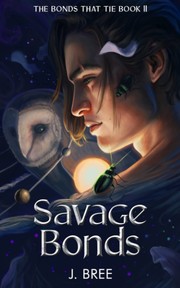
Savage Bonds
Oli's deadly gift is out in the open, her Bond runs the show, and the Resistance is closer than ever in the second Bonds that Tie novel.
2,431-word summary · 11 min read
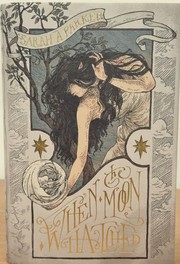
When the Moon Hatched
An assassin who hears air takes a job that throws her to dragons and a hunter.
2,083-word summary · 9 min read
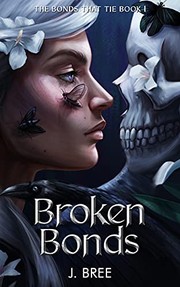
Broken Bonds
Oleander returns after five years on the run to face the five men she is bonded to, in J. Bree's 2021 opener of resentment, training, and slow trust.
2,582-word summary · 11 min read
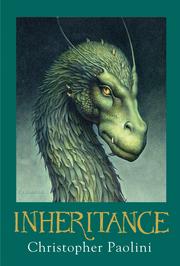
Inheritance
Eragon and Saphira march on Uru'baen to end Galbatorix, with hidden hearts and hard goodbyes.
3,160-word summary · 14 min read
Brisingr
Eragon rescues Katrina, backs a dwarf king, and earns a burning sword.
2,214-word summary · 10 min read
House of Flame and Shadow
Bryce lands outside Midgard while Hunt sits in Asteri dungeons and the war for two worlds builds.
2,983-word summary · 13 min read
Wings
A homeschooled fifteen-year-old grows a blue flower from her back and learns she is a faerie sent to guard a hidden gate. Pike's debut makes plant lore feel…
2,506-word summary · 11 min read
Wild Magic
A thirteen-year-old orphan in the kingdom of Tortall learns to live with the gift of speaking to animals, and discovers that the creatures she loves are not…
2,056-word summary · 9 min read
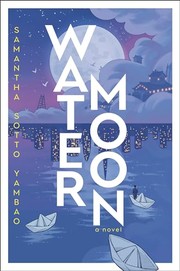
Water Moon
A woman inherits a Tokyo pawnshop that trades in regrets, finds her father gone and one glowing bird freed, and crosses into another world to learn what her…
2,087-word summary · 9 min read
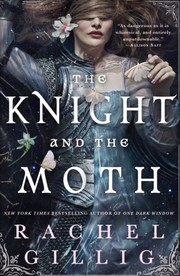
The Knight and the Moth
Six of seven Diviners vanish, and the last one flees a cathedral with a mocking knight and a gargoyle who calls everyone Bartholomew. Gillig's gothic fantasy…
2,936-word summary · 13 min read
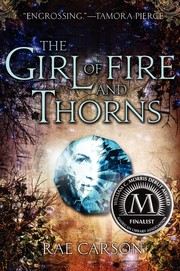
The Girl of Fire and Thorns
Rae Carson's debut follows Elisa, an insecure princess born with a godstone in her navel, who is married to a foreign king and must grow into the leader a…
2,331-word summary · 10 min read
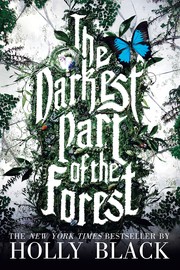
The Darkest Part of the Forest
In a town built around a sleeping horned boy in a glass coffin, a girl discovers she has been spending her nights as a faerie king's knight and remembers none…
2,012-word summary · 9 min read
The Binding
In an alternate Victorian England, binders remove unbearable memories into books, and a young apprentice discovers his own past was erased from him.
2,036-word summary · 9 min read
Temple of the Winds
In Sword of Truth book four, a magical plague sweeps the Midlands and prophecy demands that Richard enter the Temple of the Winds, but only through an…
2,962-word summary · 13 min read
Spark of the Everflame
A village healer stops taking the powder that keeps her strange powers quiet. After a dying king names her his heir, Diem Bellator faces a choice between a…
2,293-word summary · 10 min read
Shadowland
Ever Bloom cannot touch Damen without risking his life. As she hunts for a cure, a mysterious surfer named Jude arrives and her loyalty to Damen is tested.
2,301-word summary · 10 min read
Nightbane
Isla Crown has thirty days to defend Lightlark after Grim threatens to destroy it, while memories of the year she spent with him return.
2,353-word summary · 10 min read
Magic Study
Sentenced to die in Ixia, Yelena returns to the land she was stolen from to learn the magic that made her an outlaw.
2,542-word summary · 11 min read
Magic Bleeds
The fourth Kate Daniels novel finds Kate investigating a magical plague in Atlanta while her relationship with Curran fractures and an ancient enemy tied to…
2,236-word summary · 10 min read
Fool's Fate
Prince Dutiful must kill a dragon to secure his betrothal, and FitzChivalry Farseer is caught between the Fool and Chade over Icefyre's fate.
2,247-word summary · 10 min read
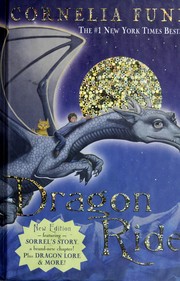
Dragon Rider
A silver dragon, a sharp-tongued brownie and a lonely orphan boy cross deserts and seas to find the dragons' lost homeland, pursued by a golden killer made by…
3,188-word summary · 14 min read

Brida
A young Irishwoman convinced she has a spiritual Gift seeks out a forest Magus and a Dublin witch, and learns that her gift is to bridge the visible and…
2,012-word summary · 9 min read
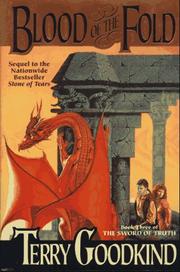
Blood of the Fold
In Sword of Truth book three, Richard Rahl takes command of Aydindril while a zealot army and an emperor who walks in dreams threaten everything he loves.
2,321-word summary · 10 min read
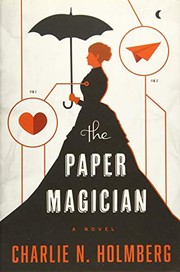
The Paper Magician
A graduate magician is assigned to paper magic instead of metal, then must face a woman who tears out her mentor's heart.
2,454-word summary · 11 min read
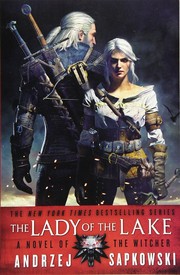
The Lady of the Lake
Ciri is trapped by the Aen Elle while Geralt winters in Toussaint, and the Witcher saga closes with the siege of Stygga and a fog-bound farewell.
2,445-word summary · 11 min read
Six Crimson Cranes
A princess who loses her voice when a curse turns her six brothers into cranes must work in secret, trust a dragon, and speak a name she does not know.
2,214-word summary · 10 min read