
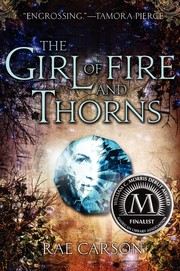
The Girl of Fire and Thorns
2,331-word summary 10 min read 423 pages in the book
- First published
- 2011
- Publisher
- Greenwillow Books
- Pages
- 423
- ISBN
- 9780062026484
- Series
- Fire and Thorns (#1)
Reading options
What's inside (10 sections)
I picked this one up because a friend kept calling it the book that made her care about a heroine she initially found annoying. That was enough of a recommendation. Rae Carson's debut arrived in September 2011 from Greenwillow Books, an imprint of HarperCollins, and it opens with a princess who is about as far from the usual chosen-one mold as a fantasy can manage while still carrying a literal mark of destiny in her body. It is the first of three books, followed by The Crown of Embers in 2012 and The Bitter Kingdom in 2013. By the end I understood my friend's point, though I also saw why the book can test your patience in the middle.
A Godstone in her navel, and no idea what to do with it
Lucero-Elisa de Riqueza, called Elisa, is a princess of Orovalle who was born with a blue gem embedded in her navel. The gem is a Godstone, a sign that she has been chosen by God for some act of service that nobody will explain to her. The prophecy attached to it is vague in the way that prophecies often are. What matters, at least at first, is that everyone treats her as special except Elisa herself.
She does not fit the part. She lacks confidence, she eats when she is unhappy, and the book calls her fat without much ceremony. Her older sister Juana-Alodia is the one destined to rule Orovalle, so Elisa has grown up as the spare, handed over to a religious sect that deliberately kept her ignorant about her own Godstone. She prays, she reads, she studies military history, and she assumes she is ordinary. The gap between what she believes about herself and what everyone else believes about her is the engine of the whole story.
Then, on her sixteenth birthday, she is married to King Alejandro de Vega of Joya d'Arena, a country about to go to war with Invierne. It is a political match dressed up as a holy one, and Elisa goes along with it because that is what princesses in her position do. She has no idea that the war will become her war, or that the stone in her navel will turn out to matter more than the crown she is marrying into.
The attack on the road to Joya d'Arena
The first real test comes before Elisa ever reaches her husband's palace. Her travelling caravan is attacked in the forest, and the people around her are killed or scattered. Her lady-in-waiting Aneaxi takes a broken leg and a gash above her ankle that becomes infected, and Elisa cannot save her. Aneaxi dies, and the loss leaves Elisa with exactly one ally, her nurse and bodyguard Ximena.
Ximena is one of the best things in the book. She raised Elisa as a small girl, she was trained as a scribe, and she turns out to have a hidden talent for assassination. She is solid where Elisa is uncertain, and she never stops treating the girl in her charge as a person worth protecting rather than a symbol to be delivered. The two of them carry the early chapters through sheer force of competence.
What surprised me here is how much of the fighting Elisa does with her head. She has studied military history, and when the king's life is in danger she gives sound advice about the conflict and helps rescue herself and her companions. She is not suddenly a warrior with a sword. She is a reader who notices things, and Carson lets that count for something. It is a small choice, but it tells you what kind of brains this heroine has, and it pays off again later.
A guest in her own husband's palace
When Elisa finally arrives at Alejandro's palace, the reception is strange. The king announces her as a princess and a special guest, but he conceals the fact that they are married, and he says nothing about the Godstone. So Elisa takes up residence in her husband's house as if she were a visitor, unsure of her own position and watching everyone for clues.
Carson spends a good stretch of the novel on court life, and this is where the book both shines and starts to sag. Elisa makes connections with Father Nicandro, a priest who tells her about Homer's Afflatus and hands over a bag of three Godstones that his monastery has watched over. She gets to know Alejandro's young son, Prince Rosario, whose mother is dead and who will later matter a great deal to her. She is asked to advise the king's Council on the war and to keep an eye on his court, which is a curious job for someone the king will not publicly acknowledge as his wife.
The opposition comes in the form of Condesa Ariña, the king's mistress, and Ariña's maid Cosmé. Ariña is smooth and hostile in the way that a rival at court can be, and Elisa never quite knows how much the woman understands about who she really is. The palace sections move slowly, and I found myself wanting the plot to hurry up and get to the desert. But the slowness does useful work. Elisa learns that the sect which raised her kept her deliberately ignorant, and she begins to understand that her whole life has been arranged around a stone she was never allowed to question.
Kidnapped into the desert
The turning point arrives when Cosmé discovers Elisa's identity as the bearer of the Godstone and arranges for her to be taken. Elisa is kidnapped and carried across the desert for a month under brutal conditions, alongside Cosmé, Cosmé's brother Humberto, and a few others. It is a harsh stretch of the book, and it is also the part where Elisa starts to change in ways that are physical before they are emotional.
She is pleased to find that she has lost weight and gained endurance. I want to flag that now, because the book ties her growing competence to her shrinking body, and that is one of the trope-heavy choices that will bother some readers. Still, the desert section works on its own terms. The heat and the distance strip away the courtly confusion, and Elisa gets a clear look at what her new country is actually facing.
When they reach their destination, she learns that the war with Invierne has been going on for years, not weeks. She learns that Alejandro is regarded as a weak king who has not protected the desert villagers, and that her kidnappers are not villains in the usual sense. They are people whose homes are being ravaged by the animagi, the powerful sorcerers of Invierne, and they believe the Godstone can be used against them. Cosmé, it turns out, comes from a hidden rebel village in the hill country beyond the desert, and her uncle Father Alentín sent her to fetch the chosen one. Elisa's first real dose of the war comes as a captive, which is a sharp way to introduce the idea that her comfortable assumptions were worthless.
The animagus in the tent
Once Elisa understands the stakes, she starts building a group of her own, the Malficio, to fight back. She sees that the people of Joya are completely unprepared for the kind of war Invierne is waging, and she sets out to learn what the enemy army is actually like. She goes with Cosmé, Humberto and two others to observe the Invierne forces from a cave hideout, and the plan goes badly when the army decides to investigate the cave. The group flees, and Elisa is left behind because she would only slow the others down.
She is captured and taken to an animagus who wears a Godstone around his neck. This is the scene that won me over. Elisa plays dumb, waits for her chance, and tricks the sorcerer into sipping a drug that knocks him out. She puts on his robes and his Godstone pendant, escapes, and burns him in his own tent. It is clever and a little brutal, and it is the moment when the girl who studied military history starts turning her reading into action.
Afterwards she finds Humberto using her Godstone, and he nurses her back to health. Their relationship grows in the quiet spaces between the fighting, and Elisa falls in love with him just before the book takes that feeling away. I had mixed reactions to this. The romance is tender and it gives Elisa a reason to stay in the fight that has nothing to do with prophecy, but Humberto is killed before the relationship can develop, which made the whole thread feel like it was cut short to fuel her grief.
Conde Treviño's betrayal
The next stretch lowers the mood considerably. A message arrives saying that Conde Treviño, the father of Condesa Ariña, wants to discuss an alliance with the Malficio. Treviño is Ariña's father and a man with his own ambitions, and Elisa and her companions travel to his village expecting a negotiation. Instead they find that he has allied himself with Invierne.
He demands that Elisa reveal the location of her camp while holding the rest of her party captive in his house. She refuses. It is a clean, ugly test of the person she is becoming, and the price of her refusal is that Treviño kills Humberto and throws her into a cell with the others. That is the moment the book's romance ends, abruptly and without much ceremony.
King Alejandro's men arrive and break everyone out. Lord Hector, the king's personal guard, is the one who finds Elisa at Treviño's place and escorts her back to the palace. There she is reintroduced to Alejandro, not as the quiet wife he has been hiding but as the leader of the Malficio. The king is shocked to discover who has been behind the resistance, and he finally announces her as his queen. It is a satisfying beat, earned by the decisions she made in the desert and the tent, but it also arrives in the middle of a very busy sequence of rescues and revelations.
Five stones and a burning tent
Back at the palace, Elisa notices that the potted plant where she kept the Godstones is missing from her room. She asks Prince Rosario to find it, and the stones turn up later in Ariña's room, which tells you that the court intrigue was never as settled as it seemed. Meanwhile the army of Invierne marches on Joya d'Arena, and Cosmé sends word that five animagi are coming with them, headed for the palace.
The army breaks through the defenses. Condesa Ariña is killed, and King Alejandro is badly wounded. Elisa's nurses are already planning to flee with her and Rosario when the animagi break in, and this is where the collected prophecy finally pays off. Elisa steps forward as the bearer of the Godstone to save the people around her. She takes the four Godstones that Rosario recovered from Ariña's room, adds the one in her own navel, and fits all five into the pendant she stole from the first animagus she killed. The result is an explosion that destroys all five animagi at once.
The king dies of his wounds, and Elisa becomes queen of Joya. She adopts Rosario, the boy whose mother is dead and whose father she has just lost, and she faces the tasks that God has set out for her. The ending is deliberately not a victory lap. She has won the battle and lost nearly everyone close to her along the way, and the crown she never wanted is now hers to wear. Carson leaves her prepared but not triumphant, which felt honest to me after a story this costly.
What works, what drags, and who this is for
The strengths here are easy to name once you have finished. Elisa is a genuinely awkward heroine whose competence is earned through reading, observation and stubbornness rather than sudden magical skill. The desert chapters have a hard, clear physicality, and the scene with the animagus in his tent is as good as anything in the book. Ximena and Cosmé are both written with a complexity that keeps them from being simple mentors or sidekicks, and the moral mess of the war, with villagers caught between a weak king and a brutal enemy, gives the fantasy some real weight.
The weaknesses are just as real. The chosen-one framework is familiar, and the book leans on prophecy and divine mystery to explain more than it should. Elisa's growing capability is tangled up with her weight loss, a choice that says something uncomfortable about who gets to be brave. The middle section at court drags, the court intrigue is convoluted, and Humberto's death feels engineered to produce grief rather than grown from the story. The book was a finalist for the 2012 William C. Morris YA Award and made the 2012 YALSA Top Ten Best Fiction for Young Adults list, so its strengths clearly landed with readers, but I can see why some people put it down impatiently.
I would hand this to a reader who likes fantasy heroines who are uncertain at the start and capable by the end, and who does not mind a slow middle in exchange for a strong finish. I would be careful with a reader who is tired of chosen-one prophecies or who wants the romance to get a fairer share of the page. What stayed with me was Elisa's habit of noticing things, of reading a situation and acting on it even when she was scared, long after the prophecy had stopped feeling like the point. That is a quieter kind of heroism than the book's title suggests, and it is the reason my friend was right about this one.
FAQ
Is The Girl of Fire and Thorns the first book in a series?
Yes. It is the first novel of the Fire and Thorns series, followed by The Crown of Embers in 2012 and The Bitter Kingdom in 2013.
What is a Godstone?
It is a gem embedded in Elisa's navel from birth, marking her as chosen by God for an act of service. Other Godstones appear in the story, and together they drive the book's explosive climax.
Who is this book best suited to?
It is a young adult fantasy from 2011 with romance and court intrigue. Readers who like an uncertain heroine who grows into a capable leader through brains and stubbornness will get the most from it.
Similar books
More from Fire and Thorns first, then related titles.

The Rose & the Dagger
Shahrzad is pulled from her Caliph husband and left in a desert camp of rebels, needing to break his curse and end a war before it ends her.
2,520-word summary · 11 min read
The Heart of Betrayal
Held captive in Venda, Lia must survive the Komizar's scrutiny while Rafe hides his identity and Kaden, the assassin who spared her, risks everything to keep…
2,702-word summary · 12 min read

Magic Study
Sentenced to die in Ixia, Yelena returns to the land she was stolen from to learn the magic that made her an outlaw.
2,542-word summary · 11 min read

Vow of Thieves
Kazi and Jase return to Tor's Watch to find it occupied, and their marriage is tested by captivity, betrayal, and a war for the town of Hell's Mouth.
2,059-word summary · 9 min read

Lioness Rampant
Alanna searches for the Dominion Jewel with the Shang Dragon, then returns to Tortall to face Duke Roger at Jonathan's coronation.
2,478-word summary · 11 min read

The Queen of the Tearling
Nineteen-year-old Kelsea leaves the woods to take her throne, ends a shipment of human captives, and draws the Red Queen's revenge.
2,357-word summary · 10 min read

We Hunt the Flame
In a fractured Arabia-inspired world, a disguised huntress and a prince-assassin race to find a magic-restoring book and confront an ancient evil.
2,195-word summary · 10 min read

A Winter's Promise
Ophelia reads objects and is sent to marry Thorn on a cold ark.
2,502-word summary · 11 min read
Lirael
A Sightless Clayr girl and a prince afraid of Death join the Dog and Mogget to stop necromancers from waking the Destroyer Orannis at the Red Lake while old…
2,692-word summary · 12 min read
Daughter of No Worlds
A former slave with rare magic hires exiled warrior Max to train her for a daring rescue, sparking slow burn love and wider war in this big 520-page fantasy…
2,529-word summary · 11 min read
Bitterblue
Eighteen-year-old Queen Bitterblue sneaks out to learn why Monsea still suffers after Leck, facing court lies, ciphers, and trials in Cashore's rich third…
2,686-word summary · 12 min read

Strange the Dreamer
Orphan librarian Lazlo Strange joins a quest to the lost city of Weep, where blue-skinned godspawn haunt dreams.
2,221-word summary · 10 min read

The Kiss of Deception
Princess Lia flees an arranged marriage and hides in a village, unaware one stranger is a prince and the other an assassin.
2,196-word summary · 10 min read

Poison Study
Sentenced to die, Yelena becomes the Commander's poison taster and learns survival in Ixia has a daily price.
2,501-word summary · 11 min read
To Kill a Kingdom
A siren princess turned human must steal a siren-hunting prince's heart to win back the sea.
2,248-word summary · 10 min read
The Shadows Between Us
Alessandra plans to woo the Shadow King, marry him, and kill him for his throne, then finds someone else wants him dead first.
2,571-word summary · 11 min read

Fire
A human monster who reads minds is pulled into war in the Dells and must decide how to use her power.
2,727-word summary · 12 min read

Finale
Sisters face waking Fates with debts due, loving princes, and choices that break immortal math.
1,995-word summary · 9 min read
Graceling
Katsa, Graced with killing, breaks from her uncle's use of her and follows a kidnapped prince toward a hidden king.
2,517-word summary · 11 min read
The Demon King
A thief steals an amulet once owned by a legendary sorcerer, while a princess flees a forced marriage in the first volume of Cinda Williams Chima's high…
2,371-word summary · 11 min read
Wings
A homeschooled fifteen-year-old grows a blue flower from her back and learns she is a faerie sent to guard a hidden gate. Pike's debut makes plant lore feel…
2,506-word summary · 11 min read
The Woman Who Rides Like a Man
Newly knighted, Alanna heads south into Tortall's desert, where a broken sword and a dead shaman leave her responsible for a rebel tribe and three Gifted…
2,894-word summary · 13 min read
The Sorceress
Flamel takes the twins to London to find Gilgamesh, while Perenelle fights for her life on Alcatraz and an older threat wakes.
2,684-word summary · 12 min read

The Iron Knight
Winter prince Ash journeys to the End of the World to earn a soul and a mortal body so he can stand beside Meghan, the Iron Queen.
2,564-word summary · 11 min read
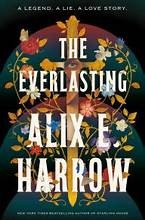
The Everlasting
A broken scholar is sent into the past to live the legend of Sir Una Everlasting, only to find that the story demands her death and that he is writing the lie.
2,464-word summary · 11 min read

The Darkest Part of the Forest
In a town built around a sleeping horned boy in a glass coffin, a girl discovers she has been spending her nights as a faerie king's knight and remembers none…
2,012-word summary · 9 min read
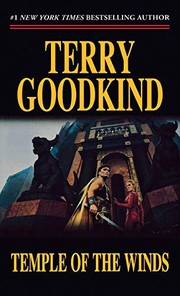
Temple of the Winds
In Sword of Truth book four, a magical plague sweeps the Midlands and prophecy demands that Richard enter the Temple of the Winds, but only through an…
2,962-word summary · 13 min read
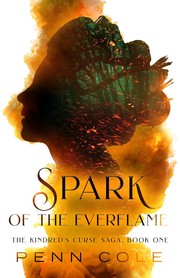
Spark of the Everflame
A village healer stops taking the powder that keeps her strange powers quiet. After a dying king names her his heir, Diem Bellator faces a choice between a…
2,293-word summary · 10 min read

Shadowland
Ever Bloom cannot touch Damen without risking his life. As she hunts for a cure, a mysterious surfer named Jude arrives and her loyalty to Damen is tested.
2,301-word summary · 10 min read
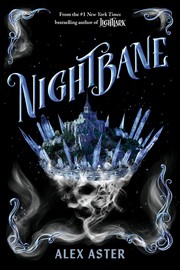
Nightbane
Isla Crown has thirty days to defend Lightlark after Grim threatens to destroy it, while memories of the year she spent with him return.
2,353-word summary · 10 min read