
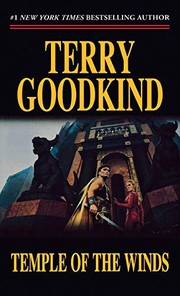
Temple of the Winds
2,962-word summary 13 min read 528 pages in the book
- First published
- 1997
- Publisher
- Tor Books
- Pages
- 528
- ISBN
- 9781250806635
- Series
- Sword of Truth (#4)
Reading options
What's inside (10 sections)
I picked this one up because the two earlier Sword of Truth books had left me with a strange mixture of irritation and affection, and I wanted to see where the story went next. Temple of the Winds came out in 1997 from Tor Books, a hefty 528-page volume, and it picks up almost exactly where Blood of the Fold stopped. What I did not expect was a book that opens with one of the funniest scenes in the whole series and then spends several hundred pages putting its heroes through a painful test built on a deliberate misunderstanding. By the end I was annoyed at the contrivance and still reluctant to put it down, which seems to be the usual Goodkind experience.
A quick warning before I go further. This is book four of a long sequence, and it assumes you already know Richard Rahl, Kahlan Amnell, Zedd, and the Mord-Sith who guard the Master of D'Hara. If you have not read the first three books, much of what follows will feel like it started halfway through a conversation. Spoilers from here on, because the whole point of a retelling is to say what actually happens.
The assassin who wanted to be killed
The book opens in Aydindril, the capital of the Midlands, with Cara the Mord-Sith walking fast down a marble corridor beside Kahlan. Cara is annoyed because a man has walked into the palace and announced that he is there to kill Richard Rahl, and she thinks the sensible thing is to kill him first and ask questions never. Kahlan, who is the Mother Confessor and a great deal more patient, wants answers. She is also worried sick about Richard, which Cara notices immediately and teases her about.
What follows in those early pages is a bit of business that tells you more about the people in this book than any speech could. Kahlan asks where Richard is, and Cara, clearly mortified, eventually admits that he is outside behind the palace taming chipmunks. Not hunting them, not fighting them, but teaching them to eat seeds out of his hand. Worse, he is teaching them to eat out of the hands of two other Mord-Sith, who have been giggling about it. Cara says the word giggling as if it were a disease. It is a lovely, warm little scene, and it establishes something the rest of the book keeps testing: Richard has become a ruler who cares far more about ordinary people and small creatures than about the trappings of power.
The man turns out to be a wizard named Marlin. He is scrawny, nervous, dressed in a mismatched soldier's uniform, and when Kahlan finally gets him alone he blurts out that Emperor Jagang sent him to kill Richard. Cara knocks him around a little, but the interesting part comes when Marlin tries to escape. He reaches for his gift, and Cara, using the Mord-Sith talent for seizing a person's power, grabs it from him. That link is a mistake. Before long Jagang himself is using the connection to take possession of Marlin, and suddenly the harmless assassin is a much more serious problem.
Cara is badly hurt in the struggle, and this is where the book introduces Richard's half-brother Drefan. Drefan has turned up in Aydindril calling himself a high priest of a sect of healers, and where an herbalist named Nadine fails to help Cara, Drefan succeeds with a treatment of acupressure. The scene is meant to make you uneasy, and it does. Drefan is smooth, plausible, and quietly pleased with himself, and I did not trust him for a second.
Nadine, Drefan, and a claim on the past
Nadine is a problem for Kahlan for reasons that have nothing to do with healing. She is a woman Richard knew years ago in the Westland, an herbalist he was close to before Kahlan ever met him. Now she has appeared at the palace asking after a man named Cy, claiming she is to marry him. Kahlan, who is the last of the Confessors and not exactly secure in her place, takes this very hard. She puts a heavy guard on Nadine and quietly orders that if the woman tries to leave, she is to be killed.
The tangle gets stranger. Kahlan learns that Nadine, far from trying to win Richard back, actually pursued Drefan, Richard's own brother, in what the account calls a baffling attempt to seduce Richard by way of his sibling. The witch woman Shota is eventually revealed to have sent Nadine to the palace in the first place. Shota claims she did it out of pity, because Nadine was the only other woman Richard had ever even remotely cared for. That explanation is the kind of logic that only a witch woman could offer with a straight face, and Shota insists the whole thing is part of a prophecy that cannot be stopped.
I want to be fair to the book here. The jealousy angle could have been handled cheaply, as a way to make Kahlan insecure so the plot has something to push against. There is more to it than that. Kahlan's fear is tied to who she is. A Confessor lives with a kind of loneliness that most people never have to consider, and the book keeps returning to the idea that her power separates her from the very relationships she wants. Her reaction to Nadine is jealous, yes, but it also comes from a real sense that she may never be allowed an ordinary life with the man she loves.
Drefan, meanwhile, keeps pressing his advantage. He has cured Cara, which gives him standing, and he keeps hinting that he understands things about healing that no one else does. I found him thoroughly creepy, and the book clearly wants me to, but it also takes far too long to do anything with that feeling. For a large stretch he is simply present, being oily and ambiguous while other plotlines move forward.
Zedd, Annalina, and the prophet who ran
While Richard and Kahlan deal with visitors and healers, the story sends Zedd and Prelate Annalina off on a separate thread. They are hunting for Nathan Rahl, an ancient prophet who has been unleashed and is causing trouble. Their search leads them to a rundown inn in a city the book never bothers to name, where they work out that Nathan deliberately misled them into following a different man. That man gives them a message: stop chasing Nathan and protect a treasure instead.
This storyline has a slightly aimless quality, and I say that as someone who enjoys the wandering subplots of these books. A Sister of the Dark is following Nathan too, and she ends up caught in a snare that Zedd had set for the prophet, which is a neat bit of accidental justice. Nathan himself has been busy rescuing a woman named Clarissa from a life of slavery in the Imperial Order. He builds a relationship with her and uses her to obtain items from Jagang, items connected to a tentative deal Nathan made with the Emperor while he was pretending to be Lord Rahl.
The problem is that this whole thread reads like it belongs to a different book. It has its moments, especially the snare and the revelation that Nathan has been playing everyone, but it keeps interrupting the much stronger material in Aydindril. Richard and Berdine are also spending a lot of pages translating something called the Journal of Kolo, which matters to the larger series but here mostly serves as a reason to have long conversations about wizardry. I found myself skimming some of these passages, and I suspect a lot of readers will do the same.
A plague and a prophecy that demands betrayal
The plot finally tightens when a Sister of the Dark begins moving through Aydindril spreading a magical plague. People start dying, and the sickness is not something ordinary medicine can touch. Richard goes to the First Wizard's Enclave looking for a cure, and Kahlan is left to deal with the prophecy that has been circling the whole story.
Here is the cruel heart of the book. Kahlan is told, again and again, by prophecy and by the ancestor spirits of the Mud People, that she must betray Richard. Only after that betrayal can he enter the Temple of the Winds, the source of the magic sealed away three thousand years ago, and only then can the plague be stopped. The spirits also say that Richard must marry Nadine, or everyone in the New World will die. Kahlan goes to Shota for a way out and gets none. The witch woman says the prophecy cannot be avoided, and repeats that Nadine was sent out of pity for Richard.
This is the part of the book that genuinely got to me. The whole structure depends on Kahlan being asked to do the one thing she cannot bear doing, to the man she loves, for the sake of everyone she rules. It is a brutal dilemma, and Goodkind does not soften it. You can argue about whether the prophecy is a fair device, and I will get to that, but in the moment it works. Kahlan's dread is earned, because the book has spent hundreds of pages showing us how much she has already given up.
The night of lightning
A messenger arrives from the Temple with the actual terms. Cara, who has been sharp and protective throughout, steals the man's gift and reads the message he carries. Richard must marry Nadine. Kahlan must marry Drefan. Both marriages must be consummated immediately, and in total silence.
What happens next is one of the more audacious scenes I have read in this genre. Kahlan, crushed at the loss of Richard and desperate for any kind of comfort, gives in. She is taken through dark corridors to a place of pillars, and she believes the man beside her is Drefan. Lightning starts crashing around them. In the flare of light she sees that it is Richard. Cara, without telling anyone, swapped the two men in the darkness, so the woman Richard thought he was marrying was the woman he actually loved, and Kahlan thought she was submitting to Drefan when she was with Richard.
The cost is immediate and ugly. In the distance, Drefan throws Nadine from the cliffs, which is what he had intended to do to Kahlan all along. Richard, believing Kahlan gave herself to his brother, feels betrayed. That pain is the price that lets him enter the Temple. He may not understand why at the time, but the magic of the place responds to a specific kind of wound, and he is carrying it.
I have mixed feelings about this section. The swap is clever, and the lightning reveal is genuinely dramatic. At the same time, the entire scenario depends on a character being kept in the dark through a very convenient series of coincidences, and the emotional payoff rests on a misunderstanding that a single honest conversation would have prevented. The book knows it is playing a dirty trick on its readers, and I think it half enjoys doing it.
Inside the Temple of the Winds
Once inside, Richard finds that he can do things that were completely beyond him before. He cures the plague with ease and performs several other spells that would once have been impossible. The Temple is a place of stored power, and being the Seeker gives him access to it. This is the payoff the title promises, and it is handled quickly. There is a real risk that a book called Temple of the Winds would spend too long getting to the temple and too little time once there. Goodkind does not quite make that mistake, though the arrival is still a long time coming.
Richard is then visited by the spirit of Kahlan's mother. The spirit tries to explain the crushing loneliness of a Confessor's life, the fact that Kahlan can never be touched or loved in an ordinary way without terrible consequence. This is the emotional centre of the book, and it is the reason the earlier scenes with Nadine matter. Richard is moved by it and eventually chooses to return to the real world rather than stay with a comforting ghost.
Before he leaves, the spirit of Darken Rahl appears and sets the terms of his release. Richard must give up the knowledge of what he learned in the Temple, and he is infected with the plague on the way out. So the cure works for everyone else, but the man who paid the price comes back carrying the sickness himself. Written on his hands and arms is a message for Kahlan: she must destroy a book in order to save him.
The book reveals its Wizard's Fourth Rule in this section, and it is worth quoting because it states the theme plainly:
There is magic in sincere forgiveness, the magic to heal. In forgiveness you grant, but more so, in forgiveness you receive.
That is the idea the whole book is building toward. Forgiveness is not presented as a soft virtue here. It is a kind of magic with real consequences, and Goodkind ties it to the necessity of letting go of bitterness. It is a heavy-handed lesson at times, delivered in long passages of explanation, but it fits the events. Richard and Kahlan both have to forgive what they believe the other has done, and the healing that follows is literal as well as emotional.
Kahlan crosses to the Old World
Kahlan acts on the message written on Richard's skin. She travels to the Old World using the sliph, a magical means of travel that appears in the earlier books, carrying the book she must destroy. When she arrives she finds Nathan, Sister Verna, and Warren in a compromised situation, and she has to act fast to help them. The struggle is brief but costly. Clarissa, the woman Nathan rescued from slavery, is killed by traitors in the fighting.
Kahlan gets back to Aydindril with the book, but Drefan is waiting for her. He attacks, and for a moment it looks as though he will win. It is Richard, nearly dead from the plague, who manages to subdue him. Drefan is then killed by the sliph, which is a strange and rather sudden end for a villain who has been given so much attention. Kahlan destroys the book, recites the names of the three chimes, and Richard is cured. The plague that was sweeping the Midlands is finally over.
The epilogue ties up the Drefan thread in an odd way. Members of his healer sect come to see Richard and explain that Drefan was seriously disturbed, and had been murdering prostitutes who reminded him of his mother. It is a grim detail, and it arrives so late that it feels more like an afterthought than a revelation. Richard and Kahlan then travel to the land of the Mud People and are wed, with Zedd and Annalina present. Shota shows up at the wedding to warn them, once again, not to conceive a child. After everything the couple has been through, that warning lands like a stone, and it sent me straight to the next book.
What lingers, and what drags
Let me be honest about the weaknesses, because this book has plenty. It is long, and the middle sags. The Journal of Kolo translations, the hunt for Nathan, and the repeated explanations of how magic works all slow the story down. Goodkind has a habit of explaining a lesson two or three times, as if he worries the reader will miss it, and the dialogue often sounds like a lecture rather than a conversation between people in danger. The betrayal plot, for all its emotional force, leans hard on a trick that the reader can see coming from a long way off.
The villains are another problem. Jagang is an imposing presence but barely appears in person, and his plans seem to advance mostly because characters behave foolishly. Drefan is unsettling for hundreds of pages and then dispatched in a rush. The plague itself is scary as an idea, but once Richard gets inside the Temple it is solved with very little struggle, which drains some of the urgency out of the final act.
And yet the book works in spite of all this. Cara is wonderful company, a lethal Mord-Sith with a dry sense of humor and a fierce loyalty that Goodkind never makes sentimental. The opening with the chipmunks and the later scene where she quietly arranges the swap are among the best things in the story. Richard's decency keeps winning me over even when the plot makes him act like a fool. And the theme of forgiveness, however heavily it is explained, gives the book a weight that a simple adventure would not have. Kahlan's loneliness is the real subject here, and the scenes with her mother's spirit are tender in a way that surprised me.
I would hand this to someone who has already fallen for the series and wants to see Richard and Kahlan finally get married. I would be cautious with a reader coming in cold, or with someone whose patience for long magical explanations is short. Temple of the Winds is uneven, sometimes maddening, and still a satisfying chapter in a story that has always cared more about the cost of love than about the size of the battles. If you can accept the detours and the occasional lecture, the night of lightning and what follows are worth the wait.
FAQ
Is Temple of the Winds the fourth Sword of Truth book?
Yes. Tor Books published it in 1997 as book four, following Blood of the Fold and preceding Soul of the Fire, and the standard edition runs 528 pages.
Do I need to read the earlier books before this one?
Yes. The story opens shortly after Blood of the Fold and assumes you already know Richard, Kahlan, Zedd, Cara, and the threat posed by Emperor Jagang and the Imperial Order.
Why does prophecy demand that Richard marry Nadine?
Prophecy and the ancestor spirits of the Mud People tell Kahlan that Richard can enter the Temple of the Winds and stop the plague only if he marries Nadine, which is why the condition weighs on her so heavily.
Similar books
More from Sword of Truth first, then related titles.
Wizard's First Rule
Woods guide Richard joins Kahlan and wizard Zedd to find the Boxes of Orden before Darken Rahl, learning why people believe lies.
2,220-word summary · 10 min read

Stone of Tears
After the veil tears, Richard seeks training from the Sisters while Kahlan holds a fracturing Midlands and Zedd hunts the missing Stone.
2,483-word summary · 11 min read
Blood of the Fold
In Sword of Truth book three, Richard Rahl takes command of Aydindril while a zealot army and an emperor who walks in dreams threaten everything he loves.
2,321-word summary · 10 min read

Jade City
On an island where jade grants power, two clans fight over the mineral, the family name, and the right to decide what loyalty costs.
2,403-word summary · 11 min read
This Kingdom Will Not Kill Me
A grocery delivery driver wakes in a fantasy capital she knows from an unfinished trilogy, only to discover she cannot die.
2,339-word summary · 10 min read
The Girl of Fire and Thorns
Rae Carson's debut follows Elisa, an insecure princess born with a godstone in her navel, who is married to a foreign king and must grow into the leader a…
2,331-word summary · 10 min read

Magic Study
Sentenced to die in Ixia, Yelena returns to the land she was stolen from to learn the magic that made her an outlaw.
2,542-word summary · 11 min read
Kushiel's Dart
Born with a scarlet mote in her eye, Phèdre nó Delaunay is sold into servitude, trained as a courtesan and spy, then thrown into a conspiracy that threatens…
2,789-word summary · 12 min read
Golden Fool
FitzChivalry Farseer returns to Buckkeep as a servant and a grieving Skillmaster, teaching Prince Dutiful while court intrigue, the Piebalds and a…
2,583-word summary · 11 min read
Fool's Fate
Prince Dutiful must kill a dragon to secure his betrothal, and FitzChivalry Farseer is caught between the Fool and Chade over Icefyre's fate.
2,247-word summary · 10 min read
The Lady of the Lake
Ciri is trapped by the Aen Elle while Geralt winters in Toussaint, and the Witcher saga closes with the siege of Stygga and a fog-bound farewell.
2,445-word summary · 11 min read
Dominion
Jean Kwok opens a trilogy in a world of four Dominions, where a memoryless refugee bonds with a tyger queen and uncovers a royal past.
2,213-word summary · 10 min read
Blood Song
Anthony Ryan's Blood Song follows Vaelin Al Sorna from the Sixth Order's brutal training to the war that earns him the name Hope-Killer, in the first Raven's…
2,479-word summary · 11 min read

The Blinding Knife
Kip trains to join the Blackguard while the Prism hides his true identity, loses his colors, and fights a war against a rogue drafter who wants to birth a god.
2,049-word summary · 9 min read

Magician's Gambit
Garion and his companions cross haunted Maragor and the caves beneath Rak Cthol to recover the Orb of Aldur.
2,391-word summary · 11 min read
Homeland
Drizzt Do'Urden is born into the cruel drow city of Menzoberranzan, where his father teaches him to fight and to doubt everything his family believes.
2,303-word summary · 10 min read
Enchanters' End Game
Garion marches toward Torak while Ce'Nedra leads the West's army in the final Belgariad volume, where prophecy and war meet.
2,557-word summary · 11 min read

The Rose & the Dagger
Shahrzad is pulled from her Caliph husband and left in a desert camp of rebels, needing to break his curse and end a war before it ends her.
2,520-word summary · 11 min read
The Queen of the Tearling
Nineteen-year-old Kelsea leaves the woods to take her throne, ends a shipment of human captives, and draws the Red Queen's revenge.
2,357-word summary · 10 min read
Fool's Errand
FitzChivalry Farseer has lived in exile for fifteen years. When Prince Dutiful vanishes before his betrothal, Fitz returns to Buckkeep to find him, with a wolf…
2,606-word summary · 12 min read

We Hunt the Flame
In a fractured Arabia-inspired world, a disguised huntress and a prince-assassin race to find a magic-restoring book and confront an ancient evil.
2,195-word summary · 10 min read
The Sword of Shannara
A young half-Elf and a company of companions set out to recover a magic sword before the Warlock Lord destroys the Four Lands.
2,474-word summary · 11 min read
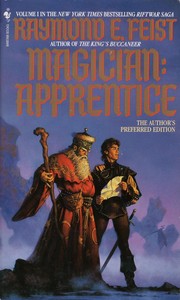
Magician: Apprentice
An orphan kitchen boy and a smith's son grow up in a frontier castle just as invaders from another world open a rift and begin a war that will change both of…
2,114-word summary · 9 min read
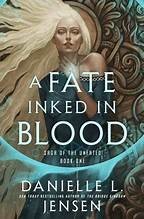
A Fate Inked in Blood
In Norse-inspired Skaland, a fish gutter hiding a goddess's blood is claimed by a jarl, bound by oath, and guarded by the son she cannot want.
1,971-word summary · 9 min read

When the Moon Hatched
An assassin who hears air takes a job that throws her to dragons and a hunter.
2,083-word summary · 9 min read
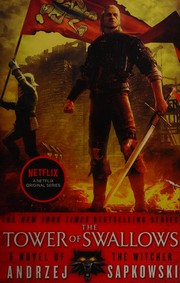
The Tower of the Swallow
Ciri flees as a bandit while Geralt gathers allies to find her.
2,580-word summary · 11 min read

The Emperor's Soul
Forger Shai must stamp a new soul for the dying emperor in 100 days.
2,313-word summary · 10 min read

Shadow's Edge
Kylar fakes death as a king killer while Vi hunts him for the Godking.
2,245-word summary · 10 min read
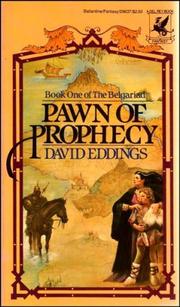
Pawn of Prophecy
Farm boy Garion learns sorcerers watch him as an old Orb wakes.
2,331-word summary · 10 min read
New Spring
Moiraine and Lan hunt the newborn Dragon before the Black Ajah finds him.
2,475-word summary · 11 min read