
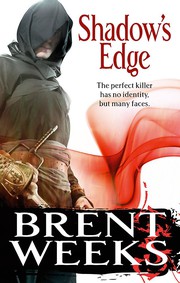
Shadow's Edge
2,245-word summary 10 min read 656 pages in the book
- First published
- 2008
- Publisher
- Orbit
- Pages
- 656
- ISBN
- 9780316033657
- Series
- Night Angel (#2)
Reading options
What's inside (8 sections)
I came to this one straight after The Way of Shadows because that first book left Kylar in a strange spot. He had been Azoth the gutter rat, then Kylar the apprentice killer, then something else entirely. A man trying to quit. I wanted to know if Weeks would let him quit. Most assassin series do not. They pull the hero back for one last job. I started Shadow's Edge on a weekend with low expectations and a lot of coffee, and I finished it late with the lights still on.
The edition I am covering is the 2008 Orbit edition, cited at 656 pages. It is book two of the Night Angel series, after The Way of Shadows. I will retell the story in order, with full spoilers, and I will be frank about the parts that troubled me. This is a dark book. There is torture, assault, and killing of people who cannot fight back. If you need clean fantasy, stop here.
Trying to stay dead
When the book opens, Kylar Stern is supposed to be dead. At the end of the last volume he took on the name of a kingslayer and let the world believe he paid for it. In truth he slipped away with Elene, the girl he loved since the streets, and with a small child they have taken in. They live far from Cenaria in a quiet town where no one knows his old trade. He works with his hands. He goes to market. He tries to pray. He tries not to touch his knives.
Weeks does this part well. Kylar is bad at peace. He checks exits in every room. He wakes at small sounds. He loves Elene but he does not know how to be ordinary. Elene loves him back and wants a simple life, a home, a child raised safe. That want is the engine of the early chapters. Can a man who killed for money learn to mend a fence and mean it.
The past does not leave him alone. News drifts south. Cenaria has fallen to the Godking of Khalidor, Garoth Ursuul. The city Kylar knew is under foreign soldiers and strange priests. Old friends are dead or missing. Worst of all, a rumor says Logan Gyre, the young lord who was Kylar's best friend and the rightful heir, might still be alive. Kylar had believed Logan died in the taking of the city. If Logan lives, hiding or chained, Kylar has to choose. Stay dead and keep his new family, or go back north and risk everything for a debt of friendship.
I liked how slow Weeks plays this. Kylar does not race off. He argues with himself. He argues with Elene. He tells himself Logan is surely dead. He checks the rumor from three angles. When he finally moves, it feels forced out of him rather than heroic. That felt true.
Logan in the Hole
The other thread belongs to Logan. If Kylar's chapters are about trying to be soft, Logan's are about refusing to break in a place built to break men.
The Hole is a prison pit below Cenaria. Men are thrown in and left to starve, fight, and die in the dark. Guards drop scraps. The strong eat. The weak vanish. Logan arrives there beaten and nameless after the fall of his house. No one knows he is a lord. To most prisoners he is just another mouth.
Weeks writes these scenes with little comfort. Hunger. Cold. Wounds that will not close. Men who have given up acting like animals. Logan holds onto two things. His name, which he hides, and a code of care for others, which he does not hide. He shares food when he has none to share. He stands between weaker prisoners and those who would use them. He gets hurt for it. He keeps doing it.
What saves him is not strength alone. It is loyalty earned in small acts. A few men start to watch his back. A scarred fighter respects him. A quiet prisoner trusts him. Together they make a pocket of order in a pit meant for chaos. Logan also learns to lead without rank. He cannot order. He can only show. Do not eat the dead. Do not trade children for bread. Bury the fallen if you can. These rules sound plain. In the Hole they are defiance.
I found these chapters the strongest in the book. They are grim, but they avoid cheap twists. Logan does not suddenly gain magic or secret skill. He endures. He listens. He remembers who he was without clinging to title. When hope of escape comes, it comes through patience and other people, not a lone hero trick. I read these pages faster than any others.
Vi and the price of obedience
The third thread follows Vi, and she nearly steals the book.
Vi is young, gifted with the Talent, and raised to kill. Her training was cruel. Her old master used pain and shame to shape her. She learned to split herself to survive. One self does the job. Another self hides and weeps. By the time the Godking's people send her after Kylar, she is lethal and brittle. She believes obedience will keep her safe. It never has, but she keeps hoping.
Her orders are plain. Find the man who calls himself dead. Confirm if he is Kylar Stern. Kill him if he is. The Godking wants no rival wetboy loose, and he wants the black ka'kari Kylar carries. That artifact, a living silver of old make, has kept Kylar alive through wounds that should have ended him. It heals him. It also binds him. Vi knows part of this and guesses the rest.
What makes Vi worth following is her slow turn. She starts as a hunter who enjoys being good at her work. She tracks Kylar across towns and woods. She watches him with Elene. She sees a killer trying to be gentle. That sight unsettles her because no one ever gave her that chance. Her handlers lie to her. Her memories contradict their praise. A street witch, a brothel keeper who sheltered girls, and other side figures show her small kindnesses she does not know how to take.
Weeks gives Vi a harsh backstory of abuse, and he does not look away. I wish he had shown more care in how often he returns to it. There are scenes that feel meant to shock more than to explain. Still, her arc lands. When she finally faces Kylar, she is not the same tool who took the job. She has questions about masters, about gods who feed on pain, about whether Talent must mean murder. Those questions matter more than the fight itself.
If you hated how women were treated in book one, this volume is better but not healed. Vi has more voice and skill. Elene has more choice. Yet both are still hurt to move male plots. Go in knowing that.
Back to a fallen Cenaria
Halfway through, the threads pull north. Kylar leaves his quiet town. Elene refuses to be left in ignorance. Vi follows. Logan waits below.
Cenaria under Khalidor is a cold occupied city. Soldiers patrol. Taxes bite. The Godking's priests, the meisters, practice a magic that feeds on fear and death. Their power, the vir, grows from cruelty. It lets them heal, spy, and compel, but it rots them inside. Weeks draws a clear contrast here. The Talent used by Kylar and others has costs in blood and focus and years. The vir has costs in soul. One tires you. The other hollows you.
Kylar plans what he tells himself is one final hit. Get in, find Logan, get out. Kill only if he must. It falls apart quickly, as such plans do. The city is layered with spies. Old allies have new scars. The resistance, such as it is, wants a symbol more than a man. Logan's name still means something to people who loved his father. Kylar's return stirs talk. Talk brings hunters.
The middle siege and street chapters are busy. There are night climbs, poisoned wine, switched cloaks, safe houses that are not safe. Durzo Blint, Kylar's old master, is gone, but his lessons speak in Kylar's head. Trust no door. Count coins. Watch hands. I enjoyed the tradecraft even when the politics blurred. Who holds which gate for which lord took me two readings to sort. Weeks loves lists of nobles and soldiers. I kept a small note of names.
Elene's role grows here. She is no fighter, and Weeks does not pretend otherwise. Her strength is moral clarity. She tells Kylar when he lies to himself. She refuses to bless killing as love. Their scenes together give the book heart. Without her, it would be knives all the way down.
Talent, ka'kari, and what magic costs
Fantasy lives or dies by what magic cannot do, and this book is stricter than the first. That helps.
The Talent is an inborn gift. Some can move light, hear far, push strength into limbs, hide in plain sight. Using it burns the body. Push too far and noses bleed, muscles tear, years shorten. Wetboys, the elite killers, train Talent alongside blades and poisons until the two blend. Kylar is strong but not the strongest. His edge was training and the black ka'kari.
The ka'kari are seven old pieces of living metal, each with its own gift. Black heals and can grant long life. Others hide, feed, or destroy in different ways. They choose bearers in ways no scholar fully grasps. Rulers want them because they tip wars. Bearers suffer because every gift asks payment. Black saves Kylar again and again, but it keeps him tied to killing. He cannot simply throw it in a river. It returns. It remembers.
The vir of Khalidor works differently. It is granted by a hidden power that drinks suffering. Meisters gain might by causing pain. Rape, torment, public execution all feed it. This makes the enemy scary and also simple. You know what fuels them. You know what starves them. Logan's refusal to degrade others in the Hole is thus not only decent. It is strategic resistance, though he does not name it that way.
The best fight scenes use these limits. Kylar cannot outlast a meister in a straight contest. He must end it fast or run. Vi cannot shield and strike at full force together. She must pick. In one late duel, victory comes not from a new power but from accepting a wound to buy a second. I believed those costs. They made the impossible feel earned.
If there is a flaw, it is explanation. Weeks pauses mid chase to lecture on colors and channels and rules. I skimmed one such pause. The story did not suffer.
One more thread deserves mention because it ties the politics together. The nobles left in Cenaria must pick between open revolt, which would bring slaughter, and quiet foot dragging, which keeps people alive a little longer. A smuggler who moves grain, a laundress who passes notes, a junior officer who looks away at the right hour, these small acts build toward the late rising in the city. Kylar wants a single knife thrust to fix things. The book keeps showing him that bread and whispers do as much work as blades. I liked that balance. It keeps the second half from becoming only hallway fights.
Endgame and whether to go on
The last hundred pages braid the three lines. Logan's fate in the Hole turns on a revolt of the starved. Kylar must decide if he is an assassin with a family or a father who once killed. Vi must decide if orders are identity. No one gets a clean win.
I will avoid step by step detail here because the turns land better unwarned. What I can say is that deaths matter and stick. Allies pay. The Godking's grip loosens but does not break. Cenaria is not saved so much as kept from worse for a night. Kylar's legend as a kingslayer grows in ways he hates. Logan steps toward a role he never sought. Vi walks away from one master without yet finding a safe road.
The tone stays hard to the end. There is mercy in it, but little softness. Elene holds Kylar to account. Logan holds his people to account. Vi starts to hold herself to account. That theme, who judges the killer when law fails, carries into the next book.
So who should read it. If you liked book one for the training and the city texture, you will find more here, plus a prison story that is worth the price alone. If you quit book one over grim content, this will not win you back. It is bloodier and more explicit. The writing is faster, the world wider, the women more present yet still harmed. I rate it a firm second act. Messier than the opener, more ambitious, and better on friendship than on love.
A practical note. Read The Way of Shadows first. Weeks recaps little. Names, debts, and artifacts arrive without footnotes. You need Azoth's guilt, Durzo's shadow, and Logan's claim to feel why Cenaria matters. Then give this volume room. Read Logan's chapters slowly. Forgive Kylar his sulking. Watch Vi closely. She is the future of the series finding its edge.
FAQ
Who wrote Shadow's Edge and when was it published?
Brent Weeks wrote it, published in 2008 by Orbit. It is book 2 in the Night Angel series.
Is Shadow's Edge part of a series?
Yes, it is book 2 in the Night Angel series, following The Way of Shadows and followed by Beyond the Shadows.
How long is the cited edition?
The cited edition runs 656 pages.
Similar books
More from Night Angel first, then related titles.
The Way of Shadows
Street rat Azoth trades his old life to train as Kylar under killer Durzo Blint, learning wetboy skills and costly Talent as war threatens Cenaria.
2,965-word summary · 13 min read
Beyond the Shadows
Kylar Stern bargains with the Wolf, hunts a legendary sword, and faces a goddess wearing the face of the woman he loves in the Night Angel finale.
2,467-word summary · 11 min read
Fool's Errand
FitzChivalry Farseer has lived in exile for fifteen years. When Prince Dutiful vanishes before his betrothal, Fitz returns to Buckkeep to find him, with a wolf…
2,606-word summary · 12 min read

The Blinding Knife
Kip trains to join the Blackguard while the Prism hides his true identity, loses his colors, and fights a war against a rogue drafter who wants to birth a god.
2,049-word summary · 9 min read
The Black Prism
Dying Prism Gavin Guile hides a secret son while war brews over color magic in the Seven Satrapies.
2,169-word summary · 10 min read
Magician's Gambit
Garion and his companions cross haunted Maragor and the caves beneath Rak Cthol to recover the Orb of Aldur.
2,391-word summary · 11 min read
Homeland
Drizzt Do'Urden is born into the cruel drow city of Menzoberranzan, where his father teaches him to fight and to doubt everything his family believes.
2,303-word summary · 10 min read
Enchanters' End Game
Garion marches toward Torak while Ce'Nedra leads the West's army in the final Belgariad volume, where prophecy and war meet.
2,557-word summary · 11 min read

The Queen of the Tearling
Nineteen-year-old Kelsea leaves the woods to take her throne, ends a shipment of human captives, and draws the Red Queen's revenge.
2,357-word summary · 10 min read
The Sword of Shannara
A young half-Elf and a company of companions set out to recover a magic sword before the Warlock Lord destroys the Four Lands.
2,474-word summary · 11 min read
Magician: Apprentice
An orphan kitchen boy and a smith's son grow up in a frontier castle just as invaders from another world open a rift and begin a war that will change both of…
2,114-word summary · 9 min read
The Tower of the Swallow
Ciri flees as a bandit while Geralt gathers allies to find her.
2,580-word summary · 11 min read

The Emperor's Soul
Forger Shai must stamp a new soul for the dying emperor in 100 days.
2,313-word summary · 10 min read
Pawn of Prophecy
Farm boy Garion learns sorcerers watch him as an old Orb wakes.
2,331-word summary · 10 min read
New Spring
Moiraine and Lan hunt the newborn Dragon before the Black Ajah finds him.
2,475-word summary · 11 min read
Furies of Calderon
Furyless Tavi defends Calderon Valley when the Marat return and lords scheme.
2,587-word summary · 11 min read
Stone of Tears
After the veil tears, Richard seeks training from the Sisters while Kahlan holds a fracturing Midlands and Zedd hunts the missing Stone.
2,483-word summary · 11 min read
The Farthest Shore
Archmage Ged and Prince Arren sail to the far west to stop Cob, whose bid for endless life drains magic across Earthsea in Le Guin's sad 1972 third volume.
2,800-word summary · 12 min read
Edgedancer
Hungry street thief Lift and her vine-like friend Wyndle cross the Herald Nale in Tashikk when a child emperor shows Radiant signs and she refuses to step…
2,328-word summary · 10 min read
Dragons of Autumn Twilight
Old friends reunite at the Inn of the Last Home, guard a glowing Blue Crystal Staff, face black dragon Khisanth, and free slaves at Pax Tharkas in this 1984…
2,803-word summary · 12 min read
The Eyes of the Dragon
In the kingdom of Delain, a jailed prince and his younger brother face a magician whose long plot for the throne turns on a napkin clue.
2,018-word summary · 9 min read
The City of Brass
Cairo con artist Nahri summons djinn Dara and is drawn to Daevabad where Ali questions pureblood rule.
1,993-word summary · 9 min read
Gardens of the Moon
Empire, gods, and mages collide over Darujhistan as Bridgeburners bleed for Empress Laseen.
2,188-word summary · 10 min read
Crossroads of Twilight
Rand cleansed saidin and the whole world felt it. Book ten follows each faction as they react, stall, and choose sides.
2,264-word summary · 10 min read
Lord of Chaos
Rand offers amnesty to men who can channel while Egwene is raised Amyrlin in exile. Book six of The Wheel of Time builds toward rescue and reckoning at Dumai's…
2,255-word summary · 10 min read
A Crown of Swords
After Dumai's Wells, Rand holds Cairhien while Egwene besieges Tar Valon and Elayne and Nynaeve hunt relief in Ebou Dar. Book seven crowns kings and queens at…
2,828-word summary · 13 min read
The Hero of Ages
Vin and Elend face ash, mist, and Ruin itself as the prophecies fail and Sazed searches old faiths for answers.
2,559-word summary · 11 min read
Ship of Magic
A sentient ship wakes when her captain dies, and the family that owns her starts to come apart over who gets to sail her.
2,026-word summary · 9 min read

Inkdeath
The final Inkworld novel sends Mo into the land of the dead, leaves Meggie choosing between two boys, and ends the Adderhead's immortality with three written…
2,062-word summary · 9 min read
Dawnshard
Rysn sails toward forbidden Akinah to save her dying larkin and finds a Dawnshard guarded by the Sleepless.
3,229-word summary · 14 min read