
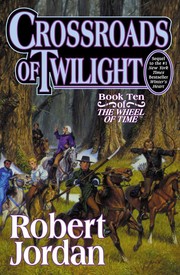
Crossroads of Twilight
2,264-word summary 10 min read 704 pages in the book
- First published
- 2003
- Publisher
- Tor Books
- Pages
- 704
- ISBN
- 9780312864590
- Series
- The Wheel of Time (#10)
Reading options
What's inside (8 sections)
I picked up Crossroads of Twilight braced for a beating. Anyone who reads the Wheel of Time hears the warnings about book ten long before reaching it. Slowest in the series, people say. The book where nothing happens. I finished Winter's Heart first, which closes with Rand and Nynaeve pulling off one of the largest feats of channeling in the history of the books, and then I opened this one expecting the fallout. That contrast turns out to be the entire point of the novel. This is the morning after the storm, told from half a dozen different windows, and your patience for it will decide how you feel about the whole thing.
The loudest event nobody understands
To follow any of this, you need the scene this book keeps circling. At the end of Winter's Heart, Rand takes Nynaeve to Shadar Logoth, the dead city soaked in its own evil, and uses the two giant sa'angreal statues called the Choedan Kal. With Nynaeve guiding him through the female half of the Source, he seizes the male half, saidin, and forces the Dark One's centuries-old taint out of it. It works. The act sends a pillar of Power into the sky that every channeler on the planet feels in her bones, and it breaks weather patterns and sets off visions and panics from Tar Valon to the Waste.
Almost every page of Crossroads of Twilight grows out of that moment. The prologue, "Glimmers of the Pattern," hops between dozens of viewpoints as the wave hits. Aes Sedai drop their teacups. The Asha'man stare east. Wise Ones dream. The Seanchan pause mid-campaign. Jordan clearly loved writing reactions, and here he gives himself thirty pages of nothing but. Some land better than others. My favorite strand follows Pevara and Seaine, two Aes Sedai secretly hunting the Black Ajah inside the Tower itself, who feel the wave and have to sit on their hands while their prey panics. The Sea Folk, the Asha'man, and the Forsaken all get their moment of vertigo too. The trick the book plays, which some readers love and others resent, is that most of its chapters run parallel to the end of the previous book instead of after it. People here are still making choices about a world that has already changed without them knowing it. Hence the title. Every thread leaves its people standing at a fork in the road: Egwene, Elayne, Perrin, Mat, even Rand himself.
Egwene tightens the rope around Tar Valon
My favorite thread belongs to Egwene, and it ends with the single hardest punch in the book. She commands the rebel Aes Sedai camp outside Tar Valon, a teenage Amyrlin holding together a coalition of proud older women who mostly think they should hold her job. The camp politics eat up a lot of pages. Romanda and Lelaine, the two Sitters who both wanted the staff, keep pulling Egwene between them. Siuan coaches her from the side. The Hall of the Tower in exile debates every step. What kept me reading was Egwene herself. She plays the rivals against each other without ever lying, pushes through reforms like accepting novices of any age, and slowly turns a protest camp into a government.
The siege itself has stalled, since the rebels lack the strength to storm the city and Elaida lacks the strength to break out. Egwene's answer is the harbor chain. Tar Valon's port traffic passes through a great chain across the river mouth, and Egwene hatches a plan to turn that chain into cuendillar, the unbreakable heartstone, sealing the city off from supply ships for good. The sequence where she and a small circle sneak to the harbor and pour the Power into iron links until they harden is genuine siege craft, the kind of clever use of magic rules this series does best.
Then it goes wrong. Someone talks, Elaida's sisters are waiting on the far bank, and the book's closing Egwene chapter lands like a door slamming. She is taken. After hundreds of pages watching her outthink everyone, seeing her gamble everything on one move and lose the throw left me staring at the wall. It is the one moment in the novel that feels like the old Jordan snap, and it sets up the Tower half of the next book beautifully.
Across the river, Elaida's chapters show why the siege matters. She is pouring the Tower's money into a gaudy new palace, alienating Sitters, leaning on Alviarin of the Black Ajah without grasping how deep the rot goes. The White Tower can no longer Travel easily, its numbers are split, and Elaida keeps mistaking obedience for loyalty. These scenes drag in places. Elaida repeating her own certainties gets old. But as a portrait of an institution rotting from the top while its rival gets sharper across the water, it works.
Elayne holds Caemlyn by her fingernails
Elayne's fight for Andor is the slowest thread and, for me, the second most rewarding once it clicks. She has claimed the Lion Throne, but a coalition of rival houses under Arymilla Marne is camped outside Caemlyn with an army, and Elayne's own forces are thin. Most of her chapters are council meetings, troop counts, grain stores, and diplomacy with nobles who smile while measuring her for a coffin. If political logistics bore you, this stretch will test you. I found it grew on me because the danger is concrete. One lost skirmish, one granary fire, and the city starves.
Two things raise the stakes. First, Elayne is pregnant with twins, Rand's children, a fact confirmed by Min's viewing and kept secret from nearly everyone. She fights queasiness through war councils and hides the truth because an heir changes every succession calculation in the room. Second, her own guard is compromised. Her captain, Doilin Mellar, is a Darkfriend plant, and his men are positioned exactly where they can do the most harm. Watching Elayne trust the wrong smile while the reader knows better is queasy in a good way.
Her support cast carries a lot. Birgitte Silverbow, the legendary hero pulled out of story into flesh, finally gets bonded as Elayne's Warder, and their bickering affection is the warmest relationship in the book. Birgitte says the blunt thing Elayne cannot afford to say, drinks too much, and still puts her body between Elayne and every blade. Dyelin, the older kinswoman who gave up her own claim, proves the steadiest head in the palace, the one counselor who tells Elayne when a plan is vanity instead of courage. Aviendha stands guard as sister and Maiden, watching her first-sister walk deeper into a trap she can feel but cannot name. And on the horizon lumbers the strangest piece on the board: the rulers of the Borderlands, marching a massive army south through Andor for reasons nobody in Caemlyn understands. Elayne ends the book still under siege, still counting spears. Nothing resolves. Everything tightens.
Perrin pays for Faile in pieces of himself
Perrin's chapters are the hardest to read and the ones I argued about most in my head. His wife Faile was taken by the Shaido Aiel several books back, and she remains a prisoner in their sprawling camp alongside Alliandre, the Queen of Ghealdan in hiding, and Morgase, the former Queen of Andor living under the alias Maighdin. The Shaido sections, seen through Faile's eyes, show Sevanna's arrogance curdling the whole camp, the Wise One Therava's cold discipline, and Galina, a supposed Aes Sedai captive who is really Black Ajah and scheming her way toward freedom. The one decent face among the captors is Rolan, a Mera'din warrior who treats the prisoners with rough kindness, and Faile's confused gratitude toward him is one of the book's most uncomfortable and human touches.
Outside the camp, Perrin is coming apart. He tortures Shaido prisoners for information about Faile, scene by scene, and Jordan does not look away or excuse it. For a hero defined early on by his gentle horror at his own strength, this is a fall, and the book knows it. His strange little army makes everything harder. Two Rivers bowmen who followed him from home march beside Aiel under Gaul, Berelain's mercenaries, and the swelling mob around the fanatic Masema, who preaches the Dragon while his followers rob and burn. Perrin has to feed this coalition, aim it, and keep it from turning on itself, all while the wolf inside him howls for him to run ahead alone. Relief comes from an unlikely direction. Tylee Khirgan, a Seanchan banner general, offers Perrin a deal: Seanchan soldiers and damane against the Shaido, in exchange for cooperation that sticks in every allied throat.
The famous chapter "The Forging of a Hammer" gives this thread its title-worthy beat. Perrin, who threw away his axe years ago in a rejection of killing and then kept picking violence back up anyway, has a new weapon forged and chooses the hammer, the tool of making, as his way forward. It is a touch on the nose as symbolism, and I still felt it. He ends the book committed to the Seanchan plan, ready to hit the Shaido camp in the next volume. Readers who hate this plot will tell you it has been circling for three books, and they are not wrong. But the moral cost being tallied here is real, and it pays off later.
Mat runs a circus and courts a conqueror
If Egwene supplies the shock and Perrin the darkness, Mat supplies the fun, and his chapters are why I would defend this book in an argument. He is still escaping Seanchan-held Ebou Dar with his companions hidden inside Valan Luca's traveling circus, and his great problem lumbers along in a wagon. Tuon, the Daughter of the Nine Moons and heir to the Seanchan throne, was effectively kidnapped during the escape, and Mat is keeping her as an honored guest while her guards watch him like a thief. He is also, per a prophecy he hates, fated to marry her. Watching fiction's most committed bachelor court an imperial princess who regards him as both amusing and beneath her is pure pleasure.
The courting scenes crackle because Tuon is Mat's equal in stubbornness and his opposite in everything else. She follows Seanchan custom the way Mat follows tavern custom, and neither will bend. Under the comedy sits the book's sharpest reveal about Seanchan power. Mat learns that Tuon herself is sul'dam, one of the women who leash channelers, which means she can be taught to channel. In Seanchan law that truth would destroy her. Mat sits on it, and the secret changes every scene they share.
Around the romance runs a heist plot. Mat is smuggling three Aes Sedai, Joline, Teslyn, and Edesina, past Seanchan patrols that collar every woman who can channel. Thom and Juilin scout and lie for him. Olver keeps nearly blowing their cover by being nine years old. Noal tells stories that may hide more than they show. And Aludra, the fireworks maker, is sitting on the recipe for gunpowder weapons she calls dragons, with Mat's money and protection buying her time to build them. Add Egeanin, the Seanchan officer turned fugitive now calling herself Leilwin, plus Domon and the innkeeper Setalle Anan with her own buried past, and the circus chapters have the crowded warmth the rest of the book lacks. This is Jordan writing an ensemble comedy with knives out, and I ate it up.
Rand rests while the world decides
And Rand, the Dragon Reborn, the man whose miracle caused all of this? He barely appears, and that absence is the most argued-about choice in the novel. He spends his few chapters at a manor in Tear, healing in body and fraying in mind, snapping at Cadsuane's lessons while Min, Nynaeve, Lan, and the terrifying ex-damane Alivia guard him. Cadsuane keeps pushing him toward humility and control, and Rand keeps refusing to be handled. Min's viewings hang over these scenes like weather, true and useless at once, and Nynaeve's frustration at being unable to Heal what ails him gives their shared chapters a sad edge. Those who find late-series Rand fascinating will savor the mood. Those waiting for him to act will fume.
What he does do matters for the future. He sends Davram Bashere, Logain, and Loial to treat with the Seanchan for a truce against the Shadow, and they return at the close with an answer that is half hope and half trap. The Seanchan will parley, but they demand the Dragon Reborn present himself before the Daughter of the Nine Moons. Readers of the Mat thread will catch the irony before Rand does. The two plots are sailing straight at each other, and neither man knows it.
So here is my honest verdict. This is the most static Wheel of Time novel, and the reputation is earned. Big stretches recap reactions to last book's climax, councils repeat, Perrin's rescue spins its wheels, and nearly every thread ends on a cliffhanger that Knife of Dreams has to resolve. I checked the page count more than once. But the highs are high. Egwene's harbor gambit and capture, Mat and Tuon's sparring, the hammer forging, and the prologue's continent-wide shudder all belong in any account of the series. Read it for those, forgive the sieges and councils, and keep the next book within reach. Book ten is the deep breath before the plunge, and the plunge is worth it.
FAQ
Do I need to read Winter's Heart before Crossroads of Twilight?
Yes. It closes with Rand and Nynaeve cleansing the male half of the Source, and most of Crossroads runs parallel to that event, showing each faction feeling the shock.
Why do readers call it the slowest Wheel of Time book?
Because it is mostly reactions instead of events. Councils, sieges, and marches fill the pages while nearly every plot ends on a cliffhanger resolved in Knife of Dreams.
Where does Crossroads of Twilight fall in the series?
It is book 10 of 14, published in 2003 by Tor Books between Winter's Heart and Knife of Dreams. The cited first-edition hardcover runs 704 pages.
Similar books
More from The Wheel of Time first, then related titles.
The Eye of the World
Farm boys flee Trollocs with Moiraine and Lan, split at Shadar Logoth, and trek to the Eye in the Blight.
2,454-word summary · 11 min read
The Great Hunt
Rand hunts the stolen Horn of Valere across the land while Egwene and Nynaeve face the Seanchan and the White Tower.
2,516-word summary · 11 min read
The Dragon Reborn
Rand flees to Tear to claim Callandor while Perrin, Mat, and Egwene are drawn after him to the fallen Stone.
2,644-word summary · 12 min read
The Shadow Rising
Rand the Dragon heads for Rhuidean with the Aiel, while Perrin defends the Two Rivers and Elayne and Nynaeve hunt trouble in Tanchico.
3,194-word summary · 14 min read
The Fires of Heaven
Rand leads the Aiel to war over Cairhien while the White Tower splits, in book five of The Wheel of Time.
2,287-word summary · 10 min read
Lord of Chaos
Rand offers amnesty to men who can channel while Egwene is raised Amyrlin in exile. Book six of The Wheel of Time builds toward rescue and reckoning at Dumai's…
2,255-word summary · 10 min read
A Crown of Swords
After Dumai's Wells, Rand holds Cairhien while Egwene besieges Tar Valon and Elayne and Nynaeve hunt relief in Ebou Dar. Book seven crowns kings and queens at…
2,828-word summary · 13 min read
The Path of Daggers
Rand wields Callandor against Seanchan while Elayne and Egwene maneuver.
2,492-word summary · 11 min read
Winter's Heart
Trapped in Far Madding without the Power, Rand baits his betrayers while Mat plots escape from Ebou Dar and Elayne fights for Caemlyn.
2,906-word summary · 13 min read
Knife of Dreams
Rand sets a Seanchan trap while Mat weds Tuon, Perrin storms Malden, Elayne takes Caemlyn, and Egwene defies Elaida.
2,988-word summary · 13 min read
The Gathering Storm
Rand hardens toward breaking the world while Egwene holds the White Tower from a cell in the twelfth Wheel of Time book.
2,176-word summary · 10 min read
Towers of Midnight
Perrin faces Whitecloak judgment and the wolf dream while Mat enters the Finns' tower for Moiraine.
2,099-word summary · 9 min read
A Memory of Light
Rand faces the Dark One at Shayol Ghul as all armies join the Last Battle.
2,165-word summary · 10 min read
Magician's Gambit
Garion and his companions cross haunted Maragor and the caves beneath Rak Cthol to recover the Orb of Aldur.
2,391-word summary · 11 min read

The Blinding Knife
Kip trains to join the Blackguard while the Prism hides his true identity, loses his colors, and fights a war against a rogue drafter who wants to birth a god.
2,049-word summary · 9 min read
Homeland
Drizzt Do'Urden is born into the cruel drow city of Menzoberranzan, where his father teaches him to fight and to doubt everything his family believes.
2,303-word summary · 10 min read
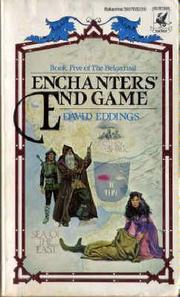
Enchanters' End Game
Garion marches toward Torak while Ce'Nedra leads the West's army in the final Belgariad volume, where prophecy and war meet.
2,557-word summary · 11 min read

The Queen of the Tearling
Nineteen-year-old Kelsea leaves the woods to take her throne, ends a shipment of human captives, and draws the Red Queen's revenge.
2,357-word summary · 10 min read
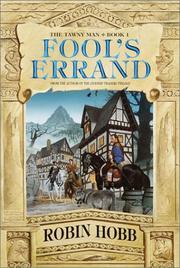
Fool's Errand
FitzChivalry Farseer has lived in exile for fifteen years. When Prince Dutiful vanishes before his betrothal, Fitz returns to Buckkeep to find him, with a wolf…
2,606-word summary · 12 min read
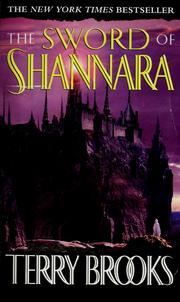
The Sword of Shannara
A young half-Elf and a company of companions set out to recover a magic sword before the Warlock Lord destroys the Four Lands.
2,474-word summary · 11 min read
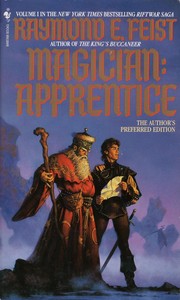
Magician: Apprentice
An orphan kitchen boy and a smith's son grow up in a frontier castle just as invaders from another world open a rift and begin a war that will change both of…
2,114-word summary · 9 min read
The Tower of the Swallow
Ciri flees as a bandit while Geralt gathers allies to find her.
2,580-word summary · 11 min read
The Emperor's Soul
Forger Shai must stamp a new soul for the dying emperor in 100 days.
2,313-word summary · 10 min read
Shadow's Edge
Kylar fakes death as a king killer while Vi hunts him for the Godking.
2,245-word summary · 10 min read
Pawn of Prophecy
Farm boy Garion learns sorcerers watch him as an old Orb wakes.
2,331-word summary · 10 min read
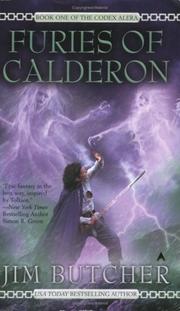
Furies of Calderon
Furyless Tavi defends Calderon Valley when the Marat return and lords scheme.
2,587-word summary · 11 min read

Stone of Tears
After the veil tears, Richard seeks training from the Sisters while Kahlan holds a fracturing Midlands and Zedd hunts the missing Stone.
2,483-word summary · 11 min read
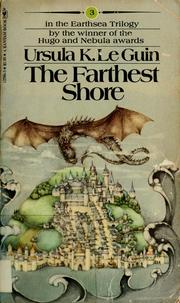
The Farthest Shore
Archmage Ged and Prince Arren sail to the far west to stop Cob, whose bid for endless life drains magic across Earthsea in Le Guin's sad 1972 third volume.
2,800-word summary · 12 min read
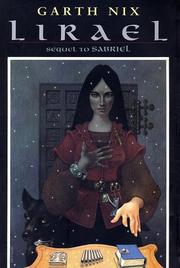
Lirael
A Sightless Clayr girl and a prince afraid of Death join the Dog and Mogget to stop necromancers from waking the Destroyer Orannis at the Red Lake while old…
2,692-word summary · 12 min read
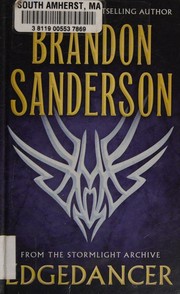
Edgedancer
Hungry street thief Lift and her vine-like friend Wyndle cross the Herald Nale in Tashikk when a child emperor shows Radiant signs and she refuses to step…
2,328-word summary · 10 min read