
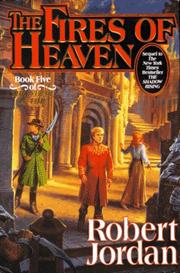
The Fires of Heaven
2,287-word summary 10 min read 704 pages in the book
- First published
- 1993
- Publisher
- Tor Books
- Pages
- 704
- ISBN
- 9780312854270
- Series
- The Wheel of Time (#5)
Reading options
What's inside (8 sections)
I came to The Fires of Heaven with real momentum. I had read the first four Wheel of Time books in a row, and the fourth one left the board scattered in the best way. This is book five of The Wheel of Time, first published in 1993 by Tor Books, and the hardcover runs 704 pages. It picks up with Rand al'Thor trying to act like a leader, the White Tower cracked in two, and two of the most stubborn young women in fantasy walking straight into trouble in the south.
The short version is that this is the book where choices start costing people. Rand wins a war and loses a friend. Nynaeve finally beats an enemy she has feared for four books. The Aes Sedai split goes from rumor to fact. And the ending has two of the strongest scenes Jordan ever wrote, which is why fans still argue about this one. It is long, baggy in the middle, and worth it.
Where the fifth book begins
When the book opens, Rand is in the Waste with the Aiel, learning how to be the Dragon Reborn instead of just being called it. He can seize the male half of the True Source now, though doing it still scares him, and he has a teacher he does not trust. The man calling himself the gleeman Jasin Natael is really Asmodean, one of the Forsaken, bound and cut off and stuck showing Rand how the Power works. Their lessons are tense and funny in a grim way. Rand needs the knowledge. He hates the source of it.
Around them, the Aiel are divided. Most chiefs and Wise Ones have accepted Rand as the one foretold. Couladin and his Shaido have not. Couladin claims the signs for himself, and his followers are raiding and burning, including an attack that leaves Rhuidean itself scarred. Mat Cauthon is there too, hungover and lucky and trying to dodge responsibility, with his memories of old battles leaking through at awkward moments. Egwene al'Vere is studying with the Wise Ones, learning to walk in Tel'aran'rhiod, the World of Dreams, where a wrong step can kill.
Down south, Nynaeve al'Meara and Elayne Trakand are on the run with the gleeman Thom Merrilin and the thief-catcher Juilin Sandar. They had a rough time in Tanchico, and they carry news that should frighten anyone who hears it. One of the Forsaken has been watching them. In the White Tower, the worst has happened offstage. Siuan Sanche has been pulled down and stilled, and Elaida now holds the Amyrlin Seat. Word of a split is spreading. Women who wore the same ring for years are choosing sides.
Perrin, notably, is nowhere in this book. Jordan leaves him out entirely, the first time one of the three young men from the Two Rivers sits out a volume. I missed him less than I expected, because the Rand and Nynaeve threads are so full, but his absence tells you how big the cast has grown.
Rand and the road to Cairhien
The heart of the book is Rand deciding to move. Couladin leads the Shaido out of the Waste toward Cairhien, a city already weak from civil war and hunger. Rand gathers the Aiel who follow him and marches after, through lands that have no food to spare for an army. Jordan is good at the logistics of this. Wells, dust, wagons, clan rivalries, Wise Ones arguing in tents while chiefs pretend they are not listening. Rand keeps trying to give orders the way a king would, and the Aiel keep teaching him that they follow a person, not a chair.
Mat steals every scene on this march. He complains about being dragged along, gambles with soldiers, and then saves the day with cold tactical sense he does not understand in himself. His luck is not a vague blessing here. It shows in dice, in cards, in the way arrows miss him. When the Shaido finally hit Cairhien, Mat ends up leading men into a fight he never wanted, and Jordan writes it as chaos with a clear map. You always know where the slope is, where the spears are, where Mat is swearing at himself for running toward the noise.
Aviendha matters more with every chapter. She is Aiel, strong and prickly, set by custom to watch Rand, and their friction has been building for two books. In this one the obligation and the attraction tangle past the point of jokes. There is a sequence in the snow, after a fight and a gateway gone wrong, that readers still talk about. I will keep it vague for new readers, but it changes both of them and sets terms neither can dodge later. Egwene watches all of this with a friend's worried eyes while carrying her own training load.
Moiraine hovers at the edge of these chapters, which is its own kind of dread if you have been paying attention. She knows more about the prophecies and prices than she tells Rand, and her letters and warnings pile up. Lan is quiet beside her, the way he always is before bad things. Asmodean keeps teaching, keeps scheming, keeps reminding you that a leashed enemy is still an enemy. The march to Cairhien feels like watching stones roll downhill. You can admire the speed and still fear the crash.
Egwene, Aviendha, and the Wise Ones
Egwene's thread is quieter and, to my taste, among the best writing in the book. The Wise Ones, Amys and Bair and Melaine, train her in the World of Dreams with a strictness that makes Tower lessons look gentle. She learns to enter the dream awake, to read its symbols, to meet the wolf brother's echoes, to face Moghedien without flinching. Her talent is real, and her teachers tell her so in the blunt way that stings and sticks.
What I like is that Egwene grows sideways here. She gains skill in the dream, and she also gains judgment about when to speak and when to yield. She starts seeing how the Aiel use dreams for truth and judgment, which clashes with how the Tower uses them for control. She argues with the Wise Ones and loses well, which is a skill. Her friendship with Aviendha deepens through shared guard duty over Rand, and the two of them trade lessons, spear talk for dream talk, in scenes that breathe between battles.
There is also strain. Egwene loves Rand like a brother and worries at the hardness settling into him. She sees him reach for the Power the way a tired man reaches for a cup, and she cannot stop him, only mark it. Her chapters ask a hard question for a young woman gaining power. What do you do when the people you love need truths they do not want. Jordan does not give her a clean answer, which feels honest.
Nynaeve and Elayne in the south
If Rand's chapters are war, Nynaeve and Elayne's chapters are a long chase with jokes and bruises. They travel with Thom and Juilin, posing as performers and various other covers, trying to reach safety while carrying word about the Tower and the Forsaken. Nynaeve is still blocked unless she is angry, which remains both her engine and her punchline. Elayne is still the calm one who can talk her way past guards, though her temper has an edge now.
Their dynamic is the comedy engine of the book, and it works because both women are competent. Nynaeve bullies innkeepers and then heals people who spit on her. Elayne smooths things over and then quietly picks a lock. Thom plays the old lion, gambling and flirting and watching doors. Juilin frets about honesty while breaking rules for them. The road scenes in Tarabon and Amadicia, with Whitecloaks and beggars and men with new pikes, give a ground-level view of a world sliding toward war that Rand's columns never show.
Then Moghedien finds them, and the tone turns cold. Moghedien is the sneaky one among the Forsaken, weaker in open battle but lethal in the shadows and in dreams. She has been dogging their steps, and Nynaeve has to face her twice over, once in the waking world and once in Tel'aran'rhiod. The showdown uses everything Nynaeve has learned, anger, healing, stubbornness, plus one clever trick with a woman's tool of the Power used as a trap. I cheered out loud when Nynaeve finally stopped running. It is the most earned win of her story so far, and Jordan lets her have it without softening what it costs her nerves.
Elayne gets her own growth in these pages. She takes risks with the Power that frighten Nynaeve, holds a shield past the point of sense, and starts acting like a queen who will one day ask people to die for her. The two of them end this thread headed toward Salidar, where runaway Aes Sedai are gathering, and their arrival will matter for the whole series.
The Tower divided
You do not see much of Tar Valon itself in this book, which is the point. The Tower's break happens at a distance, in letters and rumors and shocked faces. Elaida sits in the Tower with her chosen council, certain she can steer the world by pulling the right strings. Siuan, stilled and humbled, travels in disguise with Leane and the young woman Min, plus the disgraced warder Logain, toward the rebels gathering in Salidar. Gareth Bryne, the captain Siuan wronged, hunts them for reasons of his own that turn out to be more tangled than revenge.
Jordan handles this mostly through other people's reactions, and it works. A village hears the Amyrlin has changed and shrugs. An Aes Sedai hears it and goes pale. Nynaeve and Elayne hear competing versions and have to decide which women to trust. The split runs deeper than politics. It raises the question whether the Tower exists to serve the world or to rule it, and what happens to an order of powerful women when fear replaces debate.
I found these chapters slower than the battles, but they set up years of story. Salidar as an idea, a camp of rebels with no army and strong opinions, starts here. Siuan's fall from untouchable leader to a woman who must ask for help is painful and well drawn. Min's view of it all, practical and loyal and tired of visions no one believes, keeps the grief from turning grand. If you care about the series as a whole, do not skim this material. The war of the Tower will shape Rand's options as surely as any Forsaken.
Cairhien, Caemlyn, and what it costs
The last third moves fast. Outside Cairhien, Rand's Aiel catch Couladin's Shaido in the act of sacking a starving city, and Jordan stages one of his best battles. Spears on slopes, channeling used as artillery, Mat improvising with carnage he will later claim he never planned. Couladin meets his end at Mat's hands in single combat, and the Shaido break. Rand, trying to feed a ruined city and keep proud clans from each other's throats, learns that winning a battle can feel like inheriting a wound.
Then Rand goes to Caemlyn, and the book shifts into horror. Rahvin, one of the most dangerous of the Forsaken, has been ruling Andor from inside the palace, holding Queen Morgase under a weave that bends her will. Elayne's mother, proud and sharp, has been reduced to a smiling tool, and Rand walks into it half blind with rage. The fight between Rand and Rahvin crosses from the palace into the World of Dreams and back, with balefire burning threads out of the Pattern itself. Jordan writes balefire as mercy and crime at once. It undoes what Rahvin did, and it scars everything it touches.
At Cairhien, the other blow falls. Moiraine confronts Lanfear at the docks, by the twisted stone doorway the Aiel call a ter'angreal, and both of them go through and vanish. Lan feels the bond snap. Rand feels the loss like a wall giving way. Readers have argued for decades about what exactly happened in that passage, and Jordan leaves it stark on purpose. A small woman who carried the whole quest on her back walks into death to save people who never thanked her enough. I cried, and I rarely cry at fantasy battles.
So where does that leave the ledger. The strengths are plain. Two battles with clear geography and real stakes. A villain trap Nynaeve springs with brains instead of raw force. A love story that stops stalling. A death that lands. The weaknesses are plain too. The middle sags with travel, councils, and repeated arguments about Rand's pride. Some new names blur, Aiel and Cairhienin and Whitecloaks arriving faster than memory holds them. Nynaeve tugging her braid and Elayne sniffing at her for the hundredth time will test your patience. And Rand's romantic tangle, with three women tied to him by fate and feeling, starts here in ways that have aged awkwardly for some readers.
I still rate this among the top half of the series. It does what a fifth book should. It pays off old threads, Moiraine's warnings, Nynaeve's block, Mat's luck, while opening new ones, the Salidar rebels, the wounded Tower, the fate of Andor. Perrin's absence gives the book a leaner shape than it might have had. The pages are many, 704 in the hardcover, but the last hundred fly. If you have come this far with the Wheel, keep going through this fire. The road after Cairhien and Caemlyn never quite looks the same.
FAQ
Does Perrin appear in The Fires of Heaven?
He does not. Perrin sits out this volume entirely, the first time one of the three young men from the Two Rivers misses a book.
Who dies at the end of The Fires of Heaven?
Moiraine forces Lanfear through the twisted stone doorway at Cairhien and both vanish, leaving Lan's bond snapped. Rand also kills Rahvin with balefire at Caemlyn.
Do I need to read the earlier Wheel of Time books first?
Yes. It continues Rand, Egwene, Nynaeve, and Elayne across four books, plus a Tower split that only makes sense in order.
Similar books
More from The Wheel of Time first, then related titles.

The Eye of the World
Farm boys flee Trollocs with Moiraine and Lan, split at Shadar Logoth, and trek to the Eye in the Blight.
2,454-word summary · 11 min read
The Great Hunt
Rand hunts the stolen Horn of Valere across the land while Egwene and Nynaeve face the Seanchan and the White Tower.
2,516-word summary · 11 min read

The Dragon Reborn
Rand flees to Tear to claim Callandor while Perrin, Mat, and Egwene are drawn after him to the fallen Stone.
2,644-word summary · 12 min read
The Shadow Rising
Rand the Dragon heads for Rhuidean with the Aiel, while Perrin defends the Two Rivers and Elayne and Nynaeve hunt trouble in Tanchico.
3,194-word summary · 14 min read

Lord of Chaos
Rand offers amnesty to men who can channel while Egwene is raised Amyrlin in exile. Book six of The Wheel of Time builds toward rescue and reckoning at Dumai's…
2,255-word summary · 10 min read
A Crown of Swords
After Dumai's Wells, Rand holds Cairhien while Egwene besieges Tar Valon and Elayne and Nynaeve hunt relief in Ebou Dar. Book seven crowns kings and queens at…
2,828-word summary · 13 min read
The Path of Daggers
Rand wields Callandor against Seanchan while Elayne and Egwene maneuver.
2,492-word summary · 11 min read
Winter's Heart
Trapped in Far Madding without the Power, Rand baits his betrayers while Mat plots escape from Ebou Dar and Elayne fights for Caemlyn.
2,906-word summary · 13 min read
Crossroads of Twilight
Rand cleansed saidin and the whole world felt it. Book ten follows each faction as they react, stall, and choose sides.
2,264-word summary · 10 min read
Knife of Dreams
Rand sets a Seanchan trap while Mat weds Tuon, Perrin storms Malden, Elayne takes Caemlyn, and Egwene defies Elaida.
2,988-word summary · 13 min read
The Gathering Storm
Rand hardens toward breaking the world while Egwene holds the White Tower from a cell in the twelfth Wheel of Time book.
2,176-word summary · 10 min read
Towers of Midnight
Perrin faces Whitecloak judgment and the wolf dream while Mat enters the Finns' tower for Moiraine.
2,099-word summary · 9 min read
A Memory of Light
Rand faces the Dark One at Shayol Ghul as all armies join the Last Battle.
2,165-word summary · 10 min read

Magician's Gambit
Garion and his companions cross haunted Maragor and the caves beneath Rak Cthol to recover the Orb of Aldur.
2,391-word summary · 11 min read
Lirael
A Sightless Clayr girl and a prince afraid of Death join the Dog and Mogget to stop necromancers from waking the Destroyer Orannis at the Red Lake while old…
2,692-word summary · 12 min read
The Wise Man's Fear
Kvothe leaves the University to serve Maer Alveron in Vintas, then survives Felurian, the Adem and a trial back home.
2,788-word summary · 12 min read

The Blinding Knife
Kip trains to join the Blackguard while the Prism hides his true identity, loses his colors, and fights a war against a rogue drafter who wants to birth a god.
2,049-word summary · 9 min read

Inkdeath
The final Inkworld novel sends Mo into the land of the dead, leaves Meggie choosing between two boys, and ends the Adderhead's immortality with three written…
2,062-word summary · 9 min read

Dawnshard
Rysn sails toward forbidden Akinah to save her dying larkin and finds a Dawnshard guarded by the Sleepless.
3,229-word summary · 14 min read
The Field Guide
Three siblings move into a creepy Maine estate, anger a brownie, and find a forbidden guide to the fairy world in the first Spiderwick book.
2,033-word summary · 9 min read
The Secret of the Nagas
Shiva hunts the Naga who attacked Sati, discovers her hidden twin sister and lost son, and follows the trail to the Naga capital of Panchavati.
2,442-word summary · 11 min read
Secrets of the Dragon Sanctuary
Kendra is replaced by a plant copy and held by the Society, while Seth steals a unicorn horn so the family can enter a dragon sanctuary.
2,590-word summary · 12 min read
Lioness Rampant
Alanna searches for the Dominion Jewel with the Shang Dragon, then returns to Tortall to face Duke Roger at Jonathan's coronation.
2,478-word summary · 11 min read
Witches Abroad
Three Lancre witches fly to Genua to stop a fairy godmother from forcing a servant girl into a storybook marriage, and find a city arranged around a happy…
2,651-word summary · 12 min read
The Time Paradox
When his mother falls ill with a fairy disease, Artemis Fowl travels back in time to find the extinct lemur that can cure her and confronts his younger self.
2,601-word summary · 12 min read

The Golem's Eye
Two years after The Amulet of Samarkand, Nathaniel is a rising bureaucrat, Bartimaeus is his unwilling servant again, and something made of clay is tearing…
2,299-word summary · 10 min read
Homeland
Drizzt Do'Urden is born into the cruel drow city of Menzoberranzan, where his father teaches him to fight and to doubt everything his family believes.
2,303-word summary · 10 min read
Enchanters' End Game
Garion marches toward Torak while Ce'Nedra leads the West's army in the final Belgariad volume, where prophecy and war meet.
2,557-word summary · 11 min read

Nettle & Bone
Marra, a princess in a convent, leaves to save her abused sister, but first she must finish three impossible tasks: a bone dog, a nettle cloak, moonlight in a…
2,061-word summary · 9 min read
Grip of the Shadow Plague
A plague turns Fablehaven's creatures of light into shadows while Kendra hunts an artifact in Arizona and Seth races to find the cause.
2,131-word summary · 9 min read