
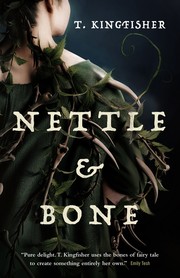
Nettle & Bone
2,061-word summary 9 min read 320 pages in the book
- First published
- 2022
- Publisher
- Tor Books
- Pages
- 320
- ISBN
- 9781250244031
Reading options
What's inside (9 sections)
A friend lent me this book on a rainy Sunday with a warning: it is very funny, and it is also very sad, and you will keep waiting for it to pick one. I read it in two sittings and spent the second one grinning at a dog made of wire and bone.
T. Kingfisher is the pen name of Ursula Vernon, and Nettle & Bone is her 2022 novel, published by Tor Books in the United States and by Titan Books in the UK a year later. It won the 2023 Hugo Award for Best Novel, and it was a finalist for the Nebula and for the Locus. If you have been meaning to try her and assumed that a Hugo winner would be solemn and world-building-heavy, this is the book to start with, because the jokes come first and the heartbreak arrives later without asking permission.
The first page is a charnel pit
The novel opens with Marra sitting at the edge of a pit full of bones, wrapping lengths of bone in wire with bleeding, inflamed fingers. The place around her is a wasteland where people have turned cannibal, which is the least cheerful start imaginable for a story about a princess.
Then the book goes backwards, and stays going backwards and forwards from there. Marra narrates, and the narrative swings between the quest in progress and the childhood and convent years that explain why she is in a wasteland in the first place. The arrangement puts you inside the action without giving you the reasons yet, and it works better than it has any right to. Chapter one is also the most gruesome thing in the book, and I know at least one reader who stopped there and came back to it later.
Three daughters and one prince
Marra is the third-born daughter of a small country called the Harbor Kingdom, which owns the only deep harbor between the much larger Northern Kingdom to the north and the Southern Kingdom to the south. Her elder sister Damia is handed to Prince Vorling of the North as a political marriage. Damia is pregnant within months and dead within months after that.
Her second sister Kania marries the widowed prince. Marra, the leftover, is sent to a convent, which she initially enjoys. She is good with her hands, she likes embroidery, she is happy mucking out goat stalls, and she learns birth control from the Sister Apothecary while helping with birthing visits around the countryside, where she observes that all women look the same in labour regardless of what they are wearing.
Then Kania's baby dies, and at the funeral Kania tells Marra what is really happening in the northern palace. Marra confronts her mother and learns that the queen already knows, and that nothing can be done until Kania produces a son, because a son is what makes the marriage worth keeping. Marra understands the arithmetic. She also understands that if Kania dies, she is the next bride.
That is the engine of the book. Nobody in the story thinks Marra will do anything. Her own family has calculated that the best outcome is to endure.
Three tasks from a dust-wife
Marra goes looking for magic and finds a dust-wife who sends her to a better one. Dust-wives, she learns, are gravediggers who talk to the dead, and the powerful one lives in the necropolis of the Southern Kingdom in a cottage at the edge of the walls. The old woman has a brown hen with a demon in it, and Marra is warned to keep her distance from the bird.
The dust-wife sets three tasks, and they are the title of the book. Marra has to spin thread from nettle wool and sew it into a cloak with owl cloth, which stings her hands until she sacrifices her left hand to the work and keeps the right one for the delicate stitching. She has to build a dog out of bones and wire, which is what we see in the first chapter. And she has to catch moonlight in a clay jar.
The tasks are not the point of the book, though the jacket sells them that way. The point is that Marra keeps going. She takes the wool, the wire and the dog, and the dust-wife, who had hoped she would quit, changes her tune and joins her. Marra names the dog Bonedog. She finds a skull that feels warm and kind, and when the dog comes alive it immediately runs off, which is both funny and a decent description of the whole quest.
Two of the three tasks are honest labour and the third turns out to arrive ready-made, which suits a story where Marra is a maker before she is anything else. The book would collapse if she were not.
South to the goblin market
On the road they travel with the dust-wife, whom Marra starts calling Lady Fox, and the chicken, and Bonedog, who has to be disguised with a glamour bought later on. The dog rules out main roads and coaches, which makes the journey slow, and much of the book's middle section is that journey: a barn here, a farmhouse there, a fight avoided, a cup of water taken from a stream.
They cross a river by talking to a drowned boy who swims upstream to guide them, and reach a goblin market built out of jeweled pavilions next to mud huts, some of them bird's nests hung upside down. Marra's first rule, taught to her by Lady Fox, is to refuse anything until you know the price. The price of what they need is two weeks of the vendor's life. They also buy a Toothdancer, a stork-like creature in a black suit who plays a whistle and makes Marra's teeth jump out of her own mouth one at a time, and the scene is one of the most efficient ten pages in modern fantasy.
In that market they meet Fenris. He is a knight who killed the father of a boy he had mentored, after that father killed the boy. Understanding that his clan was honour-bound to kill him in return, and that his death would then oblige them in turn, he walked into a fairy fort and fell asleep so the fairies would take him. He is a man trying to die correctly. He is also very funny about it, and Marra, who had assumed heroes were straightforward, has no idea what to do with him.
Fenris takes on the heavy work, chopping wood for supper and lodging, and Marra ends up accustomed to someone else carrying the firewood. The attraction builds slowly and sideways, through shared complaints about the road, and the romance stays quiet for most of the book.
Agnes, who cannot stop cursing
Marra's fairy godmother Agnes lives on a small farm and has spent her career being far better at curses than at blessings. She will bless a child with good health and nothing else, because that is the one gift that cannot go wrong. When the group needs a guide into the city, Agnes curses a chick to lead them instead of blessing it, and the dust-wife scolds her for holding back. Agnes says she would rather be decent than be the powerful one.
Agnes also brings them to the house of Vorling's godmother, an ancient woman who has been bound to the royal family by a curse laid down by a long-dead king, and who survives by burning the king's life to keep her own going. Marra notices that the woven panels on that godmother's walls are stitched in a strange, inconsistent base stitch, and later understands that they are a map of the maze of catacombs under the palace.
The most uncomfortable episode in the book involves Miss Margaret, a woman who keeps an animated puppet on her shoulder. The puppet has a cord around her throat and yanks it when she disobeys. Marra tries to free her and Margaret refuses, because the thing on her shoulder is the centre of her life and she would rather keep it. Fenris explains that you cannot force people to take help. It reads as a fable about the northern palace long before the story says so out loud.
The catacombs and the christening
To get under the palace, Fenris takes work at a quarry, where the stone is moved by men and the dead are everywhere. Through the quarry they enter the catacombs, and Lady Fox lights the way with the jar of captured moonlight. Inside, the dust-wife questions the dead until they find the king who laid the curse, and Marra can set the old godmother free so that she can finally die.
Meanwhile Kania goes into labor early. Agnes gets the group into the palace for the christening as a godmother, and there she takes on the role of family godmother to the new boy and curses him to grow up fatherless. Fenris kills Vorling. Kania takes the throne as queen regent. Marra and her companions say their goodbyes, and Marra and Fenris ride off together, with Marra rebuilding the bone dog as they go, which is the last image in the book.
For all the blood, the ending is hopeful. Nobody gets a fairy tale ending. Kania has to rule a country that treated her as property, Marra has to leave the only family she has, and Marra's mother is never named and never given an excuse. The world is slightly less cruel at the end than at the beginning, which is the victory the book offers.
Why it won a Hugo, and who it will not please
The award landed because the book does something hard: it treats domestic abuse seriously while remaining funny in the same breath. Publishers Weekly gave it a starred review for handling violence in the family with compassion and care, and readers have broadly agreed that the tone holds, that the jokes never cancel the horror. A review in Strange Horizons put it best, arguing that the thing nobody tells you about trauma is that it is hilarious, and that the novel holds everything in tension without letting the complexity collapse into something grim.
That same trick is the flaw for some readers. The tonal whiplash between the chicken and the funeral unsettles people who want the book to commit to one register, and there are a fair number of readers who found the first chapter grim enough to put the novel down. Others have said the opposite and found the warmth worth it.
The other recurring complaint is about Marra herself. One reviewer liked the book enormously but found her thin, pointing out that the dust-wife, Agnes and Fenris are all more vivid than the protagonist, and that Marra's family is largely a cipher. That is a fair hit. The character who drives the plot is also the least interesting person in it, and the book would be stronger with a narrator who occasionally surprised us.
It also does not subvert one particular fairy tale. The jacket makes you expect a Bluebeard, and what you get instead is a book that borrows from several, including Bluebeard, The Six Swans and the Goblin Market, without landing a clean demolition of any of them. Caitlyn Paxson at NPR noticed the same borrowing and treated it as a strength, arguing that a tour of a haunted world with no Gothed-up Snow White in it is a good trade.
So who is it for? Anyone who likes fairy tales and can stand them being turned over and looked at from underneath, and anyone who wants a quest novel where the quest is mostly about people refusing to be reasonable. It is not a page-turner in the sense of action, and there is no magic system to study, just a jar of moonlight and a chicken. If you want the same joke sustained for 320 pages without the grief, read something else. If you are willing to have your funny book ambush you with a baby who does not survive and a sister who has been beaten for years, this one is worth the trip.
FAQ
What are the three tasks Marra has to finish?
A cloak woven from nettle thread, a dog built from bones and wire, and moonlight caught in a clay jar. A dust-wife sets them, and finishing them earns Marra the means to kill Prince Vorling.
Does Nettle & Bone retell one specific fairy tale?
No single one. It draws on Bluebeard, The Six Swans and the Goblin Market without rebuilding any of them closely, which some readers loved and others found less satisfying.
Who writes Nettle & Bone, and did it win anything?
T. Kingfisher is the pen name of Ursula Vernon, who also writes horror and children's books. Nettle & Bone won the 2023 Hugo Award for Best Novel.
Similar books
Witches Abroad
Three Lancre witches fly to Genua to stop a fairy godmother from forcing a servant girl into a storybook marriage, and find a city arranged around a happy…
2,651-word summary · 12 min read
Dealing with Dragons
A princess who hates embroidery runs away to become the cook and librarian for a dragon, then has to outthink wizards, knights, and a plot against the dragon…
2,563-word summary · 11 min read
Homeland
Drizzt Do'Urden is born into the cruel drow city of Menzoberranzan, where his father teaches him to fight and to doubt everything his family believes.
2,303-word summary · 10 min read
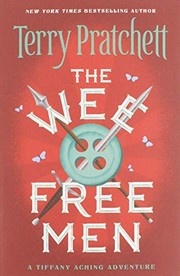
The Wee Free Men
Nine-year-old Tiffany Aching teams with the Nac Mac Feegle to rescue her brother from the Fairy Queen.
2,600-word summary · 12 min read
Wyrd Sisters
Three Lancre witches rescue a murdered king's baby, hide Lancre's future, and trap a guilty duke with a play in Ankh-Morpork.
3,085-word summary · 14 min read
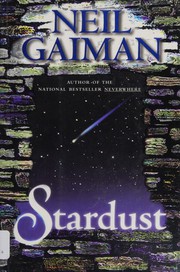
Stardust
Tristran Thorn climbs over the wall of Wall to fetch a fallen star and finds Yvaine, witches, and princes hunting her.
2,490-word summary · 11 min read
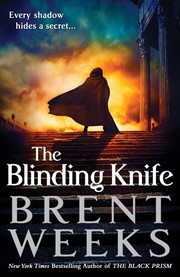
The Blinding Knife
Kip trains to join the Blackguard while the Prism hides his true identity, loses his colors, and fights a war against a rogue drafter who wants to birth a god.
2,049-word summary · 9 min read
Strega Nona
A village witch doctor hires a boy who does not listen, and the pasta pot he was told not to touch floods Calabria with noodles he cannot stop.
2,587-word summary · 11 min read

Inkdeath
The final Inkworld novel sends Mo into the land of the dead, leaves Meggie choosing between two boys, and ends the Adderhead's immortality with three written…
2,062-word summary · 9 min read
Hounded
A two-thousand-year-old druid runs a bookshop in Arizona, hides from an Irish god who wants his sword back, and talks to his dog.
2,159-word summary · 10 min read
Dawnshard
Rysn sails toward forbidden Akinah to save her dying larkin and finds a Dawnshard guarded by the Sleepless.
3,229-word summary · 14 min read
Bone, Vol. 1: Out from Boneville
Three cartoon cousins are run out of Boneville, separated by locusts, and dropped into a valley where rat creatures and an old grudge are waiting.
2,155-word summary · 10 min read

The Field Guide
Three siblings move into a creepy Maine estate, anger a brownie, and find a forbidden guide to the fairy world in the first Spiderwick book.
2,033-word summary · 9 min read
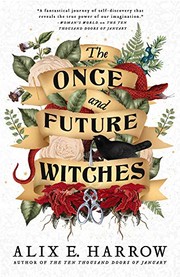
The Once and Future Witches
Three estranged sisters bring witchcraft back to an 1893 city where magic hides in nursery rhymes and the fight for the vote is also a fight for power.
2,132-word summary · 9 min read
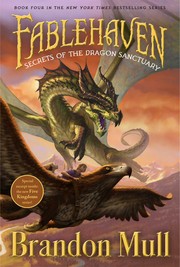
Secrets of the Dragon Sanctuary
Kendra is replaced by a plant copy and held by the Society, while Seth steals a unicorn horn so the family can enter a dragon sanctuary.
2,590-word summary · 12 min read

Lioness Rampant
Alanna searches for the Dominion Jewel with the Shang Dragon, then returns to Tortall to face Duke Roger at Jonathan's coronation.
2,478-word summary · 11 min read
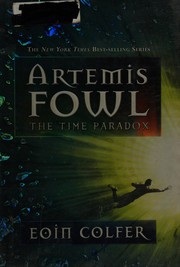
The Time Paradox
When his mother falls ill with a fairy disease, Artemis Fowl travels back in time to find the extinct lemur that can cure her and confronts his younger self.
2,601-word summary · 12 min read
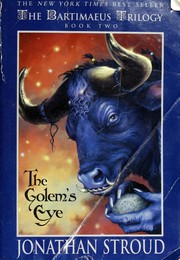
The Golem's Eye
Two years after The Amulet of Samarkand, Nathaniel is a rising bureaucrat, Bartimaeus is his unwilling servant again, and something made of clay is tearing…
2,299-word summary · 10 min read
Magician's Gambit
Garion and his companions cross haunted Maragor and the caves beneath Rak Cthol to recover the Orb of Aldur.
2,391-word summary · 11 min read
Enchanters' End Game
Garion marches toward Torak while Ce'Nedra leads the West's army in the final Belgariad volume, where prophecy and war meet.
2,557-word summary · 11 min read
Grip of the Shadow Plague
A plague turns Fablehaven's creatures of light into shadows while Kendra hunts an artifact in Arizona and Seth races to find the cause.
2,131-word summary · 9 min read

The Rose & the Dagger
Shahrzad is pulled from her Caliph husband and left in a desert camp of rebels, needing to break his curse and end a war before it ends her.
2,520-word summary · 11 min read
The Queen of the Tearling
Nineteen-year-old Kelsea leaves the woods to take her throne, ends a shipment of human captives, and draws the Red Queen's revenge.
2,357-word summary · 10 min read
Hogfather
Death fills in for a missing Father Christmas, Susan Sto Helit hunts the Hogfather, and the twentieth Discworld novel turns Santa into a management problem.
2,871-word summary · 13 min read
Fool's Errand
FitzChivalry Farseer has lived in exile for fifteen years. When Prince Dutiful vanishes before his betrothal, Fitz returns to Buckkeep to find him, with a wolf…
2,606-word summary · 12 min read

We Hunt the Flame
In a fractured Arabia-inspired world, a disguised huntress and a prince-assassin race to find a magic-restoring book and confront an ancient evil.
2,195-word summary · 10 min read
The Sword of Shannara
A young half-Elf and a company of companions set out to recover a magic sword before the Warlock Lord destroys the Four Lands.
2,474-word summary · 11 min read
The Magician
Sophie and Josh flee to Paris with Nicholas Flamel, where John Dee, Machiavelli, and an awakened god close in on the missing pages of the Codex.
2,162-word summary · 10 min read
The Hazel Wood
Alice Proserpine has spent her life running from bad luck. When her mother vanishes, she follows a trail of fairy-tale clues to her grandmother's estate and…
2,064-word summary · 9 min read
Magician: Apprentice
An orphan kitchen boy and a smith's son grow up in a frontier castle just as invaders from another world open a rift and begin a war that will change both of…
2,114-word summary · 9 min read