
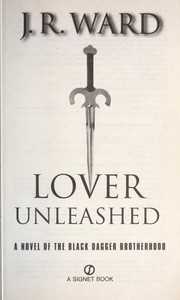
Lover Unleashed
2,374-word summary 11 min read 548 pages in the book
- First published
- 2011
- Publisher
- Signet
- Pages
- 548
- ISBN
- 9780451235114
- Series
- Black Dagger Brotherhood (#9)
Reading options
What's inside (10 sections)
- A surgeon who had stopped sleeping
- Surgery under a borrowed name
- A glow, a horse, and the long work of walking
- Vishous breaks, and Butch breaks him open
- Xcor, Throe, and the Band of Bastards
- The human thread and a surgeon who is not entirely human
- What the ending gives you
- A note on reading it in order
- Key takeaways
- FAQ
The ninth book of the Black Dagger Brotherhood opens with a racehorse. That is the first thing worth knowing about it, and it is more than a gimmick. While the vampires are gearing up, J.R. Ward puts us at a racetrack with Manuel Manello, a surgeon whose racehorse has just shattered a front leg and whose vet has told him to put her down. Manello says no and operates on the horse anyway, because in the year since Jane died he has lost his taste for letting go of things.
Everything that follows is about refusing to let go.
The book was published by Signet in March 2011, and it contains explicit sex, graphic violence and medical detail. It is adult paranormal romance in the plainest sense, and readers who want a light vampire serial should know that before they start.
A surgeon who had stopped sleeping
Manello is chief of surgery at St. Francis Hospital in Caldwell, New York, and he is a wreck. He drinks. He keeps going to a cemetery to sit at Jane's grave, and he has not accepted that the woman he loved, a doctor named Jane who was married to Vishous, died and came back as something other than alive.
When Jane calls him on a hospital page, she hides behind the name Hannah Whit. She needs a surgeon who can operate on a vampire and keep his mouth shut, and she has chosen the one man in Caldwell who has already lost a year to grief and will not ask the first question.
She finds him at the grave, which is how he learns she is calling from a house full of armed men with a compound and a security detail. He assumes a government operation. By the time he walks into that house and meets the woman on the table, he has already seen enough to be terrified and already likes her enough to stay.
That woman is Payne. She is Vishous's twin sister, which neither of them knew for most of their lives, and she is the daughter of the Scribe Virgin, the vampire deity who kept her locked away for centuries on the Far Side. Payne is a fighter of the first rank and a woman who has never had a life outside a prison of one kind or another. By the time she reaches Caldwell she has a broken spine, a grudge going back to 1761, and a brother who has just learned that he is responsible for the damage done to her.
Surgery under a borrowed name
The hospital sequence is the best-plotted stretch of the book. Payne cannot be admitted as herself, so Manello invents a patient: an Olympic equestrian from Europe, royalty, financially anonymous, with three bodyguards and a surgeon on record as responsible for her privacy. The lies are funnier than they are convincing, and Manello's growing unease is funny in a way that foreshadows the danger.
Then he looks at the scan. The healing already happening in her spine is healing that would take a human body weeks. He looks at Vishous, who has six-chambered heart, and he understands that none of this is a secret agency. He also understands that he is going to be wiped afterward, and he asks Jane never to contact him again.
The surgery itself works. Her vertebrae are fixed and her spinal cord is intact. What does not work is everything else. She cannot feel her legs. She is drugged and panicking, and she tells Jane flatly that she cannot be exposed to the sun, heals fast and has to feed before she can be moved. When Jane starts to leave, Payne braids Manello's business card into her hair so that nobody can find it and take it away from her.
It is the first thing she does that is not about survival, and it tells you where her attention is.
A glow, a horse, and the long work of walking
Payne's recovery takes most of the middle of the book, and it takes two forms. The physical form is punishing and slow. She has spent a week in a clinic room doing nothing, and Vishous eventually takes Manello to see a video of a man in a wheelchair who runs marathons and has a wife and a child, because a paralyzed fighter needs to see a paralyzed man who did not stay in the chair. That scene changes her.
The other form is the glow. Payne radiates light when her body is doing something extraordinary, and Manello and Jane piece it together from security footage: she lights up when she is being touched, when she is healing, when she is being alive at full power. And she does heal. When Glory's leg is failing, Payne glows and the leg knits, and the effort drains her so badly that Manello has to carry her out to the car.
The two of them orbit each other for a long time before anything happens. Payne is drawn to a man who treats her as a patient and a woman, not as a relic of the old world. Manello is drawn to someone whose body interests him professionally and whose mind interests him entirely. He also knows the arithmetic is bad. She is a deity's daughter who will live for centuries, and he is human, and he will watch her for one lifetime only. He tells her so, more than once, and it is the thing that finally pushes her away.
Vishous breaks, and Butch breaks him open
If you come to this series for the couple at the center, be warned: the middle belongs to Vishous.
Payne's arrival detonates him. He is the cold one, the silent one, the one who copes by going to his penthouse and hurting himself with a cat-o-nine-tails and hot wax, and now there is a twin sister, an injured twin sister, and a male doctor who is exactly the kind of man he has always hated. He slams Manello into a wall. He tells Payne that Manello is nothing but a lesser waiting to be turned. He lies to Jane about his recent behavior, and the lie includes blood and wax on his leathers that she finds on his clothes.
Jane starts packing a bag. Butch, his bonded male, tries to hold him together and then takes over, because Vishous asks to be broken open and Butch is the only one who can do it. What follows is one of the book's most discussed scenes, and it is not a romance scene. It is a controlled, staged ordeal in which a man is put through the worst thing that happened to him in the Bloodletter's camp, and it ends with Vishous weeping and finally telling Jane the truth.
They make up. He announces that he will formally mate her.
And the emotional traffic of the last third of the book belongs to other people again, which brings us to the third act.
Xcor, Throe, and the Band of Bastards
The threat in this book has a name and an address. Xcor, who was raised as the son of the Bloodletter, has inherited a camp of killers called the Band of Bastards, and he wants Wrath's throne. His plan is political: he writes to the glymera families who disowned him, stirs up outrage about the Lessening Society and the king's refusal to convene the Council, and he leaves mutilated lessers in an alley as a calling card so that the Brotherhood will come looking.
With him is Throe, who serves out of loyalty and debt but hunts humans as well as vampires, and who carries a private grief about a sister killed centuries ago. Their arrival in Caldwell and their attempt to recruit the Founding Families are the political spine of the book.
Payne runs into them by accident, in the park, after she has walked out on Manello. They take her. And in their headquarters she tells Xcor that he is not the Bloodletter's son, that Vishous was the Bloodletter's only son, and that she is the daughter who killed him in 1761 in revenge for what he did to her brother. She proves it by glowing and melting her cuffs. The revelation wrecks Xcor, because the man he thought was his father cared enough to name him while his own mother did not. Payne had the right to kill the Bloodletter and uses it, and Xcor lets her go.
The human thread and a surgeon who is not entirely human
Running parallel to all of this is a serial killer in Caldwell and the two detectives chasing him, de la Cruz and Veck. The killer murders women in ways that give the police profilers nothing. De la Cruz notices that Veck is wound tight, and there is a reason, though Veck does not know it yet: his father was Robert Bluff, a doctor who died in 1983, and Butch O'Neal is Bluff's lookalike. That discovery opens a door Manello does not want opened, because Manello is Bluff's son, which makes him part vampire and kin to Wrath.
The other human thread is the one about what Manello is becoming. He notices that he looks younger, that his body is reversing age, and that it is happening because of Payne and her glow. He also finds out that the hospital wants him on leave, that his career and his standing with the Brotherhood cannot both survive, and that he is thinking about the wrong thing entirely, which is whether his mother will notice that he is not getting older. He resigns as chief of surgery and starts packing.
What I found interesting in that material is the fear under it. Manello is not frightened of the vampires.
He is frightened of being changed by love, and he takes it out on the one person who cannot fight back.
The rest of the book fills in the other seats. Qhuinn is starving himself and drinking himself stupid over Blaylock, with Layla trying to feed him and Saxton quietly explaining that Blaylock loves him but has never been the love of his life. John Matthew pulls Qhuinn out of it and later has a vision of a daughter. The Leighs and John and every other pair in the mansion get a paragraph or two. If you read the series for its sprawl, this is the book where the sprawl peaks.
What the ending gives you
Payne is shot by a lesser during her escape and the Brotherhood assumes the worst. She comes back, and the book turns into what it promised: Manello and Payne together, with Manello's fears about aging set aside, and with the two of them facing Wrath. The king is not enthusiastic about a human complication while the Lessening Society is resurgent, and he says no at first. Vishous argues for it on the grounds that his own sister fell for a human within an hour of meeting him.
Payne goes to Xcor's people to fight. She comes back alive. Manello moves to the mansion and plans to work with Jane and with Havers. Payne is given proper gear and a place with the Brotherhood, which means the woman who was locked up for most of her life is going to be a fighter in a war instead of a prisoner in a room. For a wedding gift, Manello brings her Glory, who has healed, and Payne rides her at a gallop across the estate while Vishous watches and says he had seen it before it happened.
It is a good ending. It is also an unfinished one, which is the series' habit.
Xcor is still scheming, Throe's loyalty is still unresolved, Veck's story is left hanging with him calling 911 over a body he thinks he killed, and Qhuinn still has not said anything to Blaylock.
The honest verdict on the book is that it is too full. Four plot lines run at once, and the romance at the center of the cover is repeatedly interrupted by a man's self-destruction, a politician's schemes and a police procedural. The prose does the usual Black Dagger trick of dropping the vowels out of certain words, which was a joke in the first book and is just noise by the ninth. The serial killer is introduced, given a name and a backstory, and then abandoned. The healing glow is a convenient cure that also happens to be the sex trigger.
What survives all that is the couple, and the couple is genuinely good. Payne is one of the more interesting women in the series, funny and fierce and specific, and Manello is the rare vampire-romance hero who has a profession he is good at and a mother who calls him on Sundays. The friendship between Payne and Jane, and Jane's awkwardness around the fact that she once loved the man her mate is now competing for, is handled with more care than the BDSM material that surrounds it, and readers who care about the emotional realism will find plenty of it in the quieter scenes.
A note on reading it in order
Lover Unleashed is book nine, and it assumes eight. Wrath's blindness, the mansion, the glymera, the Lessers, the Scribe Virgin's arrangement with the Brothers, and the fact that Jane is a ghost are all assumed knowledge. New readers can follow the main plot, because Ward repeats what matters, but the emotional weight of a vampire fighting his own history only lands if you have watched him build it.
The content warning is worth repeating because it is easy to be vague about. This book contains explicit sex scenes, including one that functions as a cure, scenes of self-harm and staged torture that are not decoration, a serial killer who mutilates women, and a whipping scene that is written as a scene of love between two men who are mated to other people. Readers have complained about that last one more than any other element of the series, and the complaint is fair. Read the book for Payne and Manello, and expect to be interrupted.
FAQ
Who are Payne and Manny in Lover Unleashed?
Payne is Vishous's twin sister and the Scribe Virgin's daughter, a fighter who escapes the Far Side and arrives in Caldwell with a broken spine. Manny Manello is the human surgeon Jane recruits to operate on her at St. Francis Hospital.
Does Lover Unleashed contain explicit sex scenes?
Yes, it contains explicit sex scenes, graphic violence, a serial killer subplot and a staged torture scene that some readers dislike. It is adult paranormal romance, not a light vampire serial.
Is Lover Unleashed book nine in the series?
Yes, it is the ninth novel in the Black Dagger Brotherhood series and it follows Lover Mine. It was published by Signet in 2011 in a 548-page edition.
Similar books
More from Black Dagger Brotherhood first, then related titles.

Dark Lover
Blind King Wrath turns to cop Butch to protect Beth as the Lessers war closes in.
2,442-word summary · 11 min read

Lover Eternal
Cursed fighter Rhage must control his beast to protect Mary Luce as the Lessening Society closes in.
2,842-word summary · 13 min read
Lover Awakened
Scarred Brother Zsadist stands guard over Bella after Lessers take her in Caldwell. Book three of the Black Dagger Brotherhood pairs rescue with slow trust and…
2,468-word summary · 11 min read
Lover Revealed
Human cop Butch loves Marissa from afar until Lessers take him and the Brotherhood fights to bring him home.
2,592-word summary · 12 min read
Lover Unbound
Scarred genius Vishous falls for human surgeon Jane after a Lesser attack pulls her into his hidden war.
2,786-word summary · 12 min read
Lover Enshrined
Phury's celibacy, addiction, and duty collide when Cormia enters his life, in J.R. Ward's sixth Black Dagger Brotherhood novel of war, ritual, and mating built…
2,630-word summary · 12 min read
Lover Avenged
Half symphath Rehvenge hides behind ZeroSum and drugs while nurse Ehlena pulls him toward truth.
2,421-word summary · 11 min read
Lover Mine
Mute fighter John Matthew loves scarred Xhex as Lash and the war close in on Caldwell.
2,516-word summary · 11 min read
At Grave's End
Cat and Bones face Max, a zombie-raising ancient vampire, and a prophecy that ties their marriage to Patra's death in the third Night Huntress novel.
2,061-word summary · 9 min read
Angels' Blood
Nalini Singh's 2009 Guild Hunter opener sends vampire hunter Elena Deveraux after a murderous archangel in New York, while its most powerful ruler watches.
2,367-word summary · 11 min read

The Awakening / The Struggle
A popular high school girl falls for a vampire, then discovers that his dangerous brother wants her too, in the first two books of the Vampire Diaries series.
2,660-word summary · 12 min read
Deadlocked
A dead woman on Eric's lawn starts a murder investigation, a vampire queen wants Eric as her consort, and the fairies in Sookie's life close in.
2,885-word summary · 13 min read
Dead Reckoning
Sookie confronts the firebombing of Merlotte's, Sandra Pelt's revenge, and a vampire power struggle while questioning her future with Eric.
2,391-word summary · 11 min read
From Dead to Worse
Sookie mediates a Were war and vampire takeover while learning about her fairy blood.
2,533-word summary · 11 min read
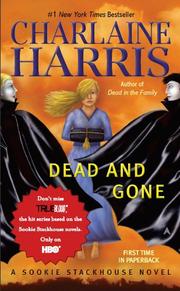
Dead and Gone
Weres reveal themselves as Sookie faces a murder, a Fellowship trap, and a brutal fairy war.
2,798-word summary · 12 min read
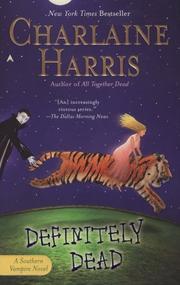
Definitely Dead
Sookie heads to New Orleans for her dead cousin estate and finds witches, vamps, and family curses.
2,027-word summary · 9 min read
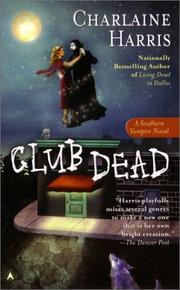
Club Dead
Sookie hunts missing Bill in Jackson, posing with a werewolf at vampire Club Dead.
2,324-word summary · 10 min read
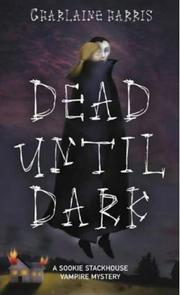
Dead Until Dark
Sookie Stackhouse, a telepathic waitress in Bon Temps, falls for vampire Bill Compton as local murders close in.
2,751-word summary · 12 min read
The Tale of the Body Thief
Lestat trades bodies with a psychic thief for one day of mortality and ends up trapped, sick, and hunting his own vampire body.
2,069-word summary · 9 min read

Six Scorched Roses
A dying scholar bargains with a reclusive vampire for blood, and six roses turn a transaction into a slow, dangerous romance.
2,663-word summary · 12 min read
Fantasy Lover
A New Orleans sex therapist summons a cursed Spartan general from an ancient book and gets one month to break his spell.
2,315-word summary · 10 min read

Born at Midnight
Kylie Galen is sent to a camp for troubled teens and discovers it is a haven for vampires, werewolves, and witches, and that she may be something stranger…
2,310-word summary · 10 min read
There Are No Saints
Two rival artists circle a struggling San Francisco painter. Cole Blackwell wants her, Alastor Shaw wants her dead. Book one of the Sinners duet.
2,190-word summary · 10 min read

Origins
Stefan's diary of 1864 and 1888: how he and Damon fell for Katherine, became vampires, and went looking for a killer in London.
2,056-word summary · 9 min read

Blue Moon
Ever Bloom tries to save her immortal boyfriend, Damen, from a mysterious illness while a new student named Roman quietly takes control of her school and her…
1,998-word summary · 9 min read
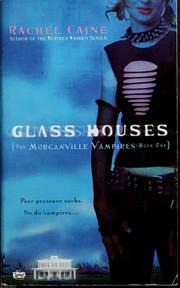
Glass Houses
Claire Danvers moves off campus to escape a bully and lands in a house where the roommates know Morganville's real secret: the town belongs to vampires.
2,345-word summary · 10 min read

The Indigo Spell
Sydney Sage hunts an aging witch, learns forbidden magic, and finally admits she loves Adrian, while the Alchemist tattoo on her cheek may be controlling her.
2,604-word summary · 12 min read
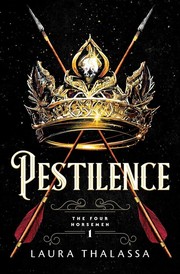
Pestilence
Firefighter Sara Burns shoots the Horseman Pestilence and discovers he cannot die. Taken captive, she rides with him as his plague sweeps the world.
2,508-word summary · 11 min read
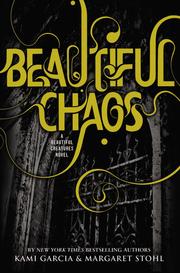
Beautiful Chaos
Ethan Wate is losing himself piece by piece as the broken Order of Things demands a sacrifice, and the answer may be the last person anyone expected.
2,068-word summary · 9 min read