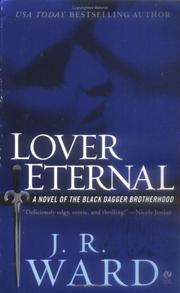
Lover Eternal
2,842-word summary 13 min read 464 pages in the book
- First published
- 2006
- Publisher
- Signet
- Pages
- 464
- ISBN
- 9780451218049
- Series
- Black Dagger Brotherhood (#2)
Reading options
What's inside (7 sections)
I came to Lover Eternal because Dark Lover left me curious about the loudest man in the mansion. J.R. Ward published it in 2006 with Signet, in a 464-page edition with ISBN 9780451218049. It is book 2 in the Black Dagger Brotherhood series, and it centers on Rhage, the fighter everyone calls Hollywood, and Mary Luce, a human volunteer who never asked to meet vampires. I expected a simple follow up where the funny brother gets a love story. What I got was stranger and sadder, a book about a man who shares his body with a monster and a woman who is running out of time.
Caldwell is still at war. On one side are vampires, long lived and strong, trying to live quietly beside humans. On the other side is the Lessening Society, humans remade by the Omega into pale killers with no pulse. Between them stands the Brotherhood, six warriors who live together outside town and patrol at night. Their king is Wrath, now mated to Beth from book one.
Rhage is the strongest fighter and the most beautiful, tall and blond and built for attention. He is also cursed. More than a hundred years before this book, young and reckless, he offended the Scribe Virgin, the mystical female who guides the vampire race, and she put a beast inside him. When Rhage is hurt or enraged or pushed too far, the beast comes out and shreds whatever is near. Afterward Rhage is left in pain and half blind. He has about ninety years left on a two hundred year sentence.
He manages it the only ways he knows. Fight hard. Have a lot of casual sex. The release keeps the pressure down. The brothers joke about his appetite because that is easier than looking at how empty he feels. He wants one woman to love and keep, but he believes no woman could survive close to him. That belief shapes every choice he makes with Mary.
Mary Luce lives a quiet life outside town. She once worked as a secretary in a legal office. Now she volunteers at a suicide prevention hotline. She knows sign language. Years earlier she had leukemia. She watched her mother die of cancer. Now the disease threatens to return, and treatment has already left her infertile.
Her neighbor is Bella, a tall dark haired beauty who lives alone in an old farmhouse and only comes out at night. Mary likes her but senses she is holding something back. Bella is in fact a female vampire of good family, hiding among humans.
The link between them is John Matthew, a thin teenage boy who calls the hotline and never speaks. One night he follows her home to make sure she gets back safe. Mary invites him to sit by her backyard pool. Bella wanders over and notices the leather bracelet John made himself, marked with characters he has seen in dreams. Bella recognizes the Old Language and the warrior name Tehrror. She understands at once that John is a pretrans vampire who does not know what he is.
Bella calls a secret number for the Brotherhood and brings John and Mary to the training center the next night. While John is interviewed, a hungover Rhage stumbles toward the gym trying to work off the aftereffects of a change. Almost blind, running on scent and instinct, he slams Mary against a hallway wall before he realizes she is a woman. Her scent hits him hard. Her voice calms him. He begs her to keep talking. Another brother interrupts. The Brotherhood wipes Mary's memory and sends her home. Rhage cannot forget her.
That scene sets his disobedience in motion. The brothers agree Mary needs checking because she has seen too much, and Rhage volunteers fast. His orders are clear. Look her over, then wipe her memory again and leave her alone. Instead he talks Bella into arranging a blind date. He gives the fake name Hal E. Wood. Bella suggests a casual chain restaurant because neither Rhage nor Mary knows dating norms in the other's world.
The date is awkward in a way I liked. Other women stare at Rhage. The waitress flirts. Mary assumes he is humoring her and nearly leaves. Rhage talks her into staying, only looks at her, walks her out, kisses her goodnight. He feels the beast stir and runs off without wiping her memory. He tells himself it was the curse. In truth he wants her to remember him.
The beast and the man who feeds it
Rhage's curse is not background color. Ward returns to it in every section, and the book is strongest when it treats the beast as both physical danger and shame.
The rules are simple and cruel. The beast wants out when Rhage is injured, afraid, or flooded with feeling. Sex and fighting let off pressure for a while. Nothing ends it. Rhage counts down the years, months, and days left. He is charming in public and numb inside. He thinks of himself as glossy surface over rot.
Vishous, the brilliant brother with a gift for seeing the future, tells him early that his fate is coming and that she is connected to a virgin. Rhage hears it as a joke about sex. Later the meaning shifts. Mary was named for the Virgin Mary by her religious mother, and the prophecy lands in a symbolic rather than literal way. I rolled my eyes a little at that turn, but it fits the book's interest in faith and naming.
What keeps Rhage from being only a sad pretty fighter is how he treats consent when he is lucid. With casual partners he is careful about memory wipes and rules. With Mary he asks, stops when she says stop, and leaves when he fears he will hurt her. The problem is that leaving also hurts her, because she reads it as rejection. Ward lets that misunderstanding sit without fixing it too fast.
The beast itself is written as hunger and noise and heat. When it rises, Rhage loses speech and shape. Bones shift. Skin splits. Vision goes. He comes back sore and sick, needing blood and quiet. The brothers fear it too. Even Wrath keeps distance when Rhage is close to turning. That fear isolates Rhage more than any lecture could.
I found the management system believable within the fantasy logic. Fight, release, repeat. It is not healthy. It is not meant to be healthy. It is a holding pattern built by a young male who made a terrible mistake and has been paying in installments. The book asks whether love can make that pattern bearable without pretending love cures it. That question carries the middle of the novel.
Mary, John, and the hotline voice
Mary is the emotional center, and Ward writes her illness without turning her into a lesson.
She knows her body. She tracks symptoms. She dreads hospitals because she sat beside her mother through the same rooms. She pushes Rhage away after learning she is relapsing because she does not want him to watch her thin out and bruise. She has seen what devotion looks like at a bedside and refuses to ask it from a man who already carries a monster.
Her work at the hotline matters here. She is good at listening to people who cannot say what hurts. That skill is why John trusts her. John is an orphan raised in institutions, passed through a system run by nuns, small for his age, mute but alert. He learned to watch doors and exits. He started calling Mary because her voice steadied him. He started walking her home because her office is in a bad part of town. Mary learns enough sign language to give him a way back. Their friendship is quiet and practical. Food. A chair by the pool. A ride. No big speeches.
Bella's recognition scene is handled well. She does not gasp and explain everything. She steadies herself, apologizes for staring, gets John fed, then makes the call. She chooses the Brotherhood over her brother Rehvenge or Havers the physician because she senses John needs fighters who understand pretrans males, not politics or clinics. It is a smart civilian choice, and it pulls Mary into the vampire world through kindness rather than kidnapping.
The first visit to the compound shows the culture clash. The training center smells of sweat and oil. Males speak the Old Language. John is measured and questioned. Mary translates with her hands while trying not to stare at the size of the males. When Rhage grabs her, she is frightened and angry, then oddly moved by how desperately he asks her to speak. After her memory is wiped, she keeps a feeling she cannot source, like a song heard through a wall.
John moves in with Tohrment and Wellsie, the one mated pair who can offer a steady home. Tohr is solid and patient. Wellsie is warm and direct. John gets lessons, food, a bed, rules. He is still scared and still silent, but he begins to learn he is not human and not alone. Mary visits when allowed, and those visits give Rhage excuses to be near her that fool no one.
The hard truth of this section is simple. Mary helps John find a home, and in doing so loses her own privacy. The Lessers later get her purse and address during the chaos around Bella, which puts her on their map. Kindness has costs in Caldwell.
Under the same roof and against orders
Once Rhage refuses to wipe Mary's memory, the plot tightens around house rules.
He brings her to the mansion for protection after the Lessers connect her to Bella and John. The mansion is part barracks and part court, with guards, customs about blood, locked doors, and Fritz the butler keeping tea and order. Mary arrives frightened and furious. Zsadist blocks a doorway and scares her badly. Beth, now queen and carrying authority, scolds the males and sends them back to the pool game. That small rescue matters. It shows Mary that females have standing here, and it shows the brothers that scaring humans is not defense.
Wrath learns Rhage broke orders and takes it to the Scribe Virgin. She orders a ritual atonement, a writhe, which is sanctioned punishment at the hands of his brothers. They whip him bloody, then bandage him. They try to hide Rhage to heal. Mary finds them and shouts at them for hurting him. It is brutal and sad, and it exposes the code. Disobedience that risks the race gets answered with pain, even when the motive is love.
Mary does not leave after that. She stays because John is there, because Bella is missing, and because Rhage is hurt. She nurses him in the plain ways the book does best. Soup. Blankets. Talking while he drifts. She asks about the beast without flinching when others look away. Rhage tells her in pieces. Cursed for arrogance. Dangerous when changed. Counting years. She listens the way she listens on the hotline, without rushing to fix.
Their physical relationship grows alongside that care, and here the book will divide readers. Ward writes explicit scenes built on permission. Rhage asks. Mary answers. When she says wait, he waits. Still, their first major scene starts rough in a way that felt at odds with the tenderness around it, and the book places it near scenes where Lessers harm unwilling victims. Readers who want heat without power imbalance should know the dynamic involves a very strong male holding back a monster while a sick human tells him she wants him.
The war presses in. The Lessers, now led by a new foreman after Mr X died in book one, are organized and patient. Bella is taken while out alone, held in a farmhouse, drugged and chained. Zsadist, scarred and silent, becomes fixated on finding her.
Butch helps ground these chapters. The human cop is healing, learning mansion ways, joking to cover fear. He cannot fight vampires hand to hand, but he can read crime scenes and keep watch. He tells Rhage plain things the brothers avoid.
Bella in danger and Mary facing the monster
The rescue plot gives the back half its drive.
Bella is held by Lessers who want information and a hold over civilians. She is strong but drugged. Zsadist tracks her with single minded focus. He has lived cut off from feeling after centuries as a slave, and Bella's interest woke something he thought dead.
Mary insists on helping rather than waiting locked in a room. She brings knowledge of human habits and addresses. She refuses to be put upstairs while Bella suffers.
The fight at the farmhouse is bloody and fast. Rhage changes during the attack, the beast tearing out in front of Mary fully seen. She does not run. She speaks to him in a low steady voice, uses his name, tells him to come back. The beast knows her scent and her voice. It stills under her hands.
Afterward Bella is freed but shaken, and her story continues into the next book with Zsadist. Mary is exhausted and sicker. She tries to end things with Rhage to spare him. He refuses.
This leads to the bargain. Rhage goes to the Scribe Virgin and offers to carry the beast forever, without hope of release, if Mary is healed and given long life. The Scribe Virgin agrees on hard terms. Mary will live, but Rhage must leave her life and her memory of him will be taken. He accepts because he thinks a life without him is better than death with him. It is the least selfish choice he has made in a century.
The Scribe Virgin heals Mary, then discovers the catch that changes the deal. Mary's prior treatment left her unable to have children. In the Scribe Virgin's economy, a life for a life requires balance, and lasting barrenness counts as a sacrifice. Since Mary will never bear a child of her own body, the demand that Rhage give her up is lifted. They mate in the old way, with vows and blood given freely.
I have mixed feelings about that resolution, and the book invites them. On one hand, the infertility exception feels convenient, as if biology solves a moral debt. On the other hand, Ward has spent hundreds of pages showing Mary's grief about that exact loss, so the reveal does not come from nowhere. It still reads as a goddess changing rules after the fact. Readers who want hard costs may find it soft. Readers who want these two to survive will accept it.
What strains and what holds
Fair criticism belongs here because the book is long and crowded.
The middle sags under subplots. Rhage and Mary could fill a novel alone. Ward adds Bella's abduction, Zsadist's awakening, John's lessons, Wrath and Beth adjusting to rule, Butch finding purpose, and the Lessers drilling recruits. Each thread is interesting. Together they crowd the central couple.
Pacing swings between slow care and sudden violence. Long chapters of soup and talk give way to raids and rescue in a few pages. Point of view moves among many heads, Rhage, Mary, Bella, Zsadist, John, plus brief turns for Wrath and Vishous. That access explains lore fast, but it weakens suspense because we often know what Mary does not.
Diction repeats under stress. Ward favors brand names, modern slang, and a tight set of physical nouns. Fight scenes lock into short bursts. Intimate scenes run long and breathy. After a while the rhythm is predictable.
Agency also narrows at times. Mary's illness forces her to wait while males decide. Rhage's curse forces him to leave rooms he wants to stay in. Ward offsets this with negotiation, Mary setting terms for feeding and information, Bella choosing whom to call, Beth intervening with authority.
And yet the center holds where it must. Rhage earns his vows through care work, not only heat. He takes punishment without blaming Mary. Mary earns her place through attention. She listens to a mute boy, to a cursed fighter, to a scared friend. The final mating works because both have paid and both choose.
Who should read it. Fans of long paranormal series with ensemble casts will feel at home. Those who want lean prose, strict focus on one couple, or romance without illness should pass. I landed closer to fond than to annoyed. The tics irritated me, the house scenes moved me, and I finished wanting the next book for Bella and Zsadist.
What stays. Mary signing to John by a backyard pool while Bella watches the bracelet. Soup brought upstairs without being asked. A beast stilled by a woman's hands in a cold farmhouse. They land because Ward puts bodies in rooms with clear wants. Those wants carry 464 pages. I closed it tired in the good way, ready to see if a male who finally stops running can learn to stay.
FAQ
Who are Rhage and Mary Luce?
Rhage is a Black Dagger Brotherhood fighter cursed with a beast that breaks out when he is hurt or enraged. Mary Luce is a human hotline volunteer facing a return of leukemia who translates for mute teen John Matthew.
Is Lover Eternal part of a series?
Yes. Lover Eternal is Black Dagger Brotherhood book 2, after Dark Lover. It was published in 2006 by Signet in a 464-page edition with ISBN 9780451218049.
How does Rhage save Mary?
Rhage offers to carry the beast forever if the Scribe Virgin heals Mary. She heals Mary, then lifts the order to part after learning prior treatment left Mary unable to bear children.
Similar books
More from Black Dagger Brotherhood first, then related titles.

Dark Lover
Blind King Wrath turns to cop Butch to protect Beth as the Lessers war closes in.
2,442-word summary · 11 min read
Lover Awakened
Scarred Brother Zsadist stands guard over Bella after Lessers take her in Caldwell. Book three of the Black Dagger Brotherhood pairs rescue with slow trust and…
2,468-word summary · 11 min read
Lover Revealed
Human cop Butch loves Marissa from afar until Lessers take him and the Brotherhood fights to bring him home.
2,592-word summary · 12 min read
Lover Unbound
Scarred genius Vishous falls for human surgeon Jane after a Lesser attack pulls her into his hidden war.
2,786-word summary · 12 min read
Lover Enshrined
Phury's celibacy, addiction, and duty collide when Cormia enters his life, in J.R. Ward's sixth Black Dagger Brotherhood novel of war, ritual, and mating built…
2,630-word summary · 12 min read
Lover Avenged
Half symphath Rehvenge hides behind ZeroSum and drugs while nurse Ehlena pulls him toward truth.
2,421-word summary · 11 min read
Lover Mine
Mute fighter John Matthew loves scarred Xhex as Lash and the war close in on Caldwell.
2,516-word summary · 11 min read
Lover Unleashed
Paralyzed vampire warrior Payne and surgeon Manny Manello collide in an adult paranormal romance, as Xcor's Band of Bastards arrives in Caldwell for revenge.
2,374-word summary · 11 min read

The Indigo Spell
Sydney Sage hunts an aging witch, learns forbidden magic, and finally admits she loves Adrian, while the Alchemist tattoo on her cheek may be controlling her.
2,604-word summary · 12 min read
Soulless
A soulless spinster in Victorian London nullifies supernaturals and solves disappearances.
2,362-word summary · 10 min read

One Foot in the Grave
Cat hunts vampires with Bones while her Sire plots from the grave.
2,200-word summary · 10 min read
Dead in the Family
Sookie shelters fairy kin and a telepathic boy while pack murder and Eric's vampire kin close in.
2,412-word summary · 11 min read
Dead as a Doornail
Sookie tracks a sniper hunting shifters as Jason faces his first panther change and pack justice looms.
2,440-word summary · 11 min read
Dead to the World
Sookie hides a blank Eric for Christmas while hunting the witch who cursed him and finding Jason.
1,997-word summary · 9 min read
Midnight Sun
Twilight retold by Edward Cullen: a silent mind, singer blood in Forks, and restraint tested to the edge.
3,824-word summary · 17 min read
Twilight
Stephenie Meyer's Twilight in full: Bella and Edward's romance in Forks, the Cullens' rules and the nomad vampires, and what the novel's restraint does to its…
2,494-word summary · 11 min read
Six Scorched Roses
A dying scholar bargains with a reclusive vampire for blood, and six roses turn a transaction into a slow, dangerous romance.
2,663-word summary · 12 min read

Magic Burns
A magic flare hits Atlanta, and mercenary Kate Daniels must recover stolen maps, find a missing witch, and keep a teenage girl alive while Celtic gods try to…
2,021-word summary · 9 min read
At Grave's End
Cat and Bones face Max, a zombie-raising ancient vampire, and a prophecy that ties their marriage to Patra's death in the third Night Huntress novel.
2,061-word summary · 9 min read

Masquerade
After Cordelia's death, Schuyler flies to Venice to find her exiled grandfather, then returns to the Blue Bloods as they prepare for a masked ball and a hidden…
2,543-word summary · 11 min read

Blood Bonds
Oleander is chained in a Resistance camp, and her five Bonds have to find her before Silas Davies finishes what he started in this third Bonds that Tie book.
2,018-word summary · 9 min read
Demonglass
Sophie Mercer spends the summer at the Council's English estate, where two new demons, a suspicious host, and Archer's return complicate her plan to remove her…
2,771-word summary · 12 min read

Born at Midnight
Kylie Galen is sent to a camp for troubled teens and discovers it is a haven for vampires, werewolves, and witches, and that she may be something stranger…
2,310-word summary · 10 min read
Cemetery Boys
A trans brujo in East Los Angeles summons the ghost of a boy who refuses to move on, and together they uncover a murder hidden beneath Día de los Muertos.
1,997-word summary · 9 min read
Switched
A Minnesota teenager who can make people obey her discovers she is a changeling troll princess, and the hidden kingdom she came from wants her back.
2,131-word summary · 9 min read
Savage Bonds
Oli's deadly gift is out in the open, her Bond runs the show, and the Resistance is closer than ever in the second Bonds that Tie novel.
2,431-word summary · 11 min read
Glass Houses
Claire Danvers moves off campus to escape a bully and lands in a house where the roommates know Morganville's real secret: the town belongs to vampires.
2,345-word summary · 10 min read