
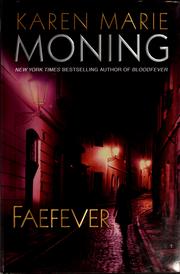
Faefever
2,079-word summary 9 min read 327 pages in the book
- First published
- 2008
- Publisher
- Delacorte Press
- Pages
- 327
- ISBN
- 9780385341639
- Series
- Fever (#3)
Reading options
What's inside (10 sections)
Faefever is the book where the Fever series stops pretending it might let its heroine catch her breath. Darkfever introduced MacKayla Lane to a Dublin full of monsters and dropped a genuine bombshell about her gifts. Bloodfever narrowed the cast and deepened the menace. Faefever takes both and adds a deadline, the night of All Hallows' Eve, when the walls between the human world and the Unseelie prison are thinnest. By the final pages, the series has changed shape. This is the point of no return.
I admire how Karen Marie Moning handles escalation. She does not simply add more creatures. She takes the alliances Mac has painfully built and turns each one into a question. The Fae prince who swears he is helping her wants something. The dark man who has saved her life twice wants something. The sister she came to Dublin to avenge is somehow still in the story, and the truth about who killed Alina is closer than Mac is ready for.
The hunt for the Sinsar Dubh
Mac's quest in Faefever is still the Sinsar Dubh, the ancient book of black magic that everyone in Dublin seems to want. The novel finally explains where it came from and why it terrifies people who should not be frightened of anything. The Book is not a passive artifact. It was scribed by the Unseelie King, and it is one of the Hallows, objects with a will of their own, and the most dangerous Hallow ever made. When it is loose, it moves from host to host, and each person who touches it is transformed into a weapon. Moning opens with a massacre on the street that Mac witnesses and cannot stop, because sensing the Book up close paralyzes her, and the horror of that scene sets the stakes for the entire novel.
Mac has also grown. She carries the spear that can kill Fae, she has learned to sift, the Fae ability to move through space, and she finally lets herself be dangerous. Some of the best scenes in the book are simply Mac deciding to fight back, using the small talents she has assembled across three novels. She invents a ridiculous contraption she calls the MacHalo, a helmet rigged with lights to keep the Shades away, and it is both funny and a real survival tool. Moning never lets Mac become a superhero. She stays a scared, stubborn woman improvising her way through a nightmare, which is why she is easy to root for.
Two impossible suitors
The central tension of the series is a triangle, and Faefever is where both arms of it tighten. V'lane is the Seelie prince, the death-by-sex Fae, and he wants the Book for his queen, Aoibheal, who needs it to shore up the walls and keep the realms apart. He is charming, shameless, and genuinely helpful at times, and Mac is self-aware enough to be suspicious of her own attraction to him. V'lane's interest in her is partly sexual and partly a matter of leverage, and she knows it.
Jericho Barrons is the other side. He owns the bookstore she stumbled into, and he has been her reluctant teacher and protector since the first book. He wants the Book too, though his explanation, that he collects books, is obviously a lie. In Faefever we learn only slivers about him, and the novel is disciplined about not paying off the question of what he is. What does change is the emotional register. Mac brings a pink cake to his store on Halloween, because she has realized the date is his birthday, and he tears her apart for it. The scene hurts because it is the clearest statement yet of the gap between them. Barrons cannot be humanized, or at least cannot allow himself to be, and Mac is beginning to understand that whatever she feels for him is not going to be returned in any ordinary way.
The triangle works because neither man is a clean option. Both hide their true goals, both lie to Mac, and both have saved her life for reasons of their own. Moning is writing about the loneliness of being the one person who can sense the thing everyone wants. Mac is valuable, and being valuable is not the same as being loved.
Christian, Dani, and the sidhe-seers
Faefever widens the cast in ways that pay off across the rest of the series. Christian MacKeltar arrives, a Druid from a family with a long history of policing the Compact between the Fae and humanity, and he becomes a steady, decent presence in a book full of schemers. He teaches Mac things nobody else will, including how to resist the Voice, the Druid compulsion that can make a person obey, and his patience with her stands in contrast to Barrons's brusqueness.
Danielle O'Malley is the other significant addition. Dani is a young sidhe-seer, barely a teenager, with the ability to move at impossible speed, and she is cocky, reckless, and formidable. Moning does not soften her for the reader. She is a girl who has already decided that the world is a war and that she is going to win her part of it, and her presence gives the series a character it will later build an entire spinoff around.
Meanwhile the existing sidhe-seer organization, led by Rowena, is revealed as something closer to a rival than an ally. Rowena distrusts Mac, resents her power, and is willing to manipulate her, and the novel is setting up a conflict that will keep simmering. The lesson Mac keeps learning is that the lines between the people trying to save the world are as tangled as the lines between the people trying to end it.
The Lord Master and the walls that are coming down
The antagonist is the Lord Master, and Faefever finally clarifies who and what he is. He is neither fully Fae nor fully human, he was the man who seduced and destroyed Alina, and he has spent years opening portals to smuggle Unseelie into the human world, teaching them to blend into society, and preparing for the night when the walls come down and the prison empties. He wants the Book, possibly to destroy it so that the walls can never be rebuilt.
He is a genuinely unsettling villain because he does not need to threaten Mac with violence. He offers her a bargain, promising to keep her family safe and even to restore her dead sister to her, and the offer is exactly the kind of thing a grieving woman wants to hear. Mac's loneliness is his weapon. He understands her better than her allies do, and that makes him far more dangerous than a monster who simply attacks.
The novel also does the work of explaining the cosmology. The Seelie and Unseelie courts, the Compact, the Hallows, the Fae ability to lie only in certain ways, the meaning of Samhain, all of it gets sketched in so the finale can land. The world-building is efficient and a little dense, but it makes the Halloween climax feel inevitable rather than arbitrary.
Halloween and the betrayal
The last act happens on All Hallows' Eve, which is both Barrons's birthday and the night the walls are weakest, and it is the best sustained sequence Moning has written to that point. The city descends into chaos as the Unseelie arrive, and the defenses Mac and her allies have assembled fall short. Mac, who has been told repeatedly that she is the only person who can find the Book, is left alone at the worst moment, and the isolation she has been fighting for three books finally catches up with her.
Then comes the betrayal. Mac is delivered into the hands of the Fae, and the book ends with her captured, traumatized, and changed, on a cliffhanger that is genuinely vicious. Where were Barrons and V'lane when it mattered? The novel does not answer, and that is the point. Every promise of protection Mac has received proves conditional, and she is the one who pays for it. Dreamfever opens with the aftermath, with Mac broken in a way that fans still talk about, and Faefever is engineered to make that opening land like a hammer.
I will not pretend the ending is pleasant. It is brutal, and it involves sexual violence that the series treats as the lowest point of Mac's life. Readers should go in knowing that.
Alina, revenge, and what Mac is really chasing
It is easy to forget, amid the Fae politics and the Hallows, that Mac came to Dublin for one reason. Her sister Alina was murdered, and the torn page from Alina's journal that arrives in this book makes the loss fresh again. Alina's words were desperate, they hinted that her killer was close, and they turn Mac's grief back into fuel. The Lord Master is not an abstract villain to her. He is the man who used, seduced, and destroyed her sister, and every bargain he offers is aimed at the wound he created.
That gives Faefever its emotional through line. Mac is chasing a book because Alina asked her to, but she is really chasing an answer to a question she cannot say out loud, which is whether she could have saved her sister if she had come to Dublin sooner. The series is careful to keep Alina present without turning her into a saint. She was a young woman who got pulled into something enormous, and the novel treats her choices with the same ambiguity it treats Mac's.
Revenge is also the theme that keeps Mac from becoming a pure heroine. She says plainly that she wants her sister's murderer dead, preferably by her own hand, and the books do not moralize at her for it. What they do instead is show the cost. The more Mac becomes capable of killing, the more the line between her and the monsters she hunts blurs, and Faefever is the book where she first notices that change in herself and does not entirely dislike it.
The loneliness at the center
The best argument for Faefever is that it is, underneath the action, a book about isolation. Mac is surrounded by powerful beings who all want something from her and none of whom she can fully trust. Barrons will not explain himself. V'lane is honest only in riddles. Christian is steady but new. Rowena wants to use her. Even her own gift for sensing the Book makes her valuable rather than loved, and valuable things get used.
Moning builds the whole Halloween catastrophe out of that loneliness. Mac goes into the final night because she has run out of people to lean on and because the Lord Master has offered her the one thing nobody else will, which is her family back. The tragedy is not that she is overpowered, it is that she is alone. The series will spend the following books dealing with the consequences of that night, and Faefever is the book that earns them.
What works and what sags
The strengths are atmosphere, voice, and escalation. Moning writes Dublin as a place that is beautiful and rotten at once, and Mac's first-person narration, with its mix of Southern sass and hardening steel, keeps the tone distinctive even when the plot turns ugly. The introduction of Christian and Dani enriches the cast, and the Lord Master finally becomes a villain worth the series.
The weaknesses are real. Mac's trust issues repeat a beat more than once, with the push and pull between her and Barrons stalling rather than developing. Barrons is absent for long stretches, including much of the early book, and the reader feels it. The love triangle relies on withholding information that the characters could plausibly share, which is a frustration across the whole series. And the cliffhanger is the kind that solves the pacing problem of the novel by simply stopping it, which is either thrilling or cheap depending on your patience.
Still, as the pivot point of the Fever series, Faefever does its job. It raises the stakes, deepens the mystery, and commits to consequences. If you have read the first two, this is the book that turns a good urban fantasy series into an addictive one, and if the ending leaves you furious, that is exactly what it was built to do.
FAQ
Is Faefever part of a series?
Yes. Faefever is book three in the Fever series, following Darkfever and Bloodfever and continuing into Dreamfever.
When was Faefever published?
Delacorte Press published it in September 2008. The hardcover runs 327 pages with ISBN 9780385341639.
Does Faefever end on a cliffhanger?
Yes. It ends with Mac captured by the Fae on All Hallows' Eve after the walls between the realms come down, and Dreamfever picks up with the aftermath.
Similar books
More from Fever first, then related titles.
Bloodfever
Mac hunts the Sinsar Dubh in Dublin while Barrons tests her.
2,124-word summary · 9 min read
Dreamfever
With the walls between worlds down and Mac broken by the Fae, Dreamfever is the darkest volume of the Fever series, and the one that changes everything.
2,007-word summary · 9 min read
Shadowfever
Mac Lane hunts the Sinsar Dubh in Dublin as Fae walls fail and Barrons secrets surface.
3,016-word summary · 13 min read

Magic Burns
A magic flare hits Atlanta, and mercenary Kate Daniels must recover stolen maps, find a missing witch, and keep a teenage girl alive while Celtic gods try to…
2,021-word summary · 9 min read

Bitten
Elena Michaels is the world's only female werewolf, and keeping that world away from her human life in Toronto works fine until the Pack calls in a favor.
2,039-word summary · 9 min read
Silver Borne
Mercy hides a Fae book while Samuel slips and the fae close in.
2,571-word summary · 11 min read
One Foot in the Grave
Cat hunts vampires with Bones while her Sire plots from the grave.
2,200-word summary · 10 min read

Cry Wolf
Omega Anna joins Charles to hunt a rogue werewolf in Montana.
2,463-word summary · 11 min read
First Grave on the Right
Charley Davidson is a private investigator in Albuquerque and the grim reaper. When three murdered lawyers come back as ghosts, her two jobs collide.
2,770-word summary · 12 min read
The Lost Sisters
Taryn Duarte writes a letter to her twin, Jude, explaining how she fell for Locke and why she stayed silent while he used them both.
1,914-word summary · 9 min read
River Marked
Mercy and Adam's honeymoon on the Columbia River turns into a fight with an ancient river devil, and Mercy finally learns the truth about her father.
2,008-word summary · 9 min read
At Grave's End
Cat and Bones face Max, a zombie-raising ancient vampire, and a prophecy that ties their marriage to Patra's death in the third Night Huntress novel.
2,061-word summary · 9 min read

Masquerade
After Cordelia's death, Schuyler flies to Venice to find her exiled grandfather, then returns to the Blue Bloods as they prepare for a masked ball and a hidden…
2,543-word summary · 11 min read
Blood Bonds
Oleander is chained in a Resistance camp, and her five Bonds have to find her before Silas Davies finishes what he started in this third Bonds that Tie book.
2,018-word summary · 9 min read
Demonglass
Sophie Mercer spends the summer at the Council's English estate, where two new demons, a suspicious host, and Archer's return complicate her plan to remove her…
2,771-word summary · 12 min read
Born at Midnight
Kylie Galen is sent to a camp for troubled teens and discovers it is a haven for vampires, werewolves, and witches, and that she may be something stranger…
2,310-word summary · 10 min read
Paranormalcy
A teenage agent who can see through glamour falls for a shape-shifter and learns the agency she works for is hiding her true nature.
2,041-word summary · 9 min read
Lore
Lore Perseous, the last of a hunted bloodline, is pulled back into the Agon when a wounded Athena offers her revenge against the god who killed her family.
2,188-word summary · 10 min read
Cemetery Boys
A trans brujo in East Los Angeles summons the ghost of a boy who refuses to move on, and together they uncover a murder hidden beneath Día de los Muertos.
1,997-word summary · 9 min read
An Enchantment of Ravens
Isobel, a mortal artist in the fairy town of Whimsy, paints a portrait of the autumn prince and falls in love with him, breaking the laws of her craft.
2,087-word summary · 9 min read
Tithe: A Modern Faerie Tale
A retelling of Holly Black's Tithe: Kaye Fierch returns to the Jersey Shore, discovers she is a changeling, and becomes the mortal sacrifice in a faerie power…
2,586-word summary · 11 min read
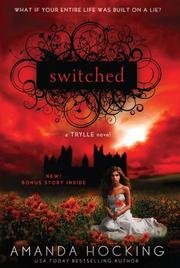
Switched
A Minnesota teenager who can make people obey her discovers she is a changeling troll princess, and the hidden kingdom she came from wants her back.
2,131-word summary · 9 min read
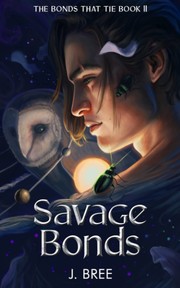
Savage Bonds
Oli's deadly gift is out in the open, her Bond runs the show, and the Resistance is closer than ever in the second Bonds that Tie novel.
2,431-word summary · 11 min read

Glass Houses
Claire Danvers moves off campus to escape a bully and lands in a house where the roommates know Morganville's real secret: the town belongs to vampires.
2,345-word summary · 10 min read
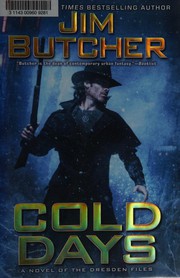
Cold Days
Back from the dead as the Winter Knight, Harry Dresden must follow Mab's order to kill an immortal and defend Demonreach on Halloween night.
2,361-word summary · 10 min read

The Indigo Spell
Sydney Sage hunts an aging witch, learns forbidden magic, and finally admits she loves Adrian, while the Alchemist tattoo on her cheek may be controlling her.
2,604-word summary · 12 min read
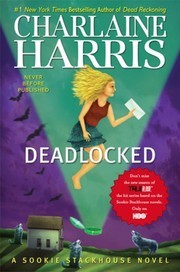
Deadlocked
A dead woman on Eric's lawn starts a murder investigation, a vampire queen wants Eric as her consort, and the fairies in Sookie's life close in.
2,885-word summary · 13 min read
A Deal with the Elf King
A village herbalist is exposed as the hidden Human Queen, married to a cold elf king, and given three months to save his dying kingdom or be bound to it…
2,094-word summary · 9 min read