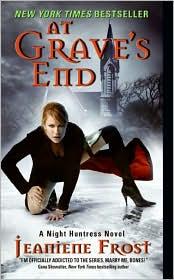
At Grave's End
2,061-word summary 9 min read 342 pages in the book
- First published
- 2009
- Publisher
- Avon
- Pages
- 342
- ISBN
- 9780061583070
- Series
- Night Huntress (#3)
Reading options
What's inside (10 sections)
The Night Huntress books are not subtle, and they are not trying to be. They are first-person urban fantasy with a heavy romance plot, a lot of violence, and a heroine who narrates her own life with a mix of bravado and self-doubt. By the time you reach At Grave's End, the third book, you know what you are getting: Cat Crawfield and Bones, a half-vampire and an old vampire, hunting rogue undead, arguing about trust, and having a great deal of sex. The fun is in watching the formula get pushed into darker territory.
At Grave's End was published by Avon in 2009. It picks up a few months after One Foot in the Grave. Cat's identity as the Red Reaper has been exposed, which makes her work with the government's paranormal unit more dangerous. She and Bones are married in the vampire sense, blood-bonded and publicly claimed. That should be a happy ending. Instead, it makes them a target. The book is about what happens when the past of a very old vampire catches up with the woman he loves, and when the woman's own family turns out to be part of the problem.
The Team and the Mission
Cat's team includes Tate, a former Special Forces sergeant who is in love with her, and a handful of other operatives. In the opening chapters, they are cleaning up a vampire nest, and the mission goes wrong. Zachary, one of the team, is killed. The loss sets the tone. This is a book where the good guys take casualties, and where the consequences of previous books are not waved away.
The team works for Don, a government official who runs a unit that officially does not exist. Cat's job is to hunt vampires who prey on humans, and her cover is a constant problem. She has to lie to her mother, to her colleagues, and sometimes to herself. The book does not spend much time on the bureaucracy, but the presence of Don and the unit gives the action a structure. Cat is not a freelance hero. She has a boss, a budget, and a set of rules she is always bending.
Tate's transformation happens early. He volunteers to be turned, and Bones is the one who does it. Cat is uneasy about it. She has seen what vampirism does to people, and she knows that Tate's feelings for her are part of what is driving him. The transformation is written as a brutal, physical thing: the bite, the blood, the hunger, the struggle to stay controlled. It also changes the team dynamic. Tate is no longer just a soldier. He is a new vampire with a sire bond to Bones and a complicated loyalty to Cat.
I liked this thread more than I expected. Tate could easily have been a jealous rival, and the book does use him that way at times. But his decision to be turned is treated as a real choice with real costs. He is not doing it to win Cat. He is doing it because he believes the team needs him, and because he wants to stop being the vulnerable one. That is a more interesting motive than romantic jealousy, even if the jealousy is still there.
Max
Cat's father, Max, is the most personal villain in the series so far. He is a vampire, a criminal, and a man who has spent years treating his daughter as a tool. In this book he teams up with another vampire, Calibos, and goes after Cat and her mother, Justina. He does not just want to kill them. He wants to humiliate them, to make Cat watch her mother suffer, and to prove that he still has power over her.
The torture sequence is hard to read. Max shoots Cat, threatens Justina, and forces mother and daughter to watch each other being hurt. Frost does not linger on the violence for its own sake, but she does not cut away either. The point is to show what Max is, and to force Cat to confront the fact that the man who helped make her is also one of the worst things in her life.
Bones arrives in time to stop the worst of it. He captures Max and keeps him alive for interrogation, which is a fate worse than a quick death. Max is eventually tortured to death by Bones and the others. Cat does not get a clean reconciliation, and she does not get to kill him herself. What she gets is the knowledge that he is gone, and that the person who protected her was the man she chose, not the man who abandoned her. It is not a tidy resolution, but it fits the series.
The Alliance
The plot's larger engine is an alliance between Bones and Mencheres. Mencheres is Bones's grandsire, an ancient and extremely powerful vampire, and he wants to bind their bloodlines together. He offers Bones power, protection, and a place in a larger political structure. Bones accepts, partly because he sees a war coming and partly because he trusts Mencheres, even though Mencheres has a habit of withholding information.
The alliance ceremony is where the book's first big set piece happens. The building is blown up. Cat and Bones survive, but the message is clear: someone is willing to start a war. That someone is Patra, Mencheres's estranged wife.
Patra is the best villain in the book. She is ancient, beautiful, and completely ruthless. She is also the daughter of Cleopatra, which gives her a sense of entitlement that is almost comic. She has forbidden magic, including the ability to raise the dead, and she uses it without hesitation. Her motive is partly political and partly personal. Mencheres once had a vision that a man who married a half-breed would kill her with a knife. When Bones marries Cat, Patra becomes convinced that the vision refers to them, and she decides to kill Bones first.
That is a good engine for a revenge plot. It ties the romantic relationship to the supernatural politics. Cat and Bones's marriage is not just a private happiness. It is a prophecy, a threat, and a declaration of war.
The Zombie War
Patra's army is made of zombies. Not the slow, shuffling kind. These are fast, strong, and almost impossible to kill. The book explains that they are animated by a spell, and that the only way to stop them is to destroy the object anchoring the spell. That gives the final act a clear objective: find the anchor, destroy it, and survive long enough to reach Patra.
The zombie sequences are the most cinematic parts of the book. Frost writes action well. She keeps the geography clear, gives each character something to do, and uses Cat's first-person narration to convey the panic of a fight that is going badly. The scene where the team realizes the zombies cannot be killed by ordinary means is genuinely tense.
The action also forces Cat to make a choice about what she is. She is a half-vampire, and she has spent the series trying to hold on to her human side. In this book, she has to use her vampire abilities more fully. She has to accept that she is not a human who happens to be strong. She is something else, and the people she loves need that something else. The transformation is not complete, but it moves forward.
Vlad
Vlad Tepesh shows up as an ally, and he is a lot of fun. He is arrogant, powerful, and annoyed by Bones. The two of them have a history of mutual irritation, and the book uses it for comedy. Vlad can control fire, which makes him useful against zombies. He also has a code of his own, and he is not simply a convenient weapon.
The addition of Vlad is one of the ways the series widens its world. The Night Huntress books started as a two-person story, Cat and Bones against the world. By book three, there is a whole vampire society with old grudges, alliances, and hierarchies. Vlad is a reminder that Cat and Bones are not the center of that world. They are players in it.
The Wraiths and the End
The final act is dark. Mencheres performs a ritual using the bones of the dead, summoning wraiths that will hunt Patra. The ritual costs him something. He is still in love with Patra, or at least still bound to her, and he cannot enter the final battle without breaking the spell. He sends Bones and the others in without him.
The wraiths are terrifying. They are not clean, heroic magic. They are the angry dead, and they tear through Patra's guards. Bones confronts Patra and kills her with a knife, which fulfills the vision. Mencheres survives, but he is changed. The victory is not triumphant. It is exhausted.
The aftermath is one of the better endings in the series. Cat wakes up recovering from blood loss. The team counts its dead. There is a cover story to manage, a government unit to keep functioning, and a lot of grief. Bones and Ian nearly come to blows. Mencheres is withdrawn. Cat and Bones are together, but they are not at peace.
What Works
Cat's voice is the main reason to read these books. She is funny, defensive, and sometimes wrong. She narrates her own mistakes without excusing them, and she has a habit of undercutting dramatic moments with a joke that is usually well timed. The romance works because the two people in it are not the same. Bones is old, patient, and manipulative in a way that Cat finds both attractive and infuriating. Cat is young, stubborn, and still figuring out what she wants. Their arguments feel like arguments, not plot devices.
The action is well staged. Frost knows how to write a fight scene, and she knows how to raise the stakes without making the characters look stupid. The zombie war is the best example. It is chaotic, but it is coherent.
The vampire politics are also more interesting than they first appear. Ian, Bones's sire, is a troublemaker who enjoys watching other people squirm, but he is not a simple antagonist. He has his own code, and he is useful in a fight. Mencheres is even more complicated. He is ancient, powerful, and emotionally compromised by his marriage to Patra. The book does not resolve his character. It leaves him grieving and dangerous, which is the right choice for a series that is still building.
What Doesn't
The book is crowded. There are too many characters, too many factions, and too many plot threads. Some of them are resolved too quickly. Max's death is satisfying, but the emotional fallout is thin. Patra is a strong villain, but her plan depends on a prophecy that is explained late. The middle section drags, especially the parts that involve vampire politics and seating arrangements.
The romance is also doing a lot of work that the plot should be doing. Cat and Bones have several scenes that exist to remind the reader that they are in love, and some of them stop the story dead. I do not mind a romance-heavy urban fantasy, but the balance in this one tilts toward the couple at the expense of the mystery.
The mother-daughter thread is the biggest missed opportunity. Justina has been a difficult presence in the series, and the torture sequence puts her and Cat in a situation where they have to rely on each other. The book touches that idea and then moves on. Justina survives, but she does not get much space to process what happened, and her relationship with Cat remains roughly where it was. For a novel that is so interested in family, it leaves one of its most interesting families underdeveloped.
Still, At Grave's End is a solid third book. It takes the characters somewhere darker, kills off people who matter, and makes the political world feel real. It is not the place to start the series. If you have read the first two, it delivers what you came for: Cat and Bones in danger, a nasty villain, and an ending that costs something.
FAQ
Do I need to read the first two Night Huntress books?
Yes. At Grave's End depends on Cat and Bones's established relationship, the team, and the events of One Foot in the Grave.
Who is Patra?
Patra is Mencheres's estranged wife, an ancient vampire and the daughter of Cleopatra, who can raise the dead.
Does Bones die in At Grave's End?
He is gravely injured and presumed lost at one point, but he survives and kills Patra in the final confrontation.
Similar books
More from Night Huntress first, then related titles.
Halfway to the Grave
Half vampire Cat hunts rogues to atone until Bones captures her and pulls her into vampire politics and love.
2,995-word summary · 13 min read
One Foot in the Grave
Cat hunts vampires with Bones while her Sire plots from the grave.
2,200-word summary · 10 min read
Lover Unleashed
Paralyzed vampire warrior Payne and surgeon Manny Manello collide in an adult paranormal romance, as Xcor's Band of Bastards arrives in Caldwell for revenge.
2,374-word summary · 11 min read
Angels' Blood
Nalini Singh's 2009 Guild Hunter opener sends vampire hunter Elena Deveraux after a murderous archangel in New York, while its most powerful ruler watches.
2,367-word summary · 11 min read
The Awakening / The Struggle
A popular high school girl falls for a vampire, then discovers that his dangerous brother wants her too, in the first two books of the Vampire Diaries series.
2,660-word summary · 12 min read
Glass Houses
Claire Danvers moves off campus to escape a bully and lands in a house where the roommates know Morganville's real secret: the town belongs to vampires.
2,345-word summary · 10 min read
Deadlocked
A dead woman on Eric's lawn starts a murder investigation, a vampire queen wants Eric as her consort, and the fairies in Sookie's life close in.
2,885-word summary · 13 min read
Lover Enshrined
Phury's celibacy, addiction, and duty collide when Cormia enters his life, in J.R. Ward's sixth Black Dagger Brotherhood novel of war, ritual, and mating built…
2,630-word summary · 12 min read
Dead Reckoning
Sookie confronts the firebombing of Merlotte's, Sandra Pelt's revenge, and a vampire power struggle while questioning her future with Eric.
2,391-word summary · 11 min read
Lover Unbound
Scarred genius Vishous falls for human surgeon Jane after a Lesser attack pulls her into his hidden war.
2,786-word summary · 12 min read
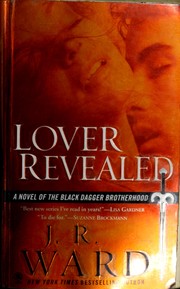
Lover Revealed
Human cop Butch loves Marissa from afar until Lessers take him and the Brotherhood fights to bring him home.
2,592-word summary · 12 min read
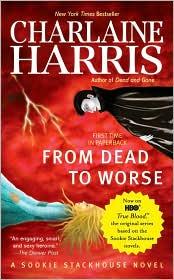
From Dead to Worse
Sookie mediates a Were war and vampire takeover while learning about her fairy blood.
2,533-word summary · 11 min read
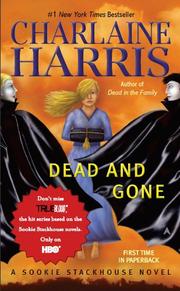
Dead and Gone
Weres reveal themselves as Sookie faces a murder, a Fellowship trap, and a brutal fairy war.
2,798-word summary · 12 min read
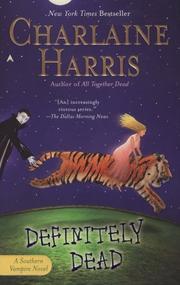
Definitely Dead
Sookie heads to New Orleans for her dead cousin estate and finds witches, vamps, and family curses.
2,027-word summary · 9 min read
Club Dead
Sookie hunts missing Bill in Jackson, posing with a werewolf at vampire Club Dead.
2,324-word summary · 10 min read
Dead Until Dark
Sookie Stackhouse, a telepathic waitress in Bon Temps, falls for vampire Bill Compton as local murders close in.
2,751-word summary · 12 min read
The Tale of the Body Thief
Lestat trades bodies with a psychic thief for one day of mortality and ends up trapped, sick, and hunting his own vampire body.
2,069-word summary · 9 min read
Six Scorched Roses
A dying scholar bargains with a reclusive vampire for blood, and six roses turn a transaction into a slow, dangerous romance.
2,663-word summary · 12 min read
Magic Burns
A magic flare hits Atlanta, and mercenary Kate Daniels must recover stolen maps, find a missing witch, and keep a teenage girl alive while Celtic gods try to…
2,021-word summary · 9 min read

Masquerade
After Cordelia's death, Schuyler flies to Venice to find her exiled grandfather, then returns to the Blue Bloods as they prepare for a masked ball and a hidden…
2,543-word summary · 11 min read
Born at Midnight
Kylie Galen is sent to a camp for troubled teens and discovers it is a haven for vampires, werewolves, and witches, and that she may be something stranger…
2,310-word summary · 10 min read
Origins
Stefan's diary of 1864 and 1888: how he and Damon fell for Katherine, became vampires, and went looking for a killer in London.
2,056-word summary · 9 min read
Circus of the Damned
A rogue master vampire arrives in St. Louis and Anita Blake is caught in an undead turf war, with a science teacher in the crossfire.
2,757-word summary · 12 min read
Paranormalcy
A teenage agent who can see through glamour falls for a shape-shifter and learns the agency she works for is hiding her true nature.
2,041-word summary · 9 min read
Lore
Lore Perseous, the last of a hunted bloodline, is pulled back into the Agon when a wounded Athena offers her revenge against the god who killed her family.
2,188-word summary · 10 min read
Blue Moon
Ever Bloom tries to save her immortal boyfriend, Damen, from a mysterious illness while a new student named Roman quietly takes control of her school and her…
1,998-word summary · 9 min read

The Indigo Spell
Sydney Sage hunts an aging witch, learns forbidden magic, and finally admits she loves Adrian, while the Alchemist tattoo on her cheek may be controlling her.
2,604-word summary · 12 min read
Pestilence
Firefighter Sara Burns shoots the Horseman Pestilence and discovers he cannot die. Taken captive, she rides with him as his plague sweeps the world.
2,508-word summary · 11 min read