
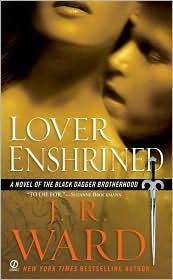
Lover Enshrined
2,630-word summary 12 min read 542 pages in the book
- First published
- 2008
- Publisher
- Signet
- Pages
- 542
- ISBN
- 9780451222725
- Series
- Black Dagger Brotherhood (#6)
Reading options
What's inside (9 sections)
I picked up Lover Enshrined because I had stalled on the Black Dagger Brotherhood after the fifth book and a friend told me the sixth was where the series either hooked you for good or lost you. She was right about the fork in the road. This is the Phury book, centered on Wrath's quiet twin brother who has spent five novels standing in doorways, refusing food he wants, refusing women he wants, and smoking too much red smoke. I expected a standard mate story. What I got was stranger and sadder, a 542 page Signet paperback first published June 3, 2008, that tries to be both a love story and a story about addiction, duty, and what happens when a man who has defined himself by denial finally wants something.
The setup helps if you know where the series stands at book six. The Brotherhood is at war with the Lessening Society in Caldwell, New York. Wrath is the blind king. His fighters live together in a mansion with a training center, a medical clinic run by Havers and later Doc Jane, and a staff of doggen. Zsadist, Phury's identical twin, has already found his shellan Bella and fathered a child, which matters because Phury spent most of his adult life feeling responsible for Zsadist's torture and enslavement years earlier. Phury is a Brother, a fine fighter, tall and scarred and yellow eyed like his twin, but he has taken a vow of celibacy. He serves as the Primale, the only male permitted among the Chosen, the cloistered race of females who serve the Scribe Virgin on the Other Side. The Chosen live apart, pray, keep tradition, and provide blood and ritual service. The Primale mates with them in ceremony. Phury has held that role while refusing the sexual part of it, which tells you most of what you need to know about his guilt and his control.
The Primale who will not touch
The early chapters stay close to Phury's daily grind. He fights at night. He comes home wired and sore. He reaches for red smoke or pain medication to sand down the edges. He goes to the Other Side to perform his Primale duties, blesses the Chosen, eats with them, listens to their concerns, and then leaves without taking any of them to bed. The Chosen notice. The Scribe Virgin notices. His brothers notice.
Ward writes Phury's addiction without glamour. He is not cool about it. He lies about how much he uses. He tells himself he can stop after this next fight, this next ceremony, this next bad night. He steals moments in bathrooms and in his room at the mansion. He begs off sparring when his hands shake. Zsadist watches him with the flat attention of a twin who knows every dodge, and that attention hurts Phury more than any lecture from Wrath or Vishous. Zsadist got out of hell and built a life. Phury stayed in his own version of it.
What makes this opening work is the detail around celibacy. It is not presented as holiness. It is presented as punishment. Phury believes he failed Zsadist as a younger male, that he should have traded himself for his twin back when they were blood slaves to a vampire owner. He believes he does not deserve pleasure. So he turned denial into an identity. The Brotherhood respects him for it, which only locks the pattern tighter, because now if he breaks the vow he feels he will disappoint everyone who praised his restraint.
Cormia and the life of the Chosen
Cormia enters as one of the Chosen, young by their measure, dutiful, curious in a way the Other Side does not reward. The Chosen live under strict custom. They cover themselves. They speak in forms. They do not leave without permission. They are taught that mating with the Primale is honor and service, not romance. Their needs are managed by ritual, not conversation. Cormia has followed the rules. Then the Scribe Virgin names her as the Primale's first mate, the female chosen to be first among the Chosen in Phury's bed and household, and Cormia's quiet questions get louder.
I liked these sections more than I expected. Ward slows down and shows meals in the white halls, the baths, the lessons in deportment, the way the Chosen whisper after Phury leaves. Cormia asks what Caldwell is like. She asks what cars sound like. She asks another Chosen what mating feels like and gets doctrine instead of an answer. When she is brought to the mansion to live closer to Phury, everything ordinary hits her hard. A refrigerator light. Jeans. A television left on. A doggen who offers her pizza and then has to explain what pizza is. Ward can be heavy handed with fish out of water comedy, but here the smallness works. Cormia trying potato chips for the first time tells you more about cloistering than three pages of history would.
The mating custom itself is the engine. By law and faith, Cormia belongs to the Primale. She is supposed to accept. Phury is supposed to take. Neither of them wants the script as written. Phury does not want to use a woman who has no real choice. Cormia does not want to be used, even by a kind male. Their early scenes are careful and awkward. He shows her the mansion library. He gives her space. He refuses to claim her body even after the ceremony that names her his. That refusal confuses the Scribe Virgin and angers some of the old guard, who see tradition slipping.
Lash and the war outside the bedroom
While Phury circles Cormia, the war plot keeps burning. Lash, the main villain of this stretch of the series, is the Omega's son, raised among vampires, now working against the Brotherhood from inside their world. He is cruel in a personal way. He does not just want to kill Brothers. He wants to corrupt and replace. He recruits lessers, sets traps in Caldwell alleys and parking lots, and plays long games with identity and bloodline that threaten Wrath's rule and the Brotherhood's safety.
The mansion responds the way it always does. Wrath holds court, blind and furious, trying to be a king while his body still carries old wounds. Vishous tracks, Rhage jokes to cover fear, Butch bridges the human and vampire sides, Zsadist trains the new recruits with frightening focus. John Matthew, the young male who reads as the reincarnated Darius in a new body, keeps pushing to prove himself as a fighter. Qhuinn, his intense friend, pushes alongside him, loyal to the point of self harm. Their bond is one of the reasons readers stayed with the series through the middle books, and Ward gives them page time here without letting them steal the central romance.
The fighting scenes are graphic and frequent. Throats open. Lessers pop into bursts of light when stabbed with black daggers. Cars burn. Phury fights well when he is clear and badly when he is high, and Ward does not hide the connection. One night he misses a cue. Another night he almost gets a brother hurt. The shame after those nights feeds the next round of use. Anyone who has watched addiction up close will recognize the loop, even inside a vampire war novel.
The younger males and the crowded house
John Matthew and Qhuinn get a full side arc about proving, belonging, and fear. John Matthew wants to fight. The Brotherhood wants to protect him until he is ready. Qhuinn wants whatever John Matthew wants, plus a place that feels permanent after a family that rejected him. They lift weights, spar, sneak out, get chewed out, and cling to each other in the way young males do when the adult world feels closed.
There is also Blaylock, called Blay, Qhuinn's friend, steady and kind and quietly carrying feelings he does not voice. Ward keeps this triangle soft in this book, glances and loyalties rather than declarations, which fits the time. Telling it in full would have needed another three hundred pages, and the book is already long.
Other threads crowd in. Bella adjusts to motherhood and fear for Zsadist. Beth, Wrath's queen, tries to hold the household together. Fritz the doggen fusses over meals. The Scribe Virgin watches Phury with growing disappointment. The Chosen send messages through ritual channels. At times I had to flip back to remember who had spoken two chapters earlier. That crowding is part of the series charm for committed readers, every brother gets a beat, but it slows Phury and Cormia when they most need room.
I found myself wishing Ward had cut one alley ambush and one mansion meeting to give Cormia another chapter alone in Caldwell. Her first trip to a grocery store, her reaction to rain on a car windshield, her attempt to understand why humans lock doors, those moments do more for the theme of choice than another briefing around Wrath's desk.
Want, withdrawal, and the cost of service
The middle of the book turns on Phury's attempt to do the right thing in the wrong way. He decides he cannot be Primale and an addict. He decides he cannot take Cormia while he is broken. So he tries to quit by force of will, without telling anyone the full shape of it. He sweats through ceremonies. He vomits in private bathrooms. He snaps at Fritz. He sits with Cormia and tries to be gentle while his skin crawls.
Cormia, meanwhile, starts choosing. Small choices first. She picks her own clothes. She walks in the garden without escort. She asks Phury direct questions about sex and service and listens when he fails to answer cleanly. Then larger choices. She tells him she does not want to return to the Other Side. She tells the Scribe Virgin's representatives that she wants a life, not a function. For a female raised to obedience, each refusal costs her. Ward gives her fear its due. Her hands shake. She rehearses sentences. She still says them.
Their romance builds through care rather than heat at first. He brings her books. She saves him food when he misses meals. He teaches her to swim in the mansion pool, a scene that works because it is about trust in a body, not just attraction. She sits with him after fights and does not flinch at blood. When desire finally rises between them, Phury pulls back, afraid he will hurt her, afraid he will need her the way he needs smoke, afraid the Scribe Virgin will punish her for his failure.
The low point comes when Phury understands he cannot white knuckle his way out. He has to admit use, admit need, admit that celibacy was not strength but avoidance. He goes through withdrawal in earnest, with help, and it is ugly. Ward does not montage past it. There are bad nights, relapses of thought if not always of act, apologies that sound thin even to him. Cormia does not cure him. That matters. She supports him, but the work is his. The book is better for refusing the easy line where love fixes chemistry.
Sacrifice, mating, and a hard earned peace
The last hundred pages braid three pressures. Lash moves openly, forcing the Brotherhood into fights that cannot be delayed. The Scribe Virgin demands Phury fulfill his Primale role in full, including the sexual mating with Cormia and the Chosen, or step down and face shame. Cormia must decide whether to stay in the human world with a male who may fail her or return to safety without freedom.
Phury's answer is sacrifice, but not the grand suicidal kind he once romanticized. He gives up status to protect Cormia's choice. He offers to release her from obligation even if it costs him the Primale title and the respect that came with it. He stops performing purity and starts practicing honesty, with his twin, with Wrath, with the Chosen who depended on him. One of the strongest scenes has him facing Zsadist without smoke in him, hands steady for the first time in chapters, saying plainly what he did and did not do years ago. Zsadist does not absolve him with a speech. He listens. For these two, listening is the absolution.
The mating scenes, when they come, are explicit, as always in this series, but the emphasis is on permission. Cormia asks. Phury asks back. They stop. They start again. The ritual language of the Chosen falls away and they speak plainly. Afterward, Cormia chooses him again in daylight, in front of witnesses, not because law requires it but because she wants the life they sketched in the library and the pool and the kitchen at two in the morning. The book ends with a mated pair, a household forming, and Phury still in recovery rather than cured. That honesty gives the happy ending weight.
Side resolutions land in order. Lash is checked but not finished, enough to carry threat into the next book. John Matthew and Qhuinn survive their proving and earn grudging respect, though their larger stories wait. The mansion settles. Wrath keeps his throne. The Chosen face a changed Primale and a changed custom, with Cormia as proof that questioning can coexist with faith.
Why this one divides readers
Lover Enshrined is the book where Ward's strengths and tics both peak. The strengths are real. Phury's addiction arc is specific, with paraphernalia, lies, shakes, and amends, not a vague darkness. Cormia's awakening is patient and respectful. Their courtship respects consent in a setup built on non consent, which takes care. The twin repair between Phury and Zsadist lands because it has been seeded for five books. When Phury finally stops narrating his guilt and speaks it aloud, the release is physical.
The criticisms are fair too, and I share most of them. At 542 pages, the book is bloated. Whole chapters of Brotherhood business repeat information. If you have read the prior books, you do not need another briefing on lesser biology or another tour of the training center. Ward's prose turns purple under pressure, especially around sex and grief, with metaphors stacked until the sentence sags. The cast is crowded to the point of noise. John Matthew and Qhuinn deserve their pages, but their scenes plus Lash's plotting plus mansion domesticity leave Phury and Cormia fighting for air in their own book.
New readers should not start here. The impact of Phury refusing Cormia means little if you have not watched him refuse everything for five books. Start with Dark Lover and move forward, or at least read Lover Awakened for Zsadist's story so the twin wound makes sense. Returning readers who love the Brotherhood's domestic sprawl will feel at home. Readers who want a tight paranormal romance may find the middle slow, especially the stretch where Phury cycles through use and shame without visible change.
I finished it fond of both leads and tired in the way you get tired after a long visit with loud family. Phury earns his peace without becoming a different man. He is still formal, still self punishing, still quick to serve. Cormia keeps her spine. She loves him but she does not dissolve into his recovery. She claims Caldwell, claims books, claims friends, claims a body that is hers to give. For a series often accused of possessive heroes, that mutual choosing felt like growth, for the characters and for Ward. I would not call it the best Black Dagger book. I would call it the most earnest, the one that most wants its hero to be well rather than merely mated, and that want carries it through the excess.
FAQ
Is Lover Enshrined part of a series?
Yes. It is book 6 in the Black Dagger Brotherhood, published by Signet in 2008 with 542 pages. It centers Phury but continues war and household threads from earlier books.
Who are the central characters in Lover Enshrined?
Phury, twin of Zsadist and celibate Primale to the Chosen, and Cormia, his named first mate. Lash drives the war plot, with John Matthew and Qhuinn on the edges.
Can I start the series with Lover Enshrined?
You can, but prior books help a lot. Phury's guilt over Zsadist and his Primale role carry five books of weight, so start with Dark Lover if you can.
Similar books
More from Black Dagger Brotherhood first, then related titles.

Dark Lover
Blind King Wrath turns to cop Butch to protect Beth as the Lessers war closes in.
2,442-word summary · 11 min read
Lover Eternal
Cursed fighter Rhage must control his beast to protect Mary Luce as the Lessening Society closes in.
2,842-word summary · 13 min read
Lover Awakened
Scarred Brother Zsadist stands guard over Bella after Lessers take her in Caldwell. Book three of the Black Dagger Brotherhood pairs rescue with slow trust and…
2,468-word summary · 11 min read

Lover Revealed
Human cop Butch loves Marissa from afar until Lessers take him and the Brotherhood fights to bring him home.
2,592-word summary · 12 min read
Lover Unbound
Scarred genius Vishous falls for human surgeon Jane after a Lesser attack pulls her into his hidden war.
2,786-word summary · 12 min read
Lover Avenged
Half symphath Rehvenge hides behind ZeroSum and drugs while nurse Ehlena pulls him toward truth.
2,421-word summary · 11 min read
Lover Mine
Mute fighter John Matthew loves scarred Xhex as Lash and the war close in on Caldwell.
2,516-word summary · 11 min read
Lover Unleashed
Paralyzed vampire warrior Payne and surgeon Manny Manello collide in an adult paranormal romance, as Xcor's Band of Bastards arrives in Caldwell for revenge.
2,374-word summary · 11 min read
At Grave's End
Cat and Bones face Max, a zombie-raising ancient vampire, and a prophecy that ties their marriage to Patra's death in the third Night Huntress novel.
2,061-word summary · 9 min read
Angels' Blood
Nalini Singh's 2009 Guild Hunter opener sends vampire hunter Elena Deveraux after a murderous archangel in New York, while its most powerful ruler watches.
2,367-word summary · 11 min read

Masquerade
After Cordelia's death, Schuyler flies to Venice to find her exiled grandfather, then returns to the Blue Bloods as they prepare for a masked ball and a hidden…
2,543-word summary · 11 min read

The Awakening / The Struggle
A popular high school girl falls for a vampire, then discovers that his dangerous brother wants her too, in the first two books of the Vampire Diaries series.
2,660-word summary · 12 min read
Circus of the Damned
A rogue master vampire arrives in St. Louis and Anita Blake is caught in an undead turf war, with a science teacher in the crossfire.
2,757-word summary · 12 min read
One Foot in the Grave
Cat hunts vampires with Bones while her Sire plots from the grave.
2,200-word summary · 10 min read
Halfway to the Grave
Half vampire Cat hunts rogues to atone until Bones captures her and pulls her into vampire politics and love.
2,995-word summary · 13 min read
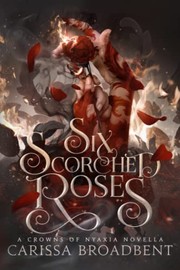
Six Scorched Roses
A dying scholar bargains with a reclusive vampire for blood, and six roses turn a transaction into a slow, dangerous romance.
2,663-word summary · 12 min read
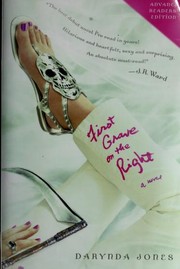
First Grave on the Right
Charley Davidson is a private investigator in Albuquerque and the grim reaper. When three murdered lawyers come back as ghosts, her two jobs collide.
2,770-word summary · 12 min read

River Marked
Mercy and Adam's honeymoon on the Columbia River turns into a fight with an ancient river devil, and Mercy finally learns the truth about her father.
2,008-word summary · 9 min read

Magic Burns
A magic flare hits Atlanta, and mercenary Kate Daniels must recover stolen maps, find a missing witch, and keep a teenage girl alive while Celtic gods try to…
2,021-word summary · 9 min read
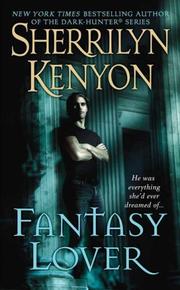
Fantasy Lover
A New Orleans sex therapist summons a cursed Spartan general from an ancient book and gets one month to break his spell.
2,315-word summary · 10 min read

Origins
Stefan's diary of 1864 and 1888: how he and Damon fell for Katherine, became vampires, and went looking for a killer in London.
2,056-word summary · 9 min read
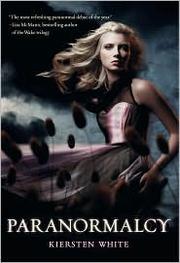
Paranormalcy
A teenage agent who can see through glamour falls for a shape-shifter and learns the agency she works for is hiding her true nature.
2,041-word summary · 9 min read

Lore
Lore Perseous, the last of a hunted bloodline, is pulled back into the Agon when a wounded Athena offers her revenge against the god who killed her family.
2,188-word summary · 10 min read

Blue Moon
Ever Bloom tries to save her immortal boyfriend, Damen, from a mysterious illness while a new student named Roman quietly takes control of her school and her…
1,998-word summary · 9 min read

Glass Houses
Claire Danvers moves off campus to escape a bully and lands in a house where the roommates know Morganville's real secret: the town belongs to vampires.
2,345-word summary · 10 min read

The Indigo Spell
Sydney Sage hunts an aging witch, learns forbidden magic, and finally admits she loves Adrian, while the Alchemist tattoo on her cheek may be controlling her.
2,604-word summary · 12 min read
Pestilence
Firefighter Sara Burns shoots the Horseman Pestilence and discovers he cannot die. Taken captive, she rides with him as his plague sweeps the world.
2,508-word summary · 11 min read
Dreamfever
With the walls between worlds down and Mac broken by the Fae, Dreamfever is the darkest volume of the Fever series, and the one that changes everything.
2,007-word summary · 9 min read