
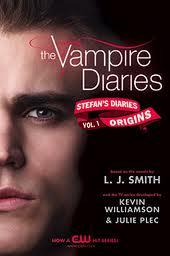
Origins
2,056-word summary 9 min read 237 pages in the book
- First published
- 2010
- Publisher
- HarperTeen
- Pages
- 237
- ISBN
- 9780062003935
- Series
- The Vampire Diaries: Stefan's Diaries (#1)
Reading options
What's inside (8 sections)
I read this one because my sister had the whole box set of the diaries and I wanted to see whether the books were worth the paper. They are worth it for about a hundred pages. The rest is a tie-in novel written to service a television show, and once you see that machinery working you cannot unsee it. HarperTeen published The Vampire Diaries: Stefan's Diaries #1: Origins on November 2, 2010. It runs 237 pages with ISBN 9780062003935. The credit line says based on the novels by L.J. Smith and the TV series developed by Kevin Williamson and Julie Plec, which is the most honest thing on the cover.
The conceit is simple. Stefan Salvatore keeps a diary, and what we read are his entries, dated, from 1864 and then 1888. He is writing to nobody in particular, or to a reader he imagines will understand him, and he keeps circling the same subjects: his brother Damon, a woman named Katherine, and the things the two of them did that he cannot stop apologizing for.
The show these books feed was on the air from September 2008 to March 2017, so this novel arrived two years into a story the audience already owned. A parallel line of Elena's Diaries books covered the other side of the same events, and both were produced as tie-ins, with the publisher, the network, and the studio all taking a cut. Knowing that changes how the pages read. The cover does not pretend otherwise either, since the face on it belongs to the actor who plays Stefan on the show.
What a diary version of a vampire story is
Diary books have a long shadow and most of it is bad. The device usually exists so the author can explain lore while pretending the character is thinking out loud. Origins has that problem, though it does not have it constantly, and the entries are short and dated, which keeps them from bloating.
The format also allows for things a script cannot. A character can misremember, change his mind on paper, report a scene the reader saw some other way, and quietly revise his own account years later. Stefan does all of that, and the effect is a book that seems to be arguing with itself about the same events in a way a televised version of the same story never could.
The bigger issue is that this is not really Smith's book. The novels of the original series were hers, written long before the show existed, and the diaries were written to explain what the show had already shown. That means the plot has to land on certain beats at certain times, and you can feel the scaffolding. Katherine has to be irresistible, the brothers have to be bound to her and then torn apart by her, and the London chapters have to end with a certain name attached to a certain set of murders, because that name is what the audience already knows.
It also means the danger is set in advance. You know where these two are going the moment Katherine walks into Mystic Falls. The pleasure of the book is in the texture of two men who love each other badly, not in surprise.
Mystic Falls in 1864
Mystic Falls, Virginia, in the spring of 1864. Stefan is a young man with a temper and a conscience, already half in love with Rosalyn, a match arranged by family. His brother Damon is the same age, sharper, and angrier, and the two of them work together badly, which is the way most brothers do.
Then Katherine arrives in town. She is not from anywhere, she is older than she seems, and she has a scar on her forehead that nobody asks about. Stefan writes about her as if she is a force of weather. He notices the way she watches people, the calm of her, the way the room changes when she walks into it. Damon notices her too, and the whole book is the story of what that does to a friendship.
Mystic Falls itself gets a paragraph here and there, and Stefan describes it like a man reading a map of a place he cannot leave. The square, the church, the families with their histories, the graveyard. He is right about how dangerous it is to be a known person in a town that size. Two hundred years later the audience would learn the same thing about that town from a different direction, and the writers clearly enjoyed the joke.
The brothers' tenderness is the most convincing thing in the book. They are cruel to each other with the fluency that comes from years of practice, and then a single sentence will show how completely Stefan knows Damon, and the reader understands that neither of them is going anywhere. That is why Katherine can do so much damage. The friendship is not the sturdy thing the story needs it to be.
I liked Stefan here. He is not the tragic romantic of the show so much as a young man with an unusually strong conscience and no idea how to use it. He lies to protect Katherine, he lies to protect Damon, and then he lies to himself about why he is doing it. The diary gives him room to be ashamed of himself in the specific, unhurried way of someone writing at night.
Katherine and the thing the brothers did
The brothers fall in love with the same woman, and Katherine plays them against each other with a skill that is not quite human. Stefan resists longer than Damon does, which surprises him. Damon gives in faster than he admits, and resents Stefan for it.
Katherine is the most interesting thing in the book and also the least. She reaches us almost entirely through the brothers' attention, so we get her as an effect: the way a room tilts, the way Stefan's careful life cracks, the way Damon becomes someone who is easier to talk to. The publisher's own description of the novel calls her a mysterious woman who wants to turn them both into vampires, which is an efficient summary of a plot that spends a long stretch on courtship before anything supernatural happens.
Then Katherine dies, and the book changes shape. What follows is the ugliest stretch of the story: Damon blames Stefan, Stefan blames himself, and the two of them destroy a village while settling a score that is really about a woman. Stefan kills people. Damon kills more people. The diary entries get shorter and less careful as the months go on.
Then both of them become vampires, and the way it happens is not the glamorous transformation the show implies. Katherine turns them. The town turns on them. Mystic Falls is emptied by vampire hunters, and the brothers run for New Orleans with the whole settlement chasing them.
This is the section of the book that I think fans misjudge. People expect a love story and get a horror story about two brothers who murder a town. The horror is the point. Whatever tenderness exists between Stefan and Damon in later seasons was built on what they did in 1864, and the book wants you to sit with that.
New Orleans and the hunters
New Orleans gives them room and takes it away. The city is the right setting for the pair of them because it is a place where anybody can disappear into a crowd, and Stefan uses that. Damon cannot let Katherine go. He rages about her for most of the book, and when he shows up somewhere with her name on his lips and her death on his mind, the reader knows what is going to happen to him.
Meanwhile Stefan discovers what he has become. He tries the animal blood trick, the old way of staying alive without killing, and it is miserable and unsatisfying, and it is exactly how a man behaves who has decided he is a monster and wants to be a tolerable one. He also falls for a human, which the book treats as a mistake and the story treats as a relapse.
Then Damon is taken. A vampire hunter captures him, and Stefan has to decide whether he is willing to trade himself for his brother. The answer is yes, and it costs him. The New Orleans chapters are the best of the book because the stakes are simple and personal and the two of them are on opposite sides of a locked door.
London, 1888
The last stretch moves to the English countryside and then London, twenty-four years later, and the tone changes completely. Stefan is older, calmer, and trying to be good, and the entry dates start jumping in a way that is easy to miss and useful to notice. He has a household and a routine, and the routine is the point: a man who has spent two decades keeping himself still.
He gets involved in the investigation of a killer whose murders have London frightened, and he is certain the killer is a vampire. The reasoning is careful and completely wrong, and Stefan is wrong in exactly the way that makes the section work: he trusts his own nose more than the evidence, and his nose has been right about monsters for twenty-four years. The Ripper material is handled the way the show handled it, with the victims used as atmosphere more than as people, and the fog doing more work than the murderer.
The suspicion falls on Damon. That is the spine of the last third, and it is a good one. Two brothers who did terrible things together, one of them convinced the other is a killer, both of them remembering the version of the past they need in order to survive.
Who wrote it, and who should read it
The credits are worth understanding before you start. These books are ghostwritten by the people who ran the television series. L.J. Smith created the vampires, the brothers, the town, and the whole mythology, but she had been pushed off the books by the time the diaries were being produced, and she later said so publicly and wrote her own continuation of the story on Kindle instead. So the name on the cover is a brand more than a byline, and the writers doing the actual work were making television material in book form.
Read it if you watch the show and want the backstory with the padding removed. Read it if you like gothic atmosphere, because Mystic Falls in 1864 and the fog over London in 1888 are genuinely moody places. Read it if you enjoy seeing a machine work, since this is an unusually clear look at tie-in publishing: a character is put in a situation the audience already knows about, the situation is re-litigated in a voice that sounds literary, and the outcome is decided in advance.
Skip it if you want L.J. Smith's actual writing, because the pleasure of The Awakening and The Return trilogy is in her own sentences and this is not one of them. Skip it if you want a vampire romance, since the book is mostly about guilt and fraternal violence. Skip it if you dislike reading a story whose ending you could guess from the show.
There are six books in this diary line, published between 2010 and 2012, and the later ones follow the pair through the years of running: Bloodlust, The Craving, The Ripper, The Asylum, and The Compelled. Origins is the one that has to build the whole mythology from scratch, and you can see the weight of that job in the setup.
I finished it in two sittings and then handed the box set to my sister with a warning attached. It is a good book for a rainy afternoon, and a strange little artifact of the early 2010s, when a television franchise was still willing to publish its mythology in paperback form and call it a novel. The vampires were not the point. The brothers were, and Stefan writing about Damon, blaming himself, and trying to sound like a better man than he is, is the reason to read it at all.
FAQ
When was Origins published and how long is it?
HarperTeen published The Vampire Diaries: Stefan's Diaries #1: Origins on November 2, 2010. The paperback runs 237 pages with ISBN 9780062003935.
Do I need to watch The Vampire Diaries before reading it?
No. The book introduces the brothers, Katherine, and Mystic Falls as it goes, though it was written for viewers who already know the show and it retells early seasons as backstory.
Who actually wrote Origins?
The series is credited to L.J. Smith but was ghostwritten by Kevin Williamson and Julie Plec, the creators of the show. Smith had been removed from the books by then and later published her own continuation on Kindle.
Similar books
More from The Vampire Diaries: Stefan's Diaries first, then related titles.
The Awakening / The Struggle
A popular high school girl falls for a vampire, then discovers that his dangerous brother wants her too, in the first two books of the Vampire Diaries series.
2,660-word summary · 12 min read

Anatomy: A Love Story
In 1817 Edinburgh, a noblewoman who wants to be a surgeon disguises herself to study anatomy and falls for the grave robber who supplies her with bodies.
2,031-word summary · 9 min read
At Grave's End
Cat and Bones face Max, a zombie-raising ancient vampire, and a prophecy that ties their marriage to Patra's death in the third Night Huntress novel.
2,061-word summary · 9 min read
Masquerade
After Cordelia's death, Schuyler flies to Venice to find her exiled grandfather, then returns to the Blue Bloods as they prepare for a masked ball and a hidden…
2,543-word summary · 11 min read
Born at Midnight
Kylie Galen is sent to a camp for troubled teens and discovers it is a haven for vampires, werewolves, and witches, and that she may be something stranger…
2,310-word summary · 10 min read
Lover Unleashed
Paralyzed vampire warrior Payne and surgeon Manny Manello collide in an adult paranormal romance, as Xcor's Band of Bastards arrives in Caldwell for revenge.
2,374-word summary · 11 min read
Angels' Blood
Nalini Singh's 2009 Guild Hunter opener sends vampire hunter Elena Deveraux after a murderous archangel in New York, while its most powerful ruler watches.
2,367-word summary · 11 min read
Last Night at the Telegraph Club
The 2021 National Book Award winner follows Lily Hu, a Chinese American teenager in 1954 San Francisco, as she falls for Kath and learns what it costs to be…
2,336-word summary · 10 min read
The Diviners
In 1920s New York, Evie O'Neill's ability to read objects pulls her into an occult investigation that awakens something far older and more dangerous.
2,045-word summary · 9 min read
Paranormalcy
A teenage agent who can see through glamour falls for a shape-shifter and learns the agency she works for is hiding her true nature.
2,041-word summary · 9 min read
The Evolution of Mara Dyer
Back in Miami after the asylum collapse, Mara Dyer is treated at Horizons while Jude, who should be dead, stalks her. Noah stays close as the experiments…
2,577-word summary · 11 min read
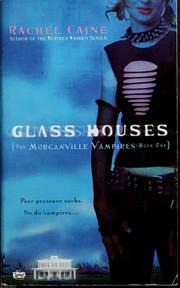
Glass Houses
Claire Danvers moves off campus to escape a bully and lands in a house where the roommates know Morganville's real secret: the town belongs to vampires.
2,345-word summary · 10 min read

The Indigo Spell
Sydney Sage hunts an aging witch, learns forbidden magic, and finally admits she loves Adrian, while the Alchemist tattoo on her cheek may be controlling her.
2,604-word summary · 12 min read
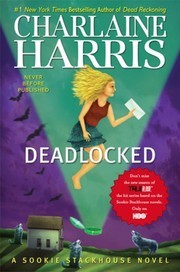
Deadlocked
A dead woman on Eric's lawn starts a murder investigation, a vampire queen wants Eric as her consort, and the fairies in Sookie's life close in.
2,885-word summary · 13 min read
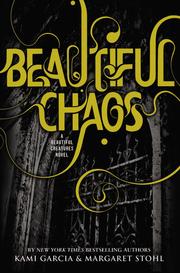
Beautiful Chaos
Ethan Wate is losing himself piece by piece as the broken Order of Things demands a sacrifice, and the answer may be the last person anyone expected.
2,068-word summary · 9 min read
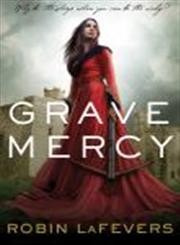
Grave Mercy
Convent assassin Ismae spares Gavriel and hunts traitors in Brittany.
2,357-word summary · 10 min read
Chain of Gold
Cordelia and James hunt demons in Edwardian London while hearts tangle.
2,364-word summary · 11 min read
Vampire Knight, Vol. 1
Guardian Yuki protects Day students from secret vampire Night Class while Zero hates what he may become.
2,106-word summary · 9 min read
Dead Reckoning
Sookie confronts the firebombing of Merlotte's, Sandra Pelt's revenge, and a vampire power struggle while questioning her future with Eric.
2,391-word summary · 11 min read
The Gentleman's Guide to Vice and Virtue
Bisexual heir Monty flees across Europe with his crush Percy and sister Felicity after stealing a dangerous box.
2,724-word summary · 12 min read
Blue Bloods
At an elite Manhattan school, Schuyler Van Alen learns she is a forbidden half-vampire as someone starts killing her kind.
2,725-word summary · 12 min read
Beautiful Darkness
After Macon's death, Lena pulls away and Ethan follows her into the Tunnels toward a dangerous choice.
2,647-word summary · 12 min read
Stalking Jack the Ripper
Lord's daughter Audrey Rose studies corpses in secret while the Ripper works Whitechapel beside Thomas.
2,030-word summary · 9 min read
Burned
Zoey's soul hides in the Otherworld while Stark must die to fetch her and Stevie Rae burns secrets.
2,074-word summary · 9 min read
From Dead to Worse
Sookie mediates a Were war and vampire takeover while learning about her fairy blood.
2,533-word summary · 11 min read
Dead and Gone
Weres reveal themselves as Sookie faces a murder, a Fellowship trap, and a brutal fairy war.
2,798-word summary · 12 min read
Bloodlines
Alchemist Sydney Sage hides Moroi princess Jill in Palm Springs, where tattoo shops and old vampires test every rule she was taught.
2,622-word summary · 12 min read
Definitely Dead
Sookie heads to New Orleans for her dead cousin estate and finds witches, vamps, and family curses.
2,027-word summary · 9 min read