
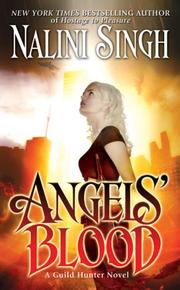
Angels' Blood
2,367-word summary 11 min read 368 pages in the book
- First published
- 2009
- Publisher
- Berkley
- Pages
- 368
- ISBN
- 9780425226926
- Series
- Guild Hunter (#1)
Reading options
What's inside (9 sections)
Angels' Blood is the first of Nalini Singh's Guild Hunter novels, and it is worth being straight about what that means before you start. This is an adult paranormal romance with explicit sex, wrapped around a fairly lean detective story, set in a New York where archangels own the skyline and vampires sign a century of servitude for the privilege of being made. If that is not your kind of book, no amount of praise for the world-building will change that. If it is, you are in for a long haul, because Singh has since written seventeen more.
A contract she cannot refuse
Elena Deveraux is a Guild hunter, which means she tracks down vampires who have run away from the angels who made them and brings them back. She is what the Guild calls hunter-born: she can smell a vampire through a crowded subway car, and she carries a filleting knife strapped to her thigh. She is also the kind of person who complains to her best friend about the job and takes it anyway.
The work itself is worth a minute because it explains who she is. A vampire is Made by an angel in exchange for a century of servitude, and a few of them decide to run. The Guild's hunters go and get them back, undamaged, because the angel owns the contract and the angel is not sentimental about property. That means necklets, paperwork, flights out of the city with the captive, and money at the end of it. It also means Elena spends most of her working life near creatures who would eat her if she let them, and she does it for money and for the one good reason that the vampires she hands back are not being let loose on the streets.
The novel opens on a routine capture in the Bronx. A young vampire named Jerry is boasting into his phone about escaping his master, an angel called Mr. Ebose, and Elena snaps a control necklet on him and hauls him to a car. The handover happens on a private airstrip, the captive goes to Sydney, and a guard hands her a second envelope. The signature on the order belongs to Raphael, Archangel of New York, who has killed people in Times Square slowly enough for the footage to air.
Her friend Sara Haziz, who runs the Guild, tells her she had no choice. Then Elena goes up to the roof of Archangel Tower, which is not a metaphor for anything. It is a building, and Raphael runs his territory from the top of it.
He tests her by producing two freshly made vampires and asking her to find them. She identifies both and works out that the older one has already moved down to the lobby, and he applauds. He also pushes at her mind while she is sitting in a chair, hard enough that she cuts her own hand on her own knife. When she accuses him of it, he does not deny it. The job, he explains, is not retrieval. The job is to find an archangel.
The tower, the party, and the fall
The archangel is Uram, one of the ten most powerful beings on earth, and the leadership agrees unanimously that he has to die. Raphael's plan is simple and unkind: Elena tracks, Raphael executes. She is the only person who can do the tracking because she can scent him, and she cannot be told why the ten want him dead.
What follows is a long education in how much power one person can hold over another. Raphael drags her into the sky over Manhattan to talk, and when she loses her temper and swings at him, he opens his arms and drops her. She lands on the Tower roof alive, mostly because he decided she would. He takes her down to a party on the vampire floor, where celebrities and executives come voluntarily to be seduced, and where Dmitri, his ancient second, sprays an erotic scent designed to overwhelm a hunter. Elena puts a knife to his throat and holds him off, which is the moment she stops being a useful tool and starts being a problem.
The party itself is a good argument and Singh makes it properly. Elena arrives assuming the powerful and the wealthy are being preyed on. Raphael points out that every person on that floor is there by choice, that the vampires are providing something people cannot buy anywhere else, and that her own instincts about who gets hurt are not reliable. She concedes the point, which irritates him more than defiance would have.
She asks for the one thing that might protect her, a binding oath that he will not harm her or the people she loves. What arrives on her balcony instead is a rose cut from a single diamond. She throws it back at him in his office, they argue about whether human lives matter to an angel, and then he kisses her. She is pulled into it for a moment and then feels sick, because she cannot tell how much of it was hers. He pins her to the wall and sends her away.
Afterward he sits alone in the dark and realizes he has not lost control of anything in centuries. Then he goes to consult Lijuan, the oldest archangel alive, in a sensory deprivation chamber, and gets the answer he does not want: Elena is one of those rare humans who can make an archangel feel human again, which is wonderful and also dangerous, because it will eventually make him mortal. Lijuan tells him to kill her now.
The Cellars, and a bullet in a wing
Elena runs. She cuts Dmitri's throat to buy herself seconds, and Ransom drives her to the Cellars, a secret bunker under Guild headquarters run by Vivek. She sends Ransom away so that his scent cannot lead Dmitri to him, and she stays underground while the Governor and the President demand answers about the mess she has made in the city.
She works the case in parallel with the hiding. Ashwini arrives from Europe with the news that Uram's servants were found beheaded around the time he disappeared. Sara gives Elena access to the Guild's restricted files, which include a note about what happens when the transformation goes wrong. Elena goes to a bank and learns that her father opened a safe deposit box in the same summer he erased every trace of her mother and her sisters. She cannot open it. She leaves it. That is the whole of her family in one gesture, and Singh barely pauses on it.
Then Raphael comes for her in person, and everything nearly ends early. He breaks her window, appears behind her, and she puts a single shot into his wing. The wound will not close. Dmitri has her bound in a chair in the Tower and feeds her by hand. Raphael heals through anshara, the healing trance an angel falls into when mortally hurt, and while he is under it he relives his childhood with his mother Caliane, who broke him and told him he would one day kill her. He wakes with a gold-patterned scar on the wing, and he decides not to punish her for shooting him.
What Uram had become
The case becomes legible in pieces. Seven bodies in Brooklyn, their hearts removed and mailed to Michaela, the archangel who ruled Central Europe and who was Uram's lover for centuries. Elena finds the warehouse where they were hung and drained, follows the blood out to a shed, and finds a survivor hiding there, naked and covered in it. Raphael tears a vampire's heart out of Michaela's guard for threatening Elena, which is casual in a way that stays with her.
The hunt takes her to an upscale townhouse east of Central Park where the victims have been tortured with a blade rather than drained, and Elena realizes these were practice. She also puts a name to what Uram is becoming: an Angel of Blood, a condition any archangel can fall into, driven mad by the same toxin the angels use to make vampires. Uram is not evil in the ordinary sense. He is broken in a specific way, and it is spreading. The book cuts away to him in short interludes, and the effect is worse than the crime scenes, because he is still an archangel and still thinks he is being sane.
Two threads of the case pull the hunt toward Elena's own family. Uram sends the heart of Elena's father's mistress, a woman who looked like Elena's dead mother, to make a point. He lures Elena's father's assistant, Geraldine, to a children's museum and nearly kills her, taking her ring as a trophy for Michaela. Uram's escalation is relentless, and the book handles the horror of it with less fuss than the romance, which is either honest about genre priorities or a flaw, depending on your taste.
The Angel of Blood
The romance finally lands. Raphael and Elena set rules: fidelity for as long as the pull between them lasts. They end up in his bath, then his bed, and the next morning Elena wakes with a shimmer on her skin that Raphael says arrived because he let his guard down. He tells her the truth about the bloodborn, about the Cadre's secrecy, and about what they do to humans who learn too much, and she says she would rather die than have her mind touched. He takes it as a vow.
What follows is a killing spree. Michaela's guards are down, Uram tears out her heart and puts a ball of flame in the cavity, and Raphael drags the fire out of her in time. Five drained bodies turn up in Battery Park. Illium is ambushed from the sky and badly hurt, and while Raphael is searching for Elena she wakes up in a room full of corpses, with a starved vampire locked in a cage to watch.
Uram breaks her ankle to teach her who is in charge, and Elena uses the pain to send Raphael sensory details through their link, the smell of a construction site, so he can find her. He blasts through the wall. The fight goes up above Manhattan, angelfire against angelfire, with Raphael shielding her with his body for the entire thing.
Above Manhattan, and then a year of silence
Raphael finds her on a narrow ledge, broken and barely alive. She is dying. Raphael tells her the truth she has been circling for a hundred pages: angels make vampires by putting toxin into human bodies, and Uram's blood has given Raphael just enough toxin to try it on her. He kisses her to begin the transformation, the ledge gives way, and they fall together until angels catch them.
Then a year passes. Sara and Ransom break into the Tower and are told Elena is in a coma and has been turned. The Cadre has already started dividing Uram's territory. Raphael, three months into his own recovery, refuses them access to her. The reader is left with the same information as the Guild, which is either a cruel structural choice or an efficient one.
When Elena wakes, she assumes she is a vampire and is furious about it, and the first thing she does is set terms: Raphael is to be her only source of blood and he is to stay faithful. Then she notices the wings. They are midnight blue at the base, fading toward dawn, tipped in white. She is the first human ever made into an angel, and the mechanism was ambrosia, a substance an archangel's body produces only when that archangel loves true.
The epilogue finds her still weak in bed at the Refuge, the angelic stronghold where Raphael has hidden her. Sara is smuggled in and nearly faints at the wings. Outside, Dmitri suggests erasing Sara's memory to protect the location; Raphael declines and says he will trust Elena's judgment about her friend, which is the whole book in one decision.
Where it strains
The honest weaknesses are worth naming. The romantic arc starts in the last third, and for two hundred pages the thing driving the book is Elena being handled: drugged, threatened, flown against her will, tied to a chair. The power imbalance is deliberate and the point of the story, but it also means that the reader has to wait a long time for any sense of mutuality. The mystery is thinner than the romance, and the world is explained in infodumps, usually by Lijuan or by the increasingly unreliable Guild.
The case itself is a fine engine but not a hard one. There are no false leads worth the name, and Elena's hunter skills get less use once she is emotionally occupied. Singh is also fond of a very specific kind of alpha male: beautiful, ancient, lethal, and wrong on purpose. If you have read her before you know the joke, and if you have not, the first fifty pages can read as a power fantasy with a hunt attached.
The violence against women is the other thing readers argue about. The book is not squeamish about what Uram does to his victims, and the horror is written plainly, but it is also treated as a device to push the couple together, and Elena's fear of it is what finally makes her body honest with Raphael. Singh is aware of the effect. Whether it works is a matter of taste.
What survives all that criticism is the thing Singh is actually good at, which is the two of them. The Tower roof, the bath, the ledge and the year of silence are written with real intelligence about what it costs to be wanted by someone who can end you with a thought. And the ending is not a clean triumph. Elena gets wings, and the Guild strikes to get her back, and an archangel who has spent fifteen centuries making decisions for everyone is learning to ask before he acts. That is a good place to leave book one.
FAQ
Does Angels' Blood contain explicit content?
Yes. It is an adult paranormal romance with explicit sex scenes, strong language and graphic violence against victims. Readers looking for a clean fantasy adventure will not find one here.
Is Angels' Blood the first book in the Guild Hunter series?
Yes. It is book one, first published by Berkley in March 2009, and it introduces vampire hunter Elena Deveraux and Raphael, the Archangel of New York.
What happens to Elena at the end of Angels' Blood?
She is mortally wounded during the fight with Uram, and Raphael makes her into an angel rather than a vampire using ambrosia, a substance an archangel's body produces when that archangel loves true. She wakes after a year in a coma with wings that fade from midnight blue to dawn.
Similar books
More from Guild Hunter first, then related titles.
At Grave's End
Cat and Bones face Max, a zombie-raising ancient vampire, and a prophecy that ties their marriage to Patra's death in the third Night Huntress novel.
2,061-word summary · 9 min read
Lover Unleashed
Paralyzed vampire warrior Payne and surgeon Manny Manello collide in an adult paranormal romance, as Xcor's Band of Bastards arrives in Caldwell for revenge.
2,374-word summary · 11 min read

The Awakening / The Struggle
A popular high school girl falls for a vampire, then discovers that his dangerous brother wants her too, in the first two books of the Vampire Diaries series.
2,660-word summary · 12 min read
Lover Enshrined
Phury's celibacy, addiction, and duty collide when Cormia enters his life, in J.R. Ward's sixth Black Dagger Brotherhood novel of war, ritual, and mating built…
2,630-word summary · 12 min read
Lover Unbound
Scarred genius Vishous falls for human surgeon Jane after a Lesser attack pulls her into his hidden war.
2,786-word summary · 12 min read
Lover Revealed
Human cop Butch loves Marissa from afar until Lessers take him and the Brotherhood fights to bring him home.
2,592-word summary · 12 min read

Masquerade
After Cordelia's death, Schuyler flies to Venice to find her exiled grandfather, then returns to the Blue Bloods as they prepare for a masked ball and a hidden…
2,543-word summary · 11 min read

Origins
Stefan's diary of 1864 and 1888: how he and Damon fell for Katherine, became vampires, and went looking for a killer in London.
2,056-word summary · 9 min read
Circus of the Damned
A rogue master vampire arrives in St. Louis and Anita Blake is caught in an undead turf war, with a science teacher in the crossfire.
2,757-word summary · 12 min read
Paranormalcy
A teenage agent who can see through glamour falls for a shape-shifter and learns the agency she works for is hiding her true nature.
2,041-word summary · 9 min read
Glass Houses
Claire Danvers moves off campus to escape a bully and lands in a house where the roommates know Morganville's real secret: the town belongs to vampires.
2,345-word summary · 10 min read
Deadlocked
A dead woman on Eric's lawn starts a murder investigation, a vampire queen wants Eric as her consort, and the fairies in Sookie's life close in.
2,885-word summary · 13 min read

One Foot in the Grave
Cat hunts vampires with Bones while her Sire plots from the grave.
2,200-word summary · 10 min read
Dead Reckoning
Sookie confronts the firebombing of Merlotte's, Sandra Pelt's revenge, and a vampire power struggle while questioning her future with Eric.
2,391-word summary · 11 min read

Halfway to the Grave
Half vampire Cat hunts rogues to atone until Bones captures her and pulls her into vampire politics and love.
2,995-word summary · 13 min read
Lover Awakened
Scarred Brother Zsadist stands guard over Bella after Lessers take her in Caldwell. Book three of the Black Dagger Brotherhood pairs rescue with slow trust and…
2,468-word summary · 11 min read
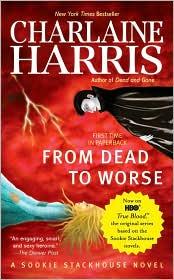
From Dead to Worse
Sookie mediates a Were war and vampire takeover while learning about her fairy blood.
2,533-word summary · 11 min read
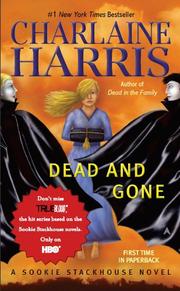
Dead and Gone
Weres reveal themselves as Sookie faces a murder, a Fellowship trap, and a brutal fairy war.
2,798-word summary · 12 min read
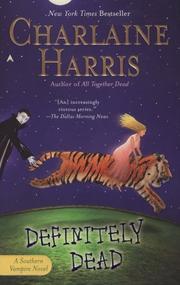
Definitely Dead
Sookie heads to New Orleans for her dead cousin estate and finds witches, vamps, and family curses.
2,027-word summary · 9 min read
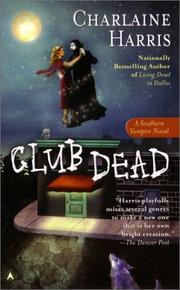
Club Dead
Sookie hunts missing Bill in Jackson, posing with a werewolf at vampire Club Dead.
2,324-word summary · 10 min read
Dead Until Dark
Sookie Stackhouse, a telepathic waitress in Bon Temps, falls for vampire Bill Compton as local murders close in.
2,751-word summary · 12 min read
The Tale of the Body Thief
Lestat trades bodies with a psychic thief for one day of mortality and ends up trapped, sick, and hunting his own vampire body.
2,069-word summary · 9 min read

Six Scorched Roses
A dying scholar bargains with a reclusive vampire for blood, and six roses turn a transaction into a slow, dangerous romance.
2,663-word summary · 12 min read
First Grave on the Right
Charley Davidson is a private investigator in Albuquerque and the grim reaper. When three murdered lawyers come back as ghosts, her two jobs collide.
2,770-word summary · 12 min read

River Marked
Mercy and Adam's honeymoon on the Columbia River turns into a fight with an ancient river devil, and Mercy finally learns the truth about her father.
2,008-word summary · 9 min read

Magic Burns
A magic flare hits Atlanta, and mercenary Kate Daniels must recover stolen maps, find a missing witch, and keep a teenage girl alive while Celtic gods try to…
2,021-word summary · 9 min read
Fantasy Lover
A New Orleans sex therapist summons a cursed Spartan general from an ancient book and gets one month to break his spell.
2,315-word summary · 10 min read

Born at Midnight
Kylie Galen is sent to a camp for troubled teens and discovers it is a haven for vampires, werewolves, and witches, and that she may be something stranger…
2,310-word summary · 10 min read

There Are No Saints
Two rival artists circle a struggling San Francisco painter. Cole Blackwell wants her, Alastor Shaw wants her dead. Book one of the Sinners duet.
2,190-word summary · 10 min read
The Diviners
In 1920s New York, Evie O'Neill's ability to read objects pulls her into an occult investigation that awakens something far older and more dangerous.
2,045-word summary · 9 min read