
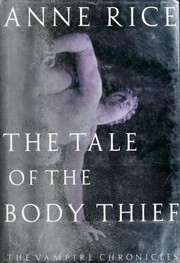
The Tale of the Body Thief
2,069-word summary 9 min read 448 pages in the book
- First published
- 1992
- Publisher
- Knopf
- Pages
- 448
- ISBN
- 9780679405283
- Series
- The Vampire Chronicles (#4)
Reading options
What's inside (9 sections)
The first time I read this book I was mostly annoyed with Lestat. He has everything, and he spends the opening chapters sulking about it. Then I got to the Gobi Desert and the reason for the sulk landed. He is not bored. He is tired of being a monster, and he has decided that the only honest way to say it is to lie down in the sand and let the sun kill him. It does not kill him. That failure sets up everything else.
Anne Rice published The Tale of the Body Thief with Knopf in 1992, 448 pages, the fourth of The Vampire Chronicles. It picks up after The Queen of the Damned, with Akasha gone and Lestat suddenly without a war to fight. He is rich, famous among the undead, and completely alone. Claudia is dead, and he still dreams about her. Louis is somewhere being Louis. Armand is not speaking to him. The only person he can stand to visit is David Talbot, the elderly head of the Talamasca, the order that watches vampires and witches and writes everything down.
David is the best thing in the early chapters. He is old, careful, and fond of Lestat in a way that never turns sentimental. Lestat keeps offering to make him a vampire. David keeps refusing. Their friendship is the one relationship in the book where Lestat has to behave like a guest instead of a prince, and Rice writes those scenes with real warmth.
The offer on the roof
Raglan James enters the story the way a bad idea usually does: politely, and with a business proposition. He sends messages. He arranges a meeting. He tells Lestat he can move a consciousness from one body to another, and he offers a trade. Lestat can have a mortal body for a day, just long enough to remember what weather feels like, and James can borrow the vampire body for the same day. Then they switch back.
Lestat asks David about him. David knows the name. James was a psychic with real talent who joined the Talamasca and was thrown out for stealing, not once but as a habit. He is a kleptomaniac who has stolen houses, cars, and at least one body. He is also clever enough to have survived cancer by jumping into someone else. That should be enough warning. Lestat hears the warning and treats it as a reason to be interested.
The part Lestat never asks about is where the mortal body came from. James has been jumping for years. He started when he was dying of cancer and talked a man in a mental institution into taking his place. Since then he has moved from body to body, leaving other people to wake up in whatever wreck he was finished with. Lestat knows this, or knows enough of it, and he still sits down at the table. That is the first real clue about what the book is doing. Lestat is not tempted by a mystery. He is tempted by a way out of himself, and he is willing to ignore the cost to someone else to take it.
The swap itself is almost anticlimactic. Rice does not give us a machine or a ritual. James does something with his mind, and Lestat opens his eyes in a body that hurts. It is heavier than his own. It breathes without being asked. It has a heartbeat that he can hear in his ears. He is mortal again, and the first thing he notices is not the sun or the food. It is the cold.
A mortal in Washington
James disappears with Lestat's body, and Lestat goes to Washington, D.C. It is winter. He walks around in a coat that is not warm enough, eats food that tastes like cardboard, and gets sick. The pneumonia comes on fast. Rice is good at this part. She lets the body be gross and inconvenient. Lestat sweats through his clothes, coughs until his ribs hurt, and discovers that a fever makes it hard to think. Immortality had spoiled him. He had forgotten that a human being is a machine that can break.
Gretchen finds him. She is a nun, or close enough to it, on her way back to a convent in South America. She takes him to a hotel room, feeds him soup, and does not panic when he tells her the truth. Before that, though, there is a stretch where he is alone and ordinary. He orders food and cannot taste it the way he expected. He tries to sleep and cannot get warm. He listens to the city through a mortal's ears, which is to say badly, and realizes how much of his old life was built on senses that are now gone. Rice spends pages on that dullness. It is not exciting, and it is the point.
Gretchen is not impressed by him. She likes the man in front of her, not the legend. When she leaves, she leaves cleanly. Rice does not drag it out, and the book is better for that.
This section is where the novel does something the other Vampire Chronicles books mostly avoid. It lets Lestat be small. He cannot hypnotize his way out of a fever. He cannot fly away from a cold room. He has to ask for help and wait for it. For a character built on defiance, that is a real change, and Rice writes it without making him noble.
The body does not come back
The day ends, and James does not return. Lestat waits. Then he understands. The trade was never a trade. James wanted a vampire body, and he has one now. Lestat is stuck in a mortal body that is still sick, with no money, no papers, and no way to reach the people who might help him.
He goes to Louis first. Louis listens, and then says no. He will not turn Lestat's new body into a vampire. Part of it is practical. Part of it is that Louis thinks Lestat wanted this, and maybe he did. Louis also has not forgiven him for the way he was written about in The Vampire Lestat, which is a funny, petty detail that makes the refusal feel real. These two have centuries of history, and most of it is unfinished business.
Marius is worse. He is furious. Lestat handed a vampire body, one of the most powerful in the world, to a thief, and Marius has no patience for the romance of mortality. Lestat leaves that conversation feeling like a child who has broken something expensive.
David is the one who stays. He is old and mortal himself, and he should be the most cautious of all of them. Instead he helps. He uses Talamasca resources, makes calls, and tolerates Lestat's moods. The book quietly turns David into the adult in the room, which makes the ending hurt more.
The hunt on the Queen Elizabeth 2
Tracking James turns out to be easy, because James cannot stop being James. He has Lestat's face and Lestat's strength, and he uses them to steal jewelry and drain people in expensive places. He books passage on the Queen Elizabeth 2 and leaves a trail of bodies and missing rings. Lestat and David follow him aboard.
The ship section is the most fun in the book. Lestat is weak, mortal, and surrounded by people who would kill him if they knew what he was. James is in the strongest body on the ship and still cannot resist a display. Rice lets the two of them circle each other in dining rooms and corridors, and the tension comes from the fact that Lestat cannot win a fight. He has to use his brain, and his brain is foggy with fever.
They get the body back. The switch happens at sunrise, which means Lestat has seconds to get out of the light. He finds a dark place and collapses. When he wakes, David is gone and James is gone. The book does not give him a clean victory. It gives him his body and a new problem.
The trick in Florida
Lestat finds David in Florida. David is different. He is younger, or at least he looks it, and he says he has changed his mind about being a vampire. He wants it now. Lestat, who has wanted this for years, does not question the wish too hard. He starts the transformation.
Then he tastes the blood and understands. This is not David. James is inside David's body. When Lestat forced him out of the vampire body, James jumped into the nearest available mind instead of returning to his own. David is somewhere else, probably in the body James left behind, and the old man Lestat is holding is the thief wearing his friend's face.
Lestat hits him. He crushes his skull. The blow is not a careful one. It damages the brain so badly that James cannot jump again. He dies in David's body, which means David's original body dies with him. It is a brutal, ugly scene, and Rice does not soften it. Lestat has saved his friend and destroyed part of him at the same time.
David, it turns out, is in James's old body. He is younger than he was, healthy, and free of the arthritis and fatigue that had been closing in on him. He is also shaken. He has been a passenger in his own life for days. The book does not pretend that this is a happy accident. It is a violation that happens to leave him with a better body.
What David wanted
Here is where the novel surprised me. David does not go back to being the wise old head of the Talamasca. He decides he likes the new body. He decides he wants to stay in it, and he decides he wants to be a vampire after all. Lestat turns him. The scene is not romantic. It is two friends doing something irreversible because they are both tired of being alone.
Then David disappears. Lestat looks for him and cannot find him. When David finally surfaces, he has already talked to Louis, and he has plans. He wants to go to Rio with Louis. He also wants to take over, or at least stop deferring to Lestat. The old David would have been embarrassed by the maneuver. The new David seems to enjoy it.
Lestat ends the book alone. He has his body, his house in New Orleans, and his old habits. He has not recovered his humanity. He has not made amends for the things he did. The experiment failed in the way that matters, and the last pages are honest about it.
Why it works, and where it sags
The best argument for this book is that it takes Lestat's central complaint seriously. He says he misses being human. Rice puts him in a human body and makes him sick, cold, hungry, and dependent. It turns out that being human is mostly discomfort, and Lestat is not good at discomfort. That is a sharp joke, and the book knows it.
The weakest part is the middle. Once Lestat is human, the plot becomes a chase, and the chase is not very complicated. James is a good villain for about a hundred pages, then he becomes a man with a boat ticket and a jewelry habit. The novel also repeats itself. Lestat explains his loneliness, then explains it again, then visits another vampire who tells him the same thing. At 448 pages, it could lose fifty without hurting.
The ending has a different problem. David's transformation is the most interesting thing in the book, and it happens off the page. We get the aftermath instead of the choice. I wanted the conversation where David admits he wanted this all along, and Rice gives us the summary of that conversation instead.
Still, I keep thinking about the Gobi Desert. Lestat goes there to die and cannot. Then he spends the rest of the novel trying to get back into a body that can die, and when he finally does, he hates it. That loop is the whole book. Rice does not resolve it. She just lets him stand in it, alone, with the sun coming up.
FAQ
Where does The Tale of the Body Thief fall in The Vampire Chronicles?
It is the fourth book, published by Knopf in 1992. It follows The Queen of the Damned and precedes Memnoch the Devil.
Who is Raglan James?
He is a psychic and former Talamasca member expelled for stealing. He has survived by swapping bodies, and he wants Lestat's vampire body for himself.
Do I need to read the earlier Vampire Chronicles books first?
It helps. The novel assumes you know Lestat, Louis, Armand, and the events of The Queen of the Damned, and David Talbot has appeared before.
Similar books
More from The Vampire Chronicles first, then related titles.

Interview with the Vampire
Louis tells a reporter how Lestat made him and how Claudia doomed them all in New Orleans and Paris.
2,195-word summary · 10 min read
The Vampire Lestat
Lestat tells his own tale from French village to rock star, waking ancient ones who hate questions.
1,916-word summary · 9 min read
The Queen of the Damned
Rock star Lestat wakes Akasha, mother of vampires, who plans to cull men.
2,100-word summary · 9 min read
NOS4A2
Vic McQueen's bike finds lost things through a bridge, pitting her against Manx's Rolls-Royce ride to Christmasland.
2,060-word summary · 9 min read
The Witching Hour
A San Francisco surgeon inherits a haunted New Orleans house where a spirit has courted her witches for centuries, until a Christmas Eve birth gives it living…
2,953-word summary · 13 min read
At Grave's End
Cat and Bones face Max, a zombie-raising ancient vampire, and a prophecy that ties their marriage to Patra's death in the third Night Huntress novel.
2,061-word summary · 9 min read
Lover Unleashed
Paralyzed vampire warrior Payne and surgeon Manny Manello collide in an adult paranormal romance, as Xcor's Band of Bastards arrives in Caldwell for revenge.
2,374-word summary · 11 min read
Locke & Key, Vol. 1: Welcome to Lovecraft
After their father is murdered, the Locke children move into a haunted family estate where keys unlock doors to ghosts, other places, and dangerous secrets.
2,019-word summary · 9 min read
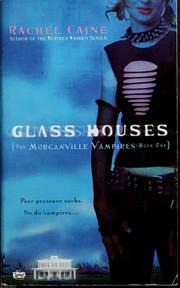
Glass Houses
Claire Danvers moves off campus to escape a bully and lands in a house where the roommates know Morganville's real secret: the town belongs to vampires.
2,345-word summary · 10 min read
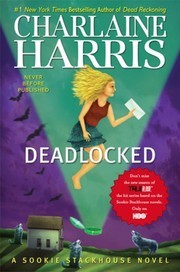
Deadlocked
A dead woman on Eric's lawn starts a murder investigation, a vampire queen wants Eric as her consort, and the fairies in Sookie's life close in.
2,885-word summary · 13 min read
Horns
Accused of killing Merrin Williams, Ig Perrish wakes with horns that force strangers to confess their darkest sins.
2,264-word summary · 10 min read

The Talisman
Twelve-year-old Jack Sawyer flips between America and the Territories to find a Talisman that can save his dying mother.
2,050-word summary · 9 min read
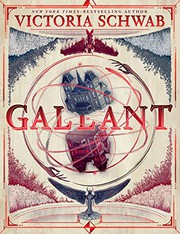
Gallant
Mute Olivia Prior returns to Gallant manor where ghouls walk and a shadow Recommends.
2,081-word summary · 9 min read
Dead Reckoning
Sookie confronts the firebombing of Merlotte's, Sandra Pelt's revenge, and a vampire power struggle while questioning her future with Eric.
2,391-word summary · 11 min read
Carmilla
Lonely Laura in Styria befriends beautiful Carmilla, whose night visits bring dreams, bites, and ancestral dread.
2,158-word summary · 10 min read
Guilty Pleasures
Animator Anita hunts a vampire killer while Jean-Claude pulls her close.
2,136-word summary · 9 min read
Insomnia
Widowed Ralph stops sleeping in Derry and sees small doctors with scissors deciding who lives and dies.
3,605-word summary · 16 min read
From Dead to Worse
Sookie mediates a Were war and vampire takeover while learning about her fairy blood.
2,533-word summary · 11 min read
Dead and Gone
Weres reveal themselves as Sookie faces a murder, a Fellowship trap, and a brutal fairy war.
2,798-word summary · 12 min read
Definitely Dead
Sookie heads to New Orleans for her dead cousin estate and finds witches, vamps, and family curses.
2,027-word summary · 9 min read
Club Dead
Sookie hunts missing Bill in Jackson, posing with a werewolf at vampire Club Dead.
2,324-word summary · 10 min read
The Historian
A daughter traces her father's search for Dracula through letters and archives across Europe.
3,237-word summary · 14 min read
Dead Until Dark
Sookie Stackhouse, a telepathic waitress in Bon Temps, falls for vampire Bill Compton as local murders close in.
2,751-word summary · 12 min read
'Salem's Lot
A writer returns to Jerusalem's Lot as an old house fills with vampires.
2,046-word summary · 9 min read
Miss Peregrine's Home for Peculiar Children
Jacob Portman finds his grandfather dead in the woods, follows a cryptic letter to a ruined orphanage in Wales, and meets children living inside a repeating…
2,331-word summary · 10 min read
Dracula
Count Dracula sails for England in letters and diaries, and Van Helsing leads the hunt to stop him.
2,860-word summary · 13 min read
What Moves the Dead
Alex Easton arrives at the Usher house to find Madeline dying, the tarn full of fungus, and the local hares refusing to stay dead.
2,586-word summary · 11 min read
The Only Good Indians
Four Blackfeet men who killed a pregnant elk are hunted by her spirit a decade later, and the only person who can end the cycle is a teenage girl who was not…
2,010-word summary · 9 min read
Six Scorched Roses
A dying scholar bargains with a reclusive vampire for blood, and six roses turn a transaction into a slow, dangerous romance.
2,663-word summary · 12 min read

Lisey's Story
Two years after her novelist husband dies, Lisey Landon follows a trail of clues into his childhood and the other world that made him a writer.
1,998-word summary · 9 min read