
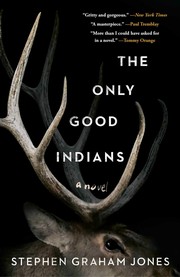
The Only Good Indians
2,010-word summary 9 min read 305 pages in the book
- First published
- 2020
- Publisher
- Saga Press
- Pages
- 305
- ISBN
- 9781982136451
Reading options
What's inside (7 sections)
The first thing to know about The Only Good Indians is that it is not a ghost story in the usual sense. Something comes back, yes, and it is angry, and it kills people in ways that are hard to read without flinching. But the thing that comes back is an elk, and the people it hunts are Blackfeet men who did something stupid and cruel ten years earlier. Stephen Graham Jones takes the revenge-horror template and fills it with reservation life, basketball, family, and a guilt that has been sitting in the characters' bodies for a decade.
Jones is a member of the Blackfeet Nation, and the novel came out in 2020 from Saga Press. It is 305 pages in the hardcover, but it feels denser than that, because the prose is doing a lot of work at the sentence level. He writes in a close third person that slides into his characters' thoughts without warning, and he lets Blackfeet speech patterns and jokes and digressions sit on the page instead of smoothing them out for outsiders.
Four men and a field
The book opens with Ricky, who has left the reservation and is working in North Dakota. He is outside a bar when an elk wanders into the parking lot and damages some cars. The white patrons see Ricky with the elk and decide he is responsible, or maybe they just decide he is available. They chase him into a field and beat him to death. It is a brutal scene, and Jones makes sure you notice how ordinary the racism is. Nobody plans a lynching. A group of men just finds a reason.
Ricky's death is the first repayment. Ten years earlier, Ricky, Lewis, Gabe, and Cass had gone hunting in the elder's section of the reservation, a place they were not supposed to be. They found a herd and shot a pregnant doe. Lewis kept shooting her even after she was down. When they realized she was carrying a calf, they buried the fetus and tried to convince themselves it was an accident. Then a game warden caught them and made them dispose of the mother's body, which meant the meat was wasted, which meant the killing had no purpose at all.
That is the crime. Not a murder, exactly. A hunt that should never have happened, a pregnant animal killed for no reason, and four young men who did not want to look at what they had done. The elk remembers.
Lewis and the dog
Lewis is the second to be hunted. He has moved to Colorado, married a white woman named Peta, and built a life that looks normal from the outside. He works, he has a dog, he loves his wife. Then he starts seeing an elk in the house. Not a hallucination exactly, or not only that. The image of the dead elk appears on the floor below him, and he almost falls to his death. Peta saves him.
Lewis tells Peta and his coworker Shaney about the hunt. Shaney is Crow, and she listens in a way that makes Lewis uneasy. Their dog is found hanging by its tether, still alive, and then later it is found stomped to death by someone wearing a pair of boots that Lewis owns. Lewis becomes convinced that Shaney is the elk spirit in human form. He invites her over and engineers a motorcycle accident that kills her.
It is a horrible sequence because Lewis is not a monster in the ordinary sense. He is a man drowning in guilt and turning that guilt outward. When Peta comes home and startles him, she falls and dies. Lewis looks at her body and decides that she must have been the elk too, that the proof is inside her. He cuts her open and an elk calf comes out. He takes the calf and tries to drive it back to the reservation, hoping to return it and end the curse. The police kill him on the way.
Jones does something clever with Lewis's section. He lets you inside the paranoia, so for a while you are not sure whether Shaney is a person or a spirit. The reveal that Lewis has killed an innocent woman is worse than any supernatural attack. The elk does not need to do anything. Lewis destroys himself and the people around him, and the spirit just walks away.
The reservation
The second half moves back to the reservation, where Cass and Gabe still live. Cass is hosting a sweat lodge. Gabe is an alcoholic and an absent father, but he stops by to see his daughter Denorah before her basketball game. Denorah is a high school player, and the game is one of the novel's best set pieces, even though it happens mostly off the page while the men are in the lodge.
While Cass, Gabe, and Nathan are sweating, the elk spirit attacks Nathan's father Victor. Cass leaves the lodge and sees his girlfriend Jo. Jo needs money from a thermos in Cass's truck so she can visit her family after Shaney's death. Gabe leaves the lodge, finds Cass's dogs stomped to death, and decides not to tell Cass. He picks up an old thermos to use as a water scoop. Cass recognizes it as the one from his truck. He thinks Gabe stole the money. He finds his dogs dead. He starts a fight.
The fight becomes a catastrophe. Gabe rocks Cass's truck off its cinder blocks, not knowing that Jo is underneath. Jo is crushed and killed. Cass shoots at Gabe and hits Nathan instead. Cass, realizing what he has done, lets Gabe beat him to death. The elk spirit appears and offers Gabe a deal: if Gabe kills himself, Denorah will live. Gabe does it. The spirit immediately makes clear that she lied. Denorah is Gabe's calf, the thing he leaves behind, and the spirit intends to take her too.
This is the part of the book where the revenge plot and the family plot lock together. The elk is not just punishing the four men. She is trying to erase what came from them. Denorah has done nothing wrong. She was a child when the hunt happened. But she is the daughter of one of the hunters, and the spirit's logic is the logic of a debt that gets passed down.
Denorah and the game
Denorah arrives at the scene and meets the elk spirit, who looks like a teenage girl. The spirit tells her that the men have gone off on horses and challenges her to a game of basketball. It sounds absurd when I describe it, and on the page it is strange and riveting. The two of them play, and the spirit is good, but her body is not human and it starts to fail. She transforms into an elk-headed woman and chases Denorah through the reservation.
Denorah runs into Nathan, wounded on one of the horses, and sends him back to alert her stepfather. She stumbles into the site of the old elk massacre, the place where her father and his friends killed the pregnant doe. The elk-headed woman catches up, but then becomes distracted by the spot where Lewis buried the fetus. She digs into the earth and the calf emerges.
Denorah's stepfather is the game warden who caught the men ten years earlier. He arrives with a gun and is about to shoot the spirit. Denorah stops him. She does not kill the elk or the calf. She lets them go, and the spirit sheds her human form and walks back into the wilderness as an elk with her calf.
That ending is the book's argument. Revenge has burned through the men and nearly through Denorah, and the only way to stop it is for someone to refuse to keep the cycle going. Denorah is not innocent in the sense of being untouched by the past. She is innocent in the sense that she did not choose it, and she chooses something else.
What the novel is doing
The title comes from a racist saying, "the only good Indian is a dead Indian," which has been used against Native people for more than a century. Jones turns it inside out. The novel is full of dead Indians, but their deaths are not proof of anything except the violence that follows them. The elk is a force of nature, but she is also a mother, and the hunters' crime was a crime against motherhood as much as against an animal.
Jones writes about leaving the reservation and coming back. Lewis left and tried to become someone else. Ricky left and was killed by white men who saw him as a trespasser. Gabe stayed and drank. Cass stayed and tried to build a community through the sweat lodge. None of these paths is presented as the right one. The reservation is not a paradise and the outside world is not a cure. The characters are just people making choices with the tools they have.
The prose can be difficult. Jones uses sentence fragments, run-ons, and shifts in perspective that require you to pay attention. Sometimes the narrator addresses the reader directly, or slides into a character's thoughts mid-sentence. Some readers find this thrilling. Others find it exhausting, especially in the middle section where the timeline jumps around. I think the style is the point. The novel is trying to get you to experience the characters' dislocation, not just observe it.
The women in the book carry a disproportionate share of the suffering. Peta is killed by her husband. Shaney is killed because Lewis mistakes her for a spirit. Jo is crushed under a truck while trying to get money for her family. Denorah is hunted for something her father did. Jones is not using these deaths as decoration. He is showing how violence against women is often the first thing that happens when men cannot face their own shame, and how the consequences keep spreading outward. The elk spirit is female, and her rage is maternal. That symmetry is deliberate, even if the novel does not always give its human women enough interiority to match it.
The horror is also very physical. There are stomped dogs, a crushed girlfriend, a man cutting open his wife, and a creature with an elk's head and a woman's body. Jones does not spare you. But the gore is not the whole show. The scariest scenes are the ones where a character realizes what he has done, or where a character is polite to someone who is about to destroy him.
If there is a weakness, it is that the four men are not equally developed. Ricky is gone too quickly to register as more than a catalyst. Cass and Gabe carry the second half, and their friendship is believable, but Nathan and the other people in the sweat lodge feel like furniture. The novel is also very interested in basketball, and if you do not care about basketball, some of the extended game material may test your patience.
Still, this is one of the best horror novels of its decade. It takes a familiar monster-of-the-week premise and makes it mean something about history, family, and the things people bury. The elk is not a simple villain. She is a mother who was killed for no reason, and she comes back because nobody ever answered for it, but she also kills people who had nothing to do with the hunt. By the end, the only character who understands that ambiguity is a teenage girl who was not there.
That is the book's final move, and it is a good one. Denorah does not defeat the monster. She recognizes it. She lets it go home. In a genre that usually ends with a body and a blade, that is a surprisingly tender ending, and it stays with you longer than the blood.
FAQ
What did the four men do in The Only Good Indians?
Ten years before the main story, Ricky, Lewis, Gabe, and Cass hunted in the elder's section of the reservation and killed a pregnant elk. They buried the fetus and were forced by a game warden to dispose of the mother, which is the act the spirit avenges.
Who is the elk spirit hunting?
She hunts the four men who killed her, then turns her attention to Denorah, Gabe's daughter, because Denorah is the child he left behind.
Is The Only Good Indians based on a true story?
No. It is a novel, though its title alludes to the racist saying that 'the only good Indian is a dead Indian' and its portrayal of Blackfeet life draws on Stephen Graham Jones's own background.
Similar books

Lisey's Story
Two years after her novelist husband dies, Lisey Landon follows a trail of clues into his childhood and the other world that made him a writer.
1,998-word summary · 9 min read
Heart-Shaped Box
A washed-up rock star buys a haunted suit online and must face the vengeful ghost attached to it.
2,980-word summary · 13 min read
The Tale of the Body Thief
Lestat trades bodies with a psychic thief for one day of mortality and ends up trapped, sick, and hunting his own vampire body.
2,069-word summary · 9 min read
Her Fearful Symmetry
Twins Julia and Valentina inherit a London flat above Highgate Cemetery from an aunt they never met, then find a ghost in it and a family secret.
2,057-word summary · 9 min read
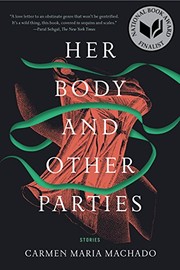
Her Body and Other Parties: Stories
Eight stories where bodies, medicine and old fairy tales get taken apart, with a green ribbon running through the whole book.
2,997-word summary · 13 min read
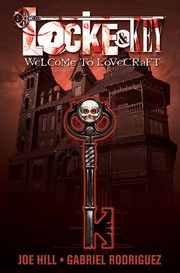
Locke & Key, Vol. 1: Welcome to Lovecraft
After their father is murdered, the Locke children move into a haunted family estate where keys unlock doors to ghosts, other places, and dangerous secrets.
2,019-word summary · 9 min read
Lullaby
A reporter discovers that a poem in a children's book kills anyone who hears it, and his attempt to destroy every copy turns into a road trip through grief,…
2,147-word summary · 10 min read
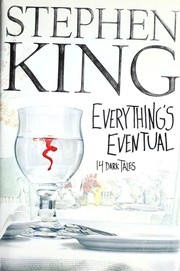
Everything's Eventual: 14 Dark Tales
Fourteen Stephen King stories shuffled by the deal of a card deck, from the haunted room of 1408 to quiet tales of grief that sting as much as the monsters.
2,000-word summary · 9 min read
This Present Darkness
A pastor and reporter face demons over Ashton while angels answer prayer.
2,384-word summary · 11 min read

If It Bleeds
Holly Gibney faces an outsider plus three more tales of dread.
2,219-word summary · 10 min read
Four Past Midnight
Four novellas about a plane lost in time, a writer haunted, and horrors small and large.
2,584-word summary · 11 min read
The Call of Cthulhu and Other Weird Stories
Seventeen tales from Dagon to Innsmouth, led by Cthulhu, the Colour, and the Whisperer, in S. T. Joshi careful Penguin edition with notes and corrected texts.
2,593-word summary · 12 min read
The Call of Cthulhu
A professor's papers link a sculptor's dreams, a Louisiana cult raid, and a sailor's voyage to a sleeping god under the sea.
2,530-word summary · 11 min read
Horns
Accused of killing Merrin Williams, Ig Perrish wakes with horns that force strangers to confess their darkest sins.
2,264-word summary · 10 min read
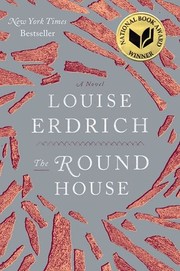
The Round House
At thirteen, Joe Coutts hunts for his mother's attacker when the law stalls, in Louise Erdrich's National Book Award novel of family, jurisdiction, and revenge…
2,391-word summary · 11 min read
The Talisman
Twelve-year-old Jack Sawyer flips between America and the Territories to find a Talisman that can save his dying mother.
2,050-word summary · 9 min read
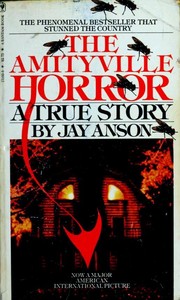
The Amityville Horror
The Lutz family flees 112 Ocean Avenue after 28 days of cold spots, voices, and flies, following DeFeo murders.
2,088-word summary · 9 min read
Skeleton Crew
King's 1985 collection pairs The Mist with The Jaunt, The Raft, and Survivor Type: 22 stories of Maine dread.
3,209-word summary · 14 min read
Revival
Jamie Morton shadows preacher Jacobs from boyhood healings to electric cures that open a door best left shut.
2,037-word summary · 9 min read
NOS4A2
Vic McQueen's bike finds lost things through a bridge, pitting her against Manx's Rolls-Royce ride to Christmasland.
2,060-word summary · 9 min read
Later
Boy Jamie Conklin sees dead people who must answer truthfully, pulling him into NYPD cases and a drug crew's greed.
2,009-word summary · 9 min read
Duma Key
After losing his arm, Edgar Freemantle paints on a Florida island and learns his pictures can open doors for something hungry.
2,530-word summary · 11 min read
Tokyo Ghoul, Vol. 1
Student Ken Kaneki becomes half-ghoul after Rize attack and hides at Anteiku.
2,438-word summary · 11 min read
The Valley of Vengeful Ghosts
A grieving therapist buys a model home in a rainy valley where the walls leak ghosts.
2,035-word summary · 9 min read
The Dark Half
A Maine novelist buries his violent pen name George Stark, then faces murders that carry his own fingerprints.
2,956-word summary · 13 min read
Rosemary's Baby
A young couple's dream apartment in the Bramford turns dark when helpful neighbors and a trusted doctor take over Rosemary's pregnancy.
2,665-word summary · 12 min read
Desperation
Travelers on Highway 50 are hauled into empty Desperation, Nevada, where a possessed deputy serves an old thing in the mine.
2,993-word summary · 13 min read
Insomnia
Widowed Ralph stops sleeping in Derry and sees small doctors with scissors deciding who lives and dies.
3,605-word summary · 16 min read
I'm Thinking of Ending Things
A woman drives out to meet her boyfriend's parents while planning to leave him, and the night turns quietly wrong.
2,754-word summary · 12 min read
There There
Twelve Native characters converge on a powwow in Oakland in Tommy Orange's 2018 debut about identity, family, and survival.
2,157-word summary · 10 min read